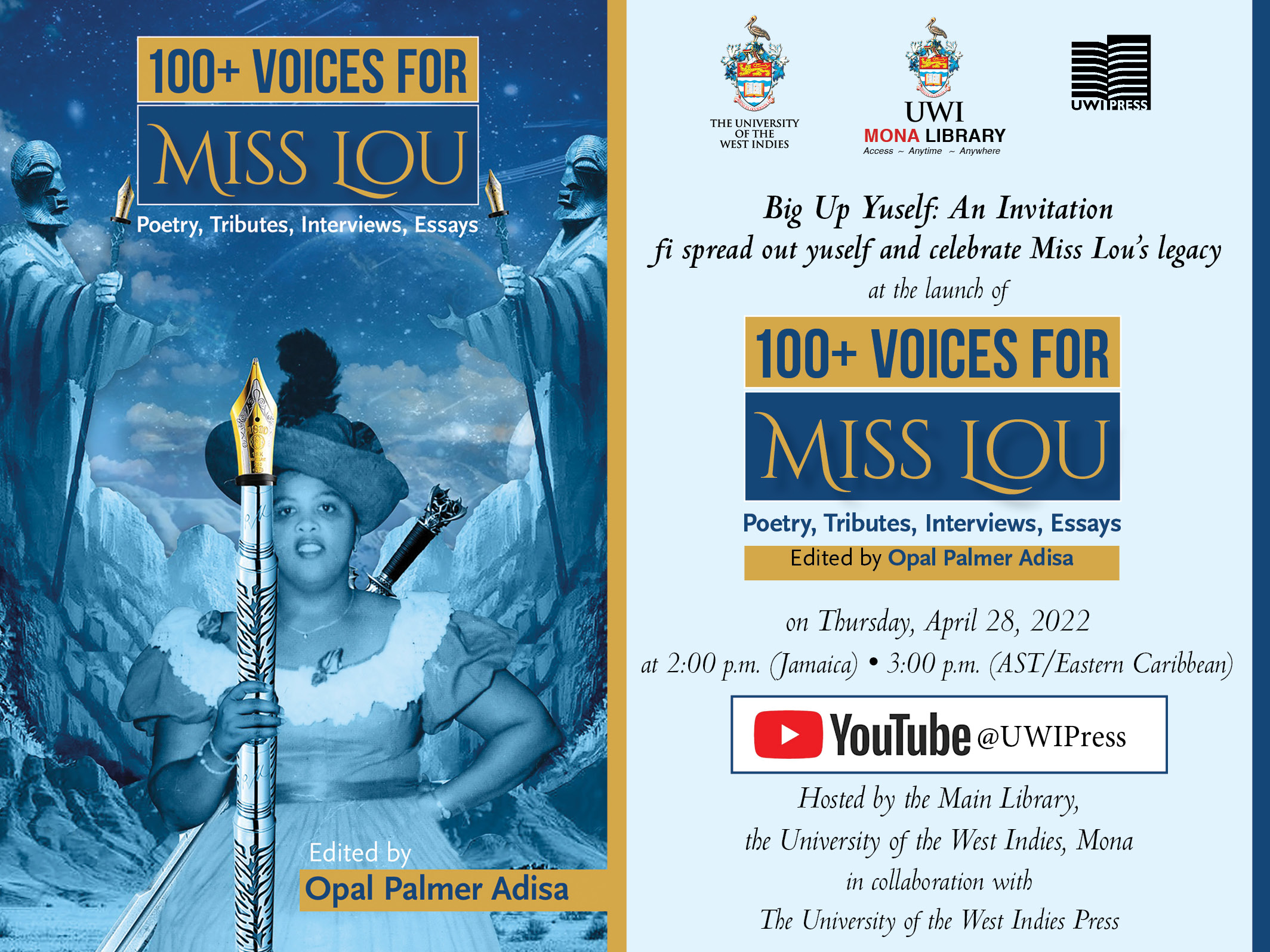
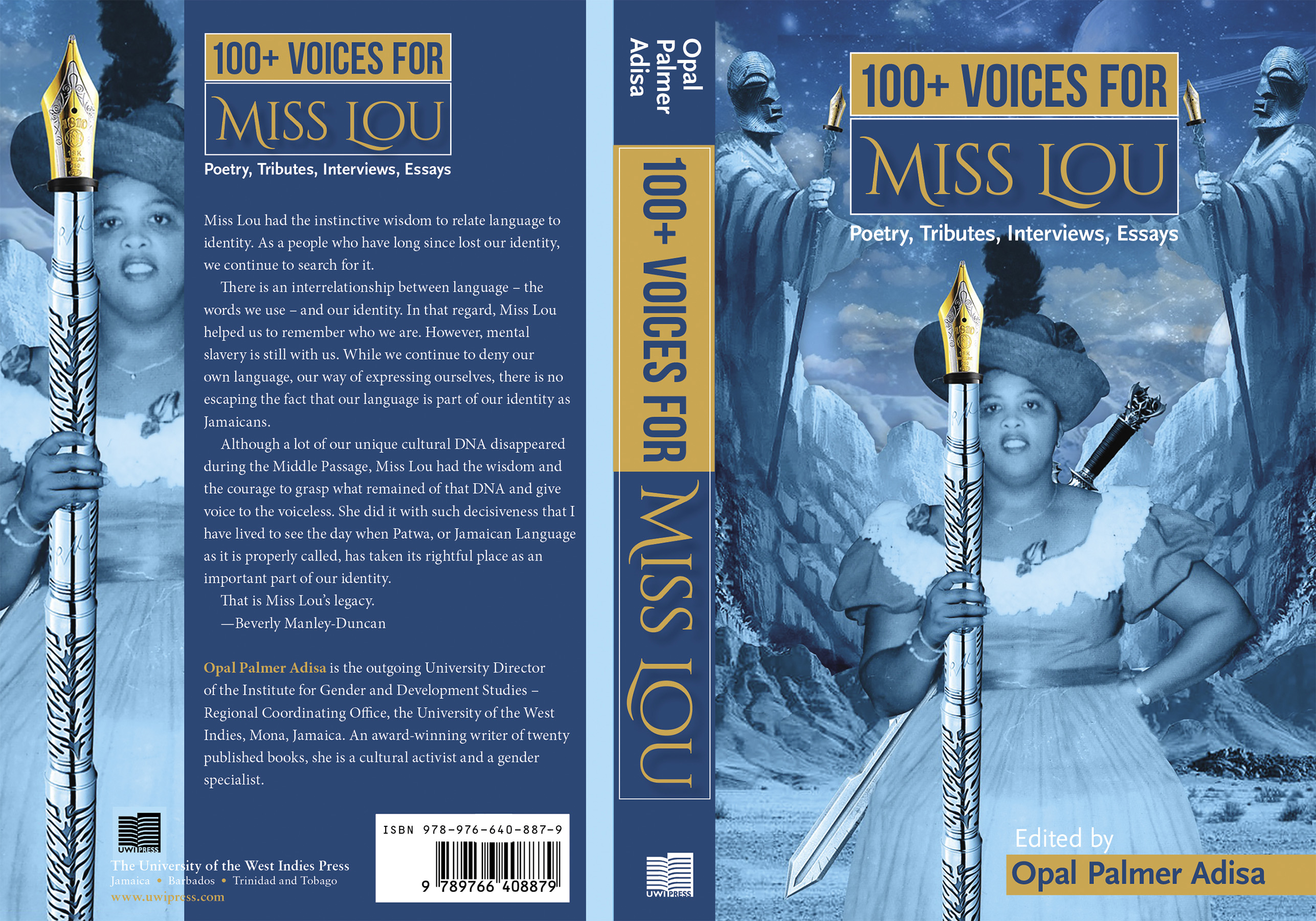
Opal Palmer Adisa is an exceptional writer/theatre director/photographer/gender advocate, nurtured on cane-sap and the oceanic breeze of Jamaica. Writer of poetry and professor, educator and cultural activist, Adisa has lectured and read her work throughout the United States, South Africa, Ghana, Nigeria, Germany, England and Prague, and has performed in Italy and Bosnia. An award-winning poet and prose writer Adisa has twenty four titles to her credit. Most recents are: Pretty Like Jamaica; The Storyteller's Return; Portia Dreams and 100 + Voices for Miss Lou. Other titles include the novel, It Begins With Tears (1997), which Rick Ayers proclaimed as one of the most motivational works for young adults. Love's Promise; 4-Headed Woman; Look a Moko Jumbie; Dance Quadrille and Play Quelbe; Painting Away Regrets; Until Judgement Comes;
I can’t imagine why Jamaica would consider remaining with the Commonwealth. I truly do not understand why the Government is investing money in hosting the Duke and Duchess of Cambridge at this time when in Jamaica, every day, so many people go hungry, some literally starving as a result of COVID-19, when thousands of children have not gotten an education because they don’t have Internet access and now need remedial support, when so many roads are in need of repair, when violence, terror, and fear of illegally smuggled guns are rampant, when our beaches are eroding, and most citizens do not access to them anyway.
Why should Jamaicans be subjected to the rhetoric of the Duke and the Duchess about staying in the Commonwealth? What has the Commonwealth done for us except extracted our natural resources, brutalised us with colonial institutions, and exploited and overworked our African ancestors for more than 300 years?
Unless the Duke and Duchess are coming with an Official apology from Queen Elizabeth II and Britain, unless they are prepared to offer viable reparations in the form of at least four new state-of-the-art hospitals, providing every rural school with Internet and indoor sanitation, solar power, and a laptop for each child, repair all our roads, provide irrigation and machinery for all our farmers, provide mental health care for the many still dazed from the trauma of slavery, provide free tertiary education for every Jamaican child wanting to pursue such course of study, and other skills training for those who opt for other choices, building at least two museums and returning stolen artifacts, and augment the salaries of teachers, nurses and police , then I am afraid I can’t welcome them, nor sanction our government expending our money to host them.
But even with these overdue concessions, I am completely against staying with the Commonwealth. We were robbed of our African names, our religion, which was maligned, our language, and repeatedly lied to that we came from the ‘Dark Continent’, instead of being told of Africa’s vast natural wealth, gold, diamond, oil, natural gas, uranium, platinum, copper, cobalt, iron, bauxite and cocoa, that were and continue to be extracted to enrich Europe and the Americas. We were not told about Africa’s diverse civilizations, the Kingdom of Kush, Land of Punt, Carthage in Tunisia, Mali and Songhai Empires, the Great Zimbabwe so many others. We were deliberately miseducated and Christianity used to oppress us and deny us an education and destroying our family structure.
I hail Barbados Prime Minister Mia Mottley and I hope our own government and the rest of this region will take the brave step she did and stand up as a true independent nation, not simple changing the Union Jack for the Black, Green and Gold. It is time to right history and once and for all throw off the colonial legacy that has unchained and dragging us down. Why should much needed resources go to pay a Governor General who represents the Queen?
The Commonwealth was formally constituted by the London Declaration in 1949 to maintain its power and control over its former territories. When has the Queen really represented, cared for or protected us? What are the tangible and evident benefits of remaining under the Commonwealth? None!
Although many want to sweep slavery into the sea and say we must get over ourselves, we endured 179 years of severe brutality and terror, rape and mutilation, worked to death without pay, and at the end, our British oppressor were compensated handsomely for the loss of our labour and we were tossed aside with no land, no food, no home.
Jamaican scholar Orlando Patterson recently said that under British enslavement an estimated five million Jamaicans were lost to us. We have endured 400 years of colonialism and neo-colonialism that has made Britain one of the wealthiest countries in the world, and still to date we have not received an apology or any compensation. Shame, I say to the queen and Britain! Shame I say to the Duke and Duchess for coming here with such a bold-faced request! Shame I say to us for welcoming them and acting like beggars!
We must not allow our children or our people to stand in the sun and wave flags. We must be resolute and stand as a proud people in honour of Nanny, Tacky, Paul Bogle, and all the nameless heroes who risked their lives for us. If we are serious about development, liberation and the sovereignty of our people, if we understand what true Independence means, let us not dishonour ourselves, not subject our people to insult, not throw away needed money and resources on those who have continuously exploited and abused us.
Let Jamaica stand as a proud Independent nation. Let us get from under the Queen’s frock.
As a member of the Advocates Network I endorse and am happy to be a part of the movement.
60 REASONS
FOR APOLOGIES AND REPARATIONS
FROM BRITAIN AND ITS ROYAL FAMILY
After 60 years of Independence we have not forgotten and we demand an APOLOGY and REPARATIONS…
CONQUEST & TRANSATLANTIC TRAFFICKING OF AFRICANS
For continuing after the 1655 conquest of Jamaica from Spain, the exploitation of the indigenous people of Jamaica, capturing their land, and forcing them to continue escaping to the hills to live a precarious (though freer) life because of their inhumane treatment.
For establishing in 1661 the Jamaica seal and coat of arms using the indigenous persons as supporters in symbolic heraldic representation of animals, handing over the fruits of the island to the monarchy; noting that by 1672 some the fruits from Jamaica included approximately 89,000-100,000 enslaved persons shipped from Africa into the royal port of Jamaica, named “Port Royal” as the crown’s principal trans-shipment hub.
For setting up as the Crown (1672-1731) the ‘Royal African Company’ modelling its coat of arms on Jamaica’s by replacing the supporters with African people, and giving knighthood and leadership to business partners of the crown – buccaneers, privateers, pirates, merchants & planters – who were rewarded with Jamaican property, including governorship for their involvement in enslavement as a lucrative business for the Crown.
For enabling Port Royal within only 37 years to become the “richest and wickedest city in the world” at the time of its 1692 earthquake, through atrocities of deception, collusion, corruption and murder on land and sea; controlled from Jamaica as the hub for the gathering and accumulation of wealth for the monarchy, centred on African human cargo stored inside the forts at Port Royal, many of whom perished in the 1692 earthquake when 4 of the 5 forts subsided into the sea, bemoaned as loss of property instead of loss of human lives.
For human trafficking across the atlantic ocean in the transatlantic trade in enslaved peoples, dislocating them from their communities, leaving many grieving families to wonder what had happened to their loved ones, and refusing to acknowledge the historic trade in Africans as a crime against humanity.
For the demographic disaster and genocide between 1655 and 1834, with just over 300,000 of the estimated 1.5 million trafficked still alive at emancipation.
For causing the high mortality on the floating dungeons that you called “slave ships” because of the inhumane conditions on board (and creating a path for the sharks to follow, because they knew they would feed off the dead bodies of our ancestors along) in what is known as the Middle Passage route.
For the “Zong Massacre” in 1781, when British crew threw 132 live Africans overboard just for financial gains from insurance and 10 of them forced to jump overboard.
For keeping our records of the Transatlantic trade in your archives and not making available to Jamaican archives copies of all of them; instead of destroying some of them, based on reports.
PLANTATION SLAVERY & INHUMANE PUNISHMENT
For establishing a plantation system as the main economic enterprise that changed the geography and landscape of Jamaica, destroying the natural environment.
For the dehumanizing violence toward the enslaved body, soul and spirit, both male and female, including excessively long hours work days, especially during the harvest months, without a rest day.
For extracting the material and human resources of the Caribbean and Africa to develop your country while under-developing ours. You made Jamaica and the Caribbean primary producers of goods while ensuring that “not a nail was manufactured in the region” even after independence.
For attempting to corrupt the Maroons through divide and conquer strategies; for failing to respect the 1739 treaty arrangements with the ‘Trelawney’ Maroons; for crafting, even as you lost the war, the treaty, mostly to your benefit in the first place.
For the brutality inflicted during the period of chattel enslavement. We are aware that in 1789, Thomas Clarkson, the anti-slavery campaigner wrote: “the wharfs of Kingston are crowded every Monday morning with poor slaves who are brought here to be whipped for the offences of the preceding week. They are generally tied up by the wrists and stretched out [as] punishment”.
For encouraging monsters like Thomas Thistlewood, who repeatedly raped enslaved women; and who also administered punishments called the “derby dose”, sealing faeces from one enslaved person in the mouth of another, until the enslaver decided to free the victims mouth from such depravity.
For deporting our ancestors who were deemed revolutionary leaders, for example in July 1796, between 550 and 600 Maroon men, women, and children were exiled from Trelawny, Jamaica and shipped to Halifax, Nova Scotia, Canada eventually deployed by Prince Edward Augustus (later Duke of Kent) to build fortifications there.
For the cruel and inhumane punishment of our ancestors for their heroic resistance to the institution of slavery, including for their insistence on maintaining African cultural practices including birthing practices and even claiming ownership of their own children.
For the shooting excursion on the mountains near Dromilly Estate in Trelawny in the month of October 1824 where runaways were brutally shot like animals.
For decapitating runaways and rebels, for progressive mutilation, slow burnings, breaking on the wheel depicted inside “a Jamaica house of correction” published 1843 by James Phillipo (where bones were dislocated and the body pulled apart) and other forms of inhumane killing and for institutionalizing violence as a way of life in our society through the sheer brutality and wickedness of slavery and the practice of a brutal brand of colonialism on Jamaica and the continent of Africa.
For criminalizing our revolutionary heroes and taking the life of Chief Takyi, Sam Sharpe and many others and for the severe, inhumane punishment of many more of our ancestors in the 1831/32 pre-emancipation war.
For taking Jamaican parliamentarian George William Gordon outside the martial law zone, trying him by court martial and executing him in 1865 when he was not a rebel/not a part of the Morant Bay war.
For the directive that Governor Edward John Eyre gave the British colonial forces to hang and shoot George William Gordon and over 400 Jamaicans, among them the men and women murdered on October 25, 1865, and for refusing to indict Governor Eyre for these atrocities and crimes against humanity in Morant Bay and Spanish Town in 1865.
CRUELTY TO WOMEN AND MEN & DESTRUCTION OF FAMILY LIFE
For the raping and force breeding of enslaved African woman, and the wicked treatment during pregnancy when they were unable to maintain the pace of work required by slave drivers, including enslaved women like Ann Smith from the Friendship Estate in Trelawny who asserted that she was “entitled to sit down” because she was pregnant; for depriving mothers adequate recovery time after childbirth and for punishing them when they took time to look after their children to ensure that they were fed, cleaned, loved, and integrated spiritually and socially into the human community.
For the psychological traumas of slavery that enslaved men, women, and children endured due to not only being in a system of racial bondage but also in a system of sexual bondage; and for treating enslaved men, women and children as property to be raped and sexually abused by the planter class.
For the horrific experience of pregnancy, birth and motherhood of enslaved women ‘rooted in loss’ – marked by ill-health and death, pain and grief – as described by Jennifer Morgan in her 2004 book labouring women; the high rates of miscarriage and infant death, even after slavery, due to the extremely strenuous physical exertion of work, inadequate nutrition among other conditions during slavery and colonialism.
For emotional and psychological damage and trauma to parents who saw their children being sold and making them work in the fields from age 6; and the loss of about 1/3 of the children born in slavery who died before they reached 7 years of age.
For the harsh and severe treatment of enslaved men as beasts of burden and sperm donors under enslavement and humiliating and emasculating our fathers and brothers under enslavement, including forcing men to watch their partners taken away for white male entertainment.
For selling and separating parents from children, wives from husband, thereby disrespecting and destroying family bonds, including through sale to settle debts under the system of enslavement, insisting that the enslaved had no rights over their progeny or their bodies, discouraging marriage among Africans during enslavement and the ongoing efforts to devalue and destroy the African family and family values. By deeming our ancestors “property” your citizens claimed “property rights in pleasure.”
For creating the stereotype “Jezebel” – an objectified enslaved woman who was treated as a “sexual object” – widely used justification by white men and enslavers (even also some free and enslaved African men) to rape women; also the stereotype “Mammy” – an inferior, surrogate mistress and a woman completely dedicated to the white family, especially to the children of that family, often neglecting her own children, if she had any.
IMMORAL, UNCONSCIONABLE LAWS & GOVERNANCE
For imposing slave laws that: a) provided financial and other rewards for enslaved Africans that killed or captured other enslaved Africans during wars of protests; thereby fostering the divisiveness among our people that still exist today; b) suppressed all forms of gatherings, especially at nights; c) prohibited enslaved Africans from keeping any horse, mare, or mule and if caught stealing was put to death; thereby stifling opportunities of the enslaved Africans to own or control property for the development of business; and d) limited the Sunday market to 11am; thereby limiting the opportunity for enslaved Africans to earn income.
For mis-use of power, imposing martial law for a whole month in the county of Surrey in 1865 in order to give you a free hand in murdering the activists in the Morant Bay war.
For making it difficult up to 1962 for Jamaicans to govern ourselves, even abolishing the old representative form of government in favour of direct Crown Rule in 1866.
For using legislation to enforce Anti-Black laws to make it difficult for our ancestors to achieve upward social mobility.
For laws which denied women and men the right to vote until the 20thcentury.
For the looted and stolen personal possessions belonging to black Jamaicans during the Morant Bay war and for other lands stolen or confiscated and kept legally as either Crown lands or private ownership.
For instituting laws that prevented and restricted land titling to free Africans thereby forcing them and their descendants to become labelled as squatters today.
For instituting laws after emancipation, such as the 1834-1838 apprenticeship which institutionalized discrimination against black and coloured people and confining them to labouring on sugar plantations where few earned enough to purchase land and develop business.
For the criminalization of Obeah, and for imposing laws that punished the practice of Obeah by floggings.
For taking away our African names and imposing English names on us, thereby denying us an authentic identity and making it hard for us to trace our lineage back to Africa by not recording our origins.
For the slave compensation act 1837 which compensated the planter class for losing their enslaved labour while ignoring legitimate claims for compensation, including the June 1865 petition labelled by the colonial government as presented by “certain poor people of St. Ann’s parish, Jamaica” sent to the Crown requesting lands and other means of relief from distress. In the Crown’s callous response, petitioners were advised to provide against adversity by “industry and prudence,” thus blaming our ancestors for their condition, whilst compensating the enslavers.
HEALTH, EDUCATION, IDENTITY & SELF-PERCEPTION
For denying us an indigenous/African-centred education but forcing on us eurocentric education/mis-education, the legacies of which are still with us today.
For referring to Africa as the “dark continent” and for teaching us that that our African ancestors were simple and could not think, that Africans in Africa were uncivilized and could not read or write; and for classifying our African ancestors as 4/5th human.
For devaluing our African religions, calling our traditional priests and doctors “witch doctors” and “ju ju priests” and taking away our African iconography and replacing them with a white religious iconography.
For lying about African history and keeping important historical facts from us, including that the oldest university in the world is Africa’s university of Al-Qarawinyyin, founded in 859 and located in Fez, Morocco, and that the Sankore mosque and university in Timbuktu, Mali is the oldest continuously-operating institution of higher education in Sub-Saharan Africa. It is believed that the mosque and university were erected in the 1100s c.e. (Twelfth Century) by Berbers who settled in the Timbuktu region.
For destroying our indigenous languages and replacing them with your English as formal then judging our intellect by our achievement of proficiency in it.
For using the English language to instil colour prejudice by using black as negative, and making everything prefaced by or called black, bad and legitimizing it by putting it in your dictionaries, while equating white with purity & goodness.
For the legacy of structural and direct discrimination in the educational system that persist and is at the root of an apartheid system of education in Jamaica today.
For appropriating all of our agricultural, engineering, and artistic skills/inventions calling them English/“Georgian”/“Victorian”, and brainwashing us to believe we created nothing, contributed nothing and therefore uncivilized.
For the distortion of our history, especially that relating to emancipation, pretending that the British led the abolition movement, when our ancestors worked, prayed, and fought hard for this.
For feeding us a “slave diet” of sugar and salt from which we suffered daily and which contributed to our current health problems; today, we have the highest rates of hypertension and type 2 diabetes in the world.
For recording the health practices of our ancestors and exporting natural herbs and medicinal plants they used traditionally to set up medical practice in 17th century England through Hans Sloane recording, and taking them to establish the British museum, also others; yet making traditional African-Jamaican medicinal practices illegal thereby exposing us to increased ill health and for encouraging us to view our traditional medicinal practices as backward and “Witch-Craft.”
For identifying and recording our African ancestors as chattel with the horses, donkeys etc.
For the promotion of mimicry images and stereotypes of Africans and Africa that persist today and which have contributed to African hair discrimination, skin bleaching, self-hate, lack of self confidence, self doubt and fearfulness.
For creating a skin-colour scale (the pigmentocracy) that put whiteness at the top (hierarchised whiteness), causing the “one drop of black blood system to apply, with octoroons, quintroons and mustee and mustiphini categories of skin shades that privileged “white blood.”
For the continued policy of discrimination that keeps African Jamaicans in a subservient class and is against people of African descent especially those of a darker complexion which still continues today as part of the legacy of underdevelopment.
For the psychological & mental health implications of slavery & colonialism that still affects the descendants of Africans in Jamaica today.
REPARATION & REPATRIATION
For genocide in the parish of St. Thomas which has not recovered to this day from the 1865 massacre, and for refusing to discuss reparation for this.
For failing to provide a repatriation and resettlement package for Rastafari and others those who wish to return to their original home but who are trapped in “Babylon” even though they have the right to return.
For maintaining policies (eg., imposition of expensive visas for us to travel to the UK) and practices, including discriminatory attitudes to Diasporic Jamaicans, especially the Windrush generation and their descendants, thereby demonstrating continued racism and inequalities towards Jamaica persist today!
For refusing to engage in a conversation about reparatory justice for slavery and colonialism as set out in the motion in the Jamaican parliament and the 10 Point Action Plan of CARICOM, and failing to recognise that reparation is a route to peace, healing and reconciliation. On the contrary, official representatives and your former Prime Minister Cameron, who addressed our parliament in 2015, have told us to forget about slavery and the past, “get over it and move on!”, without an apology nor reparations.
“I am not a writer who happens to be black. I am a writer who is black and female. These aspects of my identity strengthen my creative gifts. They are neither burdens nor limitations…” bell hooks from remembered rapture
bell hooks’ feminist scholarship has informed and sharpened both my creative work, as well as my scholarship. She has influenced and shaped many Caribbean women scholars, who have been paying homage on social media and in other formats since her death on December 15 at the age of 69. While I cannot claim bell as a friend we were more than acquaintances and during our time together she taught me a valuable lesson as a sister-feminist, for which I am eternally grateful.
In 1994 the University of Kentucky hosted the Kentucky Women’s Writers’ Conference. Gloria Anzaldua, bell hooks and I were the featured writers and presenters for the 3-day conference. Gloria and I were both coming from the Bay Area, California, and were friends having met and read at several venues over the years. I knew of bell hooks’ work well and, in fact, had been challenged and chastised by at least two professors at UC Berkeley when I was pursuing my doctorate in the late 80s for citing her Ain’t I A Woman. They said she was not a serious scholar and her work lacked academic merit as she did not follow the standard footnote/endnote citation. I argued the point, but the professors did not relent, and I often wondered what they thought when bell hooks became more famous than they. I make this point because many young scholars are not aware of some of the struggles bell hooks faced, not just by white academics, but also by a few prominent black feminist and male scholars who did not accept or respect her work.
I was thrilled when I was informed that I would be sharing the stage with bell, and we each were scheduled to do a reading, participate in a panel discussion and lead a creative writing workshop. We all were scheduled to arrive the evening before the start of the conference and were invited for dinner. Less than 15 minutes upon checking into my room, the phone rang and the voice on the other end said, “Hello Opal, this is bell can I come to your room?” I was tired and was planning to rest before the scheduled dinner, so agreed to her coming in half an hour.
In exactly 30 minutes bell knocked on my door. We exchange pleasantries and talked a little about each other’s work and what we planned to do at the conference. Then bell switched and asked directly, “How much are they paying you?” I was thrown off because no one ever asked me what I was getting paid, so I muttered unsure if I should reveal my fee. However, since bell was forthright and unrelenting, I told her. She shook her head, said umum. “I’m getting almost twice what you’re getting; that’s not right because we’re doing the same number of sessions. I bet you didn’t negotiate.” And she was right. Until that time whenever I was invited by a university I accepted what they offered. All the other arrangements for us including airfare, accommodation and per diem were the same, and bell told me that she had negotiated her honorarium.
bell then looked me directly in the eye and said, “I’m going to tell you something that you need to do from now on.” She leaned forward in the chair on which she sat while I sat at the foot of the bed. “Whenever a university or any place invites you to read or conduct a workshop don’t accept what they offer you at first. Always ask for at least 20% more than what you want so that you can bargain. I learned that the hard way.” I was so grateful because I had asked several writers before about what they were paid and they generally beat around the bush without disclosing. But not bell hooks. She took me under her wings, and added, “get yourself an agent who will do all the negotiating and do at least 4 engagements monthly.” I told her that was impossible. She frowned and objected.
I explained that I had three young children, ages 3, 5 and 10 respectively, was recently divorced , I headed the department at my university that was under-funded, and in order to be there it took a tremendous amount of negotiating and support with family, friends, students and faculty. In short it was a miracle that I was able to be there. She embraced me and said, “Sister Opal, I understand, you are wading through a river, but you are moving.” This thoughtful action illuminated a passage from hooks’ Ain’t I a woman that I had underlined and quoted years earlier.
“By completely accepting the female role as defined by patriarchy, enslaved black women embraced and upheld an oppressive sexist social order and became (along with their white sisters) both accomplices in the crimes perpetrated against women and the victims of those crimes.”
That was such a moment of light and assurance, and those 4 days in Kentucky were awesome as I got to hang out with bell, which also included going with her to buy shoes. She had a fetish for shoes and bought 4 pairs, and admonished me for not even buying one pair.
By that single generous act of schooling me about the college circuit, bell hooks demonstrated the true meaning of feminism, which promoted me to secure an agent six months later even though I was not able to be on the road as frequently as bell suggested because of my family and academic life.
Nikky Finney is another sister/writer friend (featured in the photo) who has also been supportive, and who had recommended me for the conference. Although that was bell’s and my first meeting, we had communicated a few years before when she was writing Sisters of the Yam: Black women and self-recovery, 1993. I had been performing with devorah major as Daughter of Yam, and bell wanted to use a quote from our performance. Several years later when that collection was being republished she reached out to me again for a blurb.
bell was forthright, generous and had bottled energy. I remember one of our late night conversations, when my eyes were blurry with sleep and she was energetic, and me asking her how she managed to write and published so much. She laughed and said, “I don’t have three young children.” Touché I nodded. Then in a more serious tone she added, “ I have serious insomnia so I write to try and find asleep. Also, I am driven to comment on all aspect of black life, to shed light.”
What impressed me about bell hooks at the conference, as well as other times seeing and hearing her, is her analytical ability. Her penchant for bringing many thoughts together through her wide-range and vast reading, and her unapologetic stance about being black and woman and all the things that she felt black writers and artists worldwide needed to do.
“The black aesthetic movement was a self-conscious articulation by many of a deep fear that the power of art reside in its potential to transgress the boundaries…” she pronounced in Yearning, one of her many books that I taught over the years. And that was indeed her charge and the work that she demanded that women feminist writers do continuously— bulldoze boundaries, deconstruct discourses and create new paradigms.
A few years after the conference when bell was coming to the Bay Area to present she reached out and asked me to introduce her at the event. I wrote a poem as way of introduction, which I am unable to locate now. bell was someone whose work I respected and taught, and she likewise respected and taught my work. We communicated over the years, briefly. We saw each other a few times. In New York at one conference, we talked over tea about home and wanting to return. She was fed up with being in New York and wanted to return to Kentucky and I was similarly wanting to return to Jamaican from California. When she finally moved back to teach at Berea College, Kentucky, in 2004 I sent her a congratulatory email for being able to make that move and wished her wellness as she had been having health challenges.
bell hooks knew all too well domination and had managed to find a way out of its grasp.
“A culture of domination demands of all its citizens self-negation.
The more marginalized, the more intense the demand. Since black people, especially the underclass, are bombarded by messages that we have no value, are worthless it is no wonder that we fall prey to nihilistic despair…” (from Black Looks)
The above quote by hooks is relevant to the conditions that many Jamaicans and other Caribbean people are currently facing given the crime rate, the cost of living, the gender-based violence and the horrendous physical and sexual crimes against our children. The nihilism is evident in the acceptability of the present reality and the general belief that there is nothing we can do beyond trying to survive. hooks’ work, although focuses on black life in the USA, offer us many parallels in the Caribbean. It provides us with a framework to engaged in critical feminist discourse that incorporates culture, the patriarchal and colonial modules that still govern/define our lives. Her books, Feminist Theory: From Margin to Center, 1984; Talking Back: Thinking feminist, thinking Black. Between the Lines, 1989; Yearning: race, gender, and cultural politics,1990; Black Looks: Race and representation, 1992 are lucid and straight-forward readings that connect the dots about how the historical antecedents continue to move us further away from who are, and our goal to resist the domination in every form.
For all educators and those wishing to truly create a liberating pedagogy, studying Teaching to transgress: education as the practice of freedom, 1994 and Outlaw culture: resisting representation, 1994 are prerequisite readings. For those writers or those who desire to write or who teach creative writing, I recommend these of hooks’ books: Bone Black: Memories of Girlhood (1996); Wounds of passion: a writing life (1997);Remembered rapture: the writer at work (1999). I have required these readings when I taught in the MFA in Creative writing program at California College of the Arts.
bell hooks constantly moved through fear to unbarring the door and she kept the door open not just so that she could enter, but that other writers and feminists of colour could enter too. She blended scholarship with creativity, inserting her voice as Primary source, worthy to stand alone and tell her truth. A true trail blazer she took Audre Lorde’s intersectional concept a step further thus by creating more space for other voices.
I am honoured that I knew her and got to share the stage with her a few times. Most importantly, I thank her for setting me on the path to ask for what I am worth and deserve.
Sleep now my sister. You have gifted us with a formidable body of work to feed our minds and guide our path. Asé
This article was published in Bookend, The Observer, Jamaica, Dec 25-26, 2021.
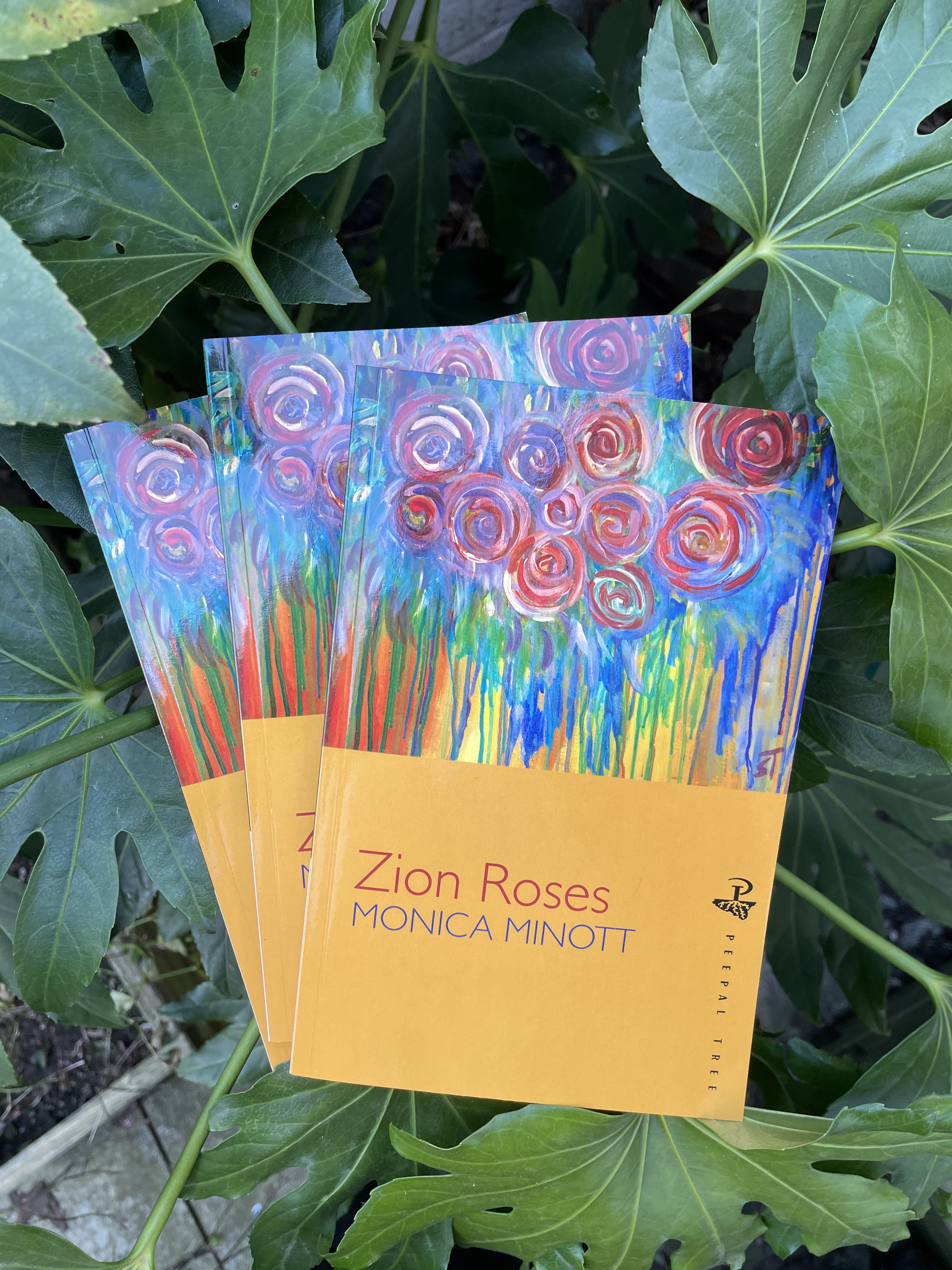
Zion Roses is the title of the collection. The collection engages with the loss of our roots as Caribbeans, we who have been separated from our ancestral history , continue to suffer disenfranchisements. Loss of land, language and cultures report in our daily experiences. Zion Roses acknowledges our pain but it does not ask readers to wallow in self-pity, but to rise-up and overcome. The collection engages with music, art, and literature, as avenues of overcoming. Descendants are encouraged to innovate and lift ourselves/ themselves into a brighter future, to use dance, music , poetry, and visual art as cure, acknowledging the power in both ‘history’ and ‘history-less-ness.’
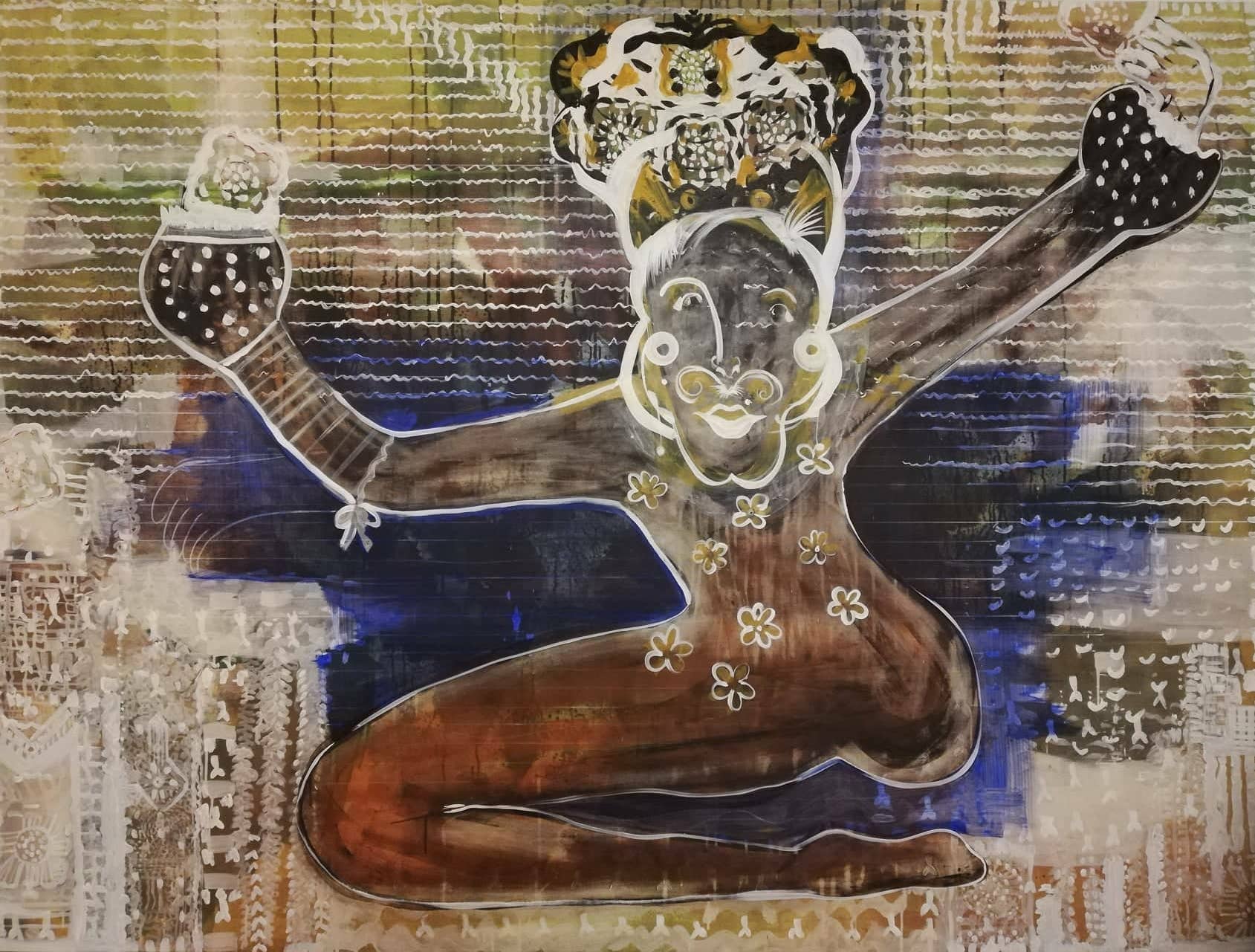
In June, 2018, while having lunch with a painter, Stefanie Thomas, who had only a few minutes before completed a painting and set it near an open window to dry, I found my gaze time and again drawn towards the image resting against a wall. I finally got up and studied the painting more closely and I said, “Stefanie, these are flowers falling from heaven, from Zion, a gift.” She studied me and the painting, a smile was her only response. Days later she called and shared her decision to name the painting … “Zion Roses.” I knew then it would be the title of my next book.
My first collection Kumina Queen was published in 2016. In that said year I attend Bennington College, Vermont (2016-2018) where I obtained an MFA. Several poems in this collection were penned during my time at Bennington. At Bennington I had the benefit of working with several significant poets resident in the United States of America, including Major Jackson, Greg Pardlo, and April Bernard. I consider my time spent interfacing with these poets as part of ‘the high.’ But the high did not start there. I had before Bennington, the benefit of mentorship from Edward Baugh and Mervyn Morris. The low …Mama said “Rome was never built in a day”…poetry needs patience and dedication. I am thrilled when a new collection is published, but the product takes time.
This collection captures the scattering and fragmentation of lives — trafficked Africans and their descendants. The continuing impact of European colonisers on the descendants of the enslaved is of particular importance. The collection reports various influences, with respect to language, foods, and cultural norms; in my mind these influences explain much of the unique multi-layered complex individuals we meet in the Caribbean and the diaspora. The collection introduces subversive voices of persons disenfranchised: “BAG-A-WIRE,” “Mahogany Tree” (Tour guide) , “Telemachus,” and “Jean Michel Basquiat,” to name a few.
Jean Michel Basquiat was born to a Haitian father and mother of Puerto Rican heritage. Basquiat has been described as: rebellious, unique, subversive, difficult, and exceptional. Every black person, more recently termed ‘hybrid,’ should want to know Basquiat’s story, his successes and his failings. His subversive paintings speak to his rejection of a system of oppression, ‘The Establishment.’ His paintings report on life in the USA for black persons. Basquiat employed symbols in his paintings: skulls, bones, crowns, scribblings and ladders of escape. He used symbols like trademarks.
Zion Roses reports on a history of violence and pain, which may be ascribed to epi-genetic markers ( findings of a recent scientific study) that may one day explain the continuing violence in our islands. But, most important, the collection encourages overcoming, planting seeds of hope.
LIGNUM VITAE.
(Three wooden figures, said to be Taino deities -Zemis on display before the Society of Antiquaries of London.”)
Hardwood taking shape.
Cacique listens to grain
of the wood, turns voice
into form. Ancestors’
knowledge-tree bends
but never breaks, stone-
chisel strips away bark
revealing heart-wood
ready for stone grinder.
Beveled liberation. No
Auction Block. Bird-
man finds tree-of-life
good to make ships.
Audience: Persons who are interested in postcolonial studies, history of people in the Caribbean, and the complexities of Caribbean persons, will appreciate Zion Roses.
Covid 19, facilitated my focused attention for approximately 14 months on the third collection. The Black Lives Matter movement confirms that my decision to explore the continuing impact of colonial occupation on trafficked Africans, via “colonial loss and reconciliation,” is reasonable and relevant.
I am currently completing my third collection, this collection, heavily biased towards ekphrasis, will present “ships that scattered us.” The collection again seeks to be a conduit of voices that had been silenced, voices that now must to be heard. I also continue my tantalizing journey through the works of Jean Michel Basquiat.
While reading, a word or a sentence often provokes a memory, I am transported to a space where I try to resolve unresolved issues, or to document injustices I have unearthed. I’ll stop and write my thoughts as they come, responding to the artistic intuition/ pulse. A memory often forms the skeleton or the sub stratum of a poem. For the poem to evolve I meditate on the idea of the poem while trying to hear my thoughts clearly; thereafter, I widen areas of consideration through research or further readings in an effort to eliminate limitations I may have subjectively imposed. The lyrical call will already have entered the lines, ‘enriching the dry bones.’ My poems are never finished until they achieve the intended purpose, i.e., ensuring the voices of the voiceless can be heard through my writings.
I wish to write the most powerful collection that I can possibly write that will impact lives and foster reconciliation.
I am a workaholic, nevertheless, I am a bit disorganized maybe because I am usually doing three projects when other persons are focused on one.
I’m Professor Opal Palmer Adisa from Kingston Jamaica where I live and work, the home to reggae music, jerk food and the fastest woman and man in the world. I am a writer of poetry , prose, essays and children’s books. I am a feminist, gender specialist and cultural activist.
From I was in my twenties I have been writing and advocating gender justice, especially in the area of children’s right, specifically for girls to be safe and protected from sexual and physical abuse.
I have also been advocating against gender-based violence, in particular domestic violence that disproportionately affects women and children. I have worked with diverse groups that have made these issues their charge. I have written extensively on the issue, in fact my first short story collection,Bake-Face and Other Guava Stories, 1985, explores both of these issues.
When I was living and teaching in California, USA I taught at California College of the Arts, and headed the Diversity Studies programme, where among looking at Ethnic inclusion also worked for gender equality; I also works the Berkeley women’s center, designing and conducting workshops in shelters for women on self-empowerment and regaining their voice after years of domestic abuse.
In the US Virgin Island I worked with the V.I. Domestic Violence & Sexual Assault Council and The Women’s Coalition of St Croix, where I wrote and directed plays as a result of interviewing women on the issue of childhood sexual trauma and domestic violence.
In Jamaica, as the outgoing University Director of The Institute for Gender and Development Studies, with units in Jamaica, Barbados and Trinidad and Tobago, I had the distinct opportunity to oversee and direct programs that tackled these issues, as well as liaison with community service organizations and NGOs throughout the Caribbean regio n to network around these issues. I have been promoting intergenerational networking of veteran advocates with emerging advocates to build capacity, share best practices and learn from each other and work together to solves many of these issues, especially GBV. As the present initiator of Thursday in Black in Jamaica, I have led island-wide campaign/demonstrations to bring public awareness to GBV and work to reduce and eventually eliminate it.
Gender equality is the necessary prerequisite to bring about a culture of peaceand, it is crucial that women and girls, and men and boys are involved in every aspect of peacebuilding as we must learn to co-exist and thrive together. Gender inequality negatively impacts everyone in the society, and while some men due to their patriarchal upbringing, believe they will lose out as a result of gender equality; they are mistaken. Everyone wins when the scale is evenly balanced. Women and girls get to make independent choices and men and boys are no longer have to bear the burden of being bread-winners or protectors as everyone will contribute to their own welfare and safety. And more importantly, for development, the full participation, intellectual, physical and other areas of both women and men and girls and boys will allow for greater progress over a shorter period of time, and the combination of innate skills will result in peace and more respect and Intunement with our environment.
Gender equality is the vision of the future that we are working to ensure will be a reality. We are all daily dying from lack of peace, from conflict, from inequality. I firmly believe GE will rebalance and allows us to recalibrate how we can live and work together in peace and harmony.
I identify as an African Jamaican because my ancestral roots are in Africa, and that sense of geographic roots grounds and connects me in a visceral way with the people of Africa; their struggles are mine, and mine theirs, and their past and present achievements are likewise mine.
People of the African diasporas in Jamaica and throughout Caribbean will feel more connected to their African roots if they are taught about Africa, not just the history of enslavement, where they are always told their people sold them, and never about their people who valiantly fought to keep them from slavery, not about the great accomplishments of Africans way before the Europeans and Asia, and all the natural resources of Africa that has and is still continuing to benefit the world, include the very technology that we now take for granted. We don’t know this history. We are not taught to love ourselves and honour our ancestors. The education system must change from the colonial model to a Caribbean/African model.
Jamaicans and other Caribbean people have been and will continue to be involved in contributing to a culture of peace in Africa. Jamaica was one of the first countries to boycott South African for its racist, apartheid policy; our musicians, Peter Tosh, Bob Marley, Juddy Mowatt, and many others have sang about freedom and liberation and peace. Reggae music is known and appreciated globally for its message of peace and liberation; its call to stand and end sufferation… We have been working to bring about peace and have joined out sisters and brothers throughout the African continent to amplify that message and end colonnization. But more needs and can be done. One way is to allow for more educational and trade exchange between the Caribbean and Africa; African languages and its full history must be taught throughout the Caribbean. We have to examine and adopt some of the measures of the Queen Mothers of Ghana and the sisters of Nzinga, with our own Nanny and other female fighters, their strategy and methods of resolving conflict and building coalition can be insightful to our struggles.
I am so excited about my new book for children, Portia Dreams.
It is the childhood story of Portia Simpson Miller, the first and still to date, the only female Prime Minister of Jamaica.
On March 2006 to September 2007 she was elected Prime Minister and again from 5 January 2012 to 3 March 2016. She was the leader of the People’s National Party from 2005 to 2017 and the Leader of the Opposition twice, from 2007 to 2012 and from 2016 to 2017.
Portia Simpson Miller is from a working-class family in the rural area of St Catherine, but she decided very early that she wanted to contribute to change, and supported by both her mother and father, she became a change-maker.
I invite you to read this book and learn about Portia’s childhood and the dreamer that she was.
My goal is to inspire children, especially those from humble beginnings, so they know that regardless of their circumstances, like Portia, they can dream and aspire and become Prime Minister one day.
It is chaos on top of chaos—the necessary brutal breaking
down to build back better, stronger—mitigate against future
blows they say will come more frequently—ferociously unpredictable.
I look up—sturdy wet new treated pine above my head, see the thicker
rafters—bird beaked—sitting tied down on edge of anchored plate.
They say you must have such cuts and ties to firmly lodge onto ledges—
the price to be secure—to be more—permanent; more knowledgeable?
My chapbook Guabancex is about that traumatic and emotionally complicated period when in 2017 Dominica suffered a category five devastating hurricane, Maria. Poetry was my way of working through some of that mental chaos. I wanted to think more deeply about some of the complex nuances I observed and experienced; all the issues bubbling under the surface that a devastating event can uncover – but also the love, resilience, empowerment and community spirit that was there too. Often, what gets portrayed on the news when a catastrophic event occurs, can be very different to the lived reality of the people going through the experience, so I also wanted to record some of that in poetry.
I try to pay attention to what’s in the space , what words I keep seeing over and over again. I had been coming across articles and videos about the indigenous Taino people of the Caribbean region, and their female deity Guabancex, associated with all natural destructive forces, including hurricanes. She’s known as “one whose fury destroys everything”, but she’s not only the goddess of disaster, she’s also the goddess of rebirth and renewal. Even though there is no evidence the Taino reached as far as Dominica, it seemed an appropriate title for the book and a way of honoring the Taino memory and the memory of all the indigenous people who perished due to colonization. We still have an indigenous population here in Dominica, the Kalinago, and people often aren’t aware of this. So, I felt it important, especially in terms of climate change that the knowledge indigenous peoples seemed to have about weather patterns, where to build your house, how to build your house — we can learn their knowledge in these current times.
Immediately after the hurricane, there was no headspace for writing, it was mentally and physically an exhausting time, and we were just concentrating on the day-to-day basics of food, water, rainproof shelter etc. It was six months after that I really began writing the poems in earnest and about one year after that I sent a few to Papillote Press for publication consideration. The final book was officially published in February 2020. Writing the poems was empowering and cathartic and it felt amazing to see something aesthetically beautiful, come out of the devastation of the hurricane. I agree with Kamau Brathwaite that art can come out of catastrophe. We had a physical book launch in Dominica, then the pandemic really kicked in, the lockdowns etc…
I never consciously have an audience in mind when I’m writing, because it makes me prone to self-censor. Hopefully during these testing time, readers will be able to relate to the themes of resilience of the human spirit, how we survive and over time heal from traumatic events, the importance of community, family, friends, faith, compassion and love; and the ‘collateral beauty’ of Guabancex.
Everything impacts my writing because for me writing is not separate to life. The world feels completely unstable and unpredictable; every area of life has been affected; I am just trying to stay balanced and healthy. I have a full-length collection of poetry which will hopefully be published at the end of next year.
I don’t have a formalized writing process. I read a lot and take a lot of notes. Sometimes I use writing prompts and writing exercises to get poems started; sometimes I work to deadlines for journals and competitions; sometimes poems subconsciously arrive unbidden which I always give thanks for and I use the craft tools I have learned to make them more potent. But every day, even though I am not writing, I am probably doing something related to my craft.
I’m a bit hesitant about giving myself a “writer” label, because there are so many expectations and assumptions as to what “a writer” should be and do and I’m just not sure yet how much of that world I want to be a part of. At the moment I am just enjoying having this creative outlet in my life; it is one of my health and wellness activities. I just want to keep enjoying the creative process, keep courageously experimenting and exploring with words and my imagination.
I have many quirks and idiosyncrasies but nothing in particular I think you should know.
a poem filled with words not metaphors
im not going to sit here and paint a heavy hurricane picture for you to
visualise in pretty clever metaphor words will never carry you to what
its like actually lets just leave it like that words cannot ever take you
there at all although to be fair Mum is always saying kannót is a boat
LeRoy Clarke was a genius, a master artist, as passionate and as complex as the best. You either loved him fully, unconditionally, or you left him alone. He was fierce, full of convictions, and he did not mince his words, regardless of who might be hurt by them.
At his house/museum, 2017
I met LeRoy for the first time, at seventeen, recently arrived in New York, getting ready for college and a friend invited me to accompany her to visit him at his home/studio in Brooklyn. When we arrived he was working on a massive piece, about 20 x 60, part of his Douen series, with such minute details, I thought he would surely go blind. I still don’t understand, how up to two years ago when I last saw him before the COVID pandemic, how he was able to see with such clarity those fine lines and details of his multi-layered, prophetic, visual compositions.
I had been around artist in Jamaica as my uncle, Lloyd Walcott, was an artist, but walking through LeRoy’s home/studio that day I knew I was in the presence of a master. Also, amazing was his ability to work and entertain — I remember him making and offering us peanut punch, playing music, chatting with others who dropped by, between the 4 hours we were there, and in the midst of all the activity and talking with us, he kept painting. The caveat of that first meeting, of what would become many, many visits, was that my friend told him that I wrote and he said I should bring some of my poems the next time I came to visit — that was before computers and cell phones.
About a month later I visited LeRoy and left him a slim folder of my typed poems. He called about 3 weeks later and declared me a poet. He suggested some books for me to read, including Rilke’s Letters to a Young Poet, provided critique on several of the poems and told me, “Keep writing.” Thanks my dear LeRoy, I am still writing. LeRoy Clarke was my first mentor and he introduced me to many important poets in New York, Quincy Troupe and the late South African poet who was in exiled in New York at the time, Keorapetse William Kgositsile; LeRoy also took me to my first open mic reading, and at the many parties at his home I met other artists, musicians, and writers/poet from the Caribbean, Africa and the entire globe.
When his first collection, Taste of Endless Fruit: Love Poems and Drawings, 1974 came out he gave me a signed copy. When I left New York after undergraduate college and returned home, Leroy and I communicated via letters — still computer and WhatsApp was not yet invented. I believe I was visiting New York when LeRoy said he was packing up and returning home. I was inspired. He told me to come and visit him there and I did, in all of the locations in which he lived before he built his home museum, El Tucuche, where I stayed many times.
Opal & Leroy, 2018
LeRoy Clarke has been an inspiration; consistently he was clear and unwavering about doing his work without any distraction or deviation. The first original piece of art I bought when I was 21 years old was one of Leroy’s Painting that he allowed me to pay for over a 2-year period; it sadly was stolen from my California home, when I was away on study leave in 2009, when some very unscrupulous people tried to take over my house and stole that, among other art work.
LeRoy insisted that I attend his 75th birthday, and asked me to speak about his work and our friendship at the Museum in Port of Spain; also, I wrote and was interviewed in a local journal about our mentorship/friendship.
In 2016 I spent a week with LeRoy, and during that time we spoke extensively about his work – his process and some of those conversations were in a taped interviewed him about his Eye Hayti Series; an excerpt of that interview was published in the journal, Interviewing the Caribbean, Vol 3, No 1, 2017
About five years ago, Leroy asked me about his work, and when I visited him three years ago he had me select 3 images from Ubiquitous Thunder, and write about those. I hope this quintessential collection of line-drawings will be a forthcoming publication by his estate.
LeRoy painting at his home, 2018
LeRoy Clarke has left a massive body of work that will take many, several life times to analyse and process. He is certainly one of the Caribbean’s most prolific visual artists and writers, and his work enshrines our history, culture and his future hopes for our restoration. I count myself among those blessed to have known him and who was encouraged to keep steadfast with the work. I am leaning on the shovel, LeRoy, and will keep leaning.
Asé. I know the ancestors welcome you in their folds. Walk Good my dear friend.
“Our success educationally, industrially and politically is based upon the protection of a nation founded by ourselves. And the nation can be nowhere else but in Africa.” Marcus Garvey
I love this photo of Garvey as it resembles my father –he resembles my father or more accurately, my father resembles him; they could have been brothers; therefore Garvey could have been my father; he is certainly my spiritual father. However, Garvey forged a path much wider than my biological father; he had a vision, insight and the tenacity to pursue his dreams, and thankfully for us –Garvey’s dreams still inspire us.
As a writer and intellectual, this Garvey quote resinates with me, especially when intellect is married with common sense then the whole world opens to one. But really what does Garvey mean by intelligence? It of course has its base with self-knowledge, as Garvey understood this to be the cornerstone of Black people’s liberation from enslavement whose primary goal was to reduce us by let us forget who we are truly and where we came from. The vast majority of us still don’t know the most basic things about our heritage, even today when so much is available to us.
CONFIDENCE in SELF
Similarly, if one has no confidence in self, there is very little positive change one can accomplish. That is why it is so important to endow our children with knowledge about self, and help to bolster their self-confidence. Everything we hope to achieve is only possible with self-confidence; without it we will remain stagnant.
Throughout his life, Garvey tried and accomplished many things. Some will say he also failed at many things, but that is also the mark of a courageous and forward thinking person, who is not afraid to fail because s/he knows every failure leads us that closer to success. So thanks Marcus Garvey for doing and failing and doing more so we have the history of the Universal Negro Improvement Association and African Communities League (UNIA-ACL, commonly known as UNIA), which you founded and Presided over, and which was once the largest organisation of Black people throughout the Diaspora, and that inspired countless, and continues to do so even today.
There are many Garvey quotes that I find inspiring but these three in particular resonate with me:
“Africa for the Africans… at home and abroad!”
I hope the leaders of Africa will come to truly understand and reflect this very soon in the near future.
“A reading man and woman is a ready man and woman, but a writing man and woman is exact.”
We all need to ponder the meaning and implications between ready and exact.
And this finally quote below speaks to our future:
“There is no force like success, and that is why the individual makes all effort to surround himself throughout life with the evidence of it; as of the individual, so should it be of the nation.”
How are we as individuals and as a society/nation measuring success, which must have a community component and an element of altruism. I don’t remember how old I was exactly when I was introduced to Garvey’s philosophy, but it feels as if he has been always around, and I know he will continue to be a beacon that sees me and others through to the other side.
The death of Nashawn Brown, resulting from the beating by his stepfather is not an anomaly. Every day, throughout Jamacia, regardless of class and ethnicity, children are abused emotionally, physically and sexually. This must stop. We must learn and understand that children are not empty vessels and not our property to do with as we feel. We must not take out our anger and frustration on our children. We must honour and respect our children, and we must not stand by and watch adults abuse children. Those of us who know better, must be the voice of children who are unable to speak for and defend themselves.
Whenever I see children out, whether going to school, church or some function, they are always well-groomed. It is evident that a parent or guardian invested time and energy to achieve that appearance. However, it seems that parents do not take the same amount of pride in the psychological and emotional welfare of their children.
What we as parents say to our children has deep, life-lasting implications. If we want children who are intelligent and compassionate and emotionally intelligent, then as parents we have to provide them with an opportunity to practice and internalise these values.
Contrary to what some adults might believe, each child comes into this world fully equipped with a unique personality, with specific likes and dislikes. While parents or guardians are intended to guide our children, we are not expected to dominate nor terrorise them.
When I do workshops, parents often throw out the Bible phrase “spare the rod and spoil the child,” which is taken completely out of context. No matter how you slice it, beating is violence. Although there should be no corporal punishment in schools, we know that children are being damaged irreparably by some teachers who humiliate them because they might not understand a certain lesson. Teachers are co-parents so it is vital that teachers are instructed in the psychology of children.
The data says that 75 per cent of adults who are in jail were abused as children. Those who rape, mutilate and murder, were abused as children. Here are the inescapable facts:
80 percent of Jamaican children experience or witness violence in their homes and communities, and 60 percent experience violence at school.
Adults who engage in violence against their intimate partners or children, experienced and or witnessed violence in their homes or communities when growing up.
If we treat children with integrity, show them love and compassion we are on the pathway to creating an open, honest and healthy society. Let us act as if each child is our most precious treasure. Listen to our children. Speak softly and kindly. Do not be quick to judge or interpret their actions based on your own adult reasoning. Give them the benefit of doubt as you discipline, do it with love and compassion. Model kindness. Model forgiveness.
Children’s Right
Opal Palmer Adisa
before she was four
she was thumped
pinched slapped in the face
by the time she was six
she’d been beaten with stick shoes
pot the hook of a fruit picker
her mother has shoved her
causing her to stumble
in the market for walking
too slow with the heavy basket
then cursed her out:
you too damn clumsy and weaky-weaky
her grandmother had spat on her
and knocked her in her head with a stone
for saying good morning to the woman who was
her grandmother’s life-long enemy
the teacher had slapped
her in her hands with the ruler until they swelled
because she couldn’t remember
nine times eight and when she said
her head hurt the teacher shamed her
now at twenty-three with four children
two fathers she expects to be thumped slapped
spread and entered with force
any friday night when her man
comes home drunk feeling defeated
she expects to be cussed out/grabbed by the throat