All posts by Opal Palmer Adisa

Opal Palmer Adisa is an exceptional writer/theatre director/photographer/gender advocate, nurtured on cane-sap and the oceanic breeze of Jamaica. Writer of poetry and professor, educator and cultural activist, Adisa has lectured and read her work throughout the United States, South Africa, Ghana, Nigeria, Germany, England and Prague, and has performed in Italy and Bosnia. An award-winning poet and prose writer Adisa has twenty four titles to her credit. Most recents are: Pretty Like Jamaica; The Storyteller's Return; Portia Dreams and 100 + Voices for Miss Lou. Other titles include the novel, It Begins With Tears (1997), which Rick Ayers proclaimed as one of the most motivational works for young adults. Love's Promise; 4-Headed Woman; Look a Moko Jumbie; Dance Quadrille and Play Quelbe; Painting Away Regrets; Until Judgement Comes;

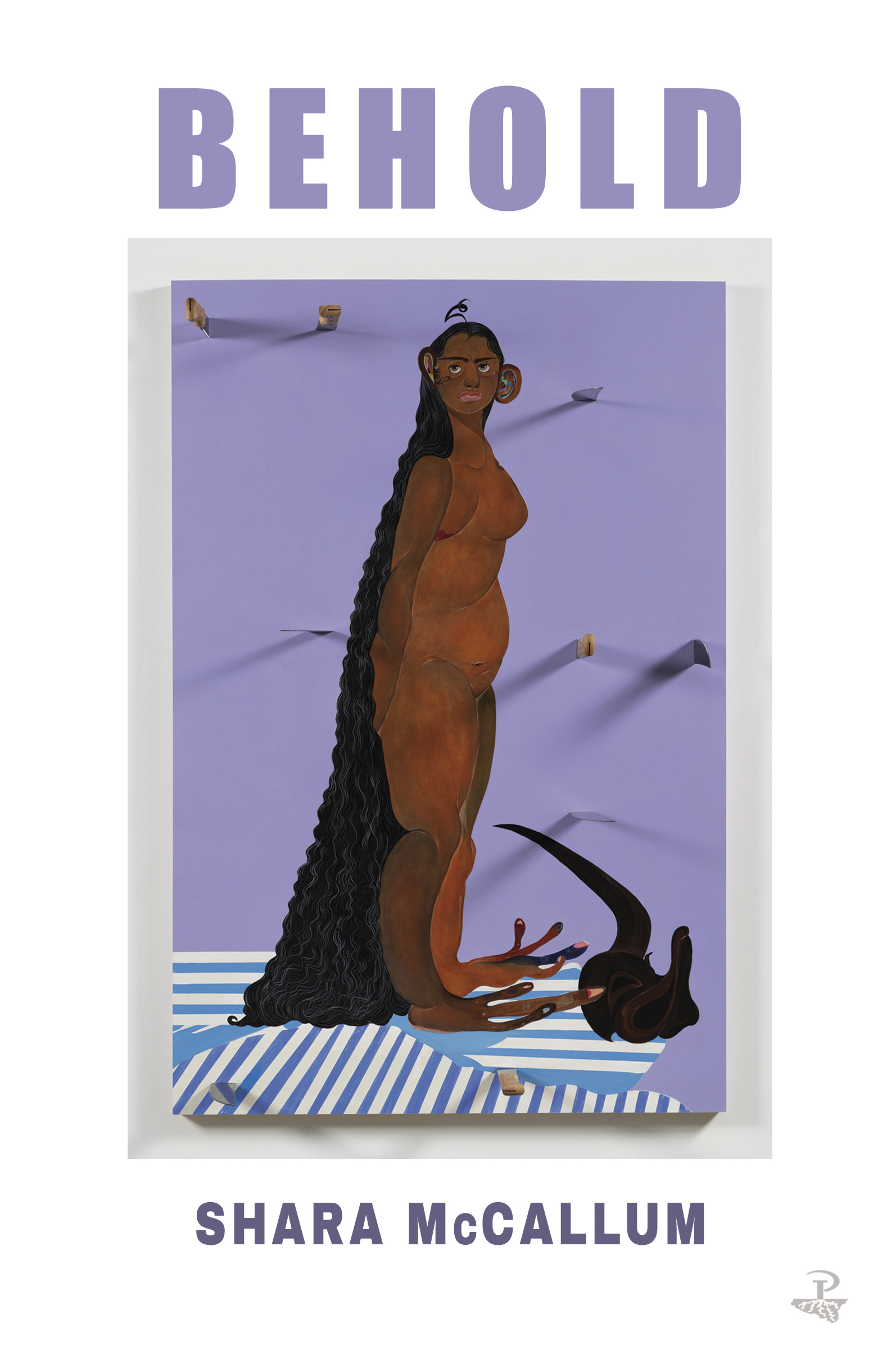
Shara McCallum’s Behold

Shara has a new book that she is sharing below, but her aspiration remains :

“To keep writing and growing as a writer, in formal measures and emotional veracity.””

“Behold engages with questions of how we see and are seen. Its formal framework is ekphrastic and, as such, it includes poems in response to specific artworks as well as poems and brief autobiographical prose meditations that reflect on the history of visual art and my relationship to that history. The book also returns to themes that have followed me &/or I have followed over the past thirty years: memory, identity, myth, the self, migration, loss, the desire for & impossibility of return.

“Like many poets, I’ve written ekphrastic poems over the years. I began thinking about the form more intently and expansively around 2022. From July 2023-April 2025, I visited museums in the US, Jamaica, and the UK with the explicit purpose of putting myself in front of works of art created by Black, Caribbean, Latin American, and Women artists.

Regarding the title, Shara says: “I don’t honestly recall, but early on it felt like the right word to capture the collection’s interest in trying to see what is in front of us and, too, with matters of the spirit.”

And she rightly notes, “Books of poetry tend to appeal to other poets. Beyond that, I hope the book might speak to art critics & curators as well as anyone who loves to make and look at art, which I hope is many of us.:

One such  poem from the collection invites us in:

                                    How Often Do You Return

Whenever I eat porridge or drink tea.

Whenever the refrain poor me Israelites sounds

and somehow calls up castor oil, gentian violet,

iodine, mercurochrome—all the remedies for all

that could possibly ail you my mother knew.

Anytime I meet someone whose ha-low

are the two syllables it takes for me to suss out

they too are every day returning, who like me

says fi true and yeah man yet keeps marvelling—

Yu really from Kingston? Everywhere I go

where I see a mountain, even lickle hill rising,

am nearish a river or semblance of sea.

Predictable, kinda pathetic. I get it. But true.

Just as when night plays the fool

and a half-way-sorta-warmish breeze sends

late-summer’s flowers climbing ladders of air.

Is so my mind trellises. Is so

trickery abounds, when our one heart

is ragged, and the other runs roughshod over it.

“And whereas the poem might be referencing a specific piece of art, it also  speaks to some of the movements of the time such as the recent Covid 19 and the Black Lives Matter movement.

“The moment I am living through in the US is both inside and outside the frame of the book but always present. As I say in one the end notes I provide on the artworks I reference in the book, I’m struck by how fortunate I was to be able to very easily see so many of the exhibits and art I saw in those two years of my travelling to museums while working toward Behold. In the time since Trump took office for a second term, countless art organisations have been defunded. Exhibits featuring artists like those I saw have come under incredible attack and many have been cancelled due to lost funding or curators fearful of retribution. Behold, in some ways, is a poetic gallery of what has been (temporarily, I trust) lost to our view.

Shara is well into her next project:

“I began an 18-month fellowship at the University of Leeds in late March and was in residence there for a month. I’ll return for a couple additional extended visits before the fellowship ends in August 2027. On my first visit, I spent time with the Peepal Tree Press Archives held at the University of Leeds’ Brotherton Library. I hope to write something—perhaps prose or a hybrid of poetry and prose—that comes out of my experience sitting with materials in those archives.

“I read far more than I write and often go months with just reading and taking notes, without the desire to finish a poem. I use a notebook still and write early drafts of poems by hand. After some time, I shape some of those drafts and other scribblings in my notebook into the poems I publish. The same process more or less holds for the essays I also write.

 Central to who I am as a writer-person, SHARA MCCALLUM states, “I need no persuasion to sing and dance, my early forays into art as a practice and enduring loves.”

                  A History of Colour

American Lawn, Alex Callender

Once leeched from lapis lazuli, now

chemically-derived, named ultramarine

blue, the most beautiful colour

is the one that doesn’t exist. The painter’s

pigments, her selection of synthetic tints hint

at the roots of cobalt, cerulean, and azurite—

opulent, lushly expressed in larger-than-life

asters and big blue stem and marsh cord grasses

overgrowing the field filling-up this canvas.

Close-ups of purple-blue flowers showcase

their black centres, massing a galaxy of stars.

Here and there, cyan blossoms erupt

into flame. The sky above all this modifies,

darkening the palette while hueing it mauve,

with dash-like strokes that conjure a meteor

raining down. Everywhere, there are

intimations of danger and grandeur,

an abundance of nature that feels utterly

unnatural. On an indigo river running

through this lurid lawn, colonial relics bob:

pages torn from an 18th century book

of botanic drawings, chipped teacups,

a submerged, disembodied plaster head.

All are phantom presences, haunting

the surreal landscape of history’s graveyard.

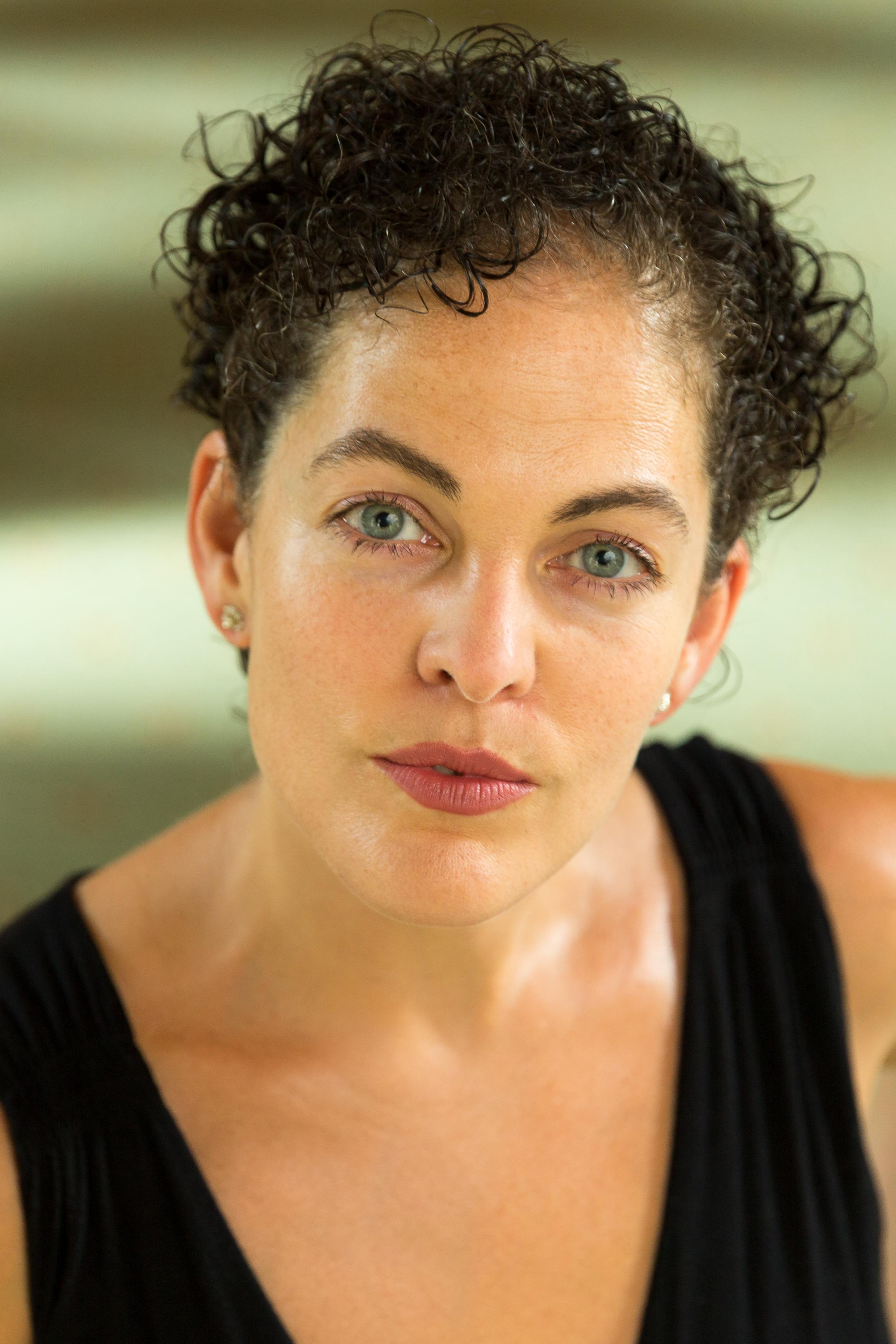
289292 (if cropped more)293300329 (if cropped more)330 (if cropped more)333347378418I am thinking close-ups are better, so lean toward the first, indoor shots, but maybe that’s because I can’t imagine what the others might look like if cropped so that they are more of a head shot.So if I’m picking just one non-smiling, I guess I’d say 300. And for a smiling (if cropped) then I’d go with 329. Let me know your thoughts too.

Demystifying Masculinities Through Art and Scholarship

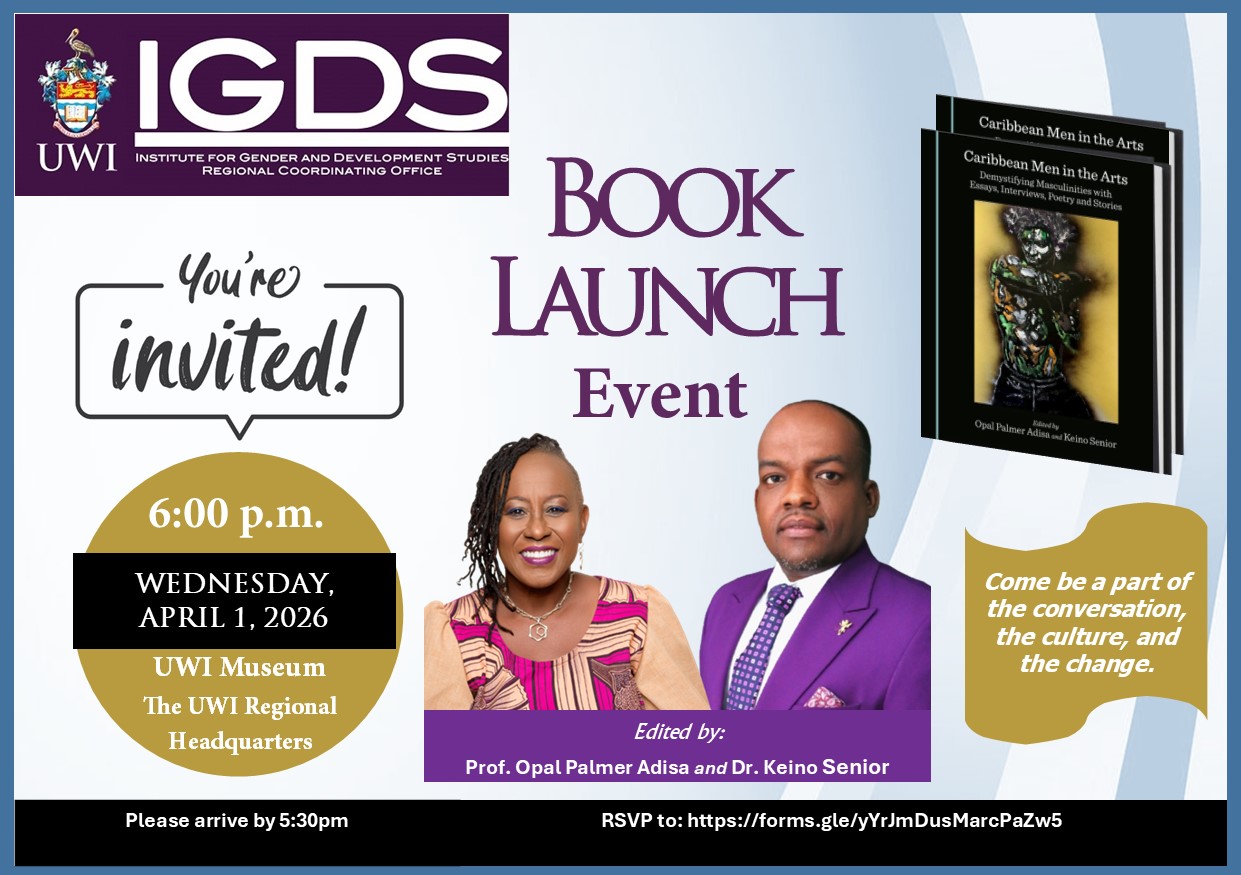
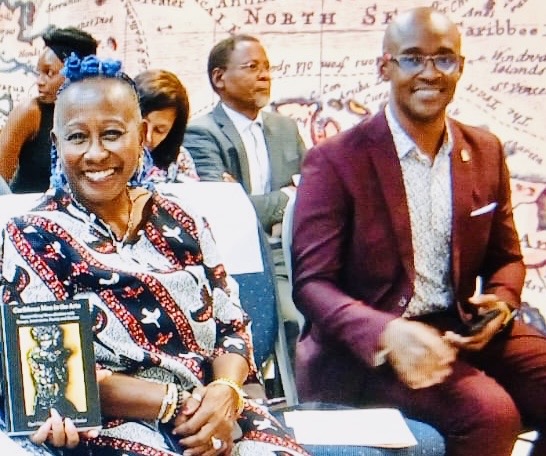
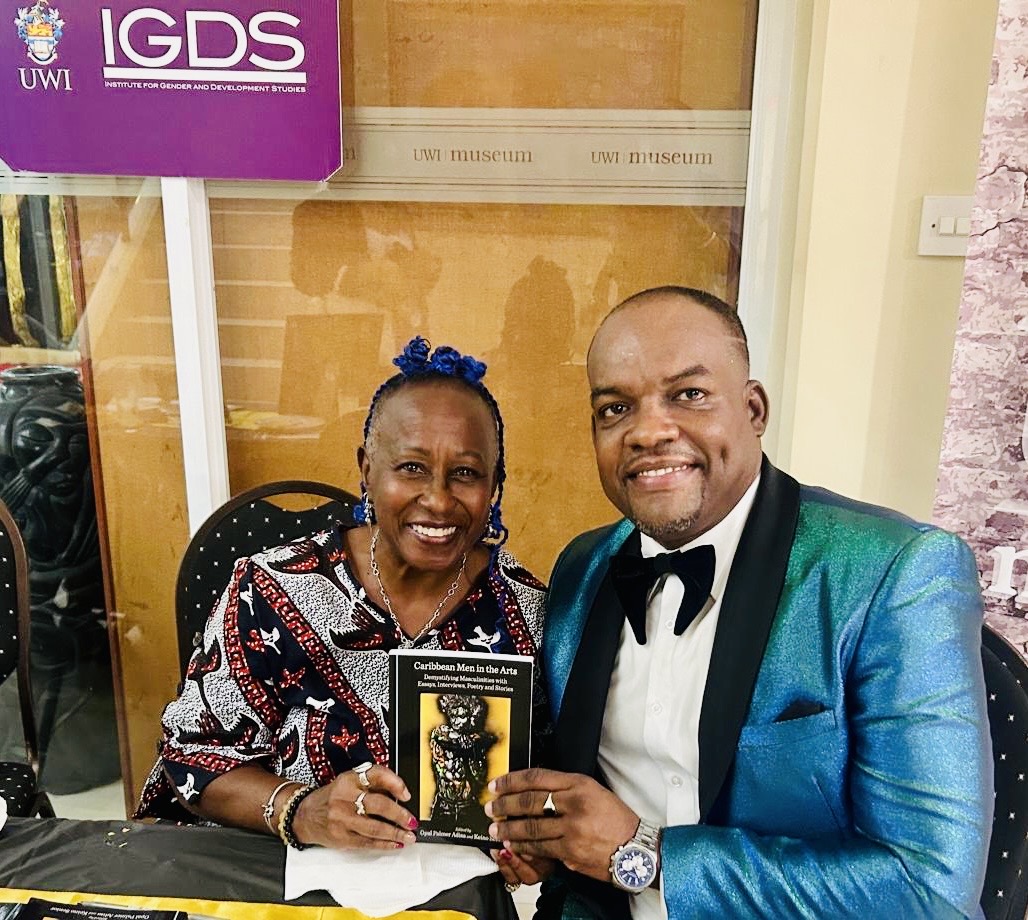
On Wednesday, April 1, 2026, the Institute for Gender and Development Studies Regional Coordinating Office, The UWI, hosted the official launch of Caribbean Men in the Art Demystifying Masculinities with Essays, Interviews, Poetry and Stories, co-edited by Professor Opal Palmer Adisa and Dr. Keino Senior. The event drew a packed and engaged audience, signaling the urgency and relevance of its theme.

This impressive collection features 39 contributors from across the Caribbean and its diaspora, bringing together essays, interviews, poetry, and short fiction. It stands as both a scholarly intervention and a creative exploration of how masculinities are constructed, performed, and reimagined in the region.

The launch itself embodied this blend of scholarship and lived experience. Remarks on the significance of the editors’ work were delivered by Professor Amar Wahab, Director of the School of Gender, Sexuality, and Women’s Studies at York University. Greetings were also brought by Sharon Coburn Robinson, Principal Director of the Bureau of Gender Affairs, on behalf of the Honorable Olivia Grange, Minister of Culture, Gender, Entertainment and Sport.

Dr. Senior, in his editorial response, stated that the book is a critical work challenging dominant Caribbean masculinities. Using a theatre metaphor, it explores how gender roles are performed and controlled, arguing for multiple, fluid masculinities. It calls on artists and scholars to reimagine, challenge, and create more inclusive, equitable expressions of manhood.

The evening was enriched by artistic performances, including a stirring musical presentation by Miss Sashekia Brown accompanied by Mr. Stephen Shaw-Naar of the Edna Manley College of the Visual and Performing Arts. Guest speaker Mr. Marlon Simms, Dean of the School of Dance at the same institution, offered a deeply personal reflection on masculinity, crediting a nurturing stepfather who allowed him emotional freedom and play, conditions that made his dance journey possible.

Additional presentations by contributors such as Mr. Amilcar Sanatan, Dr. Jahlani Niaah, and Miss Wendy Ann Brissett and Professor Opal Palmer Adisa underscored the range and depth of the collection.

At a time when Caribbean societies continue to confront high levels of gender-based violence, Caribbean Men in the Arts offers a critical and necessary intervention. It challenges narrow and often harmful constructions of masculinity that equate manhood with dominance, emotional suppression, and violence.

Instead, the book opens space for imagining multiple masculinities: ones that embrace vulnerability, creativity, care, and self-awareness. As such, it is an invaluable resource for tertiary institutions, secondary schools, and anyone committed to reshaping gender relations in the Caribbean.

The launch concluded with the symbolic presentation of copies to the University of the West Indies library, ensuring that this important work will be accessible to future generations of scholars and students.

Prepared by Professor Opal Palmer Adisa & Dr. Keino Senior

The Great Delusion, a play by Majekodunmi Oseriemen Ebhohon

The play, The Great Delusion, is a dramatic autopsy of white supremacy. I’m tired of the “trauma porn,” the stories of poverty, and the “White Savior” tropes that Hollywood loves to force on Black characters. I created a theory called Inversionism to flip that script. In The Great Delusion, Black intellectual life is returned to being the center of the universe, while the arrogance of white supremacy is reduced to an object of criticism and, frankly, ridicule. It’s a chronicle of Blacks moving from just surviving history to consciously reasserting their foundational roles in global civilization.

It came from the realization that white supremacy isn’t some grand, immutable truth, but a fragile, global hallucination. The “Great Delusion” is the lie that African history is a void or that our identity only exists as a reaction to racist aggression. I wanted a title that signaled a total psychological exit from that lie.

I worked on the play over several years. There were moments when it felt exciting and alive, and other moments when it completely exhausted me. One of the hardest parts was trying to hold together history, spirituality, politics, and human emotion without allowing the play to become preachy. Upon completion, it felt like finally laying down something heavy I had carried for a long time.

I believe this story is important because our storytelling needs a radical paradigm shift. I didn’t want to write another story about suffering. So I wrote this for the Black reader who is done being a victim and is ready to reclaim a heritage of ancestral glory. I wrote this for the African diaspora and anyone who is sick of exhausted narratives and wants to see Black dignity as the default setting. I wrote this for Black children who have for so long been denied examples of inventors, pioneers (true heroes) that look like them.

The last few years have been a pressure cooker. Living through the pandemic and the BLM movement laid bare how fragile Western systems really are. However it was the return of Donald Trump to the presidency that solidified the urgency of The Great Delusion. In the play, the character Deep, the white supremacist patriarch, is a metaphor of the arrogant, historical erasure that defines the current U.S. administration.

Trump’s presidency has been a masterclass in disinformation and the defacing of history. Seeing that play out on the world stage pushed me to focus on memory—specifically, who gets to control it and how we use it to render this entire supremacist paradigm culturally obsolete.

I am currently immersed in rigorous research of pre-colonial Africa. I want to write about our Golden Era, when we ruled and when Greek scholars traveled to our continent to learn at our feet. My goal is to remind the Black world of exactly who we were so that knowledge can inspire us to build a better tomorrow.

I’ve heard many writers say they start by plotting their story. I start with an argument. I spend weeks researching and walking, literally arguing aloud with my characters to stress-test their ideas. If a piece of dialogue can’t survive a real-world verbal confrontation, it doesn’t make it onto the page.

I want to contribute my part to the restoration of African intellectual and artistic confidence. I’m not interested in chasing trends. I want to build works that outlive me and uphold a permanent reclamation of Black moral dignity.

My creative process is deeply intertwined with my relationship with Ifá. I view my desk as an extension of the shrine and my writing as a form of divination. Before a character speaks or a plot unfolds, I am in constant consultation with the wisdom of the Odù, ensuring that every word I commit to the page aligns with ancestral truth. If you see me pacing or whispering to the air, I am not just “brainstorming”. I am listening to the guidance of the Orishas to ensure my work serves a purpose higher than mere entertainment.

Majekodunmi Oseriemen Ebhohon

Author, The Great Delusion

WhatsApp/Call: +234 (0) 9139208624

Facebook:

Instagram: https://www.instagram.com/instituteofea?igsh=MXJxdGRhd3FpaGI5Yw%3D%3D&utm_source=qr

MISSING PRE AND TEEN GIRLS IN JAMAICA

My head is pounding, my body stiffens as I stand in the line at the Company Office, and on the monitor see the listing of the number of girls who are missing in Jamaica. This is déjà vu, I think. This is not new just  a worldwide threat wearing a new name. We have changed the language from slavery to trafficking, but the machinery feels the same, the greedy exploitation feels the same, the taking feels the same.

I am pulled back to the end of 1979 when I moved to California to pursue graduate studies, and the children in Atlanta were disappearing. Twenty-nine of them stolen and murdered.  Gone!  Most were never found or bodies recovered. Mothers wailed  and pleaded into the night, while the city held its breath to suffocating. Everyone was riled up across the nation, and then Wayne Bertram Williams was arrested. The powers that be said the killings stopped, that it was over. But Toni Cade Bambara, the African American writer ,12-year research that resulted in her book, Those Bones Are Not My Child, 1999, and who was living in Atlanta saying no, the killings did not stop. What stopped was the pressure building in the community, the uprising that was about to demand more than a single answer for a collective wound. Something was quieted, not solved. Shift blame and attention and we go on, pretend there was justice, but knew deep down it was just another cover up.

So many poems I wrote about those missing children, chapbooks and even a one act play…Where now to find those testimonies?

Now here I am 40 plus years later, standing in a line in Jamaica, looking at a screen listing children, girls—12, 13,14, 15, as young as 10—missing. Missing like it is an ordinary word, like it is a misplacement, like they will turn up behind someone’s yard, or down a lane. Missing as if they are not being taken, as if they are not being moved through channels we refuse to name.

Why are we not being more mindful? Why isn’t  this being spoken about on the radio, on the television, in the spaces where we gather and listen? Do we understand the scale of what is happening, how our children are being stolen from us, not in darkness alone but in plain sight?

I hear the easy talk, the dismissal and denial : Is run dem run away.  Dem fast. Dem want big life. Dem hard ears and disobedient. The blame shifts, loudly, condemningly onto the child. Not to the home that may be fractured, away from the systems that fail, away from the networks that prey. We soften the truth so we can sleep at night.

But my heart is constricted. I am bereaved and bereft, and I cannot soften it. This keeps happening, in different forms, across time, across borders, but it is the same thing. The same greed. The same taking. The same exploitation.

I remember standing at rallies in California in 1980 and 1981, reading poems, calling for attention, for protection, for urgency. And now, here again, I am asking: what do I do? What do we do? How do we make people see what is already before us?

Wake up, Jamaica. Wake up, Haiti. Wake up, Trinidad. Wake up, America. Wake up, Africa. Look carefully. Look honestly. Do not dismiss it as children wandering off into their own undoing.

This is real. This is systematic. And what we refuse to confront will not disappear. It will return, it will widen, and it will haunt us all.

Kwame Dawes: “Turn to the alchemy of dub.”

Preamble:

“Love Affair with literature,” is an annually event hosted by the department of literatures in English at The University of the West Indies, Mona campus. The department  invites a prominent writer to read works that speak to the topic, whichever way the writer interprets the theme. The invited writer this year was none other than Kwame Dawes, with laudable accolades, which anyone can get from  the internet. I was asked to introduce him, and therefore, thought it would be a disservice to just read his biography since anyone could.  Instead, I decided  to personalize the introduction as I have known Kwame for  over 20 years.  Although not close, we have been engaging each other  in one capacity or another. Also, I wanted to  use his poems/word to introduce him; so here is my introduction of Kwame Dawes

“Turn to the alchemy of dub,” is, for me, an unforgettable line from Kwame Dawes’ poem Faith. Just that phrase alone tells us something essential about the poet we welcometonight.

To speak of dub as alchemy is to understand something profound about this Caribbean region we call home, and specially Jamaica. Dub music, born out of rhythm and experimentation, is indeed a kind of alchemy as it takes fragments such as sound, memory, slices of history, bass, and voice and transforms them into something larger, more grounding than their parts and that sits in the base of your stomach, well at least mine.  Transformative.

When Dawes names dub alchemy, he shows us something about his own poetic imagination: a deep respect and understanding for Jamaican creativity, for Caribbean ingenuity, for what our people have made out of centuries of movement, struggle, invention, and survival.

The first time I met Kwame Dawes was when I was invited to Calabash International Literary Festival, after my collection Caribbean Passion, 2004 had been published by Peepal Tree Press. I remember a brief encounter  a moment before my reading. One of the poems in the collection, “Bumbu Clat,” is about the cloth women used  to use when they had their menses before pads.  The title of the poem is said to be the worse Jamaican bad word, and just a few week before my reading, an artist was arrested for shouting the word out on stage. (Absurd, but colonial ideology still rules and bumbu clat and other such words were still on the legal books, and punishable). Nonetheless I was determined to read the poem and I did. However, I remember asking Kwame just before I went on stage, if I could be arrested for reading the poem, hence cursing a Jamaican bad word at a public event. Needless to say I didn’t get arrested.

But that was not my first contact with Dawes, I remember getting an email from him, requesting an interview for his anthology Talk Yuh Talk: Interviews with Anglophone Caribbean Poets, which was published in 2000. I remember him calling me to make plans for the interview.

Since then, I have watched his career unfold; a career that stretches across continents and institutions, across poetry and teaching, across publishing and cultural leadership.

His tag line is “the busiest man in literature,” which makes him my twin in this regard as I regard myself as the busiest woman in literature. We are both hard workers.  Perhaps you don’t know that Kwame is the day name for a boy born on a Saturday in  Ghana where almost every child has a day name.  My day name is Ama. The nursery rhyme about children born on specific days says “ Saturday’s child works hard for his living, so Kwame’s success must be measured against his hard work.

But busyness alone does not define Kwame Dawes, who is a man with a clear mission to create space for others and to build platforms.

Dawes’s objective is  to ensure that poetry does not live quietly on a shelf but circulates through communities and across borders.

In another of his poems, Stray Paths, Dawes writes:

“This is the desire I carry
the moment of being announced
followed by the golden silence
of my presence.”

I believe that those lines aptly describe Kwame Dawes who is both public and private at the same time. A man whose work travels everywhere, whose presence is felt across the literary world and yet who carries within himself that quiet interior space where the poet lives.

The place where ideas are constantly turning and where imagination never rests.

If there is one thing you should know about Kwame Dawes, it is this: He is always thinking, always imagining the next possibility for poetry.

And through that restless imagination he has created something remarkable, and  has forged a path for himself and for others.

We see that mission in the co-founding of Calabash International Literary Festival, which has become one of the most important literary gatherings in the region.

We see it in the African Poetry Book Fund, which has opened doors for poets across Africa.

And we hope to see it continue to unfold through the Caribbean Poetry Book Series that bring Caribbean poetry more fully into the world’s literary conversation.

Because poetry, as Kwame understands it, must not only be written; it must be sustained, supported and given a platform to breathe.

Kwame Dawes shows us that poetry can be organized, nurtured, and even , dare I say it, monetized to build ecosystems where poetry can live and grow.

There is a stanza from Dawes’ poem, “Marked” that seems appropriate to conclude this introduction. Dawes says:

 “The poet must weep
when he returns, his linen
garments brown with the blood
of promise, his feet sticky
with the spilled blood of despair.
A soh it go.”

“The poet must weep when he returns.”

Perhaps that is where we recognize ourselves most deeply.

Because to be a poet in this time  and in this world is to carry both vision and grief.

As a poet, I weep every day for my island. I weep for my people. I weep for the world. I weep for a future where there will be less inequality, less gender-based violence, less child abuse.

But maybe, just maybe,  “a soh it go,” will be said not as a throw away but as an affirmation.

Because poetry reminds us that another way of imagining the world is always possible, including supporting our cousins and nearest neighbours, Cuba

And that is why the work of poets matters. That is why the work of Kwame Dawes matters.  He continues to turn again and again to the alchemy of dub, to the transformative power of language, rhythm, and imagination.

To launch his Poet laureateship this year he has continued and expanded the Edward Baugh Prize for adult writers from Portland, St. Thomas, Kingston and St Andrew; the Louise Bennett-Coverley Prize for adult writers from St. Catherine, Clarendon, Manchester, Trelawny, St. Ann and St. Mary; and the Michael Cooke Prize for adult writers from Hanover, St. James, Westmoreland and St. Elizabeth.

Kwame Dawes says, “For me as a poet and as the Poet Laureate, I see it as an opportunity to see what people are thinking, what they’re feeling, and how they’re writing those feelings. It is a way to promote part of our culture, the construction of a way of seeing the world through this creative mechanism.”

Brothers and Sisters, let’s welcome Kwame Dawes, Jamaica’s current Poet Laureate.

The Fornicating Lizards

Excuse the preamble, but context is everything.

I live in rural Jamaica, where the air is alive, the soil is generous, and the house, my home, is apparently open to free accommodations by all manner of creatures. I love plants, and because I love plants, I have plants in every room,  including the bathroom. Admittedly, my home is a lush and welcoming environment, a sanctuary, a botanical embrace especially for the myriad species in the environment.

It is also, I have come to understand, a lizard/Anole resort. No negotiating.  No advance schedule notice or invitation.

There are many lizards. Anoles, mostly, quiet, watchful, generally well-behaved tenants, if one ignores their calling cards, those tiny black droppings that appear as if signed, sealed, and deliberately placed to test my patience. They live behind my art work on the walls, and I have many pictures, so naturally, they have many apartments.

We coexist.  But coexistence requires boundaries. And I have made my boundaries clear. Repeatedly.

I speak to them. Yes, I do. I am in constant conversation with all living things. I have told the lizards, calmly and with authority: Stay out of my bedroom. Especially the croaking ones; I cannot abide that incessant, rubbery sound at night. And stay out of my kitchen. ost importantly: Stay off my table.

This is not unreasonable.

So imagine! Really, truly, truly imagine my consternation when I entered my kitchen and found not one, but two lizards engaged in full, unapologetic, midday fornication on my table.

On. My. Table.

At first, I saw only the male. A big brown fellow, rather bold, with little dots on his head, as if he had dressed up for the occasion. He was animated. Committed. I moved to shoo him away, already offended by his presence, when I realized… Oh no. This was not loitering. This was an event.

Beneath him, the female, small, half his size, likely minding her own business until he decided that my table was the appropriate venue for romance or a quickie!

Now, let me be clear: I do not object to their frolicking. Nature must and do propagate. The dogs do it in the yard, in the road, with an enthusiasm that borders on civic performance. Privacy is not a universal value.

But my table is not a public square.  My table is not a nightclub.  My table is not a lizard love motel.

I had to act.

I raised my voice, invoking my authority. I brought my full ancestral displeasure into the room. I told them firmly that this was unacceptable behavior. That they had violated sacred space. That they were out of line. Grossly. Spectacularly out of line.

Then I intervened physically.  I brushed them apart. They scattered, skittered, scrambled up the wall in what I can only describe as a very undignified retreat, and escaped outside.

But I was not finished.  I addressed them as they fled,  issued a warning, a final notice.

I informed them that while I had shown mercy this time, I would not be so kind again. That I possessed a bottle with a formidable concoction of lavender and vinegar, originally designed to deal with flies (and let me tell you, with seven chicken farms in the vicinity, the flies are legion), but one that could very easily be repurposed.

I made it plain: Do not test me.

Now, I do not know if it was the male who instigated the situation, but I have my suspicions. There was a certain audacity about him. A brazenness. A disregard for protocol.

So I find myself still asking: what kind of creature enters someone else’s home, surveys the environment, and decides, “Yes. Here. On this table. This is where I will express my desires/lust/urges”?

The answer is: a lizard.

So we continue, the lizards and I, in this uneasy coexistence. They behind the pictures. I at my table. Boundaries drawn. Terms stated.

But should they forget themselves again, should passion overtake judgment and lead them once more onto my table…Well!!!

The lavender and vinegar will be waiting.

Fern Gully & Its Face Sculptures

As a child growing up, ferns burrowed our veranda, so I guess it was natural that my mother’s love was transferred to me.  However, ferns are not just decorative they are biofertilizer that helps with restoring the health of soil as well as preventing erosions and creating habitats for birds and other wild life. If you come to my yard, you will see ferns everywhere.

When I was about eight years old, my mother bought herself a car, a blue Ford Anglia, taught herself to drive, and got her license. I accompanied her on many of her self-taught lessons, so when she passed the driver’s licence exam on the first go-around, I celebrated her victory by jumping up and down and hugging her around the neck. Many of the men in the community had said she would not pass, but my mother had plans and did not take on any of those men, determined to be independent.

Thereafter, at least once a month, she would drive us from Caymanas Estate, St Catherine to Montego Bay, St James (literally across the island) to visit her sister and other relatives, and we would also go to Jericho to see our grandmother. In those early days, just after independence, my mother was one of the few female drivers on the road, and when men on the road tried to race her, she showed her skills, much to the amazement of many of them.

Naturally, at that time, there was no freeway. We drove Flat Bridge, then through Fern Gully, which became one of my favourite places. I loved the lush dampness and always thought of it as a womb, nature’s best shelter. My mother, too, loved ferns and Fern Gully, and a hush would descend inside the car as we drove through the three-mile stretch, which my mother said had the most varied species of fern anywhere in the world, reportedly 300 different types

I have to confess that my mother often stopped and snipped pieces she did not possess. The earthy smell, the artists selling crafts, the womb-like enclosure and luxuriance have made a lasting impression. So when I had children, I made sure to drive them through Fern Gully. However, the erection of the highway cuts off and bypassed that extravagant beauty,  so I have not driven through in a long time, until last week.

Although still magical, Fern Gully is not so lush as before and I seriously doubt the different species of fern left. From Hurricane Melissa, trees have fallen, but what is sadly clear is that the government has not ensured the preservation of the beauty of this place, which should be a world heritage site, a tourist destination, and a field-trip excursion for students to learn about the value and uses of fern. Fern Gully is a historical and ecological site that should be preserved for us as a safeguard against soil erosion and a habitat to birds and other wild life.

Many might not know that ferns serve many purpose and are extracted for lotion and baths. There has been and continues to be extensive research being done, and herbalist recommends ferns both internally as tea for cough and fevers and for external uses to treat skin diseases such as itching, rashes and even eczema.

However, my recent visit was prompted by an article I saw by photographer and archivist Donnette Zacca, discussing the wall sculptures of Arthur Alexander, who is now dead, having disappeared a few years ago. I did not remember those carvings, and I wanted to see if they still existed, and they do!

Almost at the end of Fern Gully, before you enter Ocho Rios, on the left-hand side, are the sculptures carved into the rock by a man known as Arthur Alexander. These sculptures are fading, but they are still there, and an effort should be made to preserve them and a plaque placed in his honour.

No one seems to know what happened to Alexander, but I am simply thankful for this man and the tremendous work that he has left as his legacy, doing what humans have always done across time: carving into rocks, giving shape to what is available, leaving an indelible mark.

I invite travellers and motorists to skip the highway and head to Ocho Rios via Fern Gully. Observe the ferns, and you will notice that your breathing slows, you feel more relaxed, and your heart begins to smile. Stop towards the end of the gully; there is a safe place for cars to pull over. Inhale. Extend your arms.  Look up! Observe keenly and notice how many different species of fern you detect. Stand there for a while and relish the sight, the sounds, the smell, and look closely at Arthur Alexander’s amazing facial sculptures.

Really look at these faces carved into stone. He was not commissioned. He was not paid. He was an artist, working from instinct, from vision, from something deeper. And he did this on his own. I want to remember him. To immortalize him. To thank him for showing us that art, in all its forms, is a testament to who we are, what we are, and what we are capable of.

I appeal to Minister Grange, of Culture, Gender, Entertainment and Sport, to preserve and protect, and to apply whatever care-treatment or facing is needed so that these carvings do not disappear. Also, let’s restore Fern Gully to a national site that can still boast 300 different species of fern.

Long live and Bless Up Fern Gully and Arthur Alexander.

MY MOTHER WAS WHAT LEADERSHIP OUGHT TO BE

Keynote  delivered for the Soroptimist International 63rd Charter Anniversary, Kingston, Jamaica, February 23, 2026

Good afternoon, ladies.

I am so happy to be here. So happy to see you.

You are all leaders.  Thanks to each of you for giving of your time and skills to such worthy causes that help to strengthen and support many women and girls throughout this society.

I am honoured to be here to celebrate the awardees Dr. Christine Fray, recipient of The Grace Allen Young Award and Vice Admiral Antonette Wemyss-Gorman, recipient of The Stella Gregory Award for Excellence. These women, like each of you  exemplify leadership.

As I stand here today and look out at you,  Louise Bennett’s  “Jamaica Oman” poem comes to mind.  Allow me to recite the first stanza:

            Jamaica oman cunny, sah!

Is how dem jinnal so?

Look how long dem liberated

An de man dem never know!

This stanza speaks volumes, especially if we pay attention to the adjectives, cunny and jinnal, which means shrewd and the ability to outsmart and get over any situation. But this is just a preamble to where I want to begin.

I want to begin by telling you my story.

I was born from between a woman’s thighs.

There is no metaphor more powerful than that. No leadership seminar more profound. No boardroom more sacred.

I was born late on a Saturday night. My mother had just finished ironing. She said she folded the last shirt, and then her water broke. There was no dramatic rush to a private hospital. I was delivered at home by a midwife, my mother’s best friend, a nurse/midwife who worked at Kingston Public Hospital.

My mother was 25.

Young. Brave. Married.

But my father was not home. He was out drinking with his friends.

It is said I came early but the truth is I came because I was ready. My mother was ready and so was the midwife. My safe birth happened because two women co-lead and ushered me into the world.

That is the greatest form of leadership.

There is an old saying:

“Water is fluid, soft, and yielding. But water will wear away rock, which is rigid and cannot yield… What is soft is strong.”

My mother was soft.

And she was one of the strongest human beings I have ever known.

She is the measure by which I understand leadership.

Her name will not be found in history books unless I put it there. But she changed lives. She changed policies in small rooms to make conditions for cane-cutters at Caymanas Estate  in the 1960s better. She shifted outcomes in kitchens and clinics, by teaching house wives stuck at home facing abuse, skills that gave them economic freedom. She raised children who whom she infused with social commitment and who would not bow.

So before i go any further, I want to pause.

I want each of you to think of a woman you know, a woman who leads, but whose name may never be printed in gold letters or appear in any history book unless you write it.

Because leadership is often mismeasured.

In the wider world leadership is measure it by titles, or offices or applause.

But leadership is not just position.

Leadership is responsibility.

Leadership is integrity.

Leadership is who shows up when things fall apart, and we know all too often it is us women who show up for our children, for our communities  and for each other.

When we speak about leadership, we often list its qualities:

Integrity and honesty  which translate into acting ethically to build trust.
Communication and listening which implies truly hearing people.
Empathy and emotional intelligence  which is understanding the emotions in a room before speaking, feeling who is present and working to touch those persons.
Then there is accountability, which is often challenging as it means taking ownership of mistakes, owning them and not shying away from saying I was wrong and I apologize.
Without Vision there is no leadership, as a leader must be present abut also able to see beyond today’s crisis to arrive at solutions.
Leaderships is also about Empowerment lifting up others.
Being Resilient which requires bending without breaking.
A leader is Confident and able to Make Decisions that will benefit the majority.

If I placed my mother against that list, she would stand tall. She demonstrated these qualities, but she is not listed in any history books, and more likely neither are any of the women you thought about earlier.

And here is the irony.

Jamaica has the highest proportion of female managers in the world , over 59%, according to the International Labour Organization.

We lead. We show up.  We give of our time and energy.

However,  globally, women make up only about 5% of CEOs of the largest corporations. In Latin America, that number once hovered below 2%.

So what does that tell us?

That women lead daily, but not always where “power” is most concentrated.

So when women do rise to visible leadership, we applaud them, like we applaud Vice Admiral Antonette Wemyss-Gorman, the first woman to achieve this level of success in what is considered a male-dominated field.

We applaud Portia Simpson-Miller, Jamaica’s first female Prime Minister, for being tallawah.

We remember Sirimavo Bandaranaike, the first female Prime Minister in the world from Sri Lanka.

We recognize Mia Mottley in Barbados, and women across Denmark, Italy, Latvia, and beyond, who have ascended to the highest office in their respective countries.

But I want to ask a crucial question.

Are women leading differently? Vice Admiral,  I put you on the spot – are you leading differently?

Are female leaders inheriting the same systems and performing the same scripts as their male predecessors?

I hope not because I do not simply want a woman in power.

I want a woman whose leadership is transformative.

Nurturing.

Inclusive.

Rooted in equity and fairness, rooted in compromise when necessary for the greater good.  We have had enough flexing of muscles.

We do not need more wars. We do not need more dissension. We do not need more division.

We need leadership that understands soil and sea.

Leadership that understands that Hurricane Melissa was not an accident. It was the result of years of extraction, dumping, neglect. Years of ignoring warning signs.

If we do not pause and take responsibility, we will meet another Melissa by another name.

And so leadership must extend beyond the binary.

It must extend beyond ego.

It must extend beyond short-term gain.

Because I have a grandchild, Quetzilla, that means light feather.

And I want to believe I am helping to create a world worthy of her.

The world will continue to test women, especially women leaders.

And here I hear the voice of Maya Angelou whispering:

“You may encounter many defeats, but you must not be defeated…” The women I saw washing clothes at the river in Hanover a month after Hurricane Melissa, with their children wading and playing in the water ere not defeated.

Although, sometime leadership requires defeat.

It requires failure.

But as Oprah Winfrey reminds us: “Failure is another steppingstone to greatness.”

Here in this room is greatness, each of you, and leadership. And it is because you have failed many times why you are sitting here today celebrating.

The triumph cannot be had without the struggle, says Wilma Rudolph, who became the first American woman to win three gold medals in a single Olympic Game in 1960 after overcoming polio.

She knows. She had to overcome and sometimes look through many struggles to succeed.

Leadership is not pretty.

It is not polished Instagram posts.

It is often sewage systems fixed.

It is roads maintained.

It is children in western Jamaica who still sit in tents months after the hurricane to learn.

Leadership ensure that electricity is restored and clean water is flowing in schools, clinics and hospitals.

It is not looking away when we drive past garbage piled high and pretend not to see.

Where is the leadership that will make this island clean and beautiful , not once a year at Christmastime, but daily?

Where is the leadership that refuses to falter to support its neighbour, Cuba that has always supported us?

And here, I turn to Angela Davis to remind myself:

“I’m no longer accepting the things I cannot change… I’m changing the things I cannot accept.” What are the things you can no longer accept that you will help to change?

That is leadership.

Leadership says: I refuse to normalize dysfunction.

Leadership says: I refuse to accept inequity.

Leadership says: I will not waver.

But here is the truth that may unsettle us. We cannot rely only on leadership from the top.

Leadership must rise from the base.

Each of us is leading directly or indirectly, and others are watching, observing.

How do you lead your family?
How do you lead your friends?
How do you lead your church?
How do you lead your community?

You know, if we are waiting for someone to rescue us, you will be waiting a long time, and it means you have misunderstood power.

Don’t sit down and wait for the opportunities to come. Get up and make them.

That is not just motivational language. That is civic instruction.

And when doubt creeps in, and it will, remember Wilma Rudolph who said:

“‘I can’t’ are two words that have never been in my vocabulary.”

Leadership begins in vocabulary.

It begins in what we permit ourselves to say.

Cicely Tyson once said:

“Challenges make you discover things about yourself that you never really knew.”

And leadership is a series of challenges.

Ella Fitzgerald reminds us:

“Just don’t give up what you’re trying to do. Where there is love and inspiration, I don’t think you can go wrong.”

Love.

Not ego.

Not dominance.

Love.

So today, as we honour women, as we honour a woman leader, I celebrate her.

But I also invite her, and all of us, to examine the kind of leadership we practice and the type of leadership we applaud.

Does it serve the majority?

Does it protect the vulnerable?

Does it understand that we are no better than the soil beneath our feet?

Does it understand that leadership is not about the individual; it is about the community?

My mother understood that.

She did not have a podium.

She did not have a press conference.

But she had integrity.

She had accountability.

She had vision.

She did not falter. She worked hard with others and help to bring about important changes.

That is the standard. By which I live and judge effective, impactful leadership.

So as you leave here today, I do not want you merely applauding women in power.

I want you reflective.

I want you asking:

What kind of leadership do I model?

What kind of leadership do I demand?

What kind of Jamaica do I want my grandchildren to inherit?

Because leadership is not a title.

Leadership is a practice.

Leadership is daily doing.

Leadership is soft and therefore strong. Like water.

And if we are fluid, if we are soft, if we are yielding in wisdom but firm in principle we will wear away what is rigid and unjust.

We will shape this country.

We will shape this world.

And when history looks back, it may not record every name.

But it will record the shift.

And perhaps, somewhere, a young girl will say:

My mother was what leadership ought to be.

And she will rise.

And we will all rise and take our places.

Salute to women leaders!

Asé

Thank you.

Seeing What We See and Allowing Others to Help Us See More Closely

I had the pleasure of having breakfast with Donnette Zacca, one of Jamaica’s leading photographers. It was in her backyard, beneath the almond tree, light filtering through green like a whispered benediction, the sun warming my shoulders and the trickle of the water quieting my galloping thoughts. There was a fountain there and in the course of our conversation Zacca said, almost casually, that she had made it.

DONNETTEZACCA

As a photographer  (I too do photography) I know that light is everything. Light is revelation. Light is confession. Light is an open door, a path and a gift. Light is the difference between seeing and knowing.

At one point she moved my chair. Gently, deliberately.
“I want you to look at this,” she said.

It was the fountain. The woman who was the face of the fountain.
“Look at her. And tell me what she evokes.”

I have always believed that objects and things talk if you listen closely. This is not madness. Or perhaps it is the madness of the artist, that holy disturbance that insists the world is speaking. It was a profound experience and reminder for me.

As I watched the woman:  stone, water, plants, silence, I heard  her saying very clearly that she was beginning to see the light and that the greyness was lifting. I felt it almost physically, as if the greyness was rising from her chest up to her head, dissolving into the air. She was coming to recognize the light in herself and the light she brings.

And even though she had long worn a crown on her head, she had not recognized her queenliness.

Perhaps she was speaking.
Perhaps it was me speaking about myself.

Perhaps it was Donnette speaking through her into my head, forcing me to see, to really see.

Zacca spoke about how she loves the light from the sun under the almond tree in that amazing garden she has made; how she spends countless hours, days, weeks, maybe years taking images of the flowers in her yard from different angles, simply to see how the light plays with them. How the light tickles and arouses them. How the light transform them. Zacca is clear, ‘I witness the way light touches petal, leaf, stone, skin.”

It was a profound exercise in seeing and in giving voice to what you see. And I think how this guidance is so important to children, helping them to see, to open their eyes and their hearts. and see.

I think this is what artists do. They allow you, and sometimes they force you to see beyond what is visible. To hear what you are seeing. To understand that sight is not passive; it is participation. It is moving outside your head into your heart.

As an anarchist, as a writer, as a photographer, Zacca talks about the storytelling element in her photography. Anyone familiar with her work knows this. And certainly, as a writer of poetry and prose, I understand that impulse. My last adult collection, The Storyteller’s Return, is about seeing Jamaica after being away for a long time and asserting that storytellers are always present in our environment. The land remembers. The streets speak. The trees testify. The people expound and explode.

So when Donnette invited me to look at the light, to see how it reflected and played upon the statue she created, a statue she often uses as meditation, she was not simply offering another lens. She was offering an invitation, and gifting me another lens through which to see.

 And I am sharing it because it is an invitation for all of us.

To see what is in front of us.
To hear what is in front of us.
To understand that the environment and the objects around us are witnesses.

Even though they are supposedly inanimate objects, they reflect, diffuse, and project their own stories onto us. They wait for our attention. They wait for our humility.

If we listen.
If we look keenly.
If we allow someone to move our chair.

So I want to Big Up Donnette Zacca, whose work I very much appreciate.   Ithank her for reminding me what seeing is and how necessary it is, in this distracted world, to truly see what is already present in our environment.

Because sometimes the light is there all along.
And we are simply waiting for someone to say,

Look again.

Will Jamaica, the Caribbean, Africa, and the World Stand By and Allow Cuba to Die?

There is hardly a country in the Caribbean, including Jamaica, that has not benefited from the generosity of the Cuban people.

More than 500 Cuban doctors currently serve in Jamaican hospitals and clinics, many in rural communities where access to medical care would otherwise be limited or non-existent. Across the region, Cuban medical professionals quietly and consistently save lives. Through programs such as those of the Henry Reeve International Medical Brigade, Cuba has also sent doctors to assist nations in times of crisis, from the COVID-19 emergency in Italy to outbreaks and disasters in Africa and Latin America.

Cuba has trained Caribbean students in medicine for decades. Jamaican doctors have studied at the Latin American School of Medicine in Havana and returned home to serve their communities. In Africa, Cuban doctors and teachers have worked in countries such as Angola, Mozambique, and South Africa during some of their most difficult periods.

This is not a political argument about communism versus democracy. It is a humanitarian appeal.

Today, ordinary Cubans, elders, children, families, face severe shortages of fuel, food, and medical supplies. The long-standing embargo imposed by the United States continues to affect daily life in profound ways. Regardless of one’s political position, the human cost is undeniable.

The question before us is simple: when a neighbour who has repeatedly come to our aid is in distress, do we turn away? Do we pretend as if we have not benefitted from their generosity?

Humanitarian assistance is not an endorsement of any government. Providing fuel so hospitals can operate, medicine so children can receive treatment, and food so elders do not go hungry is not ideology ; it is reciprocity. It is solidarity. It is humanity.

Jamaica sits less than 100 miles from Cuba. Our histories, cultures, and futures are intertwined. Across the Caribbean and Africa, thousands are alive today because Cuban doctors showed up when others did not.

If we believe in justice, in fairness, in shared humanity, then this is a moment to act with moral clarity. Governments can debate policy. But people of conscience must insist that humanitarian corridors remain open and that aid reach those in need.

We must not allow ordinary Cubans to suffer in darkness when they have brought healing and light to so many of us.

This is a call  to Caribbean people, to Africans, to Europeans, to all who believe in human dignity to stand for compassion over division.

Let us be a blanket for Cuba in its hour of need.

Let us respond not with politics, but with humanity. Help Cubans to live.