
oo
Published:Sunday | August 11, 2019 | 12:30 AMOpal Palmer Adisa – Contributor

“Freeing yourself was one thing, claiming ownership of that freed self was another,”
-Toni Morrison
Any writer over the age of forty who is worth his/her weight in salt knows of Toni Morrison’s works, and probably would say that one or more of Morrison’s texts inspired their development as a writer.
I was but a teenager when I read The Bluest Eyes in 1970. On that first reading I was not yet fully versed in American history and the tremendous struggle of African Americans to achieve equality and restore their dignity. But it was the ‘70s, and the Black Power Movement was still strong and had spread its energy throughout the world. My older brother introduced me to the works of Stokely Carmichael aka Kwame Ture, Sam Greenlee’s The Spook Who Sat By the Door, et al.
But in 1971, when we immigrated to New York, and while completing high school, an African American teacher who detected my love for literature opened the world of Black writers to me, introducing me to Jamaica’s own Claude McKay, one of the seminal writers of the Harlem Renaissance Langston Hughes, and suggested the book of the new writer, Toni Morrison, whom she said had Jamaican connections; and who was “a writer to keep an eye on as I think she is saying something.”
Well, Morrison’s connection to Jamaica was through marriage to Harold Morrison, a Jamaican architect, in 1958, that produced two sons, Harold Ford and Slade Kevin. Although the marriage ended after six years, Morrison, being the consummate historian and mother of two boys would research the history of our island. I suspect her reading about Maroon Nanny and the long, rebellious spirit of Jamaica would inform some of her other works, specifically her most acclaimed, Beloved, 1987, and the character Sethe.
Toni Morrison in earlier interviews about her Pulitzer Prize, American Book Award, and ultimate Nobel Prize book, spoke of the common practice of infanticide among enslaved women who refused to have their children subjected to the life of slavery.
She would have read Lucille Mathurin Mair and other Caribbean and African-American women scholars who wrote about this practice. Morrison’s works explore thorny areas, and her writing forces readers to look at those dark moments in our history and development. But, mostly, I would say, her work is about survival, riding the waves of the storm, being tossed hither and tither by the waves, being pulled under, but fighting your way up and out, and gulping for breath… water strangling your throat.
INFORMS MY WORK
Toni Morrison’s novels and essays will continue to inform my work and my teaching. Her young adolescent novel, The Bluest Eye, is very relevant today in the Jamaican society as it was when published in the 1970s. Its theme explores self-hatred as a result of colonialism and white supremacy. The protagonist, Pecola Breedlove, a pre-teen girl, stained by poverty, sexually abused, believes she is ugly. Pecola believes she can only be pretty if she has blue eyes like white girls. This is similar to the pervasive belief that many young Jamaicans now harbour, and as a result, are bleaching their skins, believing that whiteness connotes beauty and acceptance. What Toni Morrison wants all our children to know and believe in the fullness of their hearts is that “you are your best thing,” as she so aptly states.
The themes that Toni Morrison explored throughout her works, her vision for the triumph of Black people, her excavating of the pains that have lacerated and kept us imprisoned, and her flight to freedom through an understanding and connection with our ancestors and our nascent spirit, are characteristics that will make her work continue to be relevant forever and that grounds her work in Jamaica’s journey to being a great nation.
Born Chloe Ardelia Wofford, February 18, 1931, Toni Morrison died on the eve of Jamaica’s Independence, August 5, 2019, leaving us a treasure trove of novels and essays that should be required reading. She believed in the importance of community and working to make it a strong base of support.
She was a staunch advocate for freedom, physical, but more so mental and emotional freedom for black people, and she always asserted that “the function of freedom is to free someone else.”
As we continue to celebrate this Emancipation/Independence period, Toni Morrison’s work has much to teach us about how to walk a new walk by healing the scars and keloids of our enslavement and colonial experience so all of us as Jamaicans can truly experience and live our independence through love and restoring cohesive, safe communities.
Opal Palmer Adisa is university director of the Institute for Gender and Development Studies, (IGDS-RCO), University of the West Indies.


 My mother was a Christian, an Anglican when I was small and she insisted on us going to church and Sunday school, then she went back to being a Baptist, when I was in my teenage years, as she was reared.


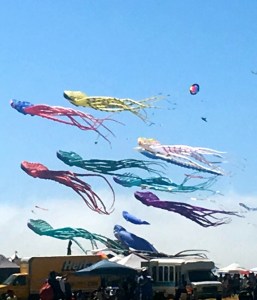 I was in Berkeley last week and caught the end of the Kite Festival. This is a wonderful family event to witness the amazing array of kites take over the sky and share the excitement of the kite-fliers, of all ages, and the wonder-gaze of the children.
 forming to become winged.
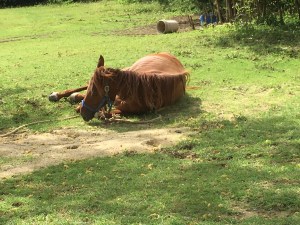 Down the road, the horses are horny. As I begin my walk I watch them sniff each other then the males mounts the female until she shakes him off.
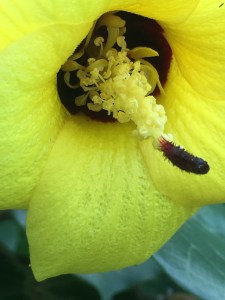 The swarm it. They have been frisky and lost, flitting everywhere, seemingly confused in search of the queen or a hive. Death might be eminent as the pollens swirl in the wind and the petals fall to the ground. Love is like that sometime — it hits rock bottom then soars. Figures!
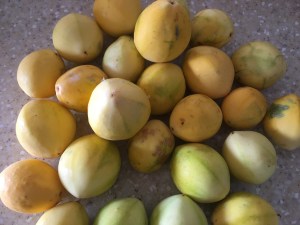 I slice off the top and suck the seedy juice in my mouth. I want their juice to lather my skin.




 and who showed me a lived example of helping others less fortunate, who fought to be herself in Jamaica at a time when dark shinned proud women were not even allowed to work in banks despite their qualification.
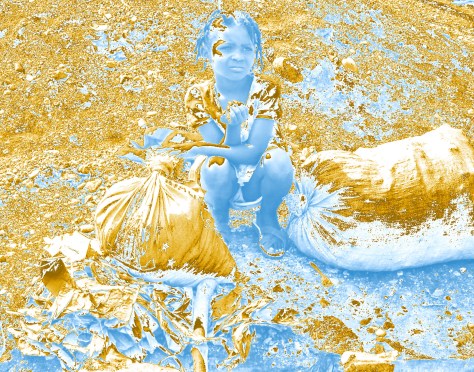 There was something golden about her manner, some assurance of belonging, some assurance that life was not going to simply use her up then sit her out. She was already installed on her throne, hence the color and texture that I employed in amending the photo.
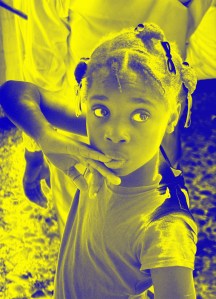 It was her gesture, finger to mouth, angle of her upright arm, bold intensity of her eyes that I wanted to share. I am here and must be counted, her presence spoke to me. I am here and have something to share. I am here and will not be forgotten. I am here…See me!
 I am a writer who takes photographs. I am a photographer who captures lives. Actually I am a recorder who interprets and transcribes all that I see. I am a seer, learning to see more. I am a projector. I am a futurist. I am a creator of reality.
 This is what I saw or perhaps this is what I projected. I have tampered with this image as all artists tamper/alter/amend images. I do this through photo-shop, the way I use light — adding or darkening– the way I crop the image to create an effect I want, and the other ways I apply filters and other methods to alter the image, as in inverting.
 But now he is my man; I get to show him off the way I want him seen; I get to tell the story I give him or extract from him or impose on him. He is mine – My Mister Intense.
 Opal Palmer Adisa