Tag Archives: mental-health

I WILL NOT DESPAIR

In order to keep despair from taking over my life, sometime toward the middle of last year, I made a conscious decision to stop watching the news. I figured that whatever I truly needed to know, I would know. Every time I watched or listened, I was overwhelmed by sadness, by grief, by a deep sense of hopelessness. I realized that if I wanted to keep living, if I wanted even a small measure of optimism, I had to be present to where I was, to my immediate life.

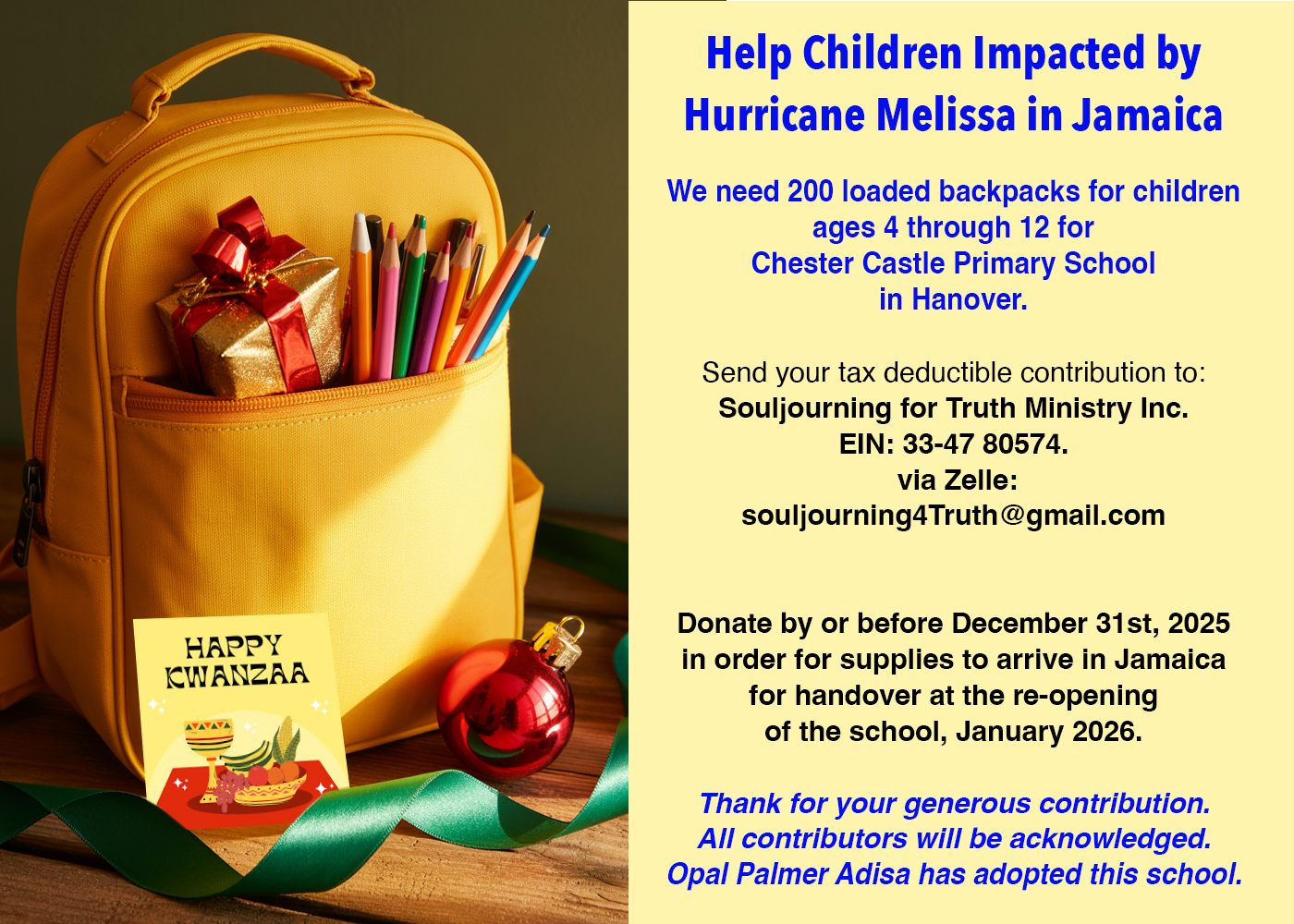
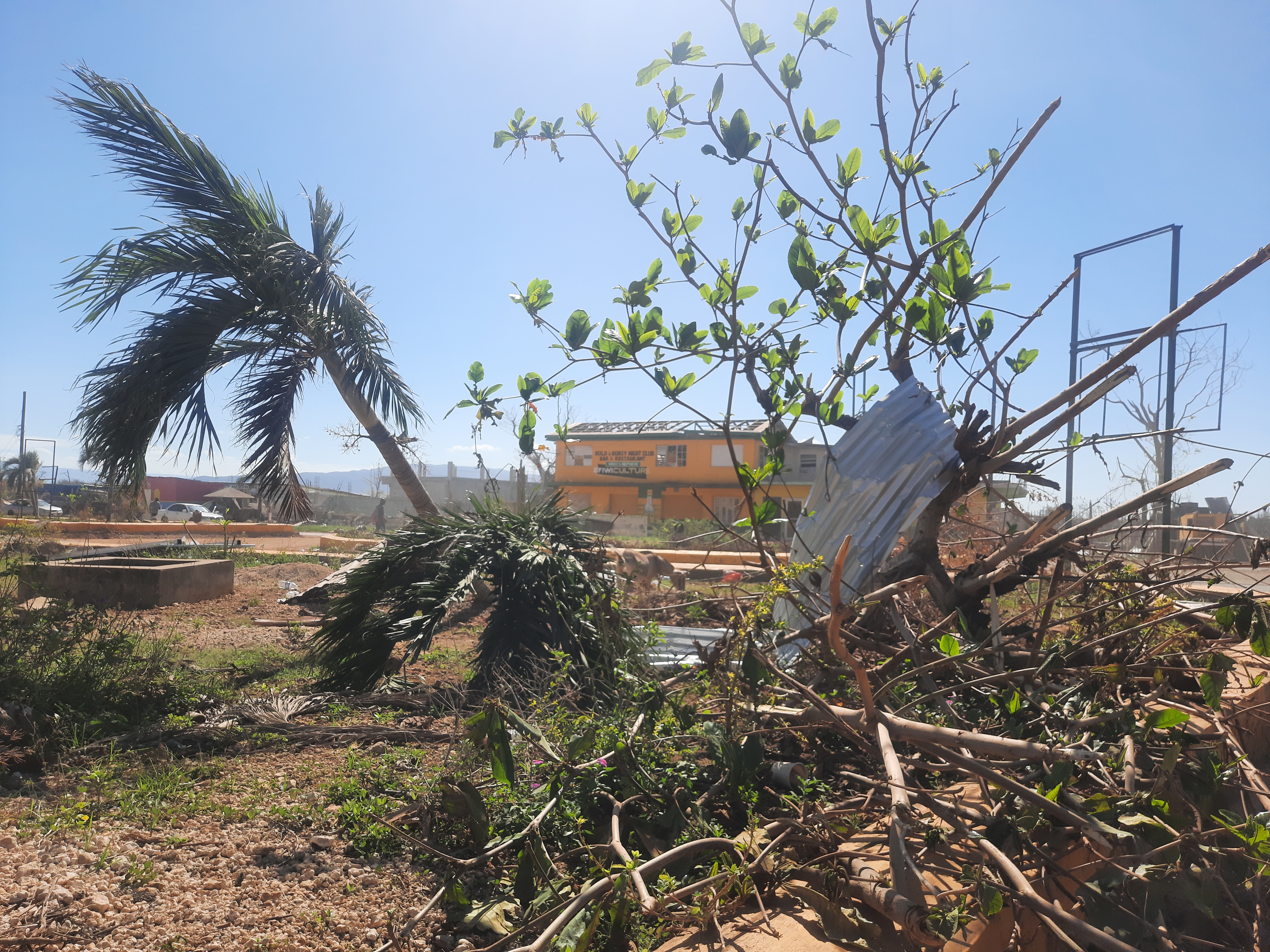
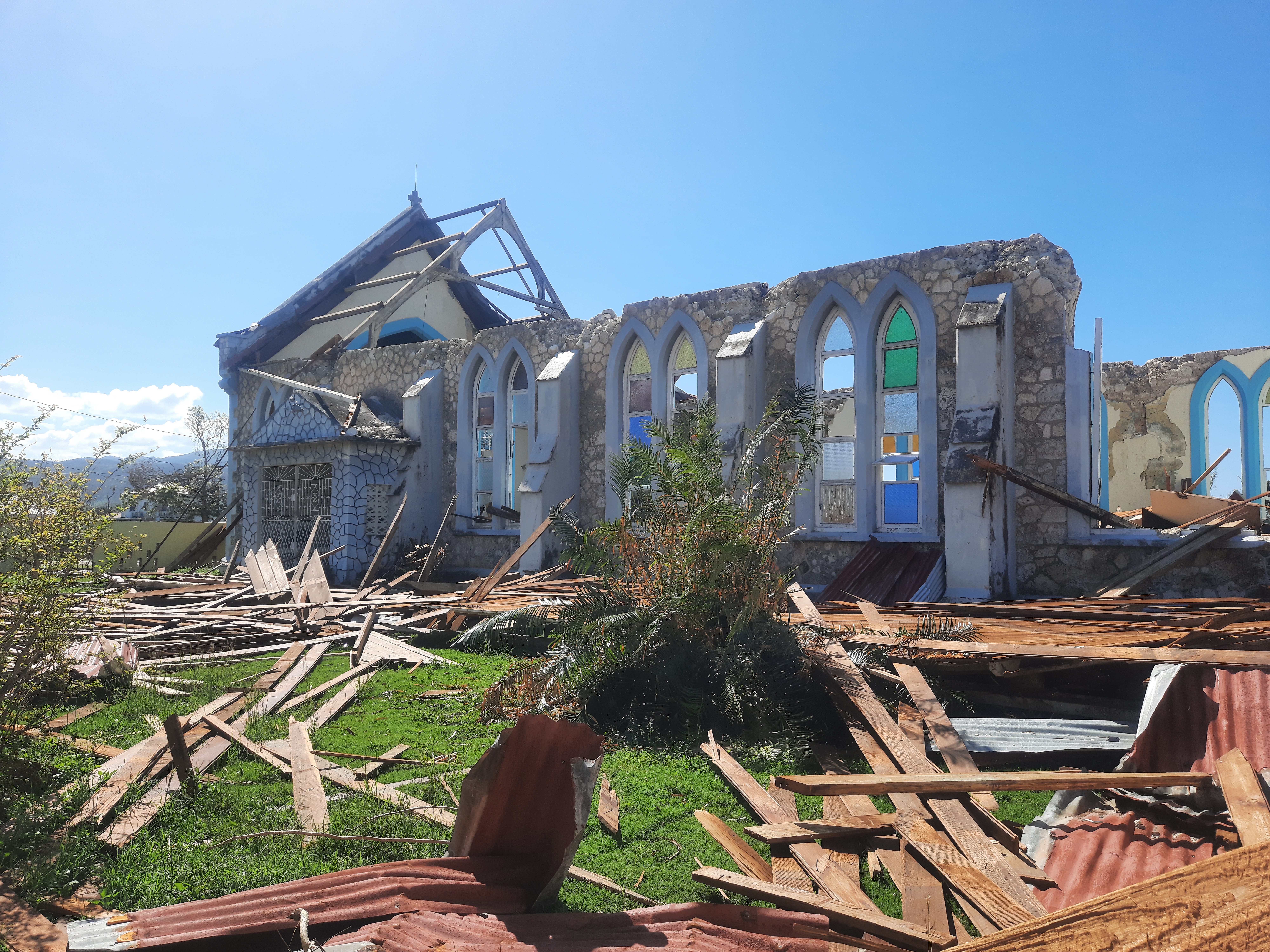
I understand, too, that I am privileged. I have a nice home. I have a yard. I am surrounded by nature. I do not take that lightly. And I know there are entertainers and athletes with money who are giving, who have projects, who are helping. But as I try to do my own work, preserving Louise Bennett’s legacy, adopting a Chester Castle Primary devastated by Hurricane Melissa, October 2025, seeking funds to get a children’s magazine for the Caribbean off the ground, and I keep hitting the same wall of insufficient financial support, I find myself asking: What is it that I am not doing? What am I not seeing? How do I make this happen?

Because there is not an absence of wealth or resources. There is an abundance. It may not be equally distributed, but it exists. I am a writer. I am an activist. All of my projects are about giving voice, about providing resources to people who do not have them. I truly did not think it would be this hard to secure 200 loaded backpacks for children of whom 75 percent have lost their homes to the hurricane. A loaded backpack costs about US$100, roughly JM$11,000. Why should getting 200 be so difficult?

Why is it so difficult to secure funding to honor Louise Bennett and Jamaican culture? I am trying to understand how to navigate this space, how to connect with the right people, how to know that I am doing as much as I can, helping as many people as I can. Maybe there is something falsely heroic, in that thinking. I don’t know. What I do know is that I genuinely want to help. But I do not have the resources.

Even my own Adisa Ancestry Artists Residency, which I launched in 2005—I am grateful that I stopped waiting for permission or help and simply did it. But I think about its future. I think about continuity. How do I maximize what I have? And how do I find the benefactors, the philanthropists, who can help ensure that it continues?

This is not despair. This is me searching for the light at the end of the tunnel, trying to continue the work I believe I am here to do, and asking plainly for the support I need.

So this is a plea. A plea to all the people who are my friends, all the people I know. If you can afford $20, or $50, or $100, or $500, or $5,000, or $5 million, send it. I will do exactly what I have outlined. You will be acknowledged. You will see the results of what your money made possible.

I still am not going to listen to the news in 2026. I am deeply saddened by the state of the world, saddened that on my own island beaches are locked off. I recently paid JM$2,000 to go to a beach –something I believe is criminal. What that means is that the vast majority of Jamaicans cannot afford access to what should belong to all of us. Some of us can afford it. Many cannot. And while not everyone will be rich or have the same resources, there are basic things everyone should have access to.

Everyone should have access to nature and parks. In the Caribbean, everyone should have access to all the beaches that should be maintained, with clean restroom facilities and changing areas—and that access should be free. I believe that everyone, even if they live in a single room, should be growing something: a plant, a tomato, a string bean, okra, cucumber, pumpkin, cane. We have to start. Not always in a grand way, though we need a grand plan, but we must start.

We must start so that I do not slip into despair. So that I can continue to believe that I make a difference, that I can make a difference, and that each individual can. We can, and we must.

This is my plea.
And this is my prayer for 2026.

Please note the deadline to contribute to Chester Castle Primary school in Hanover is extended until I am able to gift each child a loaded bagpack. Thanks for your support.

We Must Not Forget Our Children

Hurricane Melissa hasn’t only affected adults; it’s shaken the lives of our children too, and we must attend to their needs. They’ve been traumatized, are traumatized and we have to help them recover by providing them with the necessary outlets. They need books and pencils, crayons and markers, games to play, clothes to wear: t-shirts, shorts, pants, underwear. However, we cannot stop at meeting physical needs. Many parents, busy rebuilding homes and lives, are stretched thin so some children might be left to fend for themselves. Unfortunately, in every crisis, predators emerge. We must put safeguards in place so our children aren’t further traumatized by sexual, emotional, or other forms of abuse by persons posing as goodwill, offering snacks and other treats.

It is important that we look carefully at the specific needs of children and ask, what can we do right now? I know that Child Protective Services and the Ministry of Education are thinking about this, and implementing plans in formal ways for children whose schools have been damaged, but I also want us as communities, as individuals to take action. Think about the children in Anchovy and other areas still without electricity, running water, or connectivity. They can’t attend online classes, and many have lost access to school entirely. They need real support; proper food and means and ways to continue their education. Removing them from family might be an option, but can also be emotional distraught at this time.

As an educator, a writer, and a cultural activist, I’ve seen and know what happens when families are pushed to their limits, and my heart breaks for the children.  During COVID, so many parents were overwhelmed, frustrated, anxious, angry and some took that stress out on their children. It wasn’t because they didn’t love them, but because they were stretched beyond measure. We cannot let that happen again. Parents breathe and rather than shout, hit and threaten, continue to breathe and speak loving words.

Our children have already endured trauma. They need safe spaces to express what they feel, and guidance to process what they’ve lived through. They need counselors, teachers, and community support. And let’s not forget those in children’s homes who have been displaced; they are especially vulnerable and need urgent attention.

Sometimes in the midst of the crisis children are overlooked like Louise Bennett’s  reminds us in her poem,  “Earthquake Night.”  In the second and third stanzas, she recounts how in this catastrophe the child was forgotten:

            Me hear seh Verna baby,

            Tree year ole December gawn,

What never cut a teet nor walk

Nor talk good from it bawn,

When everybody run from shock

An left it one fi dead,

De pickney holler  `Po me gal!’

An run under de bed!

Parents and other people in these severe impacted communities also need communication tools: phone cards, charging stations so they can stay connected to family, teachers, and the outside world. Communication is not a luxury. In a crisis, it’s a lifeline.

We also need to give people cash. Yes, we hand out food bags, and that’s important  but those bags don’t cover everything. When you give someone a food package, ask how many children they have, and add a little cash. Even a modest amount  of $1,000 or $2,000 can help families buy fruits, vegetables, or other essentials everyday things that aren’t in food packages: oil, salt, soap, and other basics. Transportation cost to travel if someone is sick.

Let’s be honest: sometimes what’s packed for them isn’t what they eat. Even in crisis, people deserve the dignity of choice. The Jamaican rural diet is built on yam, cassava, chocho, pumpkin, green banana, callaloo, carrots and cabbage; that’s what sustains people. And our children need fruits: bananas, pineapples, papayas, watermelon. Aid shouldn’t just fill bellies; it should nourish bodies and spirits.

We have to stop assuming that one standard “disaster bag” fits all. What does a relief package look like for a Jamaican family with three children, ages three, five, and sixteen? We need to diversify what we give, and most of all, ask people what they need. Listening is an act of respect and generosity.

The government, through the Ministries of Education, Health, and Social Services, must send nurses, counselors, and social workers into isolated communities. We need patrols and outreach teams checking on families and ensuring children are safe and supported.

At the center of all this must be our children. Their healing, their safety, their sense of stability. If we fail them now, the effects will last far beyond this hurricane. But if we act wisely and compassionately, if we truly listen and respond , we can help them not just survive, but recover and grow stronger.

Yes, children are resilient, but they too have been terrified by Hurricane Melissa, and their responses will vary. So it is our job to provide them with comfort, but also the space to express their fears. And this isn’t just the government’s job. It’s on all of us, the entire community, leaders, teachers, churches, neighbours, and citizens to look out for the children around us. To notice when something’s off. To ask questions. To make sure no child is left behind in this recovery.

Let’s keep our focus clear as we continue this relief effort and protect the children, support the families, and restore their dignity. Let’s rebuild with love, awareness, and with purpose.

It Cannot Be Business as Usual

We have a tendency, after great disasters, to say we need to push through, to get back to “business as usual.” But what does that even mean when the world we knew has been upended? Of course, those who are concerned with money, the money machinery  never pauses. It never stalls. But the emotional bruises, the deep severing that happens in times like this, after Melissa here in Jamaica, are often overlooked.

I just ended a class early today. Only three out of fifteen students showed up, all of them carrying the weight of family in the devastated areas. T’s family is in Mandeville; thankfully, he has heard from them. G’s grandparents in Trelawny were unreachable for days; her mother only just managed yesterday to reach them and bring them supplies. M, Another student has relatives in Black River; for days her family were on jitters, but now they got word that they are but practically homeless due to the severe damage to homes. “We cannot focus or concentrate,” one student admitted.

They came to class as I did , showing up, yes but it was heavy. Each one spoke of exhaustion, of numbness, of not knowing how to speak the unspeakable. One student said simply, “Miss, I really don’t know how I’m feeling.” That, to me, was the most eloquent response of all. She doesn’t know because the feeling itself is too large, too raw.

So we sat with that heaviness. We talked a little. We were grateful for the extra week the university has given us, since classes were cancelled during the storm’s preparation. But the truth is, many of us still don’t have electricity or running water. Some students live on campus, others off, but none of us are untouched.

It is not business as usual. And it will not be business as usual for a long time.

To pretend otherwise is to force people to swallow their feelings, to bury their pain beneath routine. But the feelings remain: the anxiety, the sense of loss, the disconnection.

Despite all our gadgets: our phones, our laptops, our Wi-Fi — we were cut off. When the power went, when the towers went down, when the batteries died, we realized how fragile all this supposed connectivity really is. The technologies that claim to unite us failed us. They could not bridge the silence, could not bring our loved ones closer.

One student said it felt like COVID all over again — that same isolation, that same uncertainty, that same feeling of being suspended between fear and waiting. And they were right. Melissa brought back the dread of those days: the quiet streets, the locked rooms, the worry for the next meal, the exhaustion of not knowing what tomorrow will bring.

This is trauma upon trauma.

For a society like Jamaica, Melissa exposes again our fragility. Kingston and St. Andrew may have been spared the worst, but almost everyone here has relatives in the rural areas that were devastated. We know mothers without diapers for their babies, women without sanitary supplies, families without clean water or food. And we know, too, that disasters bring out the predators, the exploiters, the opportunists, the perverts who prey on the vulnerable. This is their time: when people are bewildered, desperate, searching for food and water. The community, once our safety net, becomes splintered. The children are not watched. Everyone is just trying to survive.

It is not business as usual.

We must acknowledge this tremendous trauma, trauma upon trauma upon trauma. Because Jamaica has never truly healed. We have not healed from the original wound of slavery, nor from the centuries of colonization that followed. Even before Melissa, the media showed us how many of our people still live in conditions of semi-slavery, neglected, forgotten, barely surviving.

So how do we begin to heal?

First, we acknowledge that the trauma exists. We name it. We say, something in me doesn’t feel right. My head is heavy. I feel jittery, tired, unmotivated. I can’t rest. I can’t focus. I am hungry all the time, or unable to eat. These are not small things; they are the body’s language for pain.

In my class, I gave my students crayons and paper and told them to draw how they feel. Because the arts are a form of therapy. And all those children in the hardest-hit areas, those whose schools have been destroyed, they, too, need art therapy, poetry therapy, dance and movement therapy. They need someone to say to them:

We know you feel unsafe. We know the sound of the hurricane still lives in your head, still vibrates in your bones. We are here to help you feel safe again.

We must learn to speak and act with compassion. We must provide spaces of solace where one can sit quietly, listen to music, and do nothing. No deadlines, no demands, only the slow, necessary work of healing.

It cannot be business as usual, my people.

We cannot continue being traumatized and re-traumatized, whether by natural disasters like Melissa, by centuries of enslavement and colonization, by inequality and indifference, by pandemics that isolate us, and by technologies that promise connection but deliver silence.

We need to heal. We need to pause.

We need circles of love and healing and spaces where we can shout our anguish, our despair, our frustration, our betrayal. We need time to sit with ourselves, to comfort ourselves, to forgive ourselves and the world.

We need moments of kindness and compassion where we can simply be present with what we feel, and breathe through it together.

It cannot, it must not, be business as usual.

Ode to Hurricane Melissa: A Conversation, A Plea

Dear Melissa, my sister Hurricane,

So you’ve been dilly-dallying, eh? Sauntering across the sea like you going to a party, hips swaying, your skirts of cloud dragging across the horizon. We see you, girl. We’ve been seeing you. Watching your slow, deliberate stride. Listening to the whisper of your name in the wind. They say you’re coming with anger, with force, but maybe it’s not rage at all. Maybe it’s hurt. Maybe it’s vexation, vex because of how we’ve treated you, treated the earth, treated ourselves.

All the bottles and plastics that were banned but still float like dons in the gullies. The trash we burn without care, the smoke rising like confessions. Maybe you just tired of us, tired of our stubbornness, our refusal to change our carless ways, our greed and consumption.

But I see you, Melissa. This morning I went outside to greet your first shy showers. I splashed in them, as I love to do; told you “Howdy. Welcome!” Whispered, “Please, keep my house safe.” Don’t come huffing and puffing like some big bad wolf, I beg you. Take it easy ‘round here.

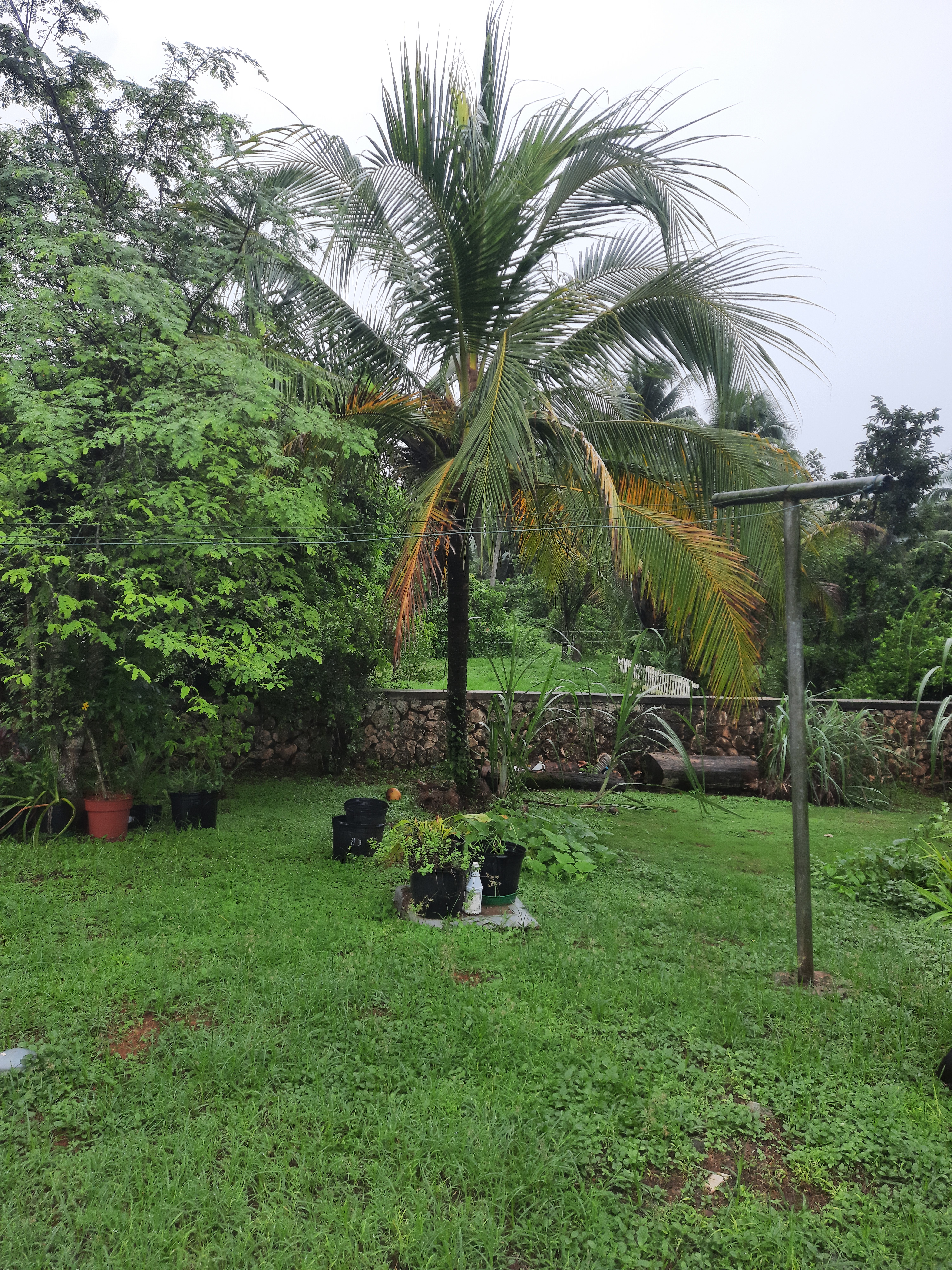
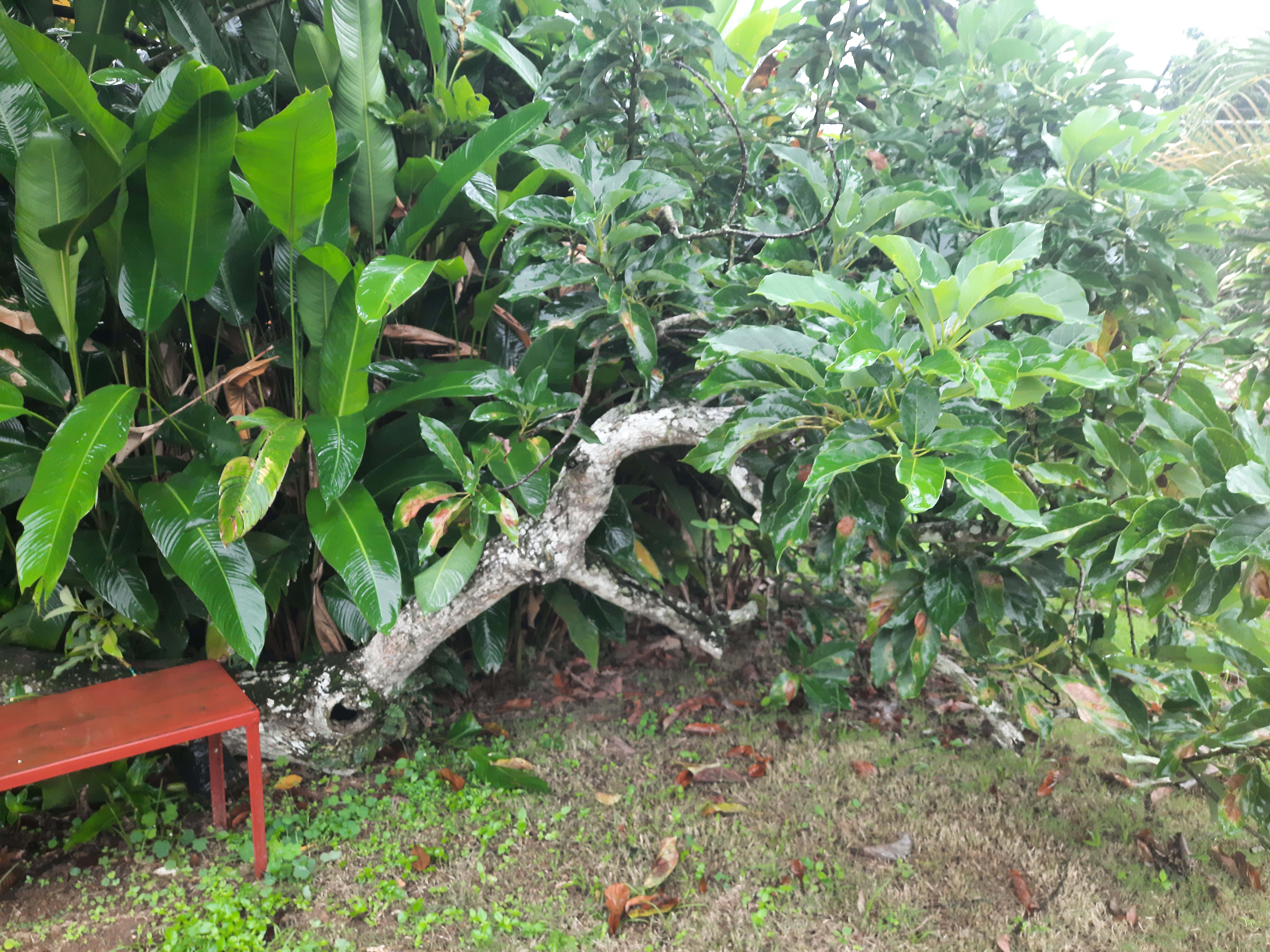
I picked a few bird of paradise which I love and in your haste you might not see them and just blow them away.  I said thanks to my banana and plantain trees, my lime and cane and my pear; poor ting fell down already and Delroy, the gardener help me kotch her up;  so please, tek time with her, nuh, have mercy pan this old limping girl.. My coconut tree standing tall still, and all my pretty flowers: hibiscus, buttercups, bread-and-basket, crotons, ferns. Jason helped me tuck them safe in the corner this morning, so when you pass by showing off your power, you might spare them your mercy.

And truth be told, I’m not innocent either. I try me best.  I pick up, I recycle, I talk about protecting the earth , but maybe I too am part of the problem. None of us are exempt, are we?

So Melissa, darling, come now. Come if you must, but come gentle. Don’t make us wait no more.  It’s one of the hardest things, this waiting. My anxiety level is high, You’ve been teasing us since last Wednesday and it’s now Monday. My classes canceled, my mind wandering. I can’t focus, can’t work. So come now, in your yellow dress or your navy one, with your hair flying wild or pressed neat — I don’t mind. Just come, do what you must, and then go on your way.

And when you reach the sea, before you touch land, just exhale your breath out there, let your rage disperse over the deep. We are a loving people here, truly. Sometimes we quarrel, sometimes we act up, but deep down, we’re kind. It breaks my heart, though, to see the way we treat our own, the cane cutters, the fishermen, our people living in conditions too close to slavery. It shames me, it wounds me.

So I pray for them, for all of Jamaica. I’m lucky to be in a solid house, but anything can happen. Still, my ancestors, my Orishas, my divine guardians, they walk with me. I trust their protection, their grace.

And to all those who’ve called, emailed, sent love and prayers, thank you. It’s for all of us.

So Melissa, my tempest sister, we’re waiting. Come if you must, say what you have to say. Trace us, scold us, dash a little saltwater in our faces, and then please, leave us in peace. Let our trees rise again, our flowers bloom again, our lives go on.

Take it easy, my child. Take it easy.

Walk good, my girl. Walk good.
And don’t let no bad duppy follow you for you’ve been carrying on like one wild spirit, and we don’t like bad duppy in Jamaica, no sah.