All posts by Opal Palmer Adisa

Opal Palmer Adisa is an exceptional writer/theatre director/photographer/gender advocate, nurtured on cane-sap and the oceanic breeze of Jamaica. Writer of poetry and professor, educator and cultural activist, Adisa has lectured and read her work throughout the United States, South Africa, Ghana, Nigeria, Germany, England and Prague, and has performed in Italy and Bosnia. An award-winning poet and prose writer Adisa has twenty four titles to her credit. Most recents are: Pretty Like Jamaica; The Storyteller's Return; Portia Dreams and 100 + Voices for Miss Lou. Other titles include the novel, It Begins With Tears (1997), which Rick Ayers proclaimed as one of the most motivational works for young adults. Love's Promise; 4-Headed Woman; Look a Moko Jumbie; Dance Quadrille and Play Quelbe; Painting Away Regrets; Until Judgement Comes;

Jump and Make It Happen

You dream must be bigger than your fears.

Your reason must exceed your own limited world.

Do support: Ay-Ay: Junior Caribbean WriterPrint

My beloved California College of the Arts mentor, Opal Palmer Adisa, is creating a magazine for kids in her home of Jamaica. Even though she has made a full life as a writer and academic in the Bay Area and around the world, she constantly finds ways to give back to her home, her place of origin. She is a true inspiration! If you have any amount of money to donate, I assure you, it will be put to good use. Before I traveled anywhere beyond South East Texas or South West Louisiana, I traveled the world through books and stories. Putting a book in the hand of a kid gives them a key to the world. This is your chance to help make that happen.

Growing the Next Generation of Caribbean Writers and Improving Literacy | Crowdfunding is a democratic way to support the fundraising needs of your community. Make a contribution today!
INDIEGOGO

Marion Bethel, Bahamian Poet: Caribbean Sensibilities


authorMarionBethel-09 (1)

Marion Bethel was born and lives in Nassau, The Bahamas. She read law at Cambridge University, England and has worked as an attorney since 1986. She has two collections of poems and is currently working on a third manuscript of poetry and a novel. In 2012, she produced and directed the documentary Womanish Ways: Freedom, Human Rights & Democracy, the Women’s Suffrage Movement in The Bahamas 1948 to 1962, a documentary on the struggle to gain women the right to vote in the Bahamas.

 OPA: You are an attorney, a poet, and a mother. Have you always written?

MB: I started writing seriously in 1986 during the final year of my Bar examinations.  I deferred my Bar exams in order to spend a full summer writing poetry.   During this period I wrote the draft of Guanahani, My Love, my first poetry collection.

OPA: How does the job as an attorney feed or distract from your writing?

MB: The time spent as an attorney often feels to be in conflict with time needed for my creative writing process.  On the other hand, I see that there is enough time for me to do my writing if and when I am committed.  I can waste a lot of time procrastinating and getting ready to write instead of just writing.  I really thought that practicing law & the pursuit of justice could satisfy me.  However, I feel closer to & am more coherent with social justice in writing poetry.

OPA: How does motherhood figure into your writing?

MB: While being a parent or mother takes lots of time within any one day, the major part of that time is now behind me as my two daughters are in their twenties.  But yes, when they were young, I felt torn between taking care of them and paying attention to my writing.  It is interesting that both of my poetry books were started and completed when my daughters were still principally in my care.  It may be then that the tension facilitates focus, productivity and attention when I actually sit down to write.

OPA: You have been widely published and recognized in the writing world, what has that journey been like?

MB: It’s been an uneven journey, that is, there have been and continue to be productive and unproductive periods, focussed and unfocussed time.   My expectation of myself is much higher than my actual productivity or production.  It’s been a journey of great gifts to me.  I must give thanks for the opportunity to attend the Caribbean Writers Summer Institute at the University of Miami in 1991 where I attended workshops with George Lamming and Kamau Brathwaite.  Coming out of that experience I worked on Guanahani, My Love. It was so wonderful to be awarded the Casa de Las Americas prize in 1994 for Guanahani, My Love.  I was then invited to participate in the Miami Book Fair.  Further, I have been a guest speaker at several colleges and universities over the years.  In 1996 I was fortunate to gain a fellowship at the Bunting Institute at Radcliffe College. This was one of the highlights of my journey where I spent twelve months at Harvard University with 39 other women artists, scientists doing our individual work.  Another highlight was my time at Cave Canem (2007 – 2009) under the direction of Toi Derricotte and Cornelius Eady. I loved this experience in the company of brilliant young, African American poets who challenged me to sharpen my poetry skills. In 2010 I founded a writer’s institute with Helen Klonaris here in the Bahamas.  This was also a gratifying part of my journey.

OPA: How does your new collection, Bougainvillea Ringplay, differ from your first?

MB:  Guanahani, My Love was the direct result of the poetry workshop with Kamau Brathwaite and my attempt to employ specific poetry forms in the service of telling the history of The Bahamas. Bougainvillea Ringplay was more politically personal.  In BR I felt infinitely more confident both in technique & content to explore different forms and subject matter.  There was tremendous growth in BR.  The poetic voice is sharper, bolder.  The poetic imagination is more expansive.

OPA: Of course this poem is as much about the characteristics of the bougainvillea plant/flower, personified as a girl, as it is about a girl/woman who is as tenacious as the plant. Can you talk about the stance in this poem, and the parallels you are drawing about the rootedness as well as resistance and determination evident in Caribbean people?

MB:  The poem, BR, really evokes for me childhood memories of fluidity, wild abandonment, freedom even in the face of overwhelming restrictions in regard to colonial education & curriculum, church traditions, family and social expectations.  This freedom came ironically in the school yard where we played ring play games every day in between the rigidity of learning and supervised behaviour.  Bougainvillaea were everywhere from the time I left home in the morning en route to school and church.  The colours and the expression of the bougainvillea evoke for me the resilient spirit of childhood that transforms and matures into the spirit of young womanhood.  It is rooted, affirmative, resistant and eternal.

OPA:  In the bougainvillea tree, I catch a glimpse of freedom, physical, emotional, mental & spiritual. This is the beauty of the Caribbean spirit at its best in music, dance, and poetry. Is it important that Caribbean writers use local imagery, fauna, flora, culture?

MB: Yes, I think it’s imperative that I use Caribbean local imagery, fauna, flora.  The physical world has shaped our sensibility and spirituality and we have humanized our physical world.  At some point in our existence we are one, i.e., the physical and human environment.  I affirm the Caribbean presence in the use off Caribbean imagery.

OPA: The belief is, the more you do something, in this instance writing, the more proficient or better you become. Can you chart your development as a poet? Do you see the growth in this collection, and if so in what ways?

MB:  This poem felt so me, integrally me. And a me that I would hope is so Bahmian, so Caribbean and so whole.  I felt entirely connected to my centre, my self and ultimately my universe when I was writing this poem.  This poem is the one from which all the other poems pivot.  The other poems are in dialogue with BR in regard to authenticity of expression and their reach for freedom.

OPA: As a child growing up, we played ring games, I don’t know if that happens so much these days. What was your process of writing this collection?

MB: The poems in BR were written over a period of 10 years.  My attention was divided between my family, work and political activism in civil society in The Bahamas.  My best work was done under great discipline i.e., getting up at 4a.m. & writing before going to work. I know the best productive process is to write every day.  I have not always followed this

OPA: I read this poem in Spain, and it was translated, but at the end of my presentation a few of the participants asked me what is ringplay? How would you explain it to a non-Caribbean audience?

MB:  Ringplay is a childhood game of dance, song and drama that is performed in a circle.  One person jumps into the ring & shows her bodily rhythm, sensuality and sexual energy in dance while the circle claps & sings her on sometimes to the point of a frenzy.  Ringplay may have religious origins in African spirituality.

Bougainvillea ringplay front cover copy

http://www.peepaltreepress.com


BOUGAINVILLAEA RINGPLAY

By Marion Bethel

 this me right here inside the ring

in March April May springing

from concrete tar sand parading

passion purple ungodly colours waving

cores of pink cream orange showing

my motion to you unsolicited

in months of dry rain sighing

ring centre I come to you straight

shaping vision beyond sugar-in-a-plum

winding my waist tight in your face

clinging to your fence I aint shame

mounting it from rock and gravel

unhedged hips fall and rise

spreading limbs all over your wall


this me now right here outside the ring

even in June July August fixing

to catch the colours of your dream playing

biggety with your emotion working

up myself round edges of islands cascading

even when poinciana throw bloodclots unconsoled

in full seagreen I just keep on coming


jumping back in the ring I aint shiftin for no one

limboing under the shade of a dilly tree

climbing up womantongue and guinep

wrapping arms around cerosee vine

rushing to inventions of a lonesome conchshell

fixed by tongue-tied conga drums

spinning we move in circles driven shaken freed


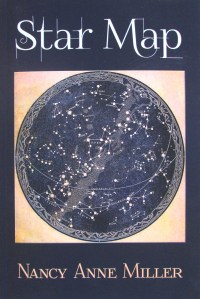
Thar She Blows: Nancy Anne Miller’s Star Map

nmheadshot_1_29_edit.jpg -2. (2)

OPA: Nancy, in this your 5th collection of poetry, do you notice any changes in your poetic, and if so in what ways?

AM: This particular collection is one written over a period of decades, poems I’ve been writing while living in Northwestern CT as a response to the seasons, thus there is a variance in voice and tone.

The earlier work is more about capturing an image, exploring it without a narrative. The poem “Sticky” is a good example of that. Of late, my work is more voice driven. I unpack the image metaphors more and incorporate them in a going narrative as in “Let’s Not Pretend.” This makes the poems less stiff and opens up the reach of the metaphors. They perform their duties more completely in the thrust of a story.

OPA: Are you a stargazer, and does the constellation affect you work?

NAM: Not at all, and I’m not even a horoscope girl although I came to America in the 60’s. However, I am always thinking of my sea captain ancestors out on the sea with the stars overhead to guide them. It is a permanent archetype in my psyche, one I am strengthened by.

OPA: This new collection is entitled, Star Map, how did you arrive at this title?

NAM: The book is about my interpretation of the seasons as a Bermudian, seeing my environs from the perspective of an islander. My writing about such is a way to locate myself, place my body in the landscape.

I had a grandfather who traveled a lot and kept a log of his everyday life much like former sea captains in my lineage. He sent these diaries around to the entire family. I think of my writing poems as keeping a log of sorts, as a place I locate my being like one might out at sea. The star map metaphor comes from the line “The frost on my windshield with/ connecting white stellar shapes/ is a star map to guide me.”  Yes! To guide me in a new country, to guide my journey in my car (Such an American metaphor for being!), and to announce that my poems are the maps that make my journey happen, possible.

OPA: The last line of the title poem intrigues me, “its slit eye, a tongue slips through, speaks.”  It’s vivid, revealing, yet mysterious. I am curious about the tongue that slips through and manages to speak. Sounds like a coup. Can you speak about the trajectory of this poem?

NAM: A coup is a good word here. I had to learn to speak about the loss of my island as when I first came to America the transition was an invisible one. I did not have to learn a new language for instance, and Bermuda was a known to the community I moved into. However, that knowledge was in a skewed context. It was the knowledge of a privileged tourist destination that postcolonial writers, myself included, write against.

There was no concept of the backstory of slavery in that perception, nor an awareness of the true complexities of colonial life because of the silence around my home country caused by a lack of island literature to bear witness to it. Thus, people would often say to me “I didn’t know anyone came from Bermuda.” It was such a dislocated and trivialized place in their minds –one that existed only for touristic exploitations by consumers. So when I began to write about Bermuda there was a lot to write against and for. And like many writers what I had to say, put down in poems was sometimes uncomfortable for my longstanding family there. In that sense I must say writing in exile from afar had its advantages.

OPA: The poems are primarily about winter and snow, with a few scant references to you home, Bermuda.  What is the setting, and where does Bermuda reside in these poems, in your life away from Bermuda?

NAM: Bermuda is my North Star. The location all other locations are seen from. The Bermuda landscape is inside me. The New England landscape is outside of me, although my poems have mapped my way into it. Thus I, of course, see the bucolic environment around me through a semitropical one, and hence a comparison is always present. I’m employing contrast by what Coleridge referred to as “the likeness within the unlikeness.”

As a poet, I generally think of writing about the seasons as comparable to life drawing. It is a really good place to improve one’s skill as nature is so immense and already very daunting to approach. And in the case when I’m writing about Bermuda as a direct subject, winter itself provides a vacuum for memory, creates an almost sublime aesthetic distance, a removal from the lush island life which hones one’s skill to recall it, bring it back into being. Exile has its perks.

OPA: Is poetry your first and primary medium?

Yes! Although painting orders my mind and there is a way that my Semitropical Paint Huts bring the island environment stateside. Keeps it close so that it facilitates my writing poems about Bermuda. My poetic language is highly visual because photography taught me to observe the world, and painting to physically embody it. Both inform how I take it in and write about it.

OPA: How do you know when the poem is done?

When it is satisfying enough in carrying a narrative, an observation and also when the formal aspects of it, tone, diction, imagery, are doing the best job they can and are” bringing things together into a unity which is original, interesting and fruitful” to quote Schwartz.” The judgement that it is good enough, happens on an intuitive level when I am mostly satisfied, and hence can let it go.

I am an advocate for sending poems out because that final read before you send poems off to another editor will make you really hone the poem in the manner Wilde describes as “spending the morning putting the comma in the paragraph, and then spending the afternoon taking it out.”

OPA: Which of the senses would you say is strongest or more dominant in this collection?

NAM: I would definitely say the visual as I start poems from image metaphors that I log in my notebook. The sense of sight carries the weight of the poem. It is the cell that Rilke speaks of when he says: “Somehow I too must discover the smallest constituent element, the cell of my art, the tangible immaterial means of expressing everything.”

OPA: The poem, “Summer’s Beggars,” has a nostalgic tone, walking on the beach, collecting shells, idle and idyllic. But life is never that simple or is it?

Summer’s Beggar

It all points to going to the ocean at the end

of the season where wave by wave summer

is covered, buried taken into the deep. Shells

are scattered at the edge of the tide, loose

change falling out of the rim of a skirt

for me to pick up, summer’s beggar. I will

bring a large conch back, itself a whirl,

a turning. Place it on my shelf to stay still,

slow. A snail crawls endlessly through winter.

If it was that simple, there would be less art in the world!


NAM: To quote Cernuda: “The poet tries to fix the transitory spectacle that he perceives. Each day, every minute, the urge to arrest the course of life falls upon him, a course so full at times it would seem to merit an eternal continuation. “In “Summer’s Beggar” the collecting of shells, the hoarding of that which held something as the shell itself is imprinted with what it contained, all of this is a metaphor for writing poems, collecting the imprint of the world in language. The conch in my work (ever since my first chapbook titled Conch), is a container for the voice of the subconscious (i.e the ocean.) So bringing the conch back is bringing back the voice for my work which unfolds, unravels, spins, yields slowly through the absence of place as Simone Weil notes when she states: “We must be rooted in the absence of a place. We must take the feeling of being at home into exile.”

OPA: Are you currently working on a new collection?

NAM: I am sending around a collection to publishers titled Island Bound Mail with some interest so far. I am beginning to start another collection titled Boiling Hot. So yes, I am busy and am forever aware of what Eliot implied when he said: every attempt/ Is a wholly new start, and a different kind of failure/ because one has learnt to get the better of words/ For the one thing one no longer has to say, or the way in which/ One is no longer disposed to say it.

https://www.amazon.com/author/nancyannemillerpoet

Star Map Cover 002_1_1 (1)


Writer/Teacher: The Importance of Play

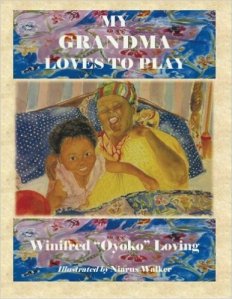
Anyone who knows Winifred “Oyoko” Loving will confirm that she is a happy, inviting person, who loves to laugh.  Hence it comes as no surprise that her second children’s book, My Grandma Loves to Play, 2013, has a jolly, inviting tone. An ideal book for a grandmother to read to her grandchild, it is also a great read for any adult to read to any child, especially as it is about togetherness and having fun.

bio picture from cruise_BwOPA: You are a poet, a children’s writer and a retired teacher. What grades did you teach and for how many years?
WOL: I taught all elementary grades from Kindergarten through 6th grade over a period of 31 years.   In preparation for working with young ones, I received a Masters in Early Childhood Development from Wheelock College in Boston back in 1972.  I am ancient!

OPA: You have written 2 children’s books, most recent, My Grandma Loves to Play. I know you are a grandmother. Was this book inspired by your grandchild?

WOL:  I have three granddaughters who are the inspiration for most of my writings, and for this book in particular.

OPA: In the notes at the back of the book, you say you emphasize play and family time?  Why is the value of both?

WOL: Time spent having fun is more precious than gold to little children.  Many life lessons can be said in a funny, animal voice, making it engaging and non-threatening to communicate with a child.

OPA: The book is beautifully illustrated by Niarus Walker, a local artist and teacher, can you talk about how that collaboration came about?

WOL: I went to an art exhibit here on St. Croix, and Niarus was the featured artist.  I love her work, so it was only natural that I re-introduce myself a year or so later when I needed an illustrator for My Grandma Loves to Play.  Without hesitation she agreed to the job.  Niarus has two, beautiful daughters of her own and I do believe she has images in the book that “vaguely resemble” Keren and Rayna!  Even her puppy is featured in the story line!  I am so grateful that we were able to find time to work together on this book.

OPA: The entire tone of the book is playful, one of patient exploration, and it rhymes.  Was the use of rhyme a deliberate choice?

WOL: Oh, yes.  It is always fun to rhyme with little ones.  If I say hickory, dickory DOCK; the mouse ran up the…(pause)  All the kiddies will (more than likely) yell the word CLOCK!  Of course, if the class is unfamiliar with Mother Goose, I can begin slowly by teaching rhymes and the meaning of rhyming words.  Rhyming poetry is another fun vehicle for learning vocabulary.  Memorizing poems at an early age helps the children gain confidence in other learning areas.  My story offers a look at a Caribbean grandmother and grandchild, which is a change from mainstream rhyming stories.  All my stories, so far, are based in St. Croix, I’m happy to say.  This is my home.

OPA: Was there a particular memory or incident that prompted this book, maybe an unmade bed…?

WOL: My own grandmother, rest her sweet soul, taught us manners, the books of the Bible, how to sing three-part harmony, and our bedtime prayers.  Those lessons instilled so much confidence into my siblings and me that I now find myself  doing the very same things she did!!!  To this day I can sing and recite all 66 books~~both old and new testaments!

OPA: How has your years as a teacher, helped you to capture the right tone that would appeal to children?

WOL: Be prepared.  Be flexible.  Keep it short, keep it sweet, make it fun.  Laugh a lot.  That’s it!

OPA: When can we expect your next children’s book, and are you willing to share what it is about?

WOL: Most definitely, Opal, my next book will be about a boy who is eagerly waiting for an important event.  (I will leavethat for your readers to imagine!)  I would like to publish it in 2016.  I already have Bethany Kennedy~~an awesome illustrator! (Finally,  I have yet another idea looming in my imagination about  a book I began while visiting the Philippines last summer.)  LOL   I am laughing out loud, indeed!

51t3YBKteNL._SX384_BO1,204,203,200_ Available @ amazon.com and from author:

oyoko_viayahoo.com

Force Ripe: A Painful Slice of Girlhood

Cindy McKenzie’s Force Ripe (2015) presents a poignant tale of parental neglect, community indifference, sexual abuse, isolation and ignorance of  Lee and her brother, Rally. Told through the eyes of Lee, who is not yet six years old when the books begins, and ends when she is in her teens, this story of Caribbean life in Grenada is not one you have likely read before. Honest and revealing, Force Ripe takes you on the journey with Lee, and you get to witness first hand, the uncertainty that is her life and world, replete with verbal and other abuses. It is sure to make you cry.  I recommend it to be included in Caribbean literature and sociology courses.

cover pic01

OPA: This is your first book, what have you written before and where have you been published ?

CM:   Apart from a response to a letter published in Mslexia Women’s magazine and a star letter in Woman & Home Magazine- for which I won a hat box of lovely French Chocolates and allowed myself to bask (just a little bit) in the novelty of seeing my name in print – I had not been published before Force Ripe. Previous writings include bits of prose, some poetry and short stories prompted by various online Writing Courses.

OPA: Roughly speaking, how long did it take you to write?

CM:   It was a long process. I can’t remember how long, but I think I completed the first draft in a few months. I started writing – what I then titled “Celestial Shades,” back in 2001. I have a “registered to myself”, two hundred and ten pages, double-sided first draft, dated June 2005. So much has happened along this journey I have travelled with this book.  And what took me a few months to write, took me fourteen years to publication.

OPA: Can you share your process of writing this novel? What are some of the ranges of emotions you experienced?

CM: The process. Hm. Writers have so many theories and rules about what works, how it should be done, when it should be done. And I have tried some of them. For me, it was handwritten notes of memories, ideas and then I drafted the chapters. Next, I typed them onto the computer. I still do it this way.

I knew nothing about rules or the fundamentals of writing at the time [I began the novel.]. What I had was this story. And I was very determined to tell it my way. I learned along the way –from the first terribly written draft– which I sent to Ian Randle Publishers, to the creative writing classes taken after the first draft, to revising, dealing with critique etc. And the learning continues.

Writing Force Ripe was therapeutic for me. I had to make that journey, all the way back and step inside Lee’s head- see through her eyes, listen with her ears, feel what she felt, talk the way she talked, walk with her again, so readers could also make that journey with her. And this journey evoked every kind of emotion in me. These emotions changed with every corner I turned, and every chapter I wrote.

OPA: This is not an easy subject, what prompted you to write this novel?

CM: This story has lived in me for as long as I have lived with it. And for a long time it has been nagging me, begging to be voiced. So I listened.

OPA: Force ripe is a Caribbean term that I heard it growing up in Jamaica.  How would you describe that term for non-Caribbean people, in particular as it relates to Lee, the protagonist?

CM: To Force ripe something, for example a fruit, is to ripen it prematurely, before it is fully matured and ready. In the Caribbean, the term Force Ripe is used to refer to girls who try to be mature, who act like grown ups, too early. In many instances, as was the case with Lee, the child has been forced ripe, having to grow up too quickly, not by her own doing or choosing, but because of circumstances, choices made by the adults in her life and because of neglect. Perhaps unintended, but neglect all the same. Lee was forced to do adult things, have adult experiences, look after herself way before she was ready, before she was mature enough.

OPA: Who do you see as the audience?

CM: Because of the language, and topics presented, I see Force Ripe as suitable reading for a wide audience – from the young adult, to the very senior. I believe Force Ripe has a little bit for everyone, especially our Caribbean audience, who will be able resonate with the scenes, characters, the places, the culture and the language. I want readers to want to read this book and want to share it with others. Selective parts can even be read to the very young audience.

Cindy McKenzie reading from Force Ripe

OPA: Are you inspired by other writers from the Caribbean, especially Merle Collins, a fellow Grenadian?

CM :I am not as widely read as I would like, however, I am inspired by writers who are bold and brave enough to step outside of conformity and write the truth, write about the taboo stuff which are unspoken and frown upon. I admire those who are not afraid to use our “Nation language” and to quote you on that, “… there are just some things that don’t have the same sense of intimacy or color if not said in Nation language…. I use nation language… to say what I mean from the center of my navel… to jolt readers to listen and read more carefully, to glean from the language the Caribbean sensibilities that I am always pushing, sometimes subtly, other times more forcefully. Nation language allows me to infuse the poem with all of the smells and colors of home…” I too believe this to be true. I thoroughly enjoyed Bake Face & other Guava Stories and Merle Collins’ Callaloo poem. When I was writing this someone very close said to me, “enough bakes and cocoa tea stories.” Am glad I didn’t listen, because bakes and cocoa tea to me is like roast beef and Yorkshire pudding to him! And I still Love my bakes and cocoa tea.

OPA: Are you currently writing or thinking about writing  another novel?

CM: I have to. I already have a few chapters, which I had cut from Force Ripe, so I have a start. I would like to get right to it now, but life happens in between.

OPA: What are you hopes for this novel — in other words who do you want it to reach, which in my mind is different from audience, what place do you hope it will have?

CM: I would like to see Force Ripe in the schools, especially the secondary schools. It would be great to have it on the school curriculum, and not just in our local Grenadian schools, but as far as it can reach, throughout the Caribbean. I really hope it will find a place on the shelf of book stores, in-spite of the self published taboo which hangs over it. And I would love to see Force Ripe as a movie.

OPA: Your children certainly were involved in the production of the book, how does being a mother inform the writing of this book?

CM: Being a mother has made me look at the characters with different eyes, especially the main character Lee. As I wrote about Lee’s experiences, I was able to compare her with my own daughter at different stages in her life, particularly at the age of 10. Being a mother has made me look at myself and where my children would have been had I make different choices, like my own parents did.

An excerpts from Force Ripe

“The convent girls gather up the front gate and line up the steps like a firing squad when they hear the Rastaman daughter coming. Me legs tremble. Me chest get heavy with fright. So I pull meself inside me like a soldier crab. I could do it real good now. And sometimes, I does even forget to come back out (p.272)”

Website:http://cindymac.info

Facebook: https://www.facebook.com/Cindy-McKenzie-Author-295573863938027/timeline/


B is for Benye, a VI Book from New Writer

PembertonPhoto_72dpiCharlene Pemberton, is a retired teacher who taught for 30 years in St Croix, at the middle school and high school level. Although she hails from St Thomas, her place of birth, St Croix is now her home, where she has just launched, her first book, but most certainly not her last.
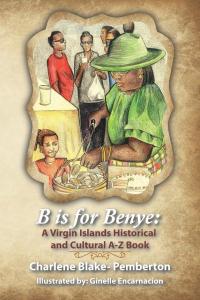
Teacher Pemberton worked for seven years researching and editing this ABC text that is not a primer. “After writing it, I left it on my desk for years until my daughter pushed and propelled me to publish it, October, 2015.”   Similar to many established and emerging writer, Pemberton’s process begins with brainstorming. She adds, “Then I write continuously without correcting errors. Usually, I put my writing away for a day or two and begin with a fresh eye. Here is when I complete my revising and editing.   Also, writing and reading groups offered ideas and encouragement throughout the process.”

The kernel for this book began many years ago as Charlene narrates its impetus. “One day I brought benye treats for my high school English classes.  To my surprise, this local name was unfamiliar to them.  However, after tasting the treats, the class responded saying, “We’ve had this before. But we just didn’t know the name.” Pemberton asserts that it was this event that “planted the seed for my cultural book that informs, and at the same time it highlights culture.  I dedicated my book to my grandson because I want him to know about his culture and to pass it on to future generations.”

Donning the roles of teacher, mother and grandmother contributed enormously to the writing of the book, Charlene Pemberton notes.  Even though her targeted audiences are middle school students and their parents and teachers, the book is also for visitors to the US Virgin Islands.  “These groups, I believe, would appreciate the essence of our culture and history.” Reflecting more, Charlene adds, “I would like my book to reach different cultures.  Virgin Islanders have a unique heritage and through my books I hope to share my culture with the world.”
Inspired by her community, Pemberton pays homage to the late Crucian poet, Marvin Williams, whom she knew.  “One of his [Williams] first published poems is my favorite.  I believe it was about Milo and the Kings, a musical icon on the island of St Thomas. I loved this particular poem because it depicted Virgin Islands musical pride.”

Be is for Benye is the first of many to come. Charlene Pemberton is currently researching Virgin Islanders “who were members of the Tuskegee Airmen.  This type of information is usually not found in history books.” Like so much of the Virgin Islands rich history that has been omitted, Charlene Pemberton believes firmly that the history and culture “must be written about and celebrated by its own so our children and future generation will know the foundation of their culture.

Support local writers such as Charlene Pemberton by buying her book, and insist that local schools purchase copies. In additiona, by purchasing and sending copies for family and friends who live abroad, as well as the children who are here, you help to support the continuity of the culture.

Happy that her book is finally out, Charlene Pemberton says, “I would like to give a warm Virgin Islands shout out to all my former students!”

Below is an excerpt from B is for Benye.

B is for Benye: A Virgin Islands Historical and Cultural A-Z Book begins with a Virgin Islands family, the Penns, living In Orlando Florida. The grandparents, Clarice and Vincent, who live on the island of St. Croix, want to pass down and share their Virgin Islands heritage with their grandchildren, Madelyn and Joah who have visited St. Croix only one time. So, both grandparents decided to send the children a very special present.

Can you guess what present the Penns sent their grandchildren?

Well, come along and find out.

Cover

Available at stores in St Croix and St Thomas

The Rain of Life

IMG_0986 We depend on rain for our water supply.

We depend on oxygen to breathe.

We depend on day to work and play.

We depend on night to rest and sleep.

We do not create or have anything to do with any of these so called “natural” phenomena.

More often than not we take them for granted.

What or who else are you taking for granted in your life?

Where are you just showing up and receiving blessings without giving something in return?

In order to have water all the time, even when we go for periods without rains, we have to built dams and wells and cisterns.

We accept the oxygen by breathing, and some of us practice deep breathing as we have learnt that this habit expands our lungs and helps the oxygen to circulate more fully throughout our bodies.

Similarly, with the day and night, we have learnt how to harness and maximize both times, and the benefits and necessity of each for us.

So it is not really true that the good things in life are free.  Nothing is free.  Everything requires our conscious or unconscious reciprocal energy.

Therefore, if you want rain in your life, make sure you have a container to store it, and you plan for its uses so you will always have water when you need it.

Think about all the people and the plant and animal life throughout the world who die from lack of water.  Pause now and send them a drop of daily rain. You and your thoughts are that powerful.

The Island of Your Mind

FullSizeRenderSome of us live on islands and for us these islands are the world, as big as the African continent, the 2nd largest, but depicted inaccurately on most maps to look smaller.

Some people dream of owning an island, while others have purchased islands for their own private resorts or play ground.

Each of us possess an island, also known as your mind, and as such, you  get to decide what you allow in and out.

As you begin a new year, honor and protect your mind by being mindful of what you eat, who you associate with,  what information you allow to enter, and most importantly the thoughts you allow to linger and upon which you ponder.

No need to enter a race if you decide in advance that you cannot win.  Similarly, whatever thoughts and ideas you feed to your mind will grow. Plants flowers and fruits on your island, not weeds and despair.

My island is 360 degree of positive inspiration and creativity.

Get Busy Living the Life You Want

FullSizeRender All too often I hear people making all kinds of excuses about why they are not living the life they want, why what they want is not impossible or they have to wait until the time is right.

Toss excuses into the garbage.  If you want it and think it then it is possible. The time is now. The time is right, if you make it so.

Live your life fully today. Take baby steps towards your goals. Love every moment of every day.  Don’t sweat the small things.  Forgive people’s haste and ignorance.  Be bigger than the small minded.

When I wake up and look out at this beautiful environment that nurtures and protects me, I know I am on the right path and my life is unfolding like a glorious sun-flower.

Joy and gratitude are the stepping stones to achieving your goals.