
All posts by Opal Palmer Adisa
Writer/Teacher: The Importance of Play
Anyone who knows Winifred “Oyoko” Loving will confirm that she is a happy, inviting person, who loves to laugh. Hence it comes as no surprise that her second children’s book, My Grandma Loves to Play, 2013, has a jolly, inviting tone. An ideal book for a grandmother to read to her grandchild, it is also a great read for any adult to read to any child, especially as it is about togetherness and having fun.
 OPA: You are a poet, a children’s writer and a retired teacher. What grades did you teach and for how many years?
WOL: I taught all elementary grades from Kindergarten through 6th grade over a period of 31 years. In preparation for working with young ones, I received a Masters in Early Childhood Development from Wheelock College in Boston back in 1972. I am ancient!
OPA: You have written 2 children’s books, most recent, My Grandma Loves to Play. I know you are a grandmother. Was this book inspired by your grandchild?
WOL: I have three granddaughters who are the inspiration for most of my writings, and for this book in particular.
OPA: In the notes at the back of the book, you say you emphasize play and family time? Why is the value of both?
WOL: Time spent having fun is more precious than gold to little children. Many life lessons can be said in a funny, animal voice, making it engaging and non-threatening to communicate with a child.
OPA: The book is beautifully illustrated by Niarus Walker, a local artist and teacher, can you talk about how that collaboration came about?
WOL: I went to an art exhibit here on St. Croix, and Niarus was the featured artist. I love her work, so it was only natural that I re-introduce myself a year or so later when I needed an illustrator for My Grandma Loves to Play. Without hesitation she agreed to the job. Niarus has two, beautiful daughters of her own and I do believe she has images in the book that “vaguely resemble” Keren and Rayna! Even her puppy is featured in the story line! I am so grateful that we were able to find time to work together on this book.
OPA: The entire tone of the book is playful, one of patient exploration, and it rhymes. Was the use of rhyme a deliberate choice?
WOL: Oh, yes. It is always fun to rhyme with little ones. If I say hickory, dickory DOCK; the mouse ran up the…(pause) All the kiddies will (more than likely) yell the word CLOCK! Of course, if the class is unfamiliar with Mother Goose, I can begin slowly by teaching rhymes and the meaning of rhyming words. Rhyming poetry is another fun vehicle for learning vocabulary. Memorizing poems at an early age helps the children gain confidence in other learning areas. My story offers a look at a Caribbean grandmother and grandchild, which is a change from mainstream rhyming stories. All my stories, so far, are based in St. Croix, I’m happy to say. This is my home.
OPA: Was there a particular memory or incident that prompted this book, maybe an unmade bed…?
WOL: My own grandmother, rest her sweet soul, taught us manners, the books of the Bible, how to sing three-part harmony, and our bedtime prayers. Those lessons instilled so much confidence into my siblings and me that I now find myself doing the very same things she did!!! To this day I can sing and recite all 66 books~~both old and new testaments!
OPA: How has your years as a teacher, helped you to capture the right tone that would appeal to children?
WOL: Be prepared. Be flexible. Keep it short, keep it sweet, make it fun. Laugh a lot. That’s it!
OPA: When can we expect your next children’s book, and are you willing to share what it is about?
WOL: Most definitely, Opal, my next book will be about a boy who is eagerly waiting for an important event. (I will leavethat for your readers to imagine!) I would like to publish it in 2016. I already have Bethany Kennedy~~an awesome illustrator! (Finally, I have yet another idea looming in my imagination about a book I began while visiting the Philippines last summer.) LOL I am laughing out loud, indeed!
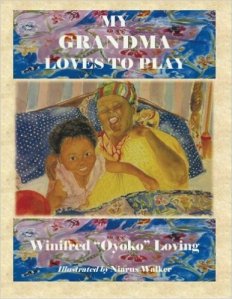 Available @ amazon.com and from author:
oyoko_viayahoo.com
Force Ripe: A Painful Slice of Girlhood
Cindy McKenzie’s Force Ripe (2015) presents a poignant tale of parental neglect, community indifference, sexual abuse, isolation and ignorance of Lee and her brother, Rally. Told through the eyes of Lee, who is not yet six years old when the books begins, and ends when she is in her teens, this story of Caribbean life in Grenada is not one you have likely read before. Honest and revealing, Force Ripe takes you on the journey with Lee, and you get to witness first hand, the uncertainty that is her life and world, replete with verbal and other abuses. It is sure to make you cry. I recommend it to be included in Caribbean literature and sociology courses.

OPA: This is your first book, what have you written before and where have you been published ?
CM: Apart from a response to a letter published in Mslexia Women’s magazine and a star letter in Woman & Home Magazine- for which I won a hat box of lovely French Chocolates and allowed myself to bask (just a little bit) in the novelty of seeing my name in print – I had not been published before Force Ripe. Previous writings include bits of prose, some poetry and short stories prompted by various online Writing Courses.
OPA: Roughly speaking, how long did it take you to write?
CM: It was a long process. I can’t remember how long, but I think I completed the first draft in a few months. I started writing – what I then titled “Celestial Shades,” back in 2001. I have a “registered to myself”, two hundred and ten pages, double-sided first draft, dated June 2005. So much has happened along this journey I have travelled with this book. And what took me a few months to write, took me fourteen years to publication.
OPA: Can you share your process of writing this novel? What are some of the ranges of emotions you experienced?
CM: The process. Hm. Writers have so many theories and rules about what works, how it should be done, when it should be done. And I have tried some of them. For me, it was handwritten notes of memories, ideas and then I drafted the chapters. Next, I typed them onto the computer. I still do it this way.
I knew nothing about rules or the fundamentals of writing at the time [I began the novel.]. What I had was this story. And I was very determined to tell it my way. I learned along the way –from the first terribly written draft– which I sent to Ian Randle Publishers, to the creative writing classes taken after the first draft, to revising, dealing with critique etc. And the learning continues.
Writing Force Ripe was therapeutic for me. I had to make that journey, all the way back and step inside Lee’s head- see through her eyes, listen with her ears, feel what she felt, talk the way she talked, walk with her again, so readers could also make that journey with her. And this journey evoked every kind of emotion in me. These emotions changed with every corner I turned, and every chapter I wrote.
OPA: This is not an easy subject, what prompted you to write this novel?
CM: This story has lived in me for as long as I have lived with it. And for a long time it has been nagging me, begging to be voiced. So I listened.
OPA: Force ripe is a Caribbean term that I heard it growing up in Jamaica. How would you describe that term for non-Caribbean people, in particular as it relates to Lee, the protagonist?
CM: To Force ripe something, for example a fruit, is to ripen it prematurely, before it is fully matured and ready. In the Caribbean, the term Force Ripe is used to refer to girls who try to be mature, who act like grown ups, too early. In many instances, as was the case with Lee, the child has been forced ripe, having to grow up too quickly, not by her own doing or choosing, but because of circumstances, choices made by the adults in her life and because of neglect. Perhaps unintended, but neglect all the same. Lee was forced to do adult things, have adult experiences, look after herself way before she was ready, before she was mature enough.
OPA: Who do you see as the audience?
CM: Because of the language, and topics presented, I see Force Ripe as suitable reading for a wide audience – from the young adult, to the very senior. I believe Force Ripe has a little bit for everyone, especially our Caribbean audience, who will be able resonate with the scenes, characters, the places, the culture and the language. I want readers to want to read this book and want to share it with others. Selective parts can even be read to the very young audience.

OPA: Are you inspired by other writers from the Caribbean, especially Merle Collins, a fellow Grenadian?
CM :I am not as widely read as I would like, however, I am inspired by writers who are bold and brave enough to step outside of conformity and write the truth, write about the taboo stuff which are unspoken and frown upon. I admire those who are not afraid to use our “Nation language” and to quote you on that, “… there are just some things that don’t have the same sense of intimacy or color if not said in Nation language…. I use nation language… to say what I mean from the center of my navel… to jolt readers to listen and read more carefully, to glean from the language the Caribbean sensibilities that I am always pushing, sometimes subtly, other times more forcefully. Nation language allows me to infuse the poem with all of the smells and colors of home…” I too believe this to be true. I thoroughly enjoyed Bake Face & other Guava Stories and Merle Collins’ Callaloo poem. When I was writing this someone very close said to me, “enough bakes and cocoa tea stories.” Am glad I didn’t listen, because bakes and cocoa tea to me is like roast beef and Yorkshire pudding to him! And I still Love my bakes and cocoa tea.
OPA: Are you currently writing or thinking about writing another novel?
CM: I have to. I already have a few chapters, which I had cut from Force Ripe, so I have a start. I would like to get right to it now, but life happens in between.
OPA: What are you hopes for this novel — in other words who do you want it to reach, which in my mind is different from audience, what place do you hope it will have?
CM: I would like to see Force Ripe in the schools, especially the secondary schools. It would be great to have it on the school curriculum, and not just in our local Grenadian schools, but as far as it can reach, throughout the Caribbean. I really hope it will find a place on the shelf of book stores, in-spite of the self published taboo which hangs over it. And I would love to see Force Ripe as a movie.
OPA: Your children certainly were involved in the production of the book, how does being a mother inform the writing of this book?
CM: Being a mother has made me look at the characters with different eyes, especially the main character Lee. As I wrote about Lee’s experiences, I was able to compare her with my own daughter at different stages in her life, particularly at the age of 10. Being a mother has made me look at myself and where my children would have been had I make different choices, like my own parents did.
An excerpts from Force Ripe
“The convent girls gather up the front gate and line up the steps like a firing squad when they hear the Rastaman daughter coming. Me legs tremble. Me chest get heavy with fright. So I pull meself inside me like a soldier crab. I could do it real good now. And sometimes, I does even forget to come back out (p.272)”
Website:http://cindymac.info
Facebook: https://www.facebook.com/Cindy-McKenzie-Author-295573863938027/timeline/
B is for Benye, a VI Book from New Writer
 Charlene Pemberton, is a retired teacher who taught for 30 years in St Croix, at the middle school and high school level. Although she hails from St Thomas, her place of birth, St Croix is now her home, where she has just launched, her first book, but most certainly not her last.
Teacher Pemberton worked for seven years researching and editing this ABC text that is not a primer. “After writing it, I left it on my desk for years until my daughter pushed and propelled me to publish it, October, 2015.” Similar to many established and emerging writer, Pemberton’s process begins with brainstorming. She adds, “Then I write continuously without correcting errors. Usually, I put my writing away for a day or two and begin with a fresh eye. Here is when I complete my revising and editing. Also, writing and reading groups offered ideas and encouragement throughout the process.”
The kernel for this book began many years ago as Charlene narrates its impetus. “One day I brought benye treats for my high school English classes. To my surprise, this local name was unfamiliar to them. However, after tasting the treats, the class responded saying, “We’ve had this before. But we just didn’t know the name.” Pemberton asserts that it was this event that “planted the seed for my cultural book that informs, and at the same time it highlights culture. I dedicated my book to my grandson because I want him to know about his culture and to pass it on to future generations.”
Donning the roles of teacher, mother and grandmother contributed enormously to the writing of the book, Charlene Pemberton notes. Even though her targeted audiences are middle school students and their parents and teachers, the book is also for visitors to the US Virgin Islands. “These groups, I believe, would appreciate the essence of our culture and history.” Reflecting more, Charlene adds, “I would like my book to reach different cultures. Virgin Islanders have a unique heritage and through my books I hope to share my culture with the world.”
Inspired by her community, Pemberton pays homage to the late Crucian poet, Marvin Williams, whom she knew. “One of his [Williams] first published poems is my favorite. I believe it was about Milo and the Kings, a musical icon on the island of St Thomas. I loved this particular poem because it depicted Virgin Islands musical pride.”
Be is for Benye is the first of many to come. Charlene Pemberton is currently researching Virgin Islanders “who were members of the Tuskegee Airmen. This type of information is usually not found in history books.” Like so much of the Virgin Islands rich history that has been omitted, Charlene Pemberton believes firmly that the history and culture “must be written about and celebrated by its own so our children and future generation will know the foundation of their culture.
Support local writers such as Charlene Pemberton by buying her book, and insist that local schools purchase copies. In additiona, by purchasing and sending copies for family and friends who live abroad, as well as the children who are here, you help to support the continuity of the culture.
Happy that her book is finally out, Charlene Pemberton says, “I would like to give a warm Virgin Islands shout out to all my former students!”
Below is an excerpt from B is for Benye.
B is for Benye: A Virgin Islands Historical and Cultural A-Z Book begins with a Virgin Islands family, the Penns, living In Orlando Florida. The grandparents, Clarice and Vincent, who live on the island of St. Croix, want to pass down and share their Virgin Islands heritage with their grandchildren, Madelyn and Joah who have visited St. Croix only one time. So, both grandparents decided to send the children a very special present.
Can you guess what present the Penns sent their grandchildren?
Well, come along and find out.
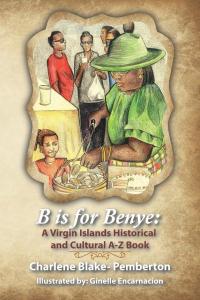
Available at stores in St Croix and St Thomas
The Rain of Life
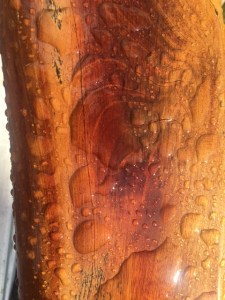 We depend on rain for our water supply.
We depend on oxygen to breathe.
We depend on day to work and play.
We depend on night to rest and sleep.
We do not create or have anything to do with any of these so called “natural” phenomena.
More often than not we take them for granted.
What or who else are you taking for granted in your life?
Where are you just showing up and receiving blessings without giving something in return?
In order to have water all the time, even when we go for periods without rains, we have to built dams and wells and cisterns.
We accept the oxygen by breathing, and some of us practice deep breathing as we have learnt that this habit expands our lungs and helps the oxygen to circulate more fully throughout our bodies.
Similarly, with the day and night, we have learnt how to harness and maximize both times, and the benefits and necessity of each for us.
So it is not really true that the good things in life are free. Nothing is free. Everything requires our conscious or unconscious reciprocal energy.
Therefore, if you want rain in your life, make sure you have a container to store it, and you plan for its uses so you will always have water when you need it.
Think about all the people and the plant and animal life throughout the world who die from lack of water. Pause now and send them a drop of daily rain. You and your thoughts are that powerful.
The Island of Your Mind
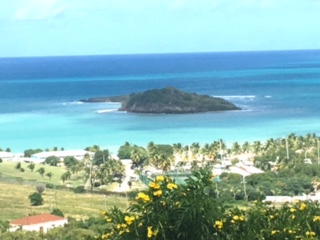 Some of us live on islands and for us these islands are the world, as big as the African continent, the 2nd largest, but depicted inaccurately on most maps to look smaller.
Some people dream of owning an island, while others have purchased islands for their own private resorts or play ground.
Each of us possess an island, also known as your mind, and as such, you get to decide what you allow in and out.
As you begin a new year, honor and protect your mind by being mindful of what you eat, who you associate with, what information you allow to enter, and most importantly the thoughts you allow to linger and upon which you ponder.
No need to enter a race if you decide in advance that you cannot win. Similarly, whatever thoughts and ideas you feed to your mind will grow. Plants flowers and fruits on your island, not weeds and despair.
My island is 360 degree of positive inspiration and creativity.
Get Busy Living the Life You Want
 All too often I hear people making all kinds of excuses about why they are not living the life they want, why what they want is not impossible or they have to wait until the time is right.
Toss excuses into the garbage. If you want it and think it then it is possible. The time is now. The time is right, if you make it so.
Live your life fully today. Take baby steps towards your goals. Love every moment of every day. Don’t sweat the small things. Forgive people’s haste and ignorance. Be bigger than the small minded.
When I wake up and look out at this beautiful environment that nurtures and protects me, I know I am on the right path and my life is unfolding like a glorious sun-flower.
Joy and gratitude are the stepping stones to achieving your goals.
Our Pot of Gold
 Our lives are precious and invaluable, and there is so much more that we each can do for ourselves as well as for others.
Forget about old hurts and grudges. Give them to the earth to be transformed into compost.
Banish the naysayers from your head.
There is really nothing you cannot do. If you think or dream it, it is possible.
Welcome the builders and cheers in your life. Welcome those who say yes to your projects and those who say I have an idea how you can achieve them, let me help you. Say yes to help and assistance it is a form of strength.
Welcome community because it is really true that it takes a team to make many amazing projects happen.
Call up an old relative or a friend and apologize even though you are sure you were not the one who caused the infraction.
Promise to do something small daily for the world, and that might just be to do you to the best of your ability and smile and applaud yourself.
The world needs our love. The world feeds on our joy. The world rejoices about our creativity. The world really, truly says yes to you just as you are.

Here! Let’s share this pot of gold.
The Best Is Now
 Today, right now is the perfect time to contemplate where you are, where you want to go, and acknowledge that your life is good and getting better minute by minute because you are paying attention and getting rid of everyone and everything that do not serve you and/or detract you from being and living your highest and best self.
How glorious you are. How awesome is your life. How blessed is this life, the only one you know…
Natalie Baszile: Blazing with her debut novel, Queen Sugar
An Interview with Opal Palmer Adisa
Natalie Baszile is the author of the debut novel, Queen Sugar, soon to be adapted into a TV series by writer/director, Ava DuVernay of “Selma” fame, and co-produced by Oprah Winfrey for OWN, Winfrey’s cable network. Queen Sugar was named one of the San Francisco Chronicles’ Best Books of 2014, was long-listed for the Crooks Corner Southern Book Prize, and nominated for an NAACP Image Award.

OPA: When did you know you had a novel in you?
NB: I began to suspect I had a novel in me when I realized a short story I’d written was actually just part of a larger story. This was 1997 and I was at my grandmother’s funeral in Louisiana. During the service, it occurred to me that her town was the place from where one of my characters had come. It was a startling realization, but also a relief. When I got home from the funeral, I pulled out the short story and started imagining the characters’ lives. The novel grew from there.
OPA: What education/life experiences prepared you to write this novel? And how long did it take?
NB: Queen Sugar took 11 years to write, and I have to say that everything I did in advance of selling the manuscript prepared me to write it. I was an English major as an undergraduate at Berkeley. That’s where I was first introduced to and fell in love with Afro-American Literature. Afro-American literature was experiencing a renaissance of sorts. Alice Walker, Toni Morrison, Gloria Naylor were just a few of the black authors who were all publishing books and I was completely inspired by their work. That’s when I started to thinking I might want to be a writer. I earned a M.A. in Afro-American Studies, and that experience depended my appreciation, not just for Afro-American literature, but for the history the diaspora. Those two experiences helped me lay the foundation. Years later, after I’d started working on Queen Sugar, I went back to school again and earned an M.F.A. in Creative Writing because I realized I needed to learn more about the craft of writing. I also worked for my family’s business for eleven years after college. While that experience didn’t teach me anything about writing, I learned some valuable lessons about how quickly time could pass and how important it was for me to pursue my passion while I had the chance.
OPA: Did you always know you wanted to write?
NB: I always knew I wanted to write. I loved books as a kid, and initially thought I wanted to be a journalist. During college I secretly dreamed of moving to New York and writing for a magazine, but I was afraid to take the leap, which, looking back seems so ridiculous. But I’d also promised my dad that after graduation I’d work in his business. I’m the oldest of two girls, and my younger sister announced early on that she wanted to be an academic, so I suppose I felt a sense of duty–so that’s what I did for 11 years until I couldn’t stand it any more and quit. Writing is something I have to do. It’s an absolute necessity–physically, emotionally, and psychologically, spiritually. When I don’t write, I don’t really feel like myself.
OPA: Your novel, Queen Sugar, is set in Louisiana. Did you grow up there or do you have family there?
NB: I’m a native Californian, but my dad was born in Louisiana, which, I think, gave me permission to claim it as part of my identity. My extended family still lives there, and I love having southern roots, but I’m also grateful to have a western sensibility. I don’t think I could have written Queen Sugar if I’d been born in Louisiana. That book is all about discovery and being in a state of wonder. In so many ways, I needed to occupy a space outside of the culture in order to write about it.
OPA: Why is this story important to the Black literary tradition?
NB: When I first dreamed of becoming a writer, African-American literature explored a range of topics, but then it seemed to narrow for a time, which I think had more to do with publishing and less to do with reality. But there was definitely a period when it seemed that the only stories told (or published) about black peoples’ lives were either entirely urban or entirely rural, and I wasn’t seeing anything that reflected my experience on the book shelves. That lack of range was huge reason why I wanted to write Queen Sugar. Because it’s like Toni Morrison says: “If you don’t see a book you want to read, then you must write it.” I always hoped that Queen Sugar would tell a story readers hadn’t seen: the story of a middle class, suburban black woman from the west. The Black literary tradition is so rich. I’m very grateful to be a part of it.
OPA: Which black writers and other writers’ works have influenced you?
NB: Where do I begin? James Baldwin, Toni Morrison, Alice Walker, Zora Neal Hurston and Jean Toomer were some of my early influences. I love Andrea Lee’s story collection, Interesting Women, then there’s Zadie Smith and Chiminanda Adiche. I don’t write poetry, but I read it and have tremendous admiration for poets: Elizabeth Alexander, A. Van Jordan, Natasha Tretheway, Cornelius Eady, Yusef Komenyakaa, Lucille Clifton . . . . I just read Claudia Rankine’s Citizen, which blew me away, and am reading Robin Coste Lewis’s Voyage of the Sable Venus, which I love, love love. I love Amy Bloom and Elizabeth Strout, Michael Cunningham, Elena Ferrante’s, Anthony Doerr. So many writers . . .I also draw inspiration from other art forms. Kara Walker’s work is provocative and interesting. Then there’s Glen Ligon, Carrie Mae Weems, Elizabeth Catlett, and Richard Mayhew . . . I could go on.
OPA: Are you willing to say what you’re working on next?
NB: I have an idea for my next novel, but I’m at the very beginning of the process, which feels so strange after working on Queen Sugar for so long. I have the tiniest seed of an idea, just a kernel, which I have to nurture and protect, so I can’t say much about it.
OPA: What does Natalie do for fun, when she is not writing, let us, just a little, into a glimpse of you – Natalie?
NB: When I’m not writing, I love to ride my bike and garden, although I have to confess I haven’t done much of either lately. I had a big garden when I lived in Los Angeles, but I still haven’t figured out how to grow anything but salad greens and lemons in San Francisco where it’s so much cooler. I like to entertain and enjoy entertaining friends over for dinner. I love to travel and have a long list of places I’d love to experience. I have a lot of things on my bucket list.
Natalie Baszile, a member of the San Francisco Writers’ Grotto, has a M.A. in Afro-American Studies from UCLA, and an MFA from Warren Wilson College’s MFA Program for Writers. Her non-fiction work has appeared in The Rumpus.net, Mission at Tenth, The Best Women’s Travel Writing Volume 9, and O, The Oprah Magazine. For more information visit her website: http://nataliebaszile.com or connect with her on FaceBook
 Opal Palmer Adisa