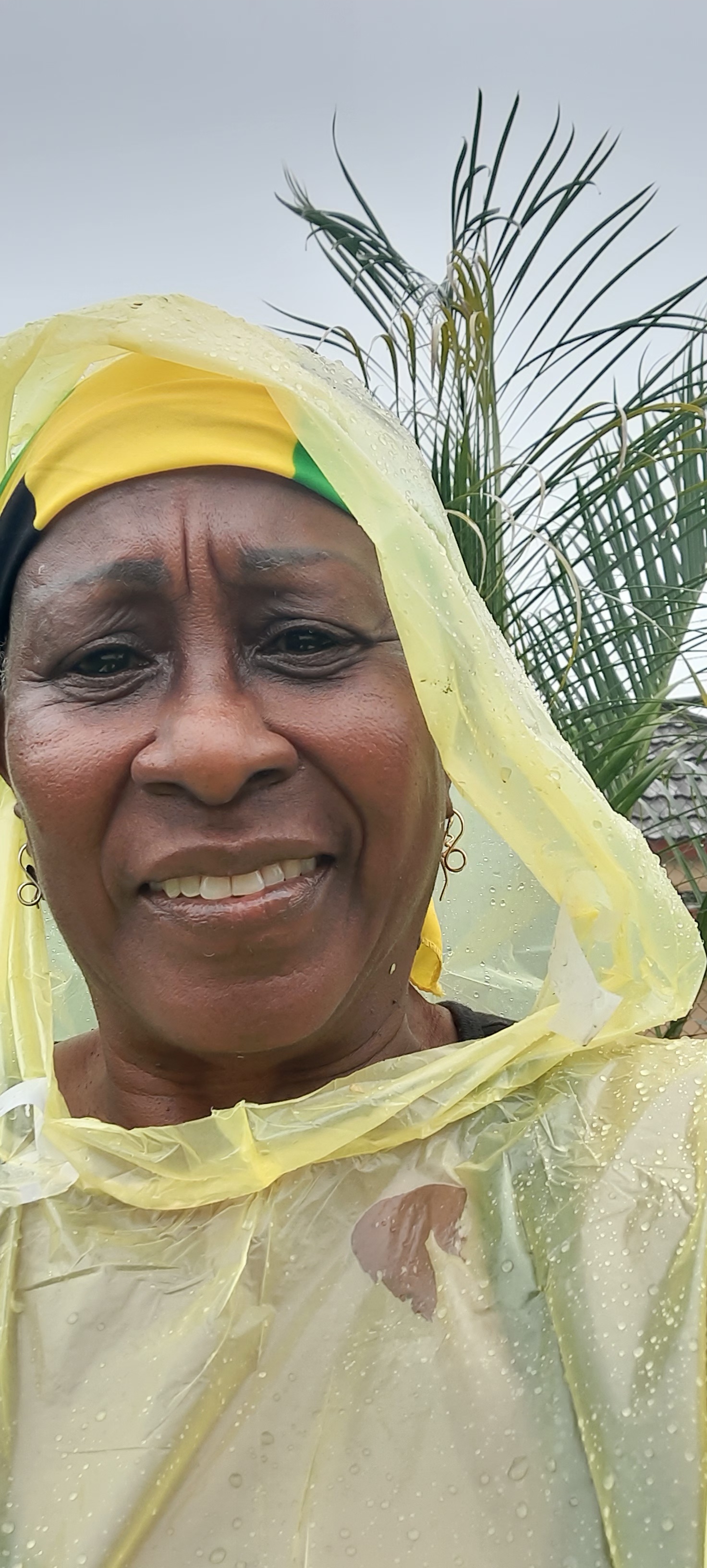
Opal Palmer Adisa is an exceptional writer/theatre director/photographer/gender advocate, nurtured on cane-sap and the oceanic breeze of Jamaica. Writer of poetry and professor, educator and cultural activist, Adisa has lectured and read her work throughout the United States, South Africa, Ghana, Nigeria, Germany, England and Prague, and has performed in Italy and Bosnia. An award-winning poet and prose writer Adisa has twenty four titles to her credit. Most recents are: Pretty Like Jamaica; The Storyteller's Return; Portia Dreams and 100 + Voices for Miss Lou. Other titles include the novel, It Begins With Tears (1997), which Rick Ayers proclaimed as one of the most motivational works for young adults. Love's Promise; 4-Headed Woman; Look a Moko Jumbie; Dance Quadrille and Play Quelbe; Painting Away Regrets; Until Judgement Comes;
Earth days are special, and I tribute this feeling to my mother who made my birthdays magical when I as a child.. Since I turned forty, I’ve made it a rule never to work on my birthday. As an academic, I had the freedom to arrange my schedule, so if my birthday happened to fall on a teaching day, I’d send my students on a field trip or give them a research project.
Birthdays, for me, have always been sacred and wherever I am in the world, I find a body of water, sea, river, or a lake to visit and spend some time meditating. After that reflective time, I treat myself to an elegant meal and usually end the day with some kind of body work, a massage or facial. My birthdays have been about reflection, indulgence, and gratitude.
But this year was different. After Hurricane Melissa, celebration felt out of place. Watching the devastation across Jamaica, I knew the best way to honour my life was to give. I’m privileged in many ways, and have more than enough. But so many in the rural areas had lost everything. While relief efforts were underway, many communities were still untouched, cut-off, unseen.
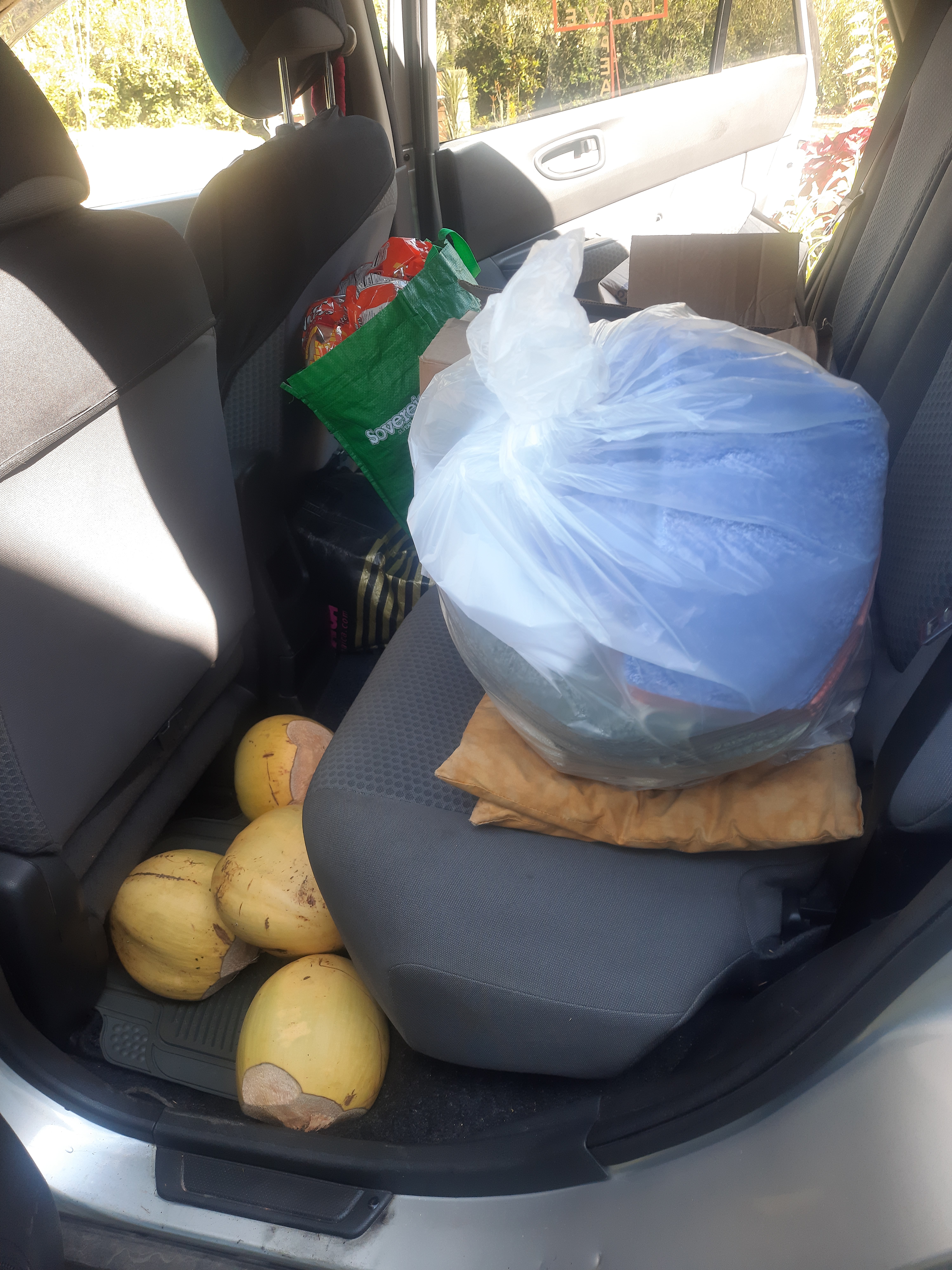
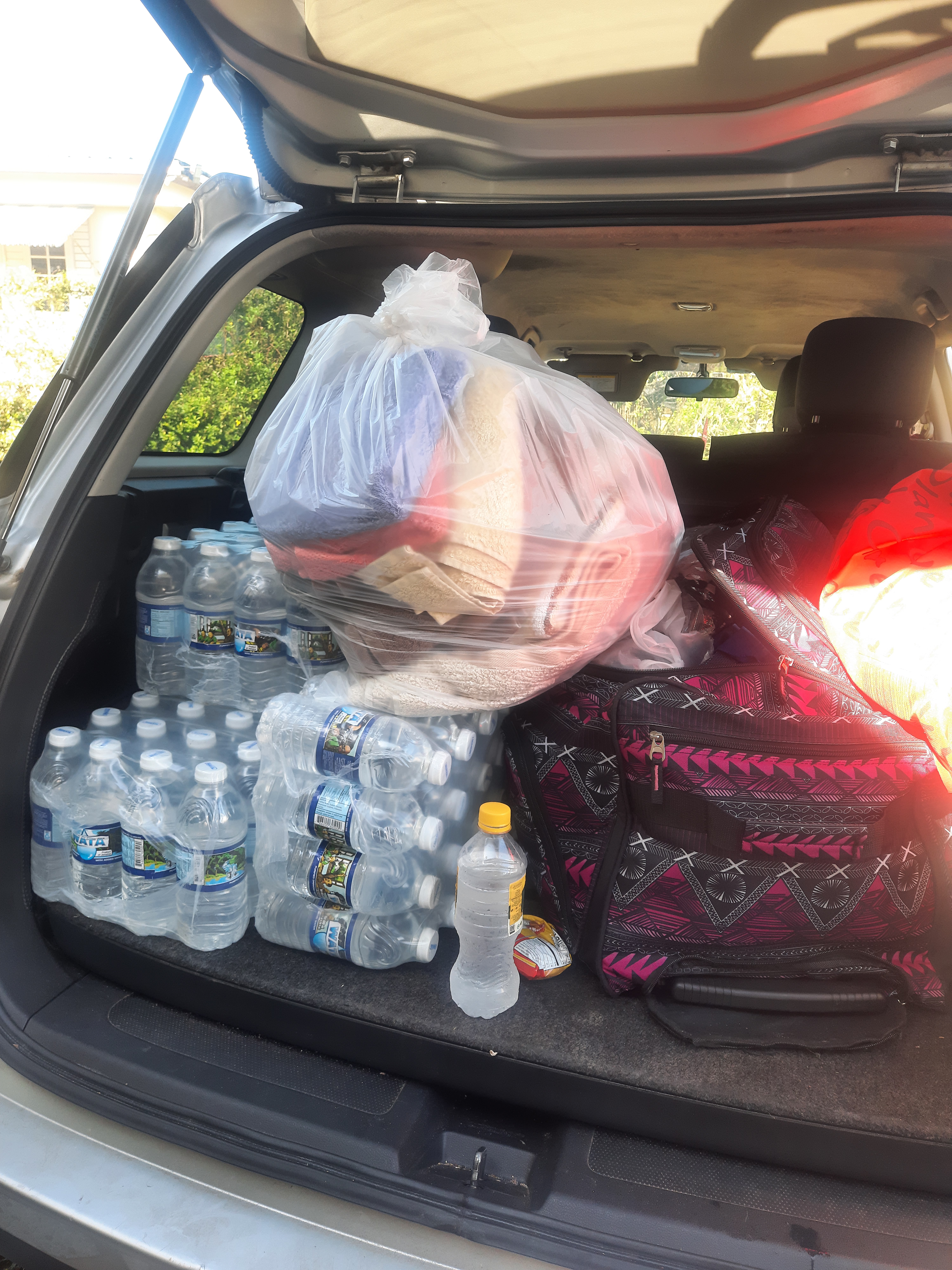
So first, I went through my closet and unloaded 40 dresses, most of which have not been worn more than six times; people needed clothes. Also, I knew people needed towels and wash cloths so packed up ten of those. Next I went shopping and spent $35,000 on the basics: rice, flour, sugar, cornmeal, bread, crackers, tinned mackerel and sausage, wipes, bottled water, soap, shampoo. I loaded everything, and accompanied by a community male, I drove to Anchovy, a community a distant cousin told me had been devastated and overlooked.
There, by the river, I met nine women washing clothes with their children nearby. Their words came like a chorus: “We have lost everything. No one has come.” I distributed what I had, and they showered me with blessings and gratitude for my modest donation. I thought about taking photos of the distribution but in the moment, the need of the women and children did not leave space for such documentation. And because the story isn’t about what I gave, but rather what lesson Melissa gave me: a new way to see my birthday not as a day of self-luxury, but of active service.
Returning from Anchovy I went into my closet, and it did not look empty. It was still full, with more dresses than I need. That’s when I affirmed that I am rich. I had never used that word for myself before. I used to say “comfortable,” but no, “I am rich.” Yet I realized I am rich enough to give and not experience loss. This is what many of my fellow Jamaicans must reckon with: the illusion of scarcity. We have more than we think.
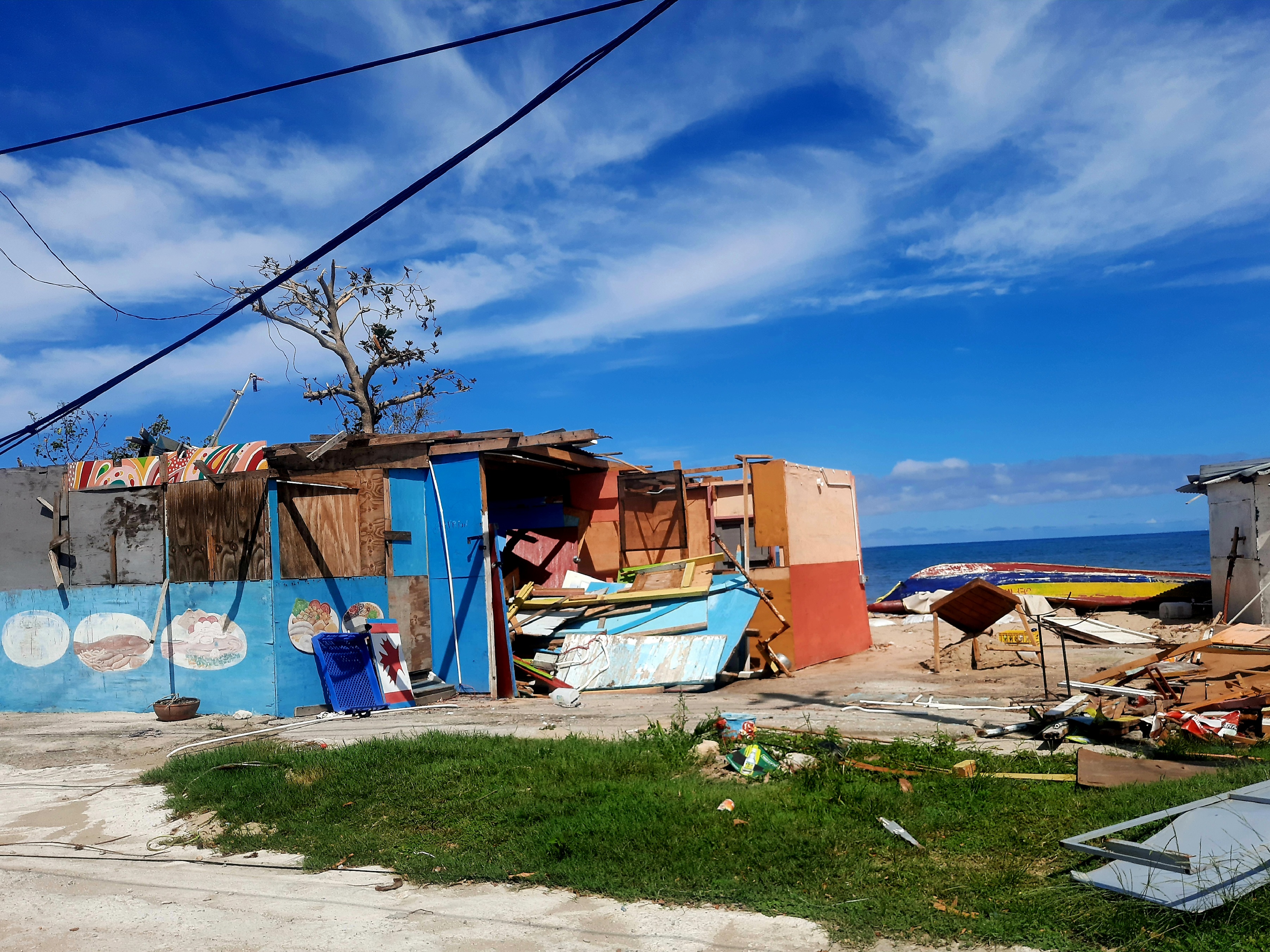
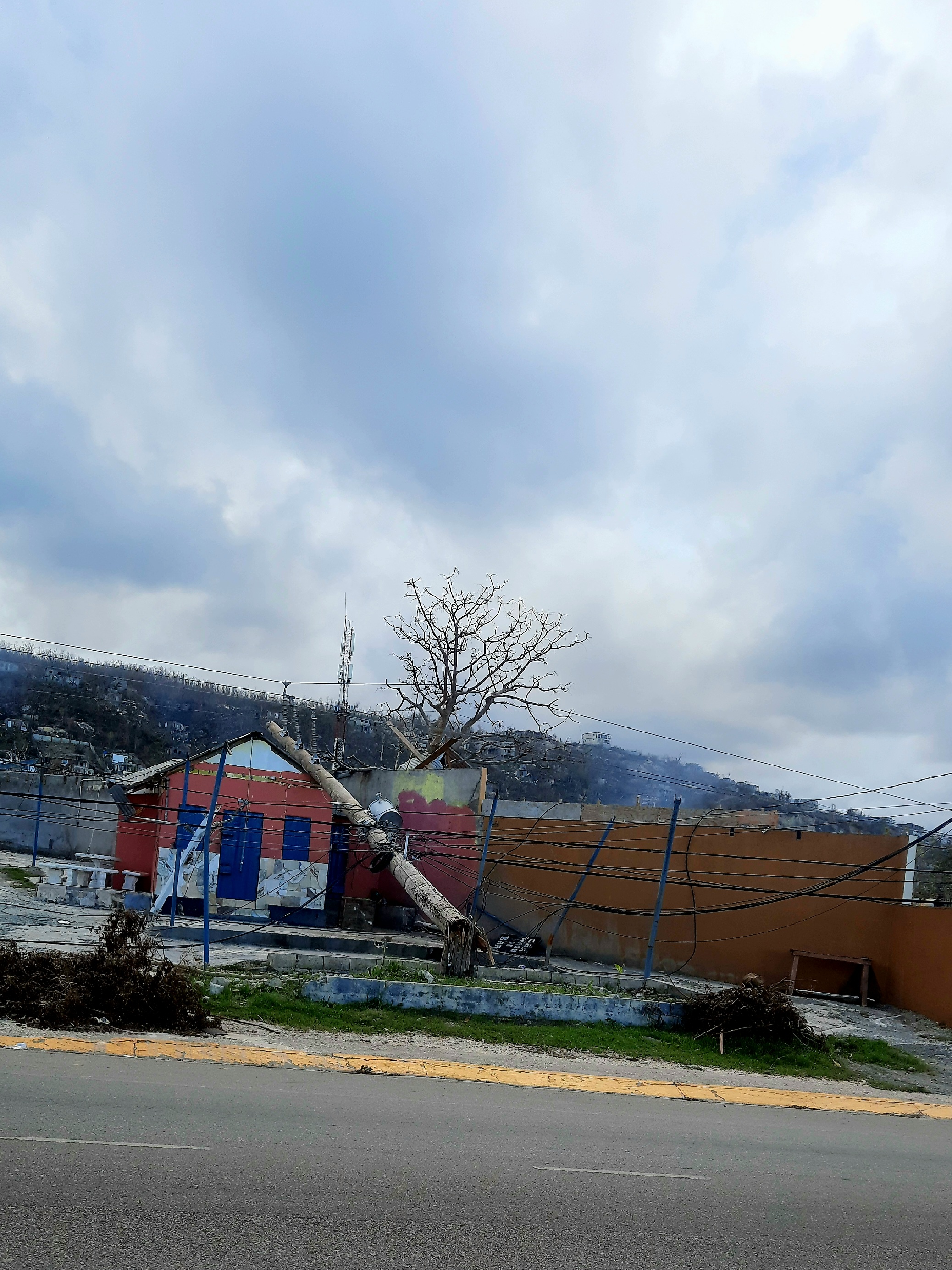
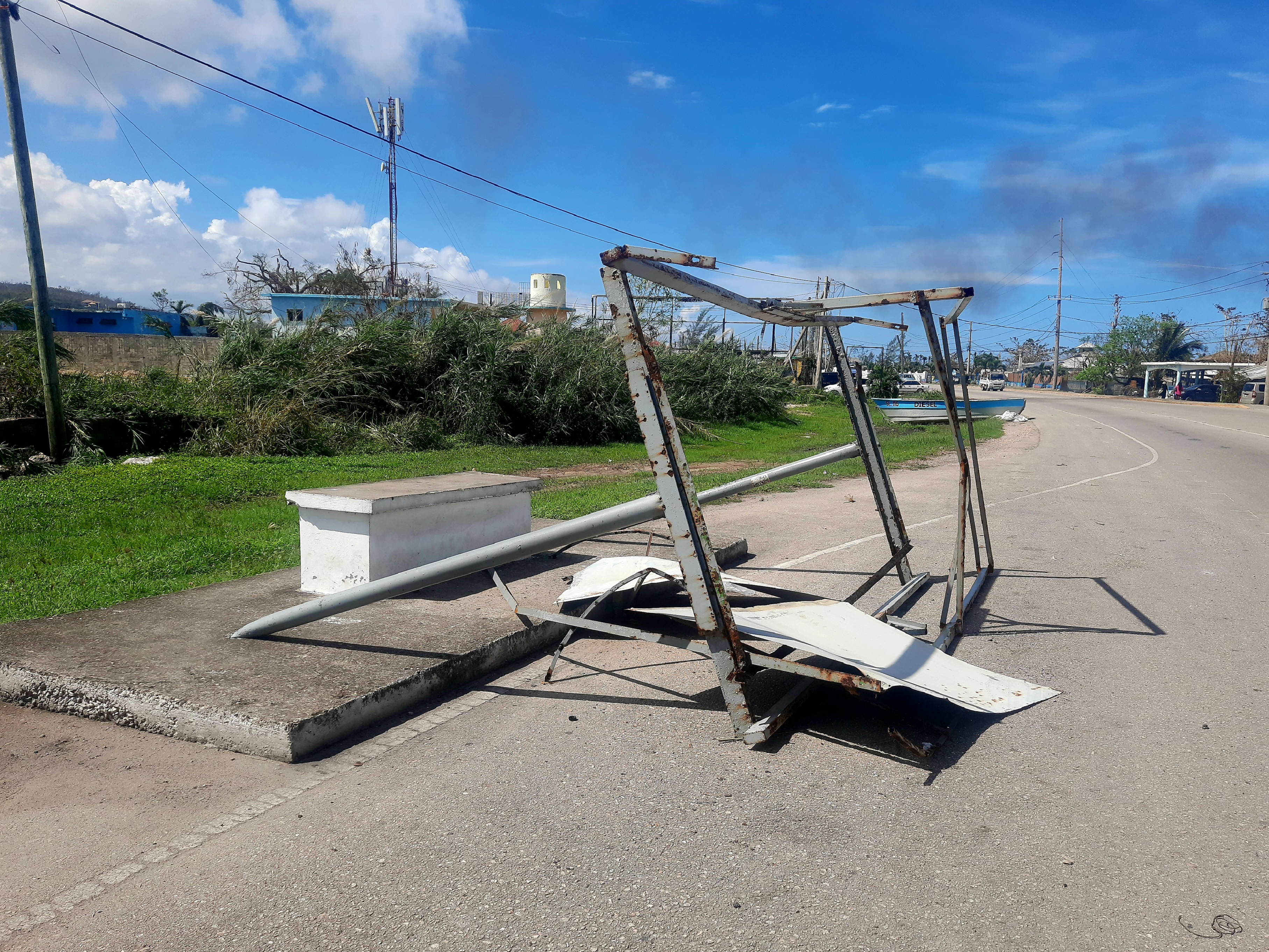
But my heart and body felt pained as I grieved for those people and the land that have been so severely impacted. The countryside looks like images I have seen of Beirut and Iraq in ruins. Thousands of trees gone. Animals lost. Land stripped bare.
And while it is true, we’re a resilient people, a phrase repeat like a mantra, I want to invite all of us to pause. It’s time to admit that resilience alone isn’t enough. We must allow space for grief, for weakness, for mourning so we can rebuild stronger and better. Strength means nothing if we cannot first acknowledge our pain and what we lost.
I believe rich and middle-class Jamaicans have a moral and social responsibility to adopt the forgotten villages, those not on the radar, cut off from aid and internet, invisible to the government. These are poor Black communities that have been neglected for centuries, before and after independence. They need more than charity; they need solidarity, and a plan that will secure their respective places, but also take them into the future. They need their stories recorded, their voices amplified, and their needs and wants acknowledged and respected.
This is an opportunity for the Ministry of Culture and Gender to send young artists, writers, and students into these communities to document the traumatic experiences of these people. Let us create a living archive of their voices, a testament to what Hurricane Melissa has done to our land and our people. We owe them that dignity.
And so I’ve made a decision that every year on my Earth Day, I will give. I will continue to celebrate my awesome life but by serving. I invite my friends, colleagues, and fellow Jamaicans to do the same. Let’s adopt a village. Let’s help ensure that by next August, 2026, the families in these rural communities will have sturdy homes and sustainable livelihoods. Food relief is temporary, but empowerment is lasting.
We are resilient, yes, but we are also humans who have suffered great loss, who are in pain, and are therefore in need of not only food and shelter, but comfort, and permission to grieve. Yes, we are tallawah and will rebuild, but let us give those impacted a moment to just be still, to reflect and decide what they want their future to look like. On this Earth Day, I learned that true abundance lies not in what we have, but in what we give away.
We have a tendency, after great disasters, to say we need to push through, to get back to “business as usual.” But what does that even mean when the world we knew has been upended? Of course, those who are concerned with money, the money machinery never pauses. It never stalls. But the emotional bruises, the deep severing that happens in times like this, after Melissa here in Jamaica, are often overlooked.
I just ended a class early today. Only three out of fifteen students showed up, all of them carrying the weight of family in the devastated areas. T’s family is in Mandeville; thankfully, he has heard from them. G’s grandparents in Trelawny were unreachable for days; her mother only just managed yesterday to reach them and bring them supplies. M, Another student has relatives in Black River; for days her family were on jitters, but now they got word that they are but practically homeless due to the severe damage to homes. “We cannot focus or concentrate,” one student admitted.
They came to class as I did , showing up, yes but it was heavy. Each one spoke of exhaustion, of numbness, of not knowing how to speak the unspeakable. One student said simply, “Miss, I really don’t know how I’m feeling.” That, to me, was the most eloquent response of all. She doesn’t know because the feeling itself is too large, too raw.
So we sat with that heaviness. We talked a little. We were grateful for the extra week the university has given us, since classes were cancelled during the storm’s preparation. But the truth is, many of us still don’t have electricity or running water. Some students live on campus, others off, but none of us are untouched.
It is not business as usual. And it will not be business as usual for a long time.
To pretend otherwise is to force people to swallow their feelings, to bury their pain beneath routine. But the feelings remain: the anxiety, the sense of loss, the disconnection.
Despite all our gadgets: our phones, our laptops, our Wi-Fi — we were cut off. When the power went, when the towers went down, when the batteries died, we realized how fragile all this supposed connectivity really is. The technologies that claim to unite us failed us. They could not bridge the silence, could not bring our loved ones closer.
One student said it felt like COVID all over again — that same isolation, that same uncertainty, that same feeling of being suspended between fear and waiting. And they were right. Melissa brought back the dread of those days: the quiet streets, the locked rooms, the worry for the next meal, the exhaustion of not knowing what tomorrow will bring.
This is trauma upon trauma.
For a society like Jamaica, Melissa exposes again our fragility. Kingston and St. Andrew may have been spared the worst, but almost everyone here has relatives in the rural areas that were devastated. We know mothers without diapers for their babies, women without sanitary supplies, families without clean water or food. And we know, too, that disasters bring out the predators, the exploiters, the opportunists, the perverts who prey on the vulnerable. This is their time: when people are bewildered, desperate, searching for food and water. The community, once our safety net, becomes splintered. The children are not watched. Everyone is just trying to survive.
It is not business as usual.
We must acknowledge this tremendous trauma, trauma upon trauma upon trauma. Because Jamaica has never truly healed. We have not healed from the original wound of slavery, nor from the centuries of colonization that followed. Even before Melissa, the media showed us how many of our people still live in conditions of semi-slavery, neglected, forgotten, barely surviving.
So how do we begin to heal?
First, we acknowledge that the trauma exists. We name it. We say, something in me doesn’t feel right. My head is heavy. I feel jittery, tired, unmotivated. I can’t rest. I can’t focus. I am hungry all the time, or unable to eat. These are not small things; they are the body’s language for pain.
In my class, I gave my students crayons and paper and told them to draw how they feel. Because the arts are a form of therapy. And all those children in the hardest-hit areas, those whose schools have been destroyed, they, too, need art therapy, poetry therapy, dance and movement therapy. They need someone to say to them:
We know you feel unsafe. We know the sound of the hurricane still lives in your head, still vibrates in your bones. We are here to help you feel safe again.
We must learn to speak and act with compassion. We must provide spaces of solace where one can sit quietly, listen to music, and do nothing. No deadlines, no demands, only the slow, necessary work of healing.
It cannot be business as usual, my people.
We cannot continue being traumatized and re-traumatized, whether by natural disasters like Melissa, by centuries of enslavement and colonization, by inequality and indifference, by pandemics that isolate us, and by technologies that promise connection but deliver silence.
We need to heal. We need to pause.
We need circles of love and healing and spaces where we can shout our anguish, our despair, our frustration, our betrayal. We need time to sit with ourselves, to comfort ourselves, to forgive ourselves and the world.
We need moments of kindness and compassion where we can simply be present with what we feel, and breathe through it together.
I want to thank all my family and friends who reached out with concern after Hurricane Melissa. I am okay, a little traumatize by all of the events, but given the horrors this storm brought, I consider myself not just fortunate, but blessed.
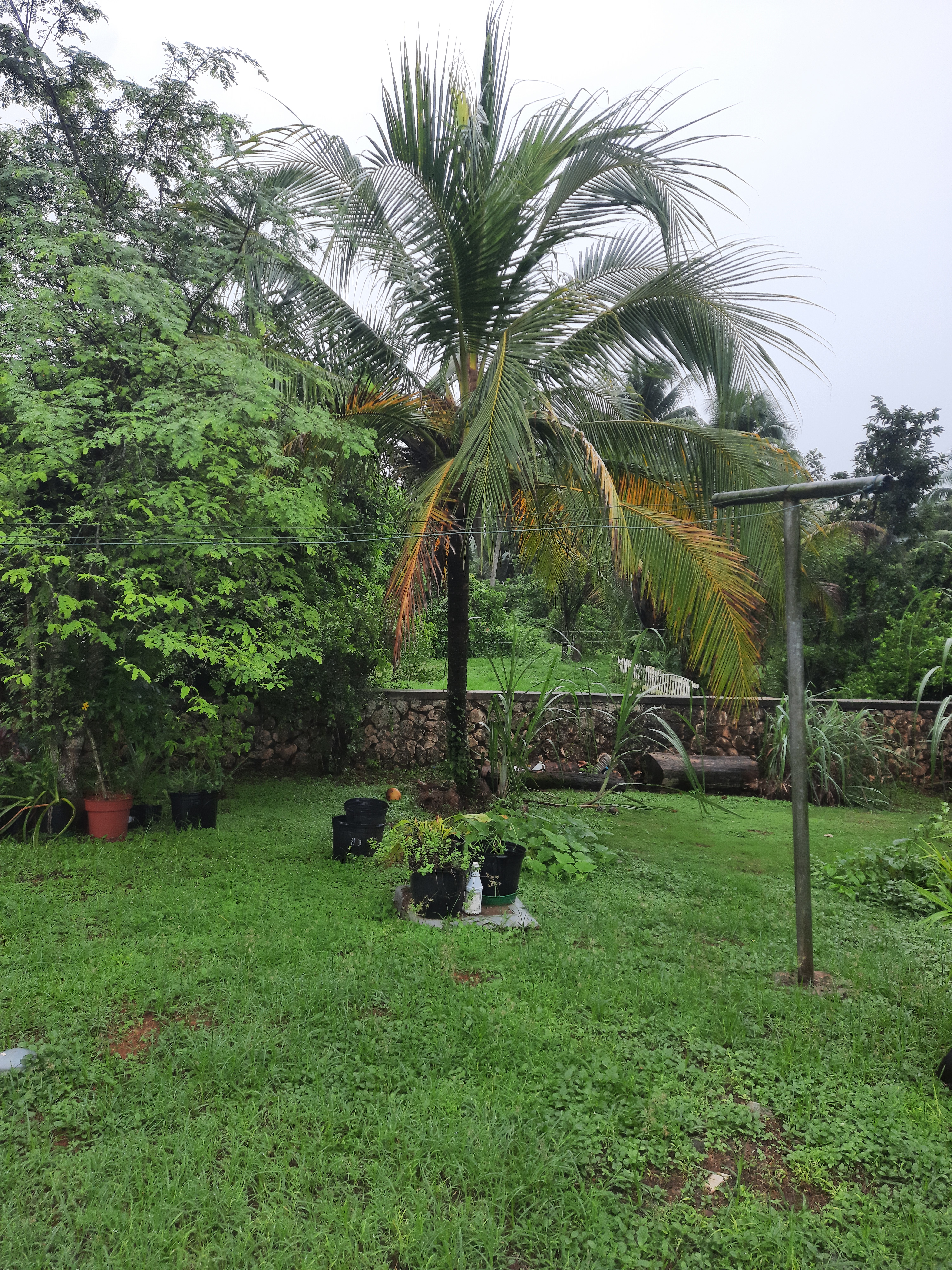
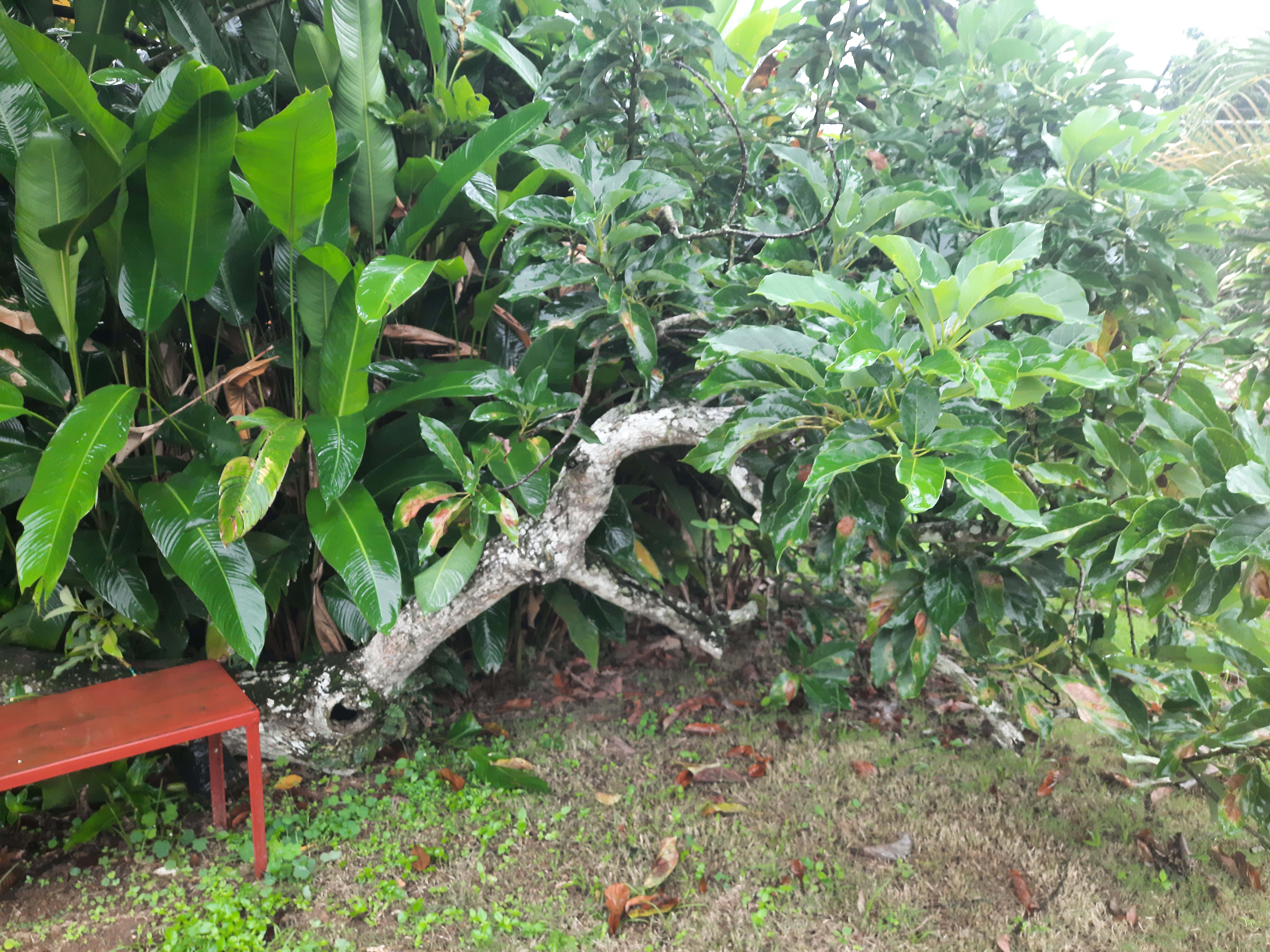
Yes, I lost some trees :my coconut tree, half of my ackees tree, my frangipani, my plantain, banana, and a few others. Plywood blew off one window, there’s some leakage, maybe three windows to replace, a small leak in another part of the house. But in comparison, there really is no comparison. I am blessed.
I’ve been staying with my niece in Kingston: she and her family have been so generous, so kind during this strange and heavy time. There’s still no electricity or water, and I don’t know when Linstead will be restored. Though St. Catherine wasn’t as badly hit, there are trees down, Flat Bridge flooded, landslides, the usual scars of nature’s wrath. And yet, all in all, we are the fortunate ones.
Melissa hurricane has been traumatic, partly because of the long buildup. Five long days of anticipation, anxiety humming in the bones. She landed in my area around 11:30 a.m. on Tuesday and she crawled and raged, groaned and dragged her feet, wailed and laid on her stomach, pounding on the ground; I was both tormented and wracked with sympathy for her, just having to listen to her howl, whine and wailed as she tore at our world until about nine that night. I couldn’t sleep. The wind had a voice, ancient, mournful, furious. The leaves and trees cried and tired to withstand the lashing, some did, many did not.
When it finally quieted, my body ached as though I’d been in a battle. The next morning, I couldn’t get out of bed. My body was in pain, and I realized it wasn’t just physical. It was trauma.
Two or three houses on my street lost their roofs. A man, a few streets over was blown to death after his roof had gone, and thinking the storm had passed, he went to secure it for his family. The wind returned and took him as a sacrifice. Gone, just like that.
They say there so far there are nineteen deaths. I believe there will be more. Some will never be counted, never deemed “hurricane-related.” Statistics cannot hold grief.
The footage I’ve seen since is as devastation like a bombing, like an earthquake. It’s beyond belief. At UWI, though the buildings stand, the beautiful trees — so many — have fallen. I will write poems for them: for my coconut tree that fell, for the ones that shaded the roads, for every trunk snapped mid-song.
Down the road, the roof of a chicken farm was blown away. The poor birds, terrified; we will not be getting eggs for a while. There is already a shortage of eggs and bread. Yesterday at the supermarket, there was no bread. The manager said the bread truck had come, and within half an hour, every loaf and bun was gone.
This is a time of mourning. For all the many-many people, families displaced, for the trees, for roofs, for the animals, for routines, for lives. But also a time of gratitude for survival, for kindness, for the breath in our lungs.
Melissa came with fury, and left us humbled. But we are still here. Rooted. Battered, yes, but alive. We are a resilient people. We survived worse, the Middle Passage and 400 years of slavery, we will work together, we will rebuild, we will grow stronger, and hopefully we will be more mindful of nature and work more in synchrony with her so we can thrive together and create a more harmonious world.
So you’ve been dilly-dallying, eh? Sauntering across the sea like you going to a party, hips swaying, your skirts of cloud dragging across the horizon. We see you, girl. We’ve been seeing you. Watching your slow, deliberate stride. Listening to the whisper of your name in the wind. They say you’re coming with anger, with force, but maybe it’s not rage at all. Maybe it’s hurt. Maybe it’s vexation, vex because of how we’ve treated you, treated the earth, treated ourselves.
All the bottles and plastics that were banned but still float like dons in the gullies. The trash we burn without care, the smoke rising like confessions. Maybe you just tired of us, tired of our stubbornness, our refusal to change our carless ways, our greed and consumption.
But I see you, Melissa. This morning I went outside to greet your first shy showers. I splashed in them, as I love to do; told you “Howdy. Welcome!” Whispered, “Please, keep my house safe.” Don’t come huffing and puffing like some big bad wolf, I beg you. Take it easy ‘round here.
I picked a few bird of paradise which I love and in your haste you might not see them and just blow them away. I said thanks to my banana and plantain trees, my lime and cane and my pear; poor ting fell down already and Delroy, the gardener help me kotch her up; so please, tek time with her, nuh, have mercy pan this old limping girl.. My coconut tree standing tall still, and all my pretty flowers: hibiscus, buttercups, bread-and-basket, crotons, ferns. Jason helped me tuck them safe in the corner this morning, so when you pass by showing off your power, you might spare them your mercy.
And truth be told, I’m not innocent either. I try me best. I pick up, I recycle, I talk about protecting the earth , but maybe I too am part of the problem. None of us are exempt, are we?
So Melissa, darling, come now. Come if you must, but come gentle. Don’t make us wait no more. It’s one of the hardest things, this waiting. My anxiety level is high, You’ve been teasing us since last Wednesday and it’s now Monday. My classes canceled, my mind wandering. I can’t focus, can’t work. So come now, in your yellow dress or your navy one, with your hair flying wild or pressed neat — I don’t mind. Just come, do what you must, and then go on your way.
And when you reach the sea, before you touch land, just exhale your breath out there, let your rage disperse over the deep. We are a loving people here, truly. Sometimes we quarrel, sometimes we act up, but deep down, we’re kind. It breaks my heart, though, to see the way we treat our own, the cane cutters, the fishermen, our people living in conditions too close to slavery. It shames me, it wounds me.
So I pray for them, for all of Jamaica. I’m lucky to be in a solid house, but anything can happen. Still, my ancestors, my Orishas, my divine guardians, they walk with me. I trust their protection, their grace.
And to all those who’ve called, emailed, sent love and prayers, thank you. It’s for all of us.
So Melissa, my tempest sister, we’re waiting. Come if you must, say what you have to say. Trace us, scold us, dash a little saltwater in our faces, and then please, leave us in peace. Let our trees rise again, our flowers bloom again, our lives go on.
Take it easy, my child. Take it easy.
Walk good, my girl. Walk good. And don’t let no bad duppy follow you for you’ve been carrying on like one wild spirit, and we don’t like bad duppy in Jamaica, no sah.
I am a writer. A writer is a person who writes books; I do this thing called writing. I have written twenty-six books, across all genres: poetry, short stories, essays, novels, and children’s books. I have edited anthologies and been published in journals far and near, wide and far. Yet many people do not understand the life of a writer. Sometimes, I’m not sure I do either. I often ask myself, why do I keep writing when my books are not selling?
The data says a writer must sell at least 40,000 books yearly to live off their craft. I have not despite twenty-six books. Still, I am a writer. I am committed to telling the stories that come to me, to portraying the people I know and never met, the histories I inherit, the worlds I imagine. But I am tired—tired of being praised but not purchased, loved but not taught, read but not reviewed. I’m not complaining; I’m simply stating the truth: I am a writer, and I write.
I didn’t begin for money, prestige, or awards, but now, I want them too. I write to reinsert myself and my people into the story: a people enslaved, colonized, silenced, erased. I write about the limestone of Jamaica, about the Taino, the first people, and the Europeans tried to take everything but couldn’t take it all. We kept more than they knew, our language, our songs, our memory.
So yes, I am a writer. I need readers to read, teachers to teach, critics to review, and buyers to buy. Read my books. Gift them. Teach them. Keep the story alive. I am fighting to keep writing.
I have never been exiled from Jamaica, though I have lived most of my life away from her shores. Jamaica has always been my root, my anchor, the marrow of who I am. I never felt cut off, never felt she was beyond my reach. Jamaica is not a distant place I visit; it is the pulse that shapes me, the rhythm in my walk, the breath in my speech. My Jamaicanness is not a badge nor a flag — it is seamless, both my imagined self and my lived reality.
Paul Gilroy speaks of “the dialectics of diasporic identification,” reminding us that it is never the same for everyone, yet always returns to the dialogue of homeland and home. Can home be carried with you? Is it in the yellow, green, and black, in the taste of ackee and saltfish — even from a can — in the cane you bite into, juice running down your chin, in the childhood lessons of duppies so that when a shadow looms, you wonder if it is this or more?
Perhaps it is as Gilroy insists: “It ain’t where you’re from, it’s where you’re at.” The “where” being body and mind, geography and imagination. Home becomes memory you carry like a favorite dress, a figurine, a faded photo of first love, the friends whose lives moved on without you as yours moved on without them. Yet it always circles back to origin. Like the time I walked into the faculty parking lot in California and found a note on my windshield: Go back to where you come from. Perhaps because I demanded a place for Black people and people of color. Perhaps because I was a woman. Perhaps simply because it was known that I was not from there — not California, not Oakland, not America. To them, I was Africa, a presence they never wished to claim except for her resources. Go back where you come from.
But it is never that easy when you live where you are not “from.” They remind you constantly, even if you wanted to forget, even if you could. It is always: Where are your people from? Where was your navel string buried? What soil stains your soles, veins your blood, whispers your names?
Gilroy says, “It ain’t where you’re from, it’s where you’re at,” but the deportee knows better. For those who fled poverty or were exiled into unfamiliar streets, home is neither here nor there. Stories told of home were mostly lies meant to soothe — to suggest a place that would welcome us — but home did not. Could not. Not for the deportees. Not for those who built new nations out of necessity. For them, home became nowhere: not in the Diaspora, not in the unfamiliar land of exile.
And yet, sometimes home is that uncanny space — familiar and foreign all at once. Like Half-Way Tree in Marcia Douglas’s Marvelous Equations of the Dread, where Marley returns disguised as a madman searching for himself. Home is recognition denied, a hostile space where you may be chased, ridiculed, shunned. It does not always yield answers. At times it feels strange, unfamiliar, as if you are experiencing the Diaspora within home itself. Still, even when hostile, home holds memory, bloodlines, visceral connections. Home teaches, as it teaches Duppy Marley before he drifts into the other realm.
But not so for the madman in Jennifer Rahim’s Curfew Chronicles. He wanted only to speak truth to power, to explain the injustice he witnessed. He was home, known — and yet not recognized. Recognition would mean being heard, and being heard would demand change. It would unravel the order, blur color and class boundaries, disrupt the hierarchy. So he was silenced, thrown down, his words trampled, his identity erased. At times, home itself robs you of belonging, of dignity, of safety. Home, too, imposes curfews.
James Clifford asks: “How do diaspora discourses represent experiences of displacement and replacement of homes away from home?” A valid question. Yet it must also be asked of home itself. How does the twelve-year-old boy who fails common entrance confront displacement at home? His identity hinges on a single act. For my Danny in Love’s Promise, the shame of home propels him outward, to anonymity in the Diaspora, to find voice and self where he is not known. Sometimes the weight of home stifles growth.
And sometimes, being away is the very condition for growth. Absence shifts the gaze from lamenting displacement to embracing the fertile ground of possibility. The Diaspora becomes a field where seeds of reinvention take root, allowing home to be reframed — not as loss, not as exile, but as promise. Between Gilroy and Clifford, home becomes a moving force, fashioned and refashioned, alive in memory, radiant in imagination — at once paradise, at once euphoria.
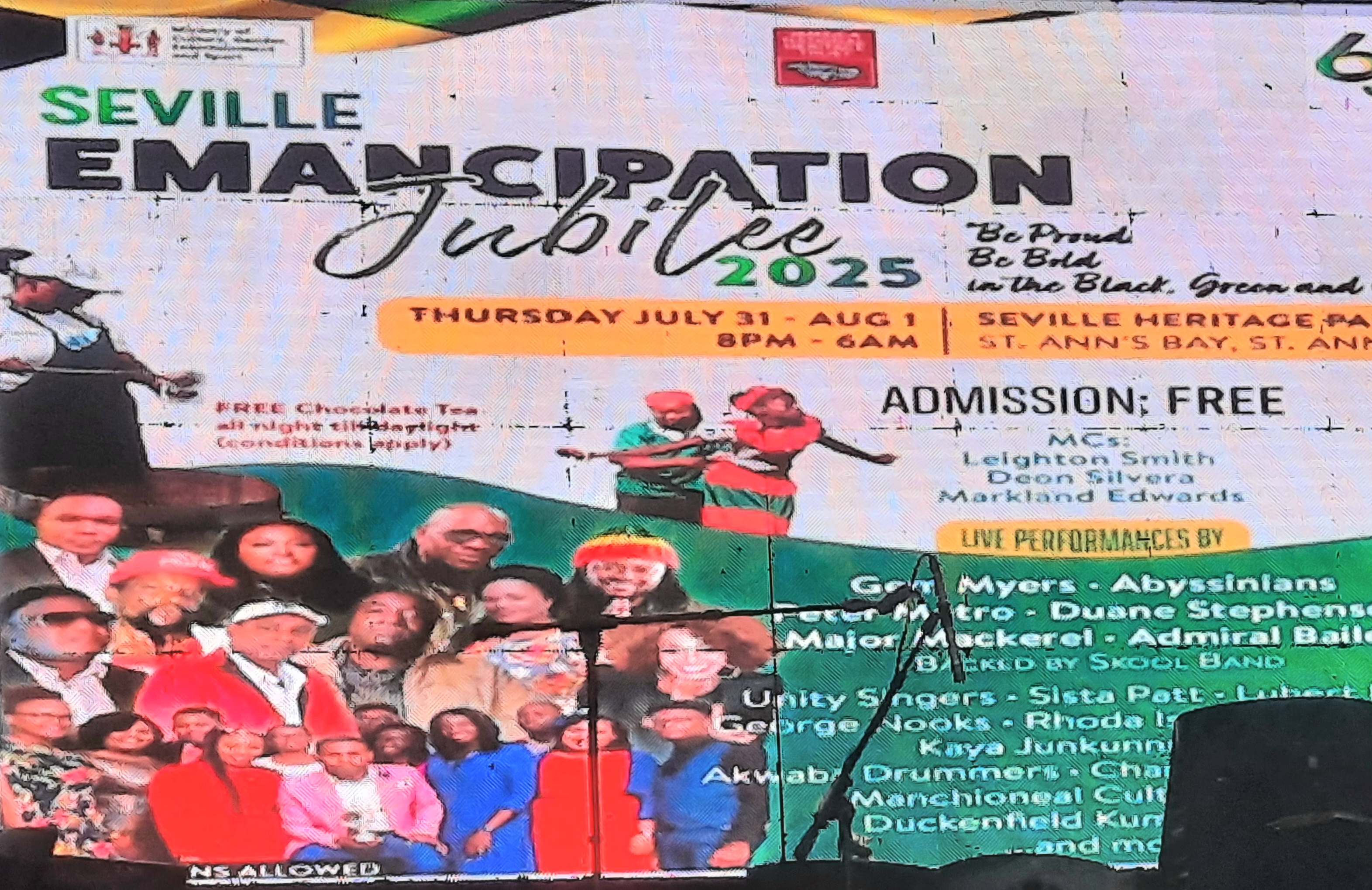
I had the honour of attending the Seville Emancipation Jubilee Celebration 2025 in St Ann, an unforgettable experience that reminded me how vital Emancipation is to every Jamaican. One of the most powerful moments of the event was honouring the ancestors, exhumation of four formerly enslaved individuals, including a woman named Coral whose remains were returned to Africa. That is a profound and sacred historical act that all Jamaican children should know about, learn from, and honour.
Seville is not just a location; it is a living monument. Field trips should happen there regularly, throughout the year. Too many of us still don’t grasp the full brutality our ancestors faced, nor do we fully understand the strength and sacrifice it took for them to resist, survive, and liberate themselves. And that’s precisely why I’m writing this appeal.
During the celebration, I witnessed a performance by children—innocent, vibrant voices singing that “Queen Victoria freed us.” I will not name the group, but I must call out the lie. That was a bold and harmful rewriting of history. Queen Victoria did not free us—our ancestors fought for, bled for, and demanded their freedom.
The Jamaica Cultural Development Commission (JCDC) and other cultural leaders have a responsibility to ensure that public performances, especially those involving children, do not repeat colonial myths. Songs like those teach our children to credit their liberation to their oppressors instead of honoring the bravery of their own people. It is insulting. It is dangerous.
Similarly, the Emancipation Proclamation that was read at the event failed to contextualize the true role our people played in securing their own freedom. That too must change. We must rewrite the proclamation—not to erase the past, but to correct the narrative and elevate the truth. Let our children read versions that reflect our people’s courage and self-determination.
And please! Why in 2025 are children still singing “London Bridge” as part of festival entries? Do we understand that this is a colonial-era nursery rhyme about plague and death in a country that once enslaved us? Why must our children sing about London when they could be singing about Stony Gut, Accompong, or Nanny Falls?
We are 63 years independent. It is past time we stop passing down lies and begin passing on pride. Let us write, sing, and teach Jamaican-centric truths. Our children deserve their own heroes, their own songs, their own stories—rooted in truth and wrapped in dignity
Kim Robinson-Walcott’s latest collection features Kingston the city as the setting. Speaking about the collection, Kim says, “It’s a collection of different voices and different people from various strata of Kingston society. Only a couple stories are not actually based in Kingston, and even there Kingston is the backdrop or starting point.”
The title, the authors states is fitting, and she elaborates: “I really think we have to harden our hearts to survive in Kingston (and Jamaica overall, but in Kingston everything seems more intense), to make it from day to day without being overwhelmed. Life is hard here. On the other hand my aim as a writer is to soften those hearts – to offer insights about different lives and perspectives that will hopefully at least in some cases result in more understanding or empathy on the part of the reader.”
Perhaps this excerpt from “Spreeing in the SUV,” one of the stories in the collection published by Blouse and Skirt Books, 2024 shed more insights:
“I always wanted to be rich. People with money had cars. When I was a
little girl I used to ask God to give my daddy a car so I wouldn’t have to
get up at four in the morning to go to school. I wanted to reach school
not tired but clean and fresh like some of the children in my class.
God didn’t listen. My daddy never got a car, and then after a while I didn’t
have a daddy because he left us to look work in foreign and never came back,
and when I was twelve I had to stop from school anyway because there was no money.
I still had to get up at four, though, because I had to get my younger brothers
and sisters ready for school and then I had to mind the baby while my mother
went out to work. And then when I was a little older I had another baby to mind,
my own this time, and then when I turned seventeen I started work myself so I
still had to get up at four.
Now my job is with some rich people up at the top of Cherry Gardens and no
bus run there, so if I don’t leave Portmore at minutes after four, then by the time
I get the bus to Half Way Tree and the taxi to Barbican and then walk up the hill
I will reach work late, and the mistress warn me already that if I get there after seven again I won’t have a job. When I get there I’m tired. Sometimes when I’m walking up that hill I try to beg a ride, but the people who drive up that way act like they don’t see you, they just flash past in their big Bimmers and Benzes and SUVs.”
Kim has been working on this collection for a while and describes its evolution.
“In a sense I’ve been working on this collection for decades: a story I wrote for Wayne Brown’s writing workshop in circa 2000 was my first piece of what I later came to recognise was flash fiction. That story won the regional Commonwealth Short Story prize in 2005, and I enjoyed writing it so much, having to condense a story into a tight space of a few hundred words, that it inspired me to write more in that genre. But I was still writing mainly longer pieces. Then in 2018 Millicent Graham invited me to teach a flash fiction workshop for her Drawing Room Project and that was a refresher course for me. I was also writing other longer short stories, but I liked the compressed energy of a shorter piece. That same year I went on a year’s sabbatical from my job as editor of Caribbean Quarterly at UWI, and although my plan had been to finalise a manuscript of those longer stories during that year, instead one after the other a series of new short pieces started popping into my brain.
Then in early 2022 Tanya Batson Savage, publisher of Blouse and Skirt Books, approached me with a proposal to publish a collection of these newer, shorter pieces. I said to her, actually I was planning to get that other collection published first. She said, no, let’s do this one. I said, I don’t think I have enough of these newer shorter stories to make a collection. She said, I think you do.
Not all the stories in this collection are flash fiction pieces but I think the energy core resides there. I signed the contract with Blouse and Skirt Books in March 2022 and in September 2022, on September 23rd to be exact, Tanya sent me her editorial suggestions. I remember that day well, because it was the same day I had a colonoscopy and I was given the news that a mass had been found that looked cancerous. A couple weeks later that diagnosis was confirmed and I started chemo immediately. It took a year before I could even think about my stories, and it was only last year that I felt I could manage revising the stories in between rounds of chemo.
So yes, completing the revisions and getting the book published – with book cover art painted by me – was a huge triumph for me.”
An editor for decades, Kim has helped many writers realize their dreams of publishing, so she understands readership appeal and audience. She speaks to the importance of this collection.
“I think it’s important because many of the stories give voice to the voiceless, the disenfranchised. Some stories give perspectives which may be new to my readers. And the stories are very short – which makes them easy to read and therefore, I hope, appealing even to those who don’t love reading!
My specific audience is primarily Jamaican or Caribbean – as the pieces written in the Jamaican language demonstrate (although I did try to write a version of patois that would be accessible). That said, I’ve been pleasantly surprised by the response of some non-Jamaicans who told me they understood and enjoyed the patois pieces. And note that only eight of the twenty-six pieces are written mainly in patois. I hope that the Standard English pieces will attract those who can’t manage the patois.”
During the writing of this collection, Covid 19 and the Black Lives Matter movement occurred, and Kim speaks to the impact they had on her and her writing.
“The Covid experience in Jamaica was much less traumatic and horrific than in other countries such as the US, Canada, the UK – we had far fewer deaths, there was no one in my inner or even outer circle who died – but it did cause me, and probably the entire world, to realise how fragile our world is, to appreciate life more, to see more clearly what matters, and that inevitably impacted my writing.
“And the imposed quiet time and solitude actually gave me space to write.
“The Black Lives Matter movement: The horrors of racism in the US and the continuing struggles of black Americans for civil rights have always been extremely disturbing – I would never have wanted to raise my children in the US. But then Jamaica is no bed of roses either – we have a problem of police brutality and a shocking number of police killings here too – the difference is that here the victims, the disenfranchised, are poor black Jamaicans.”
Here is a glimpse of her upcoming project
“I’ve been doing some memoir pieces over the years, and I want to develop, expand and consolidate them. Also I want to publish the older collection of stories that I mentioned earlier – many of them were previously published but I would like to combine them in a new collection.”
Kim’s writing process is simple yet profound. What’s important is that it works for her.
“Listen, observe and absorb.
Process – play with the subject in the imagination.
Put it down on paper (or onscreen); then leave it to gel for a while.
Rewrite, revise, refine; then leave it to gel for a while; then rewrite, revise, refine.
Kim aspires to:
To write simply and clearly.
To give voice to the voiceless.
To move people.
To show them new perspectives.
And now you know her secret, “I was/am a Trinidad Carnival addict – I missed only a handful of Carnivals between 1981 and 2021, when Covid interfered. Fête, fête, more fête – that was me. Soca makes me happy. Illness prevented me from joining in the joyful resumption of Trinidad Carnival in 2023. But I’m still hoping to go at least one more time!”
And we are affirming that Kim will get to fête, and enjoy more fêtes!!!
When did you first realize that you are a painter or rather that you wanted to paint? [You might have realized that you were an artist earlier than you decided you wanted to be a painter]. When did you step fully into your painting/artist?
When I was a child, I liked to paint and draw. I’ve never considered myself a painter, and I still don’t because painters are so saturated with paint physically and mentally, they are purists. I’m not a purist, but I use traditional materials such as acrylic and watercolor in untraditional ways. But to answer your question, I started to paint when I was about seven. Even though I have been making art since childhood, I feel now I have fully stepped into being an artist. I understand the purpose, how to sustain the ability to create art, and why I cannot live without it.
Were you exposed to Art growing up and in what ways? Are there members in your immediate or extended family who are artists?
My mother ignited my artistic spark early on, guiding me to outline shapes and fill them with vibrant colors in kindergarten. She didn’t just tolerate my scribbles in the coloring book; she was not having it.
My mother’s love for art and culture was boundless. She took me to art museums like the Chicago Art Institute, where we marveled at masterpieces, and to galleries and to see public art, even the controversial pieces. She was a fan of independent films, dance, and all things cultural. I remember her turning to drawing and painting when stress crept in, a testament to her coping through creativity. Her interest in crafts, colors, and cultural events was infectious, and she instilled in me a curiosity to experience and appreciate different art forms.
How would you define your art and what is the dialogue that you are creating between yourself and audience?
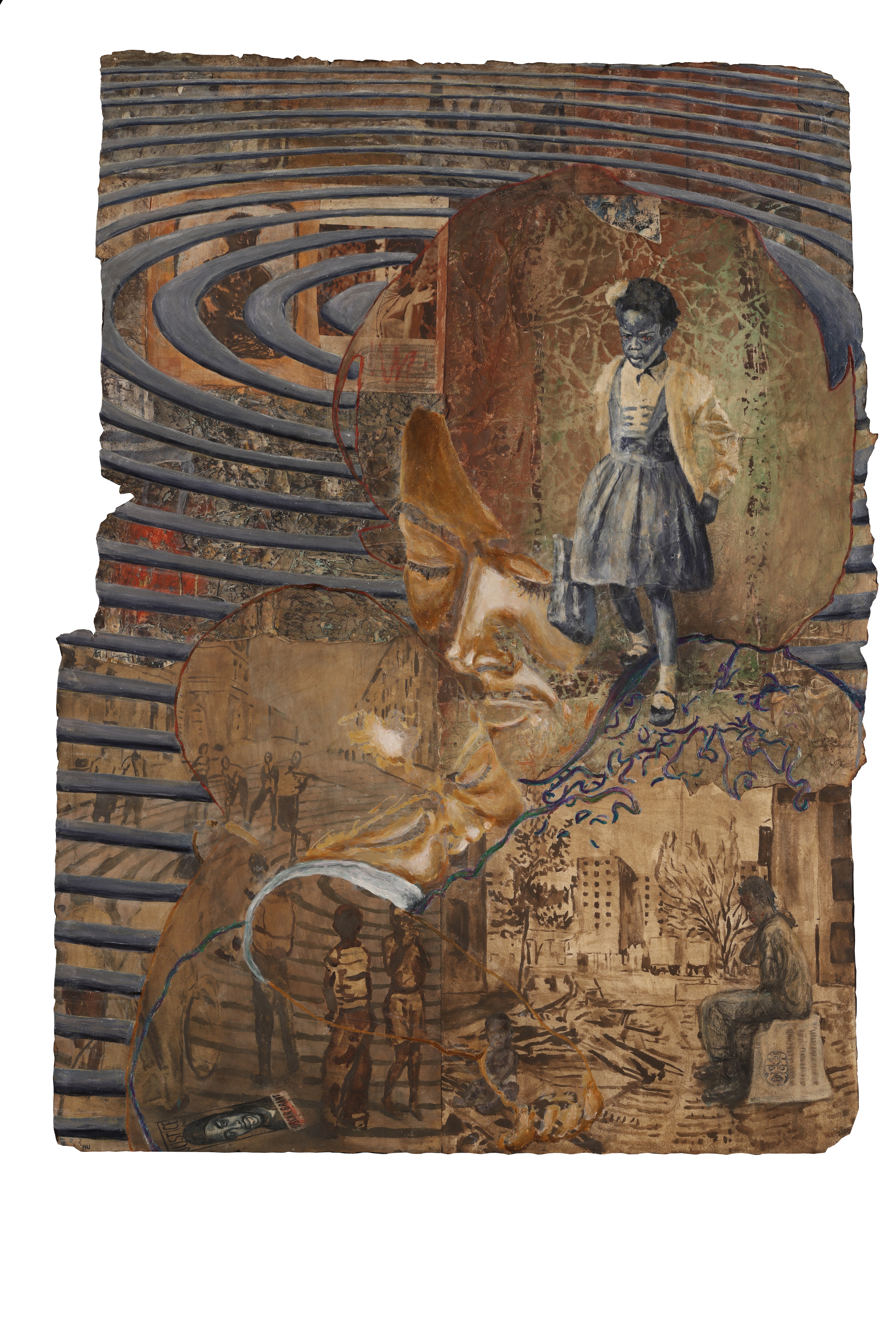
My work examines the simultaneous reality of looking backward and being in the present. It’ s not only a social commentary but also a deeply personal journey through the colonization, assimilation, and disenfranchisement of my people in the Americas. It reflects the collective consciousness and shared memories of survivors, inviting viewers to empathize with our experience.
The works on paper consist of layered collages that incorporate narrative-based painted and drawn images. These fragmented images, along with racial and ancestral memories and current events, come together to form a distinct visual language.
My goal is to awaken memories in the viewer, encouraging you to think and feel through my work. I want to create an image that resonates with you and touches your soul. I am communicating with you visually in a unique way. You recognize what you are seeing, and now it’s time to reflect on how we are all connected.
Speak to me about your new work and the other works that you’re going to be doing? What has influenced/inspired these Madonna images, women painted gold… Are you in anyway countering the Aunt Jemima, black mammy stereotypical image portrayed in America.
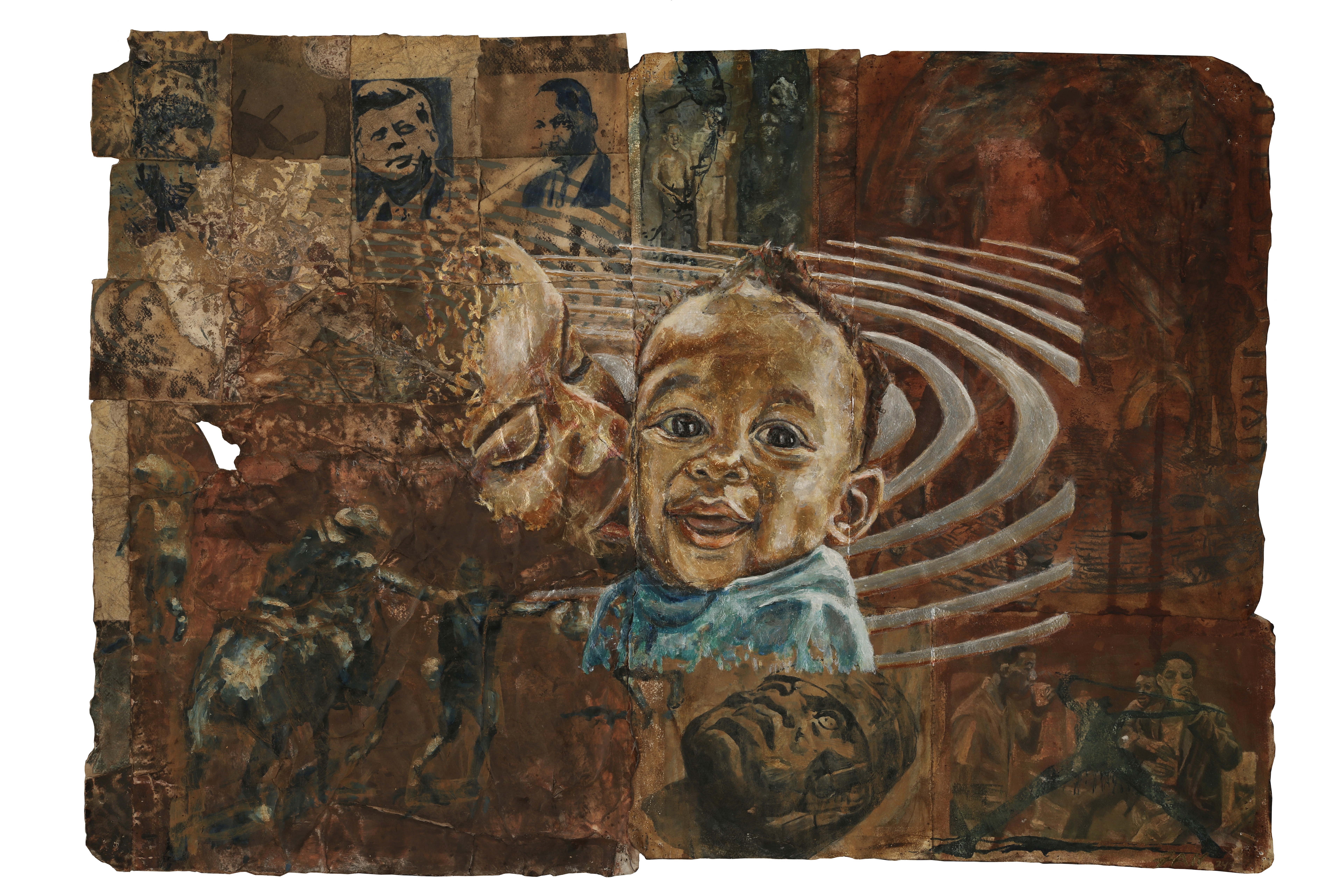
My current series, The Black Madonna, features images inspired by the original dark mother, Isis, and the iconic Mammie figure holding a child.
The image of the enslaved person nurturing the white child has been a cultural taboo that is hard to forget. Yet, I was compelled to examine these images since it has been associated with some of the elders in my family.
The mammy, nursemaid, and bed-wench servant figure perched on the spiral of life appeared in my work in1999, and I’m still deeply engaged with a mixture of those images and symbols, demonstrating a continuous commitment to the exploration of these themes.
Yes, of course, I wanted to counter those explosive images and heal those old wounds that many black women and their children carry, aiming to empower and bring about positive change.
So, the Black Madonna series was created. Contemporized images of golden and copper black women lovingly holding their babies are layered over composed visual narratives. These narratives are carefully constructed to question societal opinions, using layered images, fragments of symbols, and current events to create a multi-dimensional and thought-provoking experience.
I see that you have a series about children, how did that come about and how does that fit into the larger body of your work?
The Legacy series came about from a visit to my mother in Chicago, who was sick. I stayed with her over the summer and watched a group of children hanging outside, or at least that’s how I perceived them. They were moving in a group, walking, talking, and a little playing, but nothing like I thought. I thought, wow, there is a group they could play games together, like how I grew up. It wasn’t until I went back to Oakland that I realized they were in a war zone infested with drugs, etc. I was behind a tall chain linked fence with locks surrounding my mother’s property, and I realized that they were surviving. They had to keep their little heads on a swivel and move as a group for their protection.
The Legacy series is a stark representation of the resilience of those surviving in Western culture, symbolized by my earlier work that depicted slave houses atop colonial tables, representing the colonized mind. The later images, showing children carrying guns and e-waste on their heads, serve as a powerful symbol of imperialism. The Legacy series captures the children of Chicago, navigating through drug-infested neighborhoods, a stark and urgent representation of gentrification. Yet, amidst these harsh realities, the series also incorporates symbols of transformation and historical images, offering hope in the face of adversity.
You’ve been doing a lot of reading, but you’ve done that throughout your career. However, as a result of specific readings you have decided and will and be embarking on a series about men. Why have you decided to take on the male persona and what is it that you’re trying to say about black men? Are your tackling or countering the stereotypical Black male as dangerous, hypersexual, a buffoon — all of those stereotypical images of black men being worthless and lazy and stupid…
I’m interested in showing the complexity of black men, how they are perceived, and how they are not any of the things that we have been programmed to believe or brainwashed to see, such as being aggressive or dangerous. I want to show how the perception is a lie and that black men are incredible, special, normal and complex humans. They are fascinating when comfortable and may allow you to see who they are. Black men are some of the most beautiful men physically, yet they are more than that. Just like black women are more than the Eurocentric opinion and the gaze, that often shapes our perceptions and judgments.
When you’re producing/doing your art, how does that make you feel, what is the atmosphere that you need to create? Do you listen to music; do you drink tea or do you just go into your studio and say I’m ready to work and begin?
I must calm my mind and make space for the work to develop.
For me, achieving a balanced state of mind and spirit is crucial when I step into my studio. Whether I’ve been away for a few days or haven’t had the necessary hours to reset, finding this equilibrium is key. However, when I’ve been working nonstop, it can feel like an addiction.
When I’m creating, I feel a profound sense of calm and connection. It’s as if I’m exactly where I’m supposed to be, at the right time. I’m stimulated, excited, and deeply connected to my work.
“I’m thinking, moving, and talking within the working progress. I start by sitting in my chair and having a discussion with whatever pieces I’m involved with. Sometimes I can listen to…”
Childhood memories, see the color, hear the sounds, and remember the feelings.”
Yes, I listen to music by Miles Davis, Roots, Mos Def, Faith Evans, Clark Sisters, Isaac Hays, Ramsey Lewis, Carmen McRae, Montserrat Caballe, Jessye Norman, and Leontyne Price, to name a few. I drink hard kombucha, water, tea, and sometimes juice.
To viewers and buyers of your work –what is it you want them to take away from seeing your work? Why should anyone purchase your work?
I want my Black Madonna’s to be a source of healing for the viewer, offering a comforting and soothing experience. The creation of my Black Madonna series was a personal journey of healing, a process that helped me mend my relationship with my mother. I aimed to infuse the mother’s love into each piece, fostering a sense of connection to personal history, memory, and an understanding of how many things are connected. As I matured, I transitioned from making socially polarized statements with color and content in my art to layering it with hope, love, and understanding.
I want to engage the viewer’s memory.
My work is collectible. I’m part of the one percent club. Only one percent of people who attend art school or a program continue to make art in their older adult life or make it a profession. My work is unique in its style and techniques, which involve a blend of traditional African American art forms and contemporary methods, and how the historical content is collaged in a narrative style.
My work also holds a significant place in the historical narrative of African American art, particularly since the Harlem Renaissance and the Great Migration. This is not just a historical connection, but a personal one, as I was also part of the Great Migration from Birmingham to Chicago. This personal connection adds a layer of authenticity and depth to my work, fostering a sense of belonging and connection for the audience.
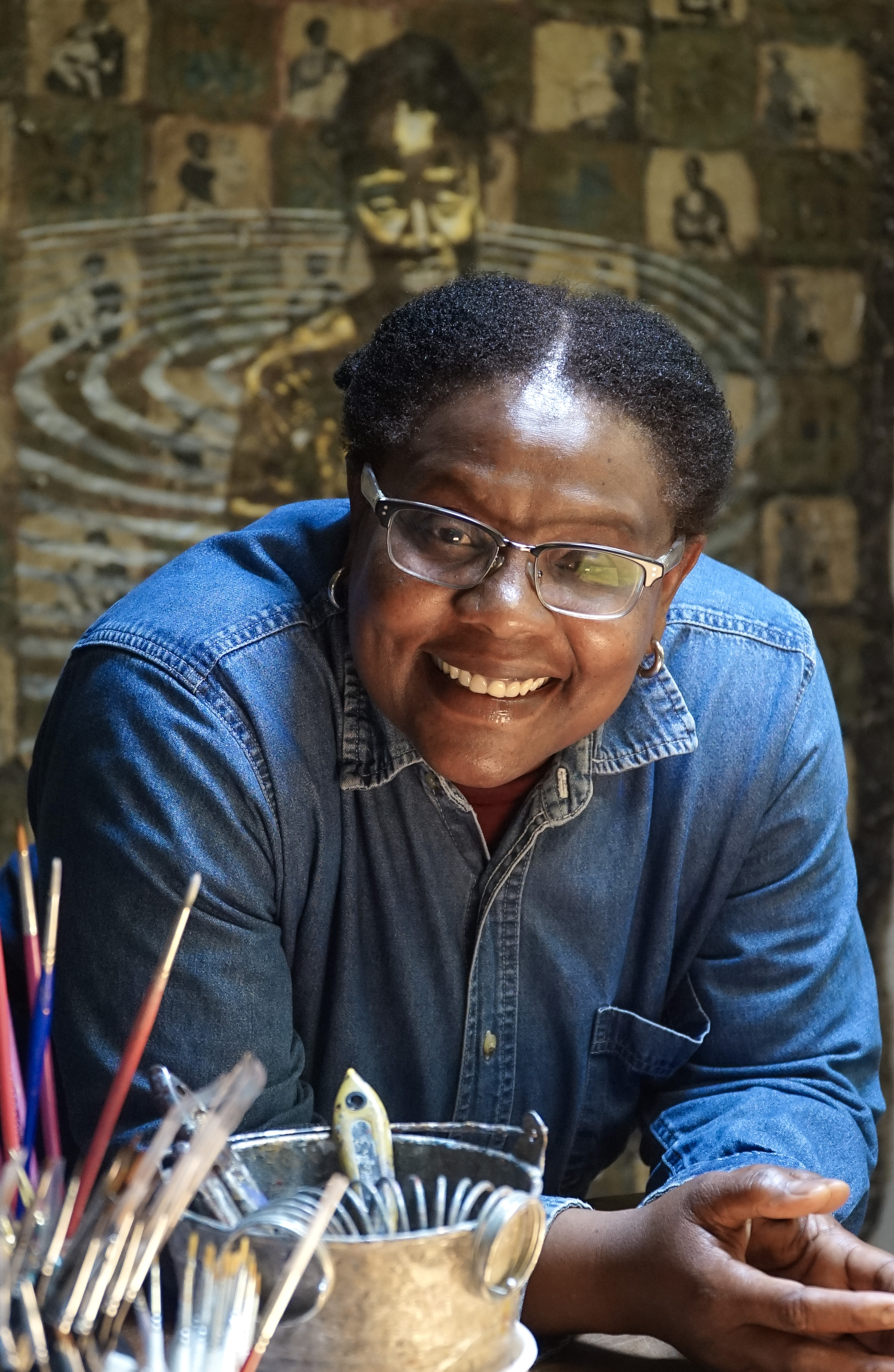
Fan Lee Warren, a contemporary African American artist, draws profound inspiration from her upbringing and education. Her birth in Birmingham, AL, and upbringing in Chicago, two culturally rich cities, have left an indelible mark on her art. Her creative boundaries expanded through her BFA from Illinois State University and an MFA from the School of the Art Institute, both of which have been instrumental in shaping her distinctive artistic voice. Her artworks grace several public collections, including the Neuberger Museum of Art in Purchase, New York, the New Harold Washington Library Center in Chicago, IL, the Alameda County Art Commission in Oakland, CA, and numerous private collections. Warren has received numerous grants, awards, and art commissions, and has been reviewed in various publications and catalogs.
For more information about the artist, visit her website:










 Opal Palmer Adisa