
http://www.jamaicaobserver.com/opinion/fatherhood-and-responsible-manhood_207969?profile=1444
All posts by Opal Palmer Adisa
TOOTS AKA FREDERICK HIBBERT OF TOOTS AND THE MAYTALS (1961-2020)
Rockstead to Ska to Reggae: Hail to Toots
The first ever Ska concert that I attended was at Carib Theatre, when my mother insisted that I, a pre-teen, tagged along with my older sister and her friends. I remember the frenzy when Toots came on stage, and his vibrant energy that pulled me out of my seat, to climb on it, so I could see him dancing across the stage, his face beaded in sweat.
I remember the rhythm and joyful energy in his festival winning Rockstead song, “Bam-Bam,” a precursor to Reggae, the tail-end of Ska. The lyrics of which says, “I am the man who fights for right not for the wrong…” In the early period of Jamaica’s independence the music was positive and singers were affirming Peace for themselves and for our society. Toots represents that tradition and drive for solidarity.
Toots’ personality on and off stage was always positive and easy. He took things in stride, and used his life as the basis of his music. He never allowed stumbling blocks to hinder him, so when he was arrested for ganja in 1966, his first hit after his 18 months release was his jail number.
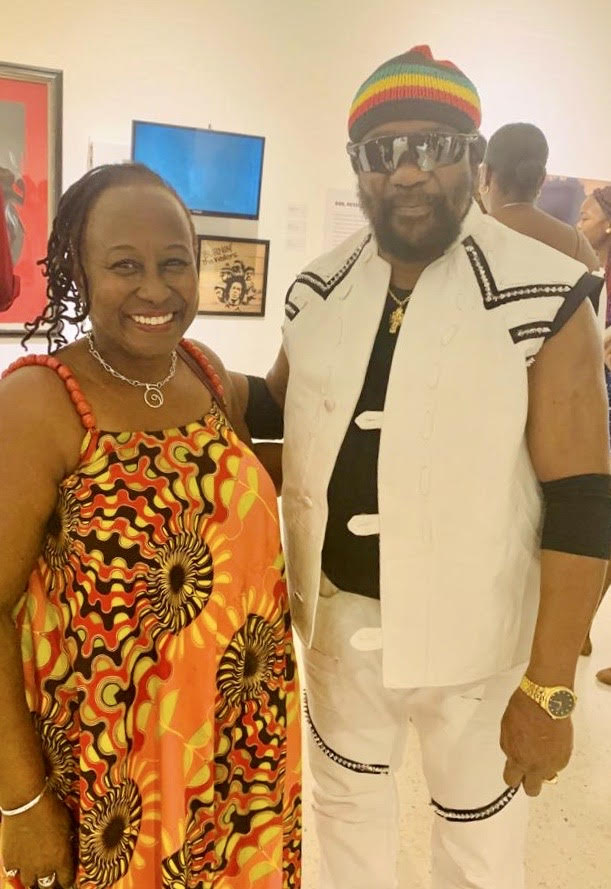
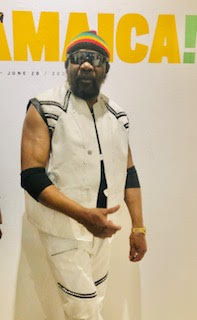
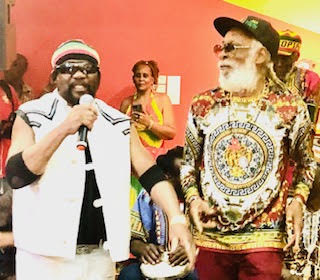
This picture of Toots and I were taken by my daughter Shola, and I took the others at the National Gallery in Kingston, Jamaica this February. I was so excited to have my daughter meet him, and to take this photo with him. I had hoped to interview him, but COIVD happened.
His legend will live on as will his many hits, and he will always be indelible in my memory as my first music idol. He was one of the runner ups in this year’s festival with his song, ” Rise Up Jamaicans” which calls on all Jamaicans to rise up with love and peace. He also just released his first studio album in a decade, entitled Got To Be Tough. He was tough and enduring, a giant who for 60 years made great music.
Sing forever Toots in the land of the ancestors. Asè
A Children’s Book about our Caribbean Culture: Dara, Ms. Mae & The Oil Down
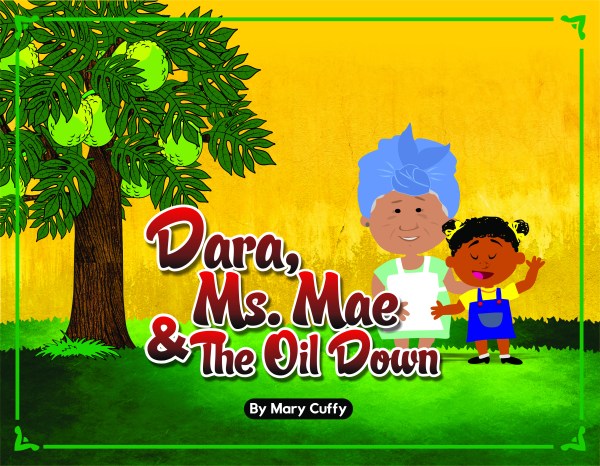
I have observed that many of our children are not familiar with the trees and fruits of the Caribbean and I strongly believe your book will inspire more interest. However, what needs to be done at the curriculum and culture level to promote greater appreciation for local and regional Caribbean culture?
The people of the Caribbean are comprised of a rich cultural mosaic, emanating from many different religious and ethnic origins. This cultural diversity is seen as one of the strengths of the Caribbean. The regulation and promotion of cultural education is critical to the development of the education system from pre-school to tertiary level. Learning about one’s culture provides “an opportunity to explore and express feelings, to stimulate creativity and the imagination; to develop visual sensitivity to nature and the environment, and to discover the visual and qualitative world,” as stated in Trinidad & Tobago’s Cultural Policy draft, 2018. There is abundant evidence to support the case of culturally responsive teaching being central to the business of educating children; its ability to integrate and harness all the elements that are part of the process of learning has been documented.
Food is such an important aspect of our life and culture. What advice do you have for teachers and parents about fostering more interest into the local culinary arts?
There is more of a connection between food and culture than anyone may think. We grow up eating the food of our cultures. It becomes a part of who each of us is. Many of us associate food from our childhood with warm feelings and good memories that ties us to our families, and which holds special personal value. Food from our family often becomes the comfort food we seek as adults in times of frustration and stress. Traditional cuisine is passed down from one generation to the next, such as making oil down. Food also operates as an expression of cultural identity. We should embrace our heritage through our culture’s food. It’s important to remember that each dish has a special place in the culture to which it belongs, and is special to those who prepare it. Food is a portal into culture, and it should be treated as such.
From idea to inception how long did it take to write and produce this books and what were some of the challenges and insights as a result.
This book took almost one year to be published. I am big on providing good illustrations for children. I would do the first draft, which took a lot of time for me to decide what I really wanted. Then there is the editing process. I have a full-time job so, finding a balance was critical. The ‘Ideal conditions may never arrive’. A book to publish is a commitment, and I always stay up late at nights and write a few pages before going to bed. As a writer, I find I am usually at my personal best form late at nights and early in the morning. If you have a full-time job it can be difficult to buckle down on a specific time to write. I recommend STRONGLY, in order to achieve your writer’s dream, draw up a personal schedule or timetable, manage your time, and STICK TO IT RELIGIOUSLY. Control your time and manage your commitments properly or else they finish up managing you instead.
What’s next for you in terms of books and how can children be inspired and guided to write their own stories.
I love children’s literature and I would like to continue to contribute worthy stories to the genre. I also want to inspire children to read, write, create, imagine, and dream. This adds to my tag line “We become experts by doing.” There’s a writer in all of us because there’s language in each of us. Have we not all shared the same spark of joy in first learning to write our very own name? Writing is self-discovery and self-expression. We begin with a spark. To inspire a child to write we must reignite that very first wonder and delight, and we must hold the spark steadfast with the intention of kindling a long lasting love of language within the child. Psychology tells us that to inspire another, we must first be inspired. Inspiration is contagious! When you discover the power and process of writing, of how words create language, communication, and stories across generations, then you can always tap into the inspiration, and the ideas you pass along will be born from a place of wonder and delight.
Facebook page @Lola and the Dancing Ladybugs.https://www.facebook.com/search/top?q=lola%20and%20the%20dancing%20ladybugs
Paper-Based Bookshop – 10 Nook Avenue, St. Ann’s Port of Spain
Scribbles and Quills – 47 Cacandee Road, Felicity
Academic Plus – Eastern Main Road, Curepe


Aboukir Artists Retreat- Adisa Haven for Artist
“Step into the past, reimagine the future and create your reality…”
Why this site:
Both my paternal grandparents, Ezikel Palmer and Edith Melahado Palmer were both in St Ann, near Aboukir, and it was the first home of my late father, Orlando Melahado Palmer, when the family returned from Cuba, where he and his sister, Enid were born. My grandfather, Ezikel Palmer is buried in the first church of the area, which he helped to support. Reportedly, my grandfather who was a tailor and also owned one of the first shops in the area, and was also credited for being the first person in the district to have electricity. Although I did not visit Aboukir much after my grandfather died when I was eight years old, I have fond, if not vague memories of the place. When I learned, about 8 years before my father died. that my father had sold off all the land, except for a small plot which was the site of his first home, and he was about to sell that I asked him to let me purchase it, and he sold it to me for $5000 US. This site represent family history and connection to ancestral lineage. Although it is not large enough to create the residency I envision, it is a start, and I need your help to make this start.
Background:
I have been fortunate to have been awarded several residencies that have allowed me to just write and dedicate 100% time to my work. In these settings, also I had the wonderful opportunity to interact with international artists from many disciplines, that would not have occurred outside the context of such residencies. It is because of these opportunities that I want to create a residency in Jamaica, my homeland, that is located in a place that is rich with natural beauty and also the birthplace of many phenomenal figures such as Marcus Garvey one of our national heroes, and certainly one of the most well known Jamaicans, Bob Marley, the reggae superstar.
Given the history of this place, I believe it is ideal for an artist residency.
Objective/Format:
To provide an ideal place where six (6) writers and artists can come together over a 2-month period to concentrate on their work, as well as design a project which should in some way engage the community. Artists will be required to execute a project that will allow them to interact with members of the community, dedicating two hours weekly.
Every two months, 6 artists, two of whom will always be writers, and at least from the Caribbean region, will be invited to attend. The goal will be to bring a diverse group of writers/artist to spend time doing their work and exchanging with each other.
2-months during the summer, June-August, will be reserved for artists who are single parents with children. Artists/writers and their children will be invited to spend 2 months. The residency will provide childcare, and will limit the number of residency to 3 or 4 participants, depending on the number of children.
Participants will be required to complete a basic application form, submit sample of their work and answer 3 shot questions.
The goal will be to always have a diverse range of artists/writers, in mediums, and varying degree of experiences – emerging as well as professional writers/artists . We will target Caribbean and Latin American artists, as these are most underrepresented areas, and writers/artists from this region has limited opportunities in comparison to writers/artists in the USA and Europe. Nonetheless, we will also welcome artists from the USA as well as Europe.
Ideally we will have 2 writing studios, 3 studios for visual or multimedia artists and one dedicated space for a performance artist (dance/theatre/music or any other performance base art).
Artists will be required to participate in a culminating activity that will be open to local artists from the island, as well as community members to see their project and hear about the development of their work while at the residency. All artists/writers will be required to do an exit interview.
Throughout the residency, there will be one weekly dinner in which various artists/writers from the Jamaican community will invited to exchange and socialize with visiting artists/writers.
In addition, cultural trips will be planned for artists/writers, which will include visits to natural sites as well as museum/galleries, etc.
Artists/writers will be selected by a panel that will review resumes/submitted work and artist statements.
History of At Ann:
Located in the lovely parish of St Ann, the largest parish in Jamaica, situated on the north coast of the island, in the county of Middlesex, St Ann is roughly halfway between the eastern and western ends of the island. Frequently referred to as “the Garden Parish of Jamaica” due to its natural beauty. Its capital, Saint ann’s Bay comprises New Seville, the first Spanish Settlement in Jamaica, and which now sports a population of approximately,173,232 inhabitants.
One of the oldest populated areas in the island tracing back to 600–650 A.D. It is believed to be the earliest Taino/Arawak settlement in Jamaica. When Christopher Columbus first came to Jamaica in 1494, he landed on the shores of St. Ann at Discovery Bay, Jamaica. He returned to Jamaica on his fourth voyage and was eventually marooned for one year at St. Ann’s Bay (June 1503 – June 1504), which he called Santa Gloria. St. Ann’s Bay became the third capital established by Spain in the Americas. In 1526, the Spaniards established the first sugar mills in Sevilla.
The boundary between St. Ann and St. Mary is formed by the White River, which flows for 27.4 kilometers. Other rivers like the Dunn’s River appear intermittently, but the main rivers are Negro, St. Ann, Great, Roaring, Cave and Pedro.
Given its historical and natural wonder, such as Dunn’s River Falls and its many beaches, including Puerto Seco, St. Ann is one of the major tourist destinations of Jamaica. There is a cruise ship dock (maritime) on the west shore of Ocho Rios Bay, and numerous hotels and resorts are located in and around the city.
The legacy of St Ann’s is also very much connected to music and heroism. The birthplace and launching ground of the Marcus Mosiah Garvey, one of the seven National Heroes of Jamaica, it is also the brith place of Bob Marley, the greatest reggae star so far, as well birth place to other talented and recognized reggae singers Floyd Lloyd, Burning Spear,Busy Signal, Bryan Art, Romain Virgo, Chezidek, Shabba Ranks, Justin Hinds, et al.
Natural & Historical Sites:
- Dunn’s River Falls
- Green Grotto Caves
- Ocho Rios Marine Park
- Fern Gully
- Shaw Park Gardens
- Coyaba River Garden
- Puerto Seco Beach
- Chukka Cove Adventures
- White River Rafting
- Dolphin Cove
- Cranbrook Flower Forrest
- Seville heritage park
- Mystic Mountain
- Bob Marley Mausoleum, Nine Mile
- Columbus Park
- Marcus Garvey Statue, St. Ann’s Bay
- Edinburgh Castle (ruins)
- Roaring River
I love Mangoes
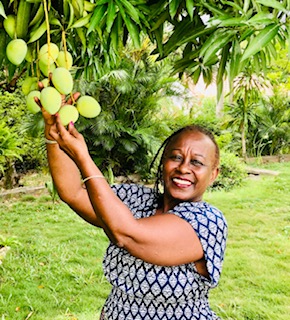 To say I love mangoes is really an understatement, and mangoes are but one of my major addictions that keeps me from losing weight.
From I was a tiny girl, able to climb, I would clamber up the mango tree, sit on one of the branches and eat my belly full.
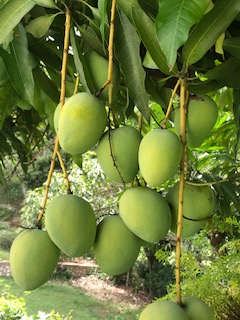
I could never get tired of mangoes, at least so I thought. But having just come in from my yard whereI picked more than two dozen mangoes, from two of three trees, Blackie, hybrid Bombay and Hairy, I can now say I am over mangoes. Now way! Yes.
Since COID 19 and stay at home, I have been eating an average of two Julie mangoes from my friend’s yard, whose season started early and in abundance. Julie and Bombay are my favourite mangoes because they are especially sweet and juicy with relatively little to no string.
We in Jamaica, and the rest of the Caribbean, do not do enough to harvest and preserve mangoes. The amount that you see on the ground rotting is truly shameful. Since this season began I have had my gardener collect boxes and give away. I have given dozens to friends and associates, have eaten an average of two a day. Only this morning I cut up three, Bombay and two Julies into my fruit salad with fresh bananas, papaya and pineapple…A bowl of fruit sugar.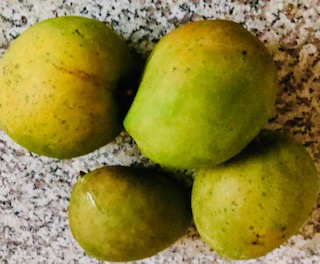
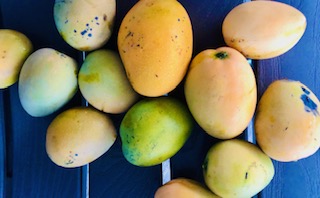
Mangoes are one of the best fruits in the world, “originally from southern Asia, especially Myanmar and Assam state of India,” and with colonial expansion were brought to the Caribbean where we have numerous species as result of grafting. There are said to be about “234 different types of mangoes, but about 30 are common.” When I lived in St Croix the US Virgin Islands, they celebrated Mango Mele in July and there were about 49 different types. In Jamaica we have about 41 variety and the most common ones are “black-greengage, black-sweetie”, “stringy”, beef, Bombay, East Indian, Haden, kidney, lady finger, Number 11, Parry, “pint o’ water”, Robin, Julie, Tommy Atkins, turpentine”. Regardless of the shape or colour of the skin, which varies, inside all mangoes are yellow-orange colour, “due to the presence of carotenoids”.
Apart from being delicious eaten picked fresh off the tree or chilled, or blended into a smoothie or sliced and eaten with yogurt or cheese of on bread in a sandwiches or in a salad, prepared green with salt, pepper and cilantro or made into chutney or the hundreds of other ways mangoes are used in culinary art, mango has additional benefits such as it helps fight cancer, maintain cholesterol level, cleanses the skin, regulates diabetes, alkalises the body, helps to lose weight, promotes good eyes and is an aphrodisiac — must be the sweet juciness of it.
Mangoes are still on my trees, and I am still eating them. However, this evening when I went to pick some for friends, I bit into a Blackie, small and sweet, and I just thought I have had enough. I only took three bites before tossing it in the pile of rotten mangoes. I suspect I am not the only one in my neighbourhood, where there are an average of two large mango trees per yard, as I see more and more mangoes on the ground. Sorry mangoes, our freezers and fridges are full and so are our tummies. You have been swell, sweet, luscious mangoes. Come around again next year.
Lyndsey Ellis’ Forthcoming Novel: Bone Broth
I am proud to claim Lyndsey Ellis, my former student from the MFA program at California College of the Arts, who was determined to complete and have a novel published, and who, after many hurdles, has succeeded. Congrats Lyndsey on completing your novel. Here is what she says about the novel and her writing journey thus far.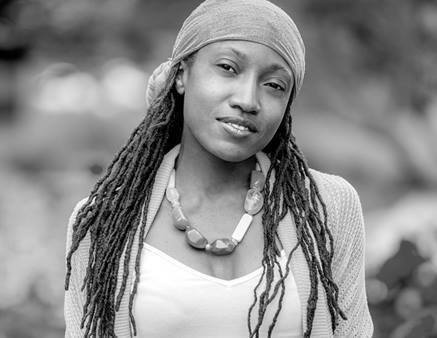
“BONE BROTH is about Justine Holmes, a widow, former activist, and funeral thief, mourning her husband’s death during the aftermath of the Ferguson unrest in St. Louis, Missouri.
“As family tensions deepen between Justine and her three grown children, –an unemployed former Bay Area activist at odds with her hometown’s customs, a social climbing realtor stifled by the loss of her only child, and a disillusioned politician struggling with his sexual identity–the matriarch is forced to face her grief head-on. By reconciling a past tied to her secret involvement in civil rights activism during the early 1970’s in St. Louis, Justine quickly learns the more she attempts to make peace with her history, the more skeletons continue to rise to the surface.”
Scheduled to be released, May 2021, Lyndsey talks about the process of writing Bone Broth, an engaging title, forth with mystery
OPA: How long has it taken you to write this novel?
LE: I’ve been developing this novel (dare I say it?!) for 12 years.
OPA: Why is this novel important to you and why would it appeal to others?
LE: Bone Broth represents the human side of activists that you don’t hear or read about too much these days. I’ve always wondered what happens –what the frontrunners of civil rights movements do after they have been on the frontlines and then go home. That’s what compelled me to write this…to show that activists are human beings with personal, complicated lives.
OPA: Is this a common story in the Black experience or what is unique about it, your perspective?
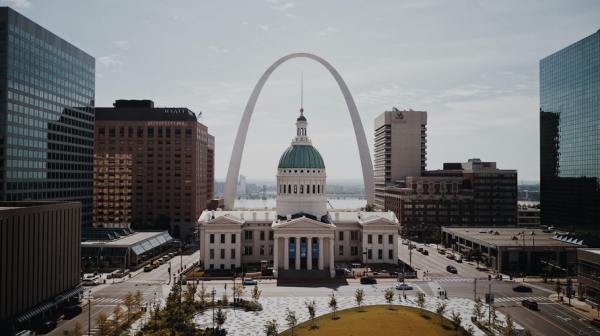
LE: This is both a common story and a unique experience in the Black community. It’s common in that it speaks to intergenerational trauma and resilience that resonate in any Black community. It’s unique in that this is a story that sheds lights on Black lives and experiences in the Midwest, which aren’t usually at the forefront of mainstream media. Many persons still believe the Midwest is synonymous with white people and rural life, and this couldn’t be further from the truth. There are cities here, and communities where people of color exist.
OPA: As a writer living under Covid 19 and the Black Lives Matter movement, how have these two very different social realities impacted you, your writing?
LE: As with most people, COVID-19 has made me take a long, hard look at what actually matters and what’s important in my life and my community, as well as examine the craft of writing more closely. COVID 19 is further complicated by the injustices that many Black individuals are subjected to at the hands of police and other authority figures who abuse their power. This saddens me, but it also propels me want to stand up for Black lives even more and portray these experiences in my writing because words do matter and particularly now in these time, marginalized voices really need to be heard.
OPA: Do you think more people will be interested in black stories/novels now?
LE: I definitely think more people are interested in deepening their understanding of the Black experience by way of Black literature now. Recently, I read somewhere that Black-owned bookstores have been selling out of their merchandise due to the high demands for Black stories. This is great and so necessary, and I hope our stories continue to resonate with people.
OPA: What are your hopes/dreams as a writer?
LE: I want my stories to be seen and heard; I write about the experiences of those who are marginalized or voiceless in mainstream media –working class Black people in the Midwest. I want to uplift the voices/stories so others come to know them and respect their humanity and struggle. We all have a place and all of our experiences/stories matter.
OPA: Have you begun your 2nd novel?
LE: I have begun on a short story collection that I’m looking forward to sharing soon. An idea for a longer work—possibly a novel—is also been in the works. I’m looking forward to continuing both those journeys.
OPA: Finally, what has writing taught you about yourself thus far?
Writing has taught me how to channel my emotions—particularly anger and sorrow—in constructive ways. It’s shown me how to remain open and curious about life. Most of all, I think it’s helped me learn how to be patient with myself, as well as others. It may sometimes take a while but the journey—trusting the process—is totally worth it.
Lyndsey Ellis is a fiction writer and essayist. She earned her MFA in writing from California College of the Arts. Ellis was a recipient of the San Francisco Foundation’s Joseph Henry Jackson Literary Award in 2016 and the Money for Women/Barbara Deming Memorial Fund in 2018 for her fiction. A Kimbilio Fiction Fellow, her writing appears in The Offing, Joyland, Entropy, Shondaland, and elsewhere. She lives in St. Louis, MO. Her debut novel, Bone Broth, will be published by Hidden Timber Books in spring 2021.
Dem Is Sea’s Children
Read my essay on contemporary Caribbean Identity and Resilience.
Let’s End Sexual Harassment
Happy Birthday Jawara, My Amazing Son
They Will Not Take You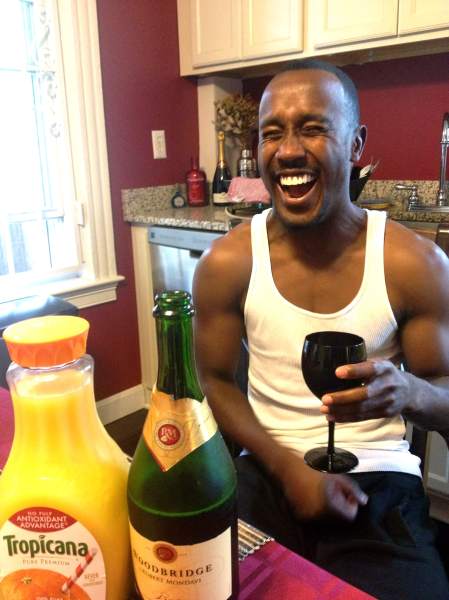
by Opal Palmer Adisa
April 29 – May 4,1992 marks the LA’s riot as a result of the acquittal of 4 LAPD officers recorded beating and using excessive force on Walter Rodney. My son was almost one year old, and police brutality and the lynching and abuse of Blacks, but specifically African American men, had been institutionalized and normalized. I decided that my son would not be a victim to this system. I wrote, “I Will Not Let then Take You,” then as a pledge to him, but now with the wave of protest over the killing of George Floyd, and other African American men and women with deadly force by the police, I’ve upgraded the poem by reaffirming my commitment to my son who is now thirty one years old and living in LA. I have also changed the title.
Tell them
Tell them loud and clear
your mother is a crazy Jamaican woman
who will wage war for you
who refuses to sacrifice you
to racism
You will breathe
You will breathe
your ancestors breathed for you
to live with dignity
unafraid that your life-breath
will be kneed-out
Tell them
Tell them
I will not surrender you to distressed streets
I will not leave you for dope dealers
I will not abandon you to the police
who targets you –a black man
You will breathe
You will breathe
We all breathe for you
What is the language of tomorrow
that we mothers and sisters
and lovers and wives must speak
words seeped in future years
words that raise you
to soar beyond the heavens
to dance in the lap of life
and sleep in the belly of laughter
Tell them
Tell them
you have a mother
who remembers
she endured
in getting you here
and she will not give you up
will not give you up
to no one
Your breath is filtered
through rosemary water
and eucalyptus oil
so you can leap
you are heir to the next generation
whose path has been cleared
by the blood of your forefathers
who were silenced
humiliated
whose present were usurped
from them
but still they insisted
on being men so you
could leap
You will breathe
You will live
for all those
massacred
You will live
Tell them
Tell them
Your mother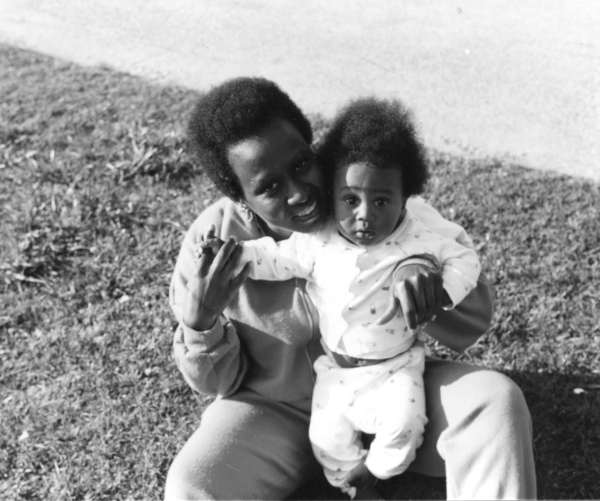
will not give you up
but to love of
your own dreams
Tell them
your mother
insists you breathe
HONOUR YOUR CHILD SELF
In this photograph I am not yet 2 years old. My mother’s bicycle is leaned next to the bench where I am sitting.
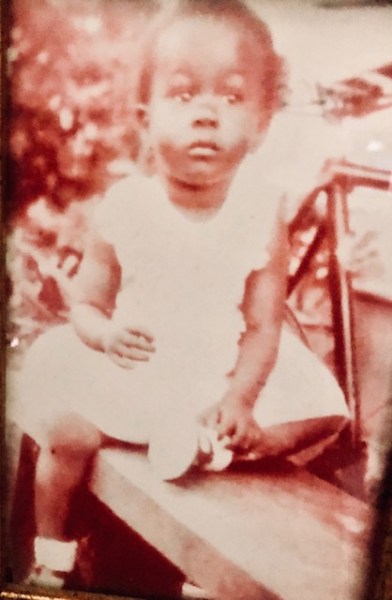 My mother doesn’t remember the occasion or circumstance under which the photo was taken or where my sister and other siblings were.
I often try to imagine what this little girl –me– was thinking.
I am not smiling, rather it seems my attention is focused keenly, else where, rather than at the person taking the photo. Yet, I seem very intense. I don’t have a memory of myself at this age, but I see myself, much younger in my crib, very self-absorbed and feeling as if I don’t need anyone. My imagination is active and I love being alive in that moment.
How do we connect to who we were when we were born, to who we have become?
How do we know or remember which dreams were important to us and when we let them go, or why we let them go or do they still live somewhere else?
How do we know if we have realised more than we had hoped for as a child or less?
How connected or disconnected are we to our little person self? I feel strongly that I am connected to little Opal, that we walk side by side, that she nudges me and says good going, that she is so proud that I have not abandoned her or our dreams.
 Opal Palmer Adisa