Broken Ankle: Learning From My Immobility

opalcrutchesI began walking because it is healthy, because one needs to keep fit when one gets to a certain age – well any age, because I have had stubborn middle-age excess weight that I have been trying to lose.

I have grown to like walking in the morning before the sun is too high and hot. I enjoy the clearing of my head that walking provides. I have come to enjoy walking by myself, to move at my own pace, to pause when I see a flower or an insect or a view, anything, even a dead frog or iguana that has been run over by a vehicle, to really see and not just look and walk by, but to marvel at life and death and the every day, simple extraordinary sights.

So the morning, when I was feeling lazy and pondering “where am I going in life?” and thinking I should skip the walk, but decide to go anyway, my head like a wasp nest, I took the same path, and not far from the house I slipped and cursed the gravel. Then the pain flew to my head and I saw the blood seeping from my ankle from the gash from the stone. I cursed the stone. I laid there on my back thinking I would just stay for a while then get up.

I looked at the sky as blue and beautiful as every other day and wondered why am I on my back on the road, gravel on my back, my ankle bleeding and hurting.  My left foot and ankle were still twisted. I tried to stand and raw pain was like a snake coursing through my body. Right then and there I decided that I needed help, I wanted someone to pick me up, I was too hurt to pick up myself. I felt the strap of my little pouch in which I had my cell phone, tight around my neck, partially under my back. I tugged, retrieved it and dialed Brian and he was right there.

After an hour at home, ankle swelling more despite ice pack, blood still seeping despite generous dosage of peroxide, I decided it was more than a sprain and I needed to go to the emergency room.

Juan Louis Hospital in St Croix, a wheel chair that could not be adjusted, nurses and doctors from everywhere but St Croix or the greater Caribbean, x-ray, 4 stitches, confirm ankle broken upper and lower fibula, 4 hours later, scheduled to see the orthopaedic surgeon in two days.

Feet according to Louise Hay, represents our understanding of ourselves, of our life, of others. A Broken joint suggests fear of the future and of not stepping forward in life or it could also mean rebelling against authority.

*          *          *          *

I called my mother because I remember that she broke her ankle my first year in college, and since she was the sole breadwinner, and I was a spoilt brat, only working 10 hours a week for pocket money, I was worried about how the mortgage would be paid, who would cook dinner as she still did daily even though she worked, and what it would mean for my life. I was terrified. My mother was doing what she did everyday, coming down the stairs in our home when she slipped, broke her ankle in several places, and had to have pins implanted; she was off work for 3 months.

*          *          *          *

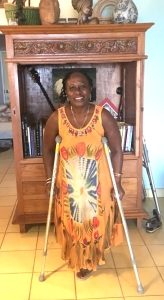
I got crutches, which initially were not adjusted properly, but thanks to YouTube videos they are now properly fitted and I almost feel as if I could run in them like I remembering see a youth in a movie do. But I won’t. I understand metaphysics, and the way the universe gives us messages, gently or harshly – okay I get it, I was juggling too much and needed to pull back and slow it way down. I am prone.


The first commercially produced crutch was patented in 1917 by Emile Schlick, but his design was more like a walking stick with upper arm support. Later, A.R. Lofstrand, Jr. developed the first height-adjustable crutches. Thomas Fetterman is credited with inventing the first forearm crutches after his experiences with polio in the 1950s. Modern crutches are designed with the help of orthopedic specialists and have padding for shock absorption and terrain grip.


Since I have broken my ankle, the stories I have been told about broken limbs have been endless:

  1. Jumping out of bed because the cat sprang on the bed with a mouse, and she landed too heavily in her bedroom, broken foot.
  2. Watering the garden in her backyard, tripped on the hose.
  3. Coming down from a step ladder in her kitchen, trying to secure china from breaking, slipped, right foot broken. Etcetera…No need to go on.


I have pulled back. Days and moments go by and my gaze into the horizon flits away hours. Projects and timelines have been abandoned. I am doing what the universe has instructed. I am laying low.


What Makes You a mother? Happy Mother’s Day

momsisCatherine, My Mother & Leonie, My Sister


Bringing forth life does not

make you a mother

What makes you a mother

is the caring that’s bigger than your heart

is the understanding that’s deeper

than any well


What makes you a mother

is unconditional love

that will leave no stone unturned

to get your child what s/he needs

the willingness to learn even as you teach

to forgive and praise even when you’re challenged


What makes you a mother

is your recognition of the privilege

and highest honor that you have been given

to bring forth             nurture and care for another

human being…


You are a mother

when you surrender to life’s teaching

and raise your progeny to walk

to her/his own beat.


Happy Mother’s Day

One Love, Opal


Purple Rain: Inspiring Poetry in Youth

Summer of 1984, a girlfriend who was a long-standing, avid Prince fan invited me to see Purple Rain with her. Up until then, I had been on the fence about Prince, but Purple Rain made me a believer. I cannot express the electrifying transformation.  However, the movie and its theme song captured me with its lush purple majesty. I heard the song in my sleep, and the following Monday I went and purchased the album.

I had just been contracted by two  schools in Oakland, deemed challenging, and located in the flat-lands (another term for ghetto/underfunded marginalized) to do poetry work shops, with 8th graders who were failing.  I had convinced the head of this program that I could get students reading and writing through poetry, working with these students twice weekly for ten lessons, under the umbrella of California Poets in the Schools.  I was motivated.  I was determined.

The Tuesday after seeing the movie, I brought in the sound track of Purple Rain and the class went wild. We had one of the most engaging discussions we had ever had, and several of the boys who had not written any poems before, (only turning in blank sheets with their names as I had insisted every time, every student had to turn in something) actually wrote poems about what they taught Purple Rain was. The last 10 minutes of the class when I asked for volunteers to read their poems, almost every hand shot up, and we went over the class period. I was elated.

I wish I could put my hands on the class anthologies I produced that year with those two classes, but they are in storage somewhere. I was as proud of those students as they were of themselves, as were their teacher and the school. They all dug deep and wrote some amazing poems. I used Purple Rain for many years, but it was that album, and that moment, that made me incorporate playing music and discussing lyrics into teaching young people to write poetry, and I still do, even with college students.

Purple Rain expanded my pedagogical practice.  To be effective at teaching, you have to meet students where they are before you can take them somewhere else. You have to know their language, what turns them on, who they are being and who they are afraid of being. You have to delve into the mystery of Purple Rain and see what you make of its meaning, just like they are trying to fashion meaning out of their life.

Prince, thanks for helping to make me a more effective teacher, and for providing a space for students to hear, translate and share their voices.

purple rain, purple rain

i find you in the wetness

of this magical purple rain…search


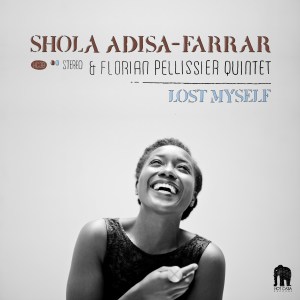
SHOLA: LOST MYSELF, A JAMERICAN, New Sound


LostMyselfCoverArtwork


OPA: Your first, awaited album, Lost Myself drops today. Congratulations.  How does it feel?

SAF: I am happy. I am proud. I am excited to know what people think, and to see where this project takes me

OPA: You wrote some of the songs on the album. Why did you go that route as oppose to just doing all jazz standards?

SAF: When Florian and I started working together we began by pure improvisation in his studio and exploring the sound we created together, ultimately leading us to produce original music. It is important for me to create something new, not just “redo or remix” something that has already been done. Also I wanted to mark this collaboration, capture this period in time with music that was personal us, music that came from us.

OPA: One of my favorite songs of yours, “Just You (Suspicious),” written for Trayvon Martin is not on the album.  Why was that song omitted?

SAF: This album is a collaboration between myself and Florian Pellissier Quintet, so all of the original songs were composed or co-composed by Florian. “Just You” however was created with another producer a few years back, so it didn’t fit into the concept of this album but I am still exploring ways to release that song and include it on other projects.

OPA: I happen to know that since your were about ten years old Josephine Baker was one of your heroines, and similar to her, you now seem to be living your dream of music in Paris.  Do you feel as if you are walking in her footsteps, that her spirit is guiding you?

SAF: I don’t necessarily feel as though I am walking in her footsteps as my career trajectory is different, but I do feel as though I’m benefiting from and walking proudly on the path that she and other singers, musicians and performers paved almost a century before my arrival to Paris. When I am in certain neighborhoods in Paris, I do feel the spirit of Jimmy (James Baldwin), Josephine (Baker) and Bricktop (Ida “Bricktop” Smith) and I imagine that some of the feelings and experiences they had once upon a time here, I feel at points too. It’s empowering to know that such incredible figures were able to find their wings in Paris. Being in Paris has definitely imbued me with newfound confidence and a sense of freedom.

OPA: Since World World II many African Americans have found haven in Paris as artists, in all genres. Would you say that Paris still offers that respite for African Americans to pursue and excel in the arts?

SAF: Yes, I believe it does, for a variety of reasons.

OPA.  Have you always wanted to sing, and what has prepared you for this moment, this album?

SAF: I’ve been singing since I was 8 years old, and though there have been many times when I was afraid to share my voice publicly and lacked the confidence to do so, singing is something that I have always loved. What has prepared me to enter this new chapter in my life is my perseverance to see this album through to fruition, my love of and respect for music and my passion to create. In addition I have studied others people’s careers development  and in some instances worked with emerging artists, so I feel as though I have a sense of what to expect, the unexpected.  I am a new artist, but I’m not new to the music industry.

OPA: You are a Ja-Merican. Although you were born and reared in Oakland, Ca, your maternal Jamaican heritage has been strong and lasting, and you spent a great deal of time in Jamaica when you were growing up. How has Jamaica impacted your development as an artist, and your sense of self?

SAF: It’s funny: my older cousins who recently came to visit me in Paris and who grew up in Jamaica, in Spanish Town, told me of one of their first memories of meeting me when I was a young girl in Jamaica. They said when I talked to them about what foods I liked to eat at the time, ackee n salt fish, stewed peas and rice and dumpling…they thought “ey ey aye ah who dis Yankee girl talkin bout stew peas n dumpling.” It was at this moment they realized that even though I was born in California that my Jamaica-ness was very much present and evident. This is obviously due to my mother who is a griot, really, and who makes it her business to collect our family history and to infuse her children with as much family culture and Jamaican traditions as she knows and practices. So this is a part of my identity that I like to celebrate and of course music is so important to Jamaica and Jamaicans that if I can use some of the Mento/ Reggae/ Soca / Dancehall elements in my music it’s a great pleasure for me to do so. In fact two of the songs on the album make references to my Jamaican background, “Blue Chords” and “What A Night.” The latter was inspired by a song taught to me as a child, “Linstead Market” and I decided to use the “what a night” lyric of this Jamaican folk song and flip the meaning on its head…

OPA: Does this album represent your voice, or are you still developing/finding your way to what might be considered your “true” voice?

SAF: Being that this album was created over a span of two years, my inspiration and my awareness of myself as an artist evolved. This album definitely does capture my voice, though during its teenage years, still trying to find and step fully into its identity, its true self and I am still working to further develop my authentic sound. Right now I can describe my music as a mix of jazz, Soul and reggae in order to create music that feels good, is poetic and is honest in describing aspects of human emotion and situations: conflict and struggle, joy and angst, curiosity and discovery.

OPA: Who are some of the artists who have influenced your development as a singer/artist?

SAF: Nina Simone and Ella Fitzgerald for sure. And of course many others…

OPA: So what’s next?  Are you ready to work on another album?

SAF: I am definitely ready to work on another album and I’ve been thinking of ideas for the next project: beginning collaborations with different artists and producers to continue developing my sound and creating new music. Simultaneously, I would love to tour within France and abroad to grow my fan base and connect with people through music.

OPA: When will you be touring the USA and the Caribbean?

SAF: Hopefully very soon.

SholaAdisaFarrar_0815_J.LEBRUN

Shola’s website is www.sholajoy.com
Like Shola’s Facebook page at: www.facebook.com/SholaAdisaFarrar

Here is a link to another interview with Shola:  http://www.southernworldartsnews.blogspot.fr/2016/04/singer-shola-adisa-farrar-drawing-on.html

The Shad Series: Jamaica’s Detective by Gillian Royes

Opal Palmer Adisa's avatarOpal Palmer Adisa

OPA:  The Rhythm of August Rain  is your 4th title in your detective series that is set in rural Jamaica. Are readers to believe that Shad, the bartender who plays an amateur detective, has real skills to seek out facts, or is he to be perceived as one who dabbles – this is just a hobby?

GR:Shad’s true vocation is being a detective. In another culture or time, he would have made it. However, due to his prison term and his lack of formal education, he is limited to working as a bartender and practicing his vocation on the side. He has few skills when the series starts out but tries to educate himself as it goes along. Above all, he is immensely curious.

OPA:  What distinguish this series as a detective genre?

GR: The series was created as a Caribbean parallel to Number One Ladies Detective Agency…

View original post 793 more words

The Shad Series: Jamaica’s Detective by Gillian Royes

OPA:  The Rhythm of August Rain  is your 4th title in your detective series that is set in rural Jamaica. Are readers to believe that Shad, the bartender who plays an amateur detective, has real skills to seek out facts, or is he to be perceived as one who dabbles – this is just a hobby?


GR:Shad’s true vocation is being a detective. In another culture or time, he would have made it. However, due to his prison term and his lack of formal education, he is limited to working as a bartender and practicing his vocation on the side. He has few skills when the series starts out but tries to educate himself as it goes along. Above all, he is immensely curious.


OPA:  What distinguish this series as a detective genre?


GR: The series was created as a Caribbean parallel to Number One Ladies Detective Agency. Both fall into the category of “cozy mystery,” not the typical blood and guts form of mystery. There is more character and plot development than mystery to this genre.

OPA: How did you arrive at the title, which has a very poetic ring?  How does the title connect to the central story of this novel?

GR: The title came to me one night in Ann Arbor in a dream. A woman in a bright blue dress said the words and told me it was the title. I got up and wrote it down.

OPA:  There are at least 3 competing stories, Shad and his impending marriage, his boss Eric and his relationship with Shannon, the mother of his daughter, and his daughter, and then the story of  Katlyn, the missing woman from Canada 30 years ago and her affair with a Rasta who is/was a member of one of the Rasta sects. Was it challenging during the writing process to juggle these three story lines and keep each going?

GR: No, I’m used to having one main plot and three subplots, part of the formula I use for the series. The subplots are ongoing, i.e., Shad’s relationship with Beth, Eric’s haphazard life, and the development of the hotel. The main plot differs with each novel. In this case, it’s the story of Katlyn and her entanglement with the Rasta community. By the way, I did know a Canadian woman who went into a Rasta community and came out dying.

OPA: What research did you do to writer about the Rastafarian community?

GR: I read several books written by Rastafari or about them. Barry Chevannes, Yasus Afari, Gerald Hausman, Leonard Barrett were some of the authors. I also discussed the philosophy and lifestyle with Yasus Afari.

OPA: What do you want readers to learn/take away about Rasta culture, it’s various sects?

GR: The point of including Rasta culture and history was to set the record straight, particularly for foreigners who don’t understand or appreciate the origins. I also wanted to show that prejudice has existed toward the group since its inception and, to a certain extent, continues today. Jamaicans are proud of the music, but many still would not want their daughter to marry a Rasta.

OPA:  Eric has not reached out to his daughter, Eve since she was born, and while you do reveal some initial tension between the two when they are reunited, she is a teenager, and Jamaica is very different from her Canadian environment, but it seems that all is forgiven rather easily.

GR: The relationship between parents and child is a complex one, in all cases. Eve is at an age where her emotions are heightened. She hates her absent father, but she’s curious about his world and wants his acceptance. She begins to see that he’s not a bad guy after all. I think a big part of her coming around is that she likes Jamaica and wants to return. Adolescents tend to be very egocentric.

OPA:   Classism and colorism are big social issues in Jamaica still, yet  it seems non-existent in the novel, in that Shad is accepted by Eric, even though American, his best friends are brownnose Jamaicans, who appear to be also accepting of Shad and his family? I don’t know if I have a questions so much as I would like to hear your opinion of these social constructs that impact relationships in Jamaica.

GR: In each novel, I have attempted to deal with a single social issue. I think it would make it too confusing if I’m following several plots and subplots and trying to introduce all the problems existent in the island. In my first novel, The Goat Woman of Largo Bay, the issue was political corruption. The second  — The Man who Turned Both Cheeks — discussed homosexuality and homophobia. The third was The Sea Grape Tree. I went into class and color prejudice in that book.

OPA:At the close of the novel, everything is resolved amicably, and all puzzles  are in place.  Given the context of Jamaica, would it be that easy to solve a 30 year mystery of a white woman in rural Jamaica who goes missing?  And given that tourism is such a big part of Jamaica’s economy, would the government have just brushed that case aside, like it apparently did?

GR: Fiction is not real life, just a reflection of it in the lens of a writer. I always leave things unresolved that are not going to leave the reader with an unfinished feeling. In August Rain, I tried to wrap most things up, in the event that I would end the series. Unfortunately, we never had a real resolution to the death of my friend Sharon.

www.gillianroyes.com

Jump and Make It Happen

You dream must be bigger than your fears.

Your reason must exceed your own limited world.

Do support: Ay-Ay: Junior Caribbean WriterPrint

My beloved California College of the Arts mentor, Opal Palmer Adisa, is creating a magazine for kids in her home of Jamaica. Even though she has made a full life as a writer and academic in the Bay Area and around the world, she constantly finds ways to give back to her home, her place of origin. She is a true inspiration! If you have any amount of money to donate, I assure you, it will be put to good use. Before I traveled anywhere beyond South East Texas or South West Louisiana, I traveled the world through books and stories. Putting a book in the hand of a kid gives them a key to the world. This is your chance to help make that happen.

Growing the Next Generation of Caribbean Writers and Improving Literacy | Crowdfunding is a democratic way to support the fundraising needs of your community. Make a contribution today!
INDIEGOGO

Marion Bethel, Bahamian Poet: Caribbean Sensibilities


authorMarionBethel-09 (1)

Marion Bethel was born and lives in Nassau, The Bahamas. She read law at Cambridge University, England and has worked as an attorney since 1986. She has two collections of poems and is currently working on a third manuscript of poetry and a novel. In 2012, she produced and directed the documentary Womanish Ways: Freedom, Human Rights & Democracy, the Women’s Suffrage Movement in The Bahamas 1948 to 1962, a documentary on the struggle to gain women the right to vote in the Bahamas.

 OPA: You are an attorney, a poet, and a mother. Have you always written?

MB: I started writing seriously in 1986 during the final year of my Bar examinations.  I deferred my Bar exams in order to spend a full summer writing poetry.   During this period I wrote the draft of Guanahani, My Love, my first poetry collection.

OPA: How does the job as an attorney feed or distract from your writing?

MB: The time spent as an attorney often feels to be in conflict with time needed for my creative writing process.  On the other hand, I see that there is enough time for me to do my writing if and when I am committed.  I can waste a lot of time procrastinating and getting ready to write instead of just writing.  I really thought that practicing law & the pursuit of justice could satisfy me.  However, I feel closer to & am more coherent with social justice in writing poetry.

OPA: How does motherhood figure into your writing?

MB: While being a parent or mother takes lots of time within any one day, the major part of that time is now behind me as my two daughters are in their twenties.  But yes, when they were young, I felt torn between taking care of them and paying attention to my writing.  It is interesting that both of my poetry books were started and completed when my daughters were still principally in my care.  It may be then that the tension facilitates focus, productivity and attention when I actually sit down to write.

OPA: You have been widely published and recognized in the writing world, what has that journey been like?

MB: It’s been an uneven journey, that is, there have been and continue to be productive and unproductive periods, focussed and unfocussed time.   My expectation of myself is much higher than my actual productivity or production.  It’s been a journey of great gifts to me.  I must give thanks for the opportunity to attend the Caribbean Writers Summer Institute at the University of Miami in 1991 where I attended workshops with George Lamming and Kamau Brathwaite.  Coming out of that experience I worked on Guanahani, My Love. It was so wonderful to be awarded the Casa de Las Americas prize in 1994 for Guanahani, My Love.  I was then invited to participate in the Miami Book Fair.  Further, I have been a guest speaker at several colleges and universities over the years.  In 1996 I was fortunate to gain a fellowship at the Bunting Institute at Radcliffe College. This was one of the highlights of my journey where I spent twelve months at Harvard University with 39 other women artists, scientists doing our individual work.  Another highlight was my time at Cave Canem (2007 – 2009) under the direction of Toi Derricotte and Cornelius Eady. I loved this experience in the company of brilliant young, African American poets who challenged me to sharpen my poetry skills. In 2010 I founded a writer’s institute with Helen Klonaris here in the Bahamas.  This was also a gratifying part of my journey.

OPA: How does your new collection, Bougainvillea Ringplay, differ from your first?

MB:  Guanahani, My Love was the direct result of the poetry workshop with Kamau Brathwaite and my attempt to employ specific poetry forms in the service of telling the history of The Bahamas. Bougainvillea Ringplay was more politically personal.  In BR I felt infinitely more confident both in technique & content to explore different forms and subject matter.  There was tremendous growth in BR.  The poetic voice is sharper, bolder.  The poetic imagination is more expansive.

OPA: Of course this poem is as much about the characteristics of the bougainvillea plant/flower, personified as a girl, as it is about a girl/woman who is as tenacious as the plant. Can you talk about the stance in this poem, and the parallels you are drawing about the rootedness as well as resistance and determination evident in Caribbean people?

MB:  The poem, BR, really evokes for me childhood memories of fluidity, wild abandonment, freedom even in the face of overwhelming restrictions in regard to colonial education & curriculum, church traditions, family and social expectations.  This freedom came ironically in the school yard where we played ring play games every day in between the rigidity of learning and supervised behaviour.  Bougainvillaea were everywhere from the time I left home in the morning en route to school and church.  The colours and the expression of the bougainvillea evoke for me the resilient spirit of childhood that transforms and matures into the spirit of young womanhood.  It is rooted, affirmative, resistant and eternal.

OPA:  In the bougainvillea tree, I catch a glimpse of freedom, physical, emotional, mental & spiritual. This is the beauty of the Caribbean spirit at its best in music, dance, and poetry. Is it important that Caribbean writers use local imagery, fauna, flora, culture?

MB: Yes, I think it’s imperative that I use Caribbean local imagery, fauna, flora.  The physical world has shaped our sensibility and spirituality and we have humanized our physical world.  At some point in our existence we are one, i.e., the physical and human environment.  I affirm the Caribbean presence in the use off Caribbean imagery.

OPA: The belief is, the more you do something, in this instance writing, the more proficient or better you become. Can you chart your development as a poet? Do you see the growth in this collection, and if so in what ways?

MB:  This poem felt so me, integrally me. And a me that I would hope is so Bahmian, so Caribbean and so whole.  I felt entirely connected to my centre, my self and ultimately my universe when I was writing this poem.  This poem is the one from which all the other poems pivot.  The other poems are in dialogue with BR in regard to authenticity of expression and their reach for freedom.

OPA: As a child growing up, we played ring games, I don’t know if that happens so much these days. What was your process of writing this collection?

MB: The poems in BR were written over a period of 10 years.  My attention was divided between my family, work and political activism in civil society in The Bahamas.  My best work was done under great discipline i.e., getting up at 4a.m. & writing before going to work. I know the best productive process is to write every day.  I have not always followed this

OPA: I read this poem in Spain, and it was translated, but at the end of my presentation a few of the participants asked me what is ringplay? How would you explain it to a non-Caribbean audience?

MB:  Ringplay is a childhood game of dance, song and drama that is performed in a circle.  One person jumps into the ring & shows her bodily rhythm, sensuality and sexual energy in dance while the circle claps & sings her on sometimes to the point of a frenzy.  Ringplay may have religious origins in African spirituality.

Bougainvillea ringplay front cover copy

http://www.peepaltreepress.com


BOUGAINVILLAEA RINGPLAY

By Marion Bethel

 this me right here inside the ring

in March April May springing

from concrete tar sand parading

passion purple ungodly colours waving

cores of pink cream orange showing

my motion to you unsolicited

in months of dry rain sighing

ring centre I come to you straight

shaping vision beyond sugar-in-a-plum

winding my waist tight in your face

clinging to your fence I aint shame

mounting it from rock and gravel

unhedged hips fall and rise

spreading limbs all over your wall


this me now right here outside the ring

even in June July August fixing

to catch the colours of your dream playing

biggety with your emotion working

up myself round edges of islands cascading

even when poinciana throw bloodclots unconsoled

in full seagreen I just keep on coming


jumping back in the ring I aint shiftin for no one

limboing under the shade of a dilly tree

climbing up womantongue and guinep

wrapping arms around cerosee vine

rushing to inventions of a lonesome conchshell

fixed by tongue-tied conga drums

spinning we move in circles driven shaken freed


Thar She Blows: Nancy Anne Miller’s Star Map

nmheadshot_1_29_edit.jpg -2. (2)

OPA: Nancy, in this your 5th collection of poetry, do you notice any changes in your poetic, and if so in what ways?

AM: This particular collection is one written over a period of decades, poems I’ve been writing while living in Northwestern CT as a response to the seasons, thus there is a variance in voice and tone.

The earlier work is more about capturing an image, exploring it without a narrative. The poem “Sticky” is a good example of that. Of late, my work is more voice driven. I unpack the image metaphors more and incorporate them in a going narrative as in “Let’s Not Pretend.” This makes the poems less stiff and opens up the reach of the metaphors. They perform their duties more completely in the thrust of a story.

OPA: Are you a stargazer, and does the constellation affect you work?

NAM: Not at all, and I’m not even a horoscope girl although I came to America in the 60’s. However, I am always thinking of my sea captain ancestors out on the sea with the stars overhead to guide them. It is a permanent archetype in my psyche, one I am strengthened by.

OPA: This new collection is entitled, Star Map, how did you arrive at this title?

NAM: The book is about my interpretation of the seasons as a Bermudian, seeing my environs from the perspective of an islander. My writing about such is a way to locate myself, place my body in the landscape.

I had a grandfather who traveled a lot and kept a log of his everyday life much like former sea captains in my lineage. He sent these diaries around to the entire family. I think of my writing poems as keeping a log of sorts, as a place I locate my being like one might out at sea. The star map metaphor comes from the line “The frost on my windshield with/ connecting white stellar shapes/ is a star map to guide me.”  Yes! To guide me in a new country, to guide my journey in my car (Such an American metaphor for being!), and to announce that my poems are the maps that make my journey happen, possible.

OPA: The last line of the title poem intrigues me, “its slit eye, a tongue slips through, speaks.”  It’s vivid, revealing, yet mysterious. I am curious about the tongue that slips through and manages to speak. Sounds like a coup. Can you speak about the trajectory of this poem?

NAM: A coup is a good word here. I had to learn to speak about the loss of my island as when I first came to America the transition was an invisible one. I did not have to learn a new language for instance, and Bermuda was a known to the community I moved into. However, that knowledge was in a skewed context. It was the knowledge of a privileged tourist destination that postcolonial writers, myself included, write against.

There was no concept of the backstory of slavery in that perception, nor an awareness of the true complexities of colonial life because of the silence around my home country caused by a lack of island literature to bear witness to it. Thus, people would often say to me “I didn’t know anyone came from Bermuda.” It was such a dislocated and trivialized place in their minds –one that existed only for touristic exploitations by consumers. So when I began to write about Bermuda there was a lot to write against and for. And like many writers what I had to say, put down in poems was sometimes uncomfortable for my longstanding family there. In that sense I must say writing in exile from afar had its advantages.

OPA: The poems are primarily about winter and snow, with a few scant references to you home, Bermuda.  What is the setting, and where does Bermuda reside in these poems, in your life away from Bermuda?

NAM: Bermuda is my North Star. The location all other locations are seen from. The Bermuda landscape is inside me. The New England landscape is outside of me, although my poems have mapped my way into it. Thus I, of course, see the bucolic environment around me through a semitropical one, and hence a comparison is always present. I’m employing contrast by what Coleridge referred to as “the likeness within the unlikeness.”

As a poet, I generally think of writing about the seasons as comparable to life drawing. It is a really good place to improve one’s skill as nature is so immense and already very daunting to approach. And in the case when I’m writing about Bermuda as a direct subject, winter itself provides a vacuum for memory, creates an almost sublime aesthetic distance, a removal from the lush island life which hones one’s skill to recall it, bring it back into being. Exile has its perks.

OPA: Is poetry your first and primary medium?

Yes! Although painting orders my mind and there is a way that my Semitropical Paint Huts bring the island environment stateside. Keeps it close so that it facilitates my writing poems about Bermuda. My poetic language is highly visual because photography taught me to observe the world, and painting to physically embody it. Both inform how I take it in and write about it.

OPA: How do you know when the poem is done?

When it is satisfying enough in carrying a narrative, an observation and also when the formal aspects of it, tone, diction, imagery, are doing the best job they can and are” bringing things together into a unity which is original, interesting and fruitful” to quote Schwartz.” The judgement that it is good enough, happens on an intuitive level when I am mostly satisfied, and hence can let it go.

I am an advocate for sending poems out because that final read before you send poems off to another editor will make you really hone the poem in the manner Wilde describes as “spending the morning putting the comma in the paragraph, and then spending the afternoon taking it out.”

OPA: Which of the senses would you say is strongest or more dominant in this collection?

NAM: I would definitely say the visual as I start poems from image metaphors that I log in my notebook. The sense of sight carries the weight of the poem. It is the cell that Rilke speaks of when he says: “Somehow I too must discover the smallest constituent element, the cell of my art, the tangible immaterial means of expressing everything.”

OPA: The poem, “Summer’s Beggars,” has a nostalgic tone, walking on the beach, collecting shells, idle and idyllic. But life is never that simple or is it?

Summer’s Beggar

It all points to going to the ocean at the end

of the season where wave by wave summer

is covered, buried taken into the deep. Shells

are scattered at the edge of the tide, loose

change falling out of the rim of a skirt

for me to pick up, summer’s beggar. I will

bring a large conch back, itself a whirl,

a turning. Place it on my shelf to stay still,

slow. A snail crawls endlessly through winter.

If it was that simple, there would be less art in the world!


NAM: To quote Cernuda: “The poet tries to fix the transitory spectacle that he perceives. Each day, every minute, the urge to arrest the course of life falls upon him, a course so full at times it would seem to merit an eternal continuation. “In “Summer’s Beggar” the collecting of shells, the hoarding of that which held something as the shell itself is imprinted with what it contained, all of this is a metaphor for writing poems, collecting the imprint of the world in language. The conch in my work (ever since my first chapbook titled Conch), is a container for the voice of the subconscious (i.e the ocean.) So bringing the conch back is bringing back the voice for my work which unfolds, unravels, spins, yields slowly through the absence of place as Simone Weil notes when she states: “We must be rooted in the absence of a place. We must take the feeling of being at home into exile.”

OPA: Are you currently working on a new collection?

NAM: I am sending around a collection to publishers titled Island Bound Mail with some interest so far. I am beginning to start another collection titled Boiling Hot. So yes, I am busy and am forever aware of what Eliot implied when he said: every attempt/ Is a wholly new start, and a different kind of failure/ because one has learnt to get the better of words/ For the one thing one no longer has to say, or the way in which/ One is no longer disposed to say it.

https://www.amazon.com/author/nancyannemillerpoet

Star Map Cover 002_1_1 (1)