2 Faces or 1

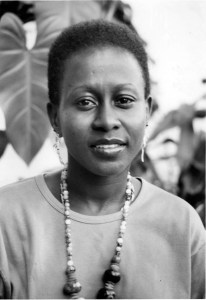
opal87The poem asks who is this child woman and where has she gone? Does her poems still grow in sun-flowers? Does she still dance in the rain?  How has she faced the disappointments and with whom does she celebrate the successes?
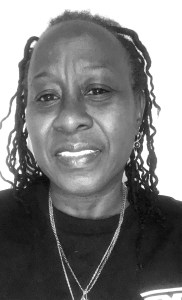
opal2016The poems asks who is this other woman?  Where did she come from and why does she have the eyes of the woman above? Are her poems still soaked in dreams submerged in molasses? Does she still hide among the tall grasses and interpret the shapes of clouds?
Are her songs still melodious and do birds sing her awake?

The poem really wants to know who are these faces and where do their truths intersect?

If poetry is the only truth and life is a lie where flows the water of our legacy?

My Mother Makes Things

My Mother still has beautiful hands, but they give her the most trouble.  She laments that she has difficulty raising her arms above her head, she laments that her fingers ache and swell, she laments that she has difficult grasping things.

She is thankful that she can still use them to take care of herself, dress, go to the bathroom, even though it takes long.

I can’t imagine my mother not being able to use her hands.  When I were a child her hands were never still.  She could fix things around the house, the electrical iron, a bench needing a nail to stabilize it.  She basked and every Saturday I lived for her sweet potato puddings, coconut cookies, cinnamon role. She was the best cook, and as a result was asked to cater for the cricket teams, but I couldn’t get enough of her stew peas and rice and pepper-pot soup.

There is nothing that my mother couldn’t and didn’t grow.  Everyone said she had a green thumb, African violets, gerbas, banana trees, all kind of fruits.  She also had healing fingers.  When the chickens had yaws she would rub aloe vera mixed with something else on them.  If the dogs got in a fight during the night with the other neighborhood dogs, she would dress and bandage their ears.  When I got chicken pox, she filled a great aluminum basin with water and tamarind leaf, which she boiled, then bathed me in the water to soothe my itching.

She made some of our clothes that many thought were store bought. She made curtains for our windows, crocheted doilies for the tables and dressers; she embroidered patterns on our pillow cases and our initials on our hand-kerchiefs; she knitted tops, she made beautiful needle point wall decoration, she churned ice-creams, made wine from local fruits, juices, various concoctions, all with her hands. Her needlepoints graced our walls.


Blessed and Doing the Work

I sometimes forget how blessed I am to have an endless stream of creativity, to care about the world and contribute to help make it better, to be alive at this time and know that right now is the absolutely best time of my life, that everyday I get stronger, better, more inspired, and that I have always been able to find people who love me to support my artistic expressions and my cultural activist work.seahibicusadisa16

Although it is not always easy to make my dream a reality, and sometimes I get frustrated and ask where is my help, why do I have to do so much of the leg work alone, where are the billions to fund my project –after all I want to do good in the world, I don’t want six cars and a diamond ring that cost millions.  I just want to create an amazing  artists colony with a profuse Caribbean garden with sculptures and an orchard with all the many fruits, and ponds and flowing water and wide open space to dream and think and create.

I want to leave my children a legacy of land and ownership, in addition to my writings, so each generation is not beginning from scratch so that we never make any ground way .  I don’t want to go out the same way I came, unknown, unheralded, without leaving monuments that document that I was here, I had dreams and plans which I implemented that will exist long, long after i have gone, and will contribute to humanity.

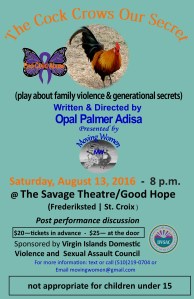
The Cock Crows Our Secrets Flier Final

I want it all.  I deserve it all.  I will live my dreams.  I will continue to create and leave a lasting legacy.  I will continue to help heal the world, and expose child abuse, and provide victims and parents with a voice to say no more enough. Our community must talk out, blare out, expose, eradicate and heal.  To this end I have written, The Cock Crows Our Secrets, to begin the dialogue.  I cannot do this without out. So support in all ways you can, spread the word, send contribution to the St Croix Foundation care of Moving Women. Raise the conversation with friends, family and colleagues, and most importantly do not be silent about these crimes that impact the entire community.

I am blessed and grateful and each day I am doing my part.  Join me in happinesses and wealth building to support all our dreams. Support Moving Women’s theatre efforts.

Put on Lipstick

FullSizeRender (2)I just put on luscious plum, one of my favorite colors, that accentuates my lips.
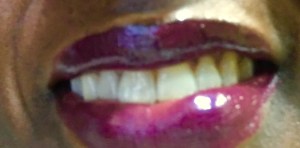
I love my lips, their perfect fullness and shape. I mostly wear dark colors, and I don’t spend a lot of money on lipsticks, but I have one in every purse, and I almost never go out without adorning my lips, for moisture, but also for appeal.

Men have always complimented my lips, all my lips, say I have kissing lips.

FullSizeRender (1)A few years ago while in the bank, one of those old fashion, charming Caribbean men that can talk you to step out of your underwear, even in a bank, I did not, started to chat me up, he said, “Darling, your lips so lovely if I had them I would be wealthy and own this bank, and I know if I were to kiss them I would be transported to heaven.” Talk about sweet talk. I must admit I smiled, even blushed – he was so into talking me up, saying he could spend more than a year just on a lips before his eyes adore my neck and the rest of my body. It made my day, and writing it now makes me smile.

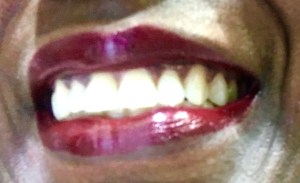
 

When I was twenty-one years old another Caribbean man did adore my lips, while in a working meeting, that resulted in him getting into my pants, and the attention he paid to my lips during the course of our flirtation was divinely satisfying, running his fingers and tongues… okay enough.

This is actually about writing. I have lots of writing projects that need my attention –completing the edits on my forthcoming short story collection, Love’s Promise, proofing galleys on my children’s books, Look, Moko Jumbie!, drafting and editing interviews, completing a play, poems about my father, a daily guide, lots to do and this morning I woke up ready to go, but the words were reticent so I had to put on lipstick.

I discovered over three decades ago that there are times I need to put on lipsticks to initiate the writing process. It doesn’t matter if I have washed my face or bathed, or if I am in pajamas or wearing a sarong, if my lips are pretty, then I am ready to write.

The writing process of a writer is often idiosyncratic, and depending on what I am writing I need different things, a lit candle (the color and scent are important), a cup of tea, fresh flowers on my desk, always being able to see outside –trees, water, sounds-, walking around the house, taking a break to sit on the patio and visualize a scene, doing what is necessary to do the writing, which I love.

FullSizeRender (3)This morning my lips shouted, girl, adore me. So I went through my pouch of lipsticks and tried on several different shades. My lips are ecstatic!   They love the flavor and of plum… They feel loved. They are vain and admire themselves. They can feel a tongue tracing them. They remember the pleasure of being sucked into a mouth. Now I am ready to write what I need to write!
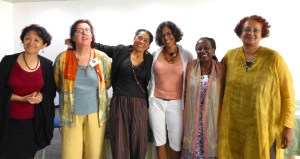
Sisterhood and Letters: That’s What the Association of Caribbean Women Writers & Scholars (ACWWS) Represents.

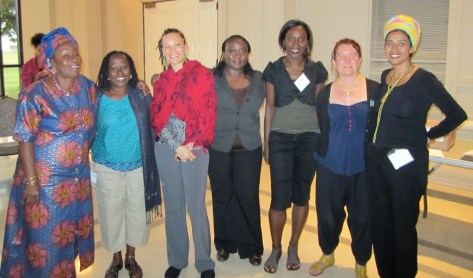
ACWWSSuriname2 we are wrought from salty foam

rising from the surface of the ocean

we are rocks and limbs

meeting the swell

like mountains pushing

back the storm

I had the fortunate pleasure to be among the 50 invited writers at the first international gathering of Caribbean Women Writers conference, held at Wellesley University, April 8-10, 1988, organized by Selwyn Cudjoe. My short story collection, Bake-Face and Other Guava Stories, had been published January 1986, and was praised in the New York Times. That initial gathering changed how I thought about myself as a writer, and introduced me to a supportive community of women who, like me, were seeking to tell their unique stories of the Caribbean and share them with the world.

As a result of the above gathering, The Association of Caribbean Women Writers and Scholars (ACWWS) was born, spearheaded by the late Helen Pyne Timothy, founder and inaugural President. I invite us to stand in a moment of silence to honor the passing of this sweet spirit. Pyne Timothy was at various times Dean and University Dean for the Faculty of Arts and General Studies at the University of the West Indies St Augustine ,Trinidad; also, she had been the inaugural Chair of the Department of Language and Linguistics at that institution. Pyne Timothy saw the need for a women to come together to celebrate the works of Caribbean writers and scholars so founded ACWWS.

Throughout the years, I made sure to attend almost all of those bi-annual conferences in order to see and share with my sisters and learn what was trending, gain insight about new works and theories, but also to experience the warm, comforting feeling of being in a community of brilliant women, who were about supporting, but also interrogating each other, probing and pushing one another to go further, dig deeper, write more, network, create space for new voices and growth and come together to share and expand our insights. And it was with this keen realization of this important mission, why I agreed to be president of ACWWS.

ACWWS is still needed as an organization, and still provides a vital platform for Caribbean women writers and scholars. We need young scholars to step forward and grow this association so that we can continue to host bi-annual conferences that focuses on the work of Caribbean women writers at home and throughout the Diaspora.

  words fill our handbags

heavy as any fisherman’s net

each an endless puzzle

we shuffle to stitch meaning

ACWWSOpal2010 copy

we are women of the same

mother who jumped ship

but did not sink instead

held firmly to yemoja


scrap paper from magazines

wall paper our walls telling

a story not our own yet one

as familiar as our own life


no more will we be invisible

our voices roam freely and loudly

we are the architects of our future

moving beyond glass confinement


color us multi ethnic   name us

madonna and jezebel we are twins

who have run through fields and found

the other side  a place of our own making


If you are a Caribbean writer and/or scholar I urge you to become a member of ACWWS -http://www.acwws.org/

Tribute to Jamaican-American author, Michelle Cliff (11/2/1946-6/12/ 2016

mcliff copy 

Color ain’t no faucet

You can’t turn it off and on

I say, color ain’t no faucet

You can’t turn it off and on

Tell the world who you are

Or you might as well be gone

(Excerpt from Within the Veil) by Michelle Cliff 

Michelle Cliff’s Abeng came out in 1984. Browsing a book store in Berkeley, I saw the title and wanted to know who was this person writing about my Jamaican culture. The Abeng horn was connected to freedom and liberation in Jamaica, especially among the Maroons. It announced, called the people to action and was a signal to unite and fight the enemy. I bought and devoured Cliff’s first novel, in the bildungsroma genre, and could well empathize  with the young Clare Savage, the protagonist of that novel that is set in colonial Jamaica. I wanted to meet this Michelle Cliff.

When my short story collection, Bake-Face and Other Guava Stories, was being published I asked my publisher to reach out to Cliff for a blurb, and she very generously wrote:

“I greet this collection of writing by Opal Palmer Adisa with enthusiam and joy, and a touch of awe…Adisa’s stories chart the experience of island-women with a deep understanding and compassion, and a true sense of their terror and pride, the ghosts that dog their tracks…Adisa makes Jamaica and her women live for us as few before her have done.” Michelle Cliff

I was blown away by this endorsement as we had not yet met or had contact, but I was determined that this would happen.

I sought out Cliff, and we became friends, especially after she moved to California in 1999, where I had been living. Cliff always encouraged and supported me and my work. When I was working on my doctorate on Caribbean Women Writers at UC Berkeley in 1987, Cliff was one of the first writers I interviewed, and after I completed my degree an excerpt of the interview was published

Journey into Speech-A Writer between Two Worlds: An Interview with …

https://www.jstor.org/stable/pdf/10.2307/3041999.pdf Among the subjects Jamaican born writer Michelle Cliff ex- … The following text is based on two separate interviews: one … 01994 Opal Palmer Adisa .

The Michelle Cliff I knew was shy and soft spoken, a gentle soul, who wanted to lead a very private life, despite being the partner of the very famous and late poet, Adrienne Rich. Although she felt estranged from Jamaica, and refused to return because of Jamaica’s homophobia and violence, Cliff was nonetheless deeply in love with Jamaica and researched its culture which is the setting of both Abeng and No Telephone to Heaven, her first two novels.These works, like her other works explore the very thorny issue of race and class in identity formation, and the impacts and residual effects of post-colonialism.

I spoke with Michelle Cliff about a month ago. She said she was not feeling or doing well, but thanked me for the call, and like always asked about my children. I promised that I would visit with her in the fall when I will be in California, and perhaps do another interview, a continuation of the first. Michelle Cliff’s works are important contributions to the Caribbean canon, and her death will leave a void. Her poetry/prose collection, Claiming an Identity They Taught Me to Despise, 1980 is an important work that I have taught, along with her other novels.

I hope you are rocking in the arms of peace and the cool breeze from the Blue Mountains, our island home, enfolds. Be well my sister in letters and friendship –Michelle Cliff, you will not be forgotten.

Michelle Cliff is the author of the following books:

  • 1998:The Store of a Million Items (New York: Houghton Mifflin Company). Short stories
  • 1993:Free Enterprise: A Novel of Mary Ellen Pleasant (New York: Dutton). Novel
  • 1990:Bodies of Water (New York: Dutton). Short stories
  • 1987:No Telephone to Heaven (New York: Dutton). Novel (sequel to Abeng)
  • 1985:Abeng (New York: Penguin). Novel

Prose poetrymcliff2 copy

  • 1985:The Land of Look Behind and Claiming (Firebrand Books).
  • 1980:Claiming an Identity They Taught Me to Despise (Persephone Press).


My Ancestry: African 99%

During my formative years I was surrounded by many adults who were proud of their African roots although they knew very little factual information about where on the continent they were from, or who their people were. My paternal grandmother, Edith, always boasted of her Guinean roots.

In Jamaica we learned that the vast majority of Jamaicans have ancestral connections to Ghana, and that the Jamaican language has many words and syntax in keeping with the Twi language of the Akan people from that region, including why we omit “h” or insert them in front of some vowels. But there are also dances and religious traditions in Jamaica that have Congo roots that can be traced to the Kongo or Bantu people, and the Yoruba people of Nigeria, and many more strains from other African nations –I don’t use tribe as it is a racist and erroneous term that we have come to accept and use to refer to ourselves.

I was taught about Marcus Garvey and his back to Africa movement, the Rastafarians who were marginalized then, and are still somewhat, always sang praise to Africa, mainly Ethiopia as a result of Haile Selassie and his lineage to the Queen of Sheba and King Solomon, and my uncle Lloyd, in particular, spoke of Egypt and the pyramids, and the valley of the Kings and Queen which was Black Africa, despite seeing the movie with Elizabeth Taylor who played the bi-racial Cleopatra.

As a teen my older brother Stratton and his friends taught me about Kwame Nkrumah that led Ghana to independence, 1957, Jomo Kenyatta of Kenya and the Mua Mau rebellion against the British, and Patrice Lamumba, Congolese independence leader and Julius Nyerere of Tanzania and the then imprisoned Nelson Mandela and his formidable then wife, Winnie Mandela. They were all my heroes.

With my nutmeg colored skin, thick, tightly curled hair that was as stubborn and I was, and my generous lips I knew and loved that I was African. My mother and father were African Jamaicans and proud. As a little girl of ten I remember being on the front lawn painting with my Uncle Lloyd and we talked and fantasized about going to Egypt one day to see the pyramids, and to stroll around the Black Star Square in Accra, Ghana.

Before Alex Haley’s Roots,1977, I celebrated my African heritage, although I did not get to the continent until 1987. I have been fortunate to visit all of the countries of my above heroes, except the Congo, and I was able to share and experience Egypt with my three children and mother and lived for 4 months in Cairo and went snorkeling in the Red Sea. But only very recently when I decided enough delay, and had my DNA done that I learned that my roots are:

  • Cameroon/Congo23%
  • Nigeria20%
  • Mali19%
  • Ivory Coast/Ghana15%
  • Benin/Togo13%

I’ve been to all of the above countries except Cameroon, which borders Nigeria, nor the Democratic Republic of the Congo so those countries will be my next visit. What I do know is that I am African and whenever and wherever I have visited in that continent, people have embraced me and say I am one of them, their relatives, and I have always felt at home in the various countries among the varied people.

The cruel history of the Atlantic Slavery trade might have robbed me of close connection to my direct ancestral lineage, but it has not been able to keep Africa from or out of me. I am Africa. I am African.

Muhammad Ali: The Poet Boxer & Humanitarian

alithinkadisa

“I ain’t got no quarrel with them Viet Cong.” Muhammad Ali

I have never liked boxing, and have always believed and still do, that it should be outlawed. Having men or women beat on each other, while others watch and bet money seems barbaric, which is where the sport has its origin. The raw violence of boxing makes me shudder.

Nonetheless, when Muhammad Ali busted on the scene, his handsome face, his braggadocious manner, his poetic rhymes, his whole manner said he was a cut above the rest and I, like so many others, succumbed to his charisma and strong belief in himself. He was not just a boxer and a Muslim, he was a metaphysician. He understood keenly the law of attraction, how thinking and believing something are keys to making things happen.

Mostly what I admired about Ali was his sense of integrity, his willingness to put his life on the line, stymie his boxing career for his greater belief. When on April 28, 1967, in Huston, Ali decided to be a conscientious objector, and refused to be drafted into the U.S. army, his bold stance made many African Americans and other non-blacks proud. Ali dared to voice what many had been feeling and thinking, but were afraid to act upon. He spoke a truth America did not want to hear, not from a black man, not then, and not even now.

“Why should they ask me to put on a uniform and go 10,000

miles from home and drop bombs and bullets on brown

people in Vietnam while so-called Negro people in Louisville

are treated like dogs and denied simple human rights?”

Many remember Muhammad Ali as a great fighter, which he was, but I think Ali would like to be remembered as a great humanitarian, a man of principles. Ali kept faith with his heart even when it meant he was stripped of his heavy-weight title, and was banned from boxing for three years.

Muhammad Ali scored a gold medal at the 1960 Olympic Games in Rome. 

Muhammad Ali is the only fighter to be heavyweight champion three times.

Muhammad Ali danced like a buttlerfly in the ring and had the spirit and style of many lions.

May he continue to soar and soar and find rest among the ancestors.alifloatadisa


Bees Everywhere: Another Dream

I am sitting in my garden surrounded by a swarm of bees that are busy pollinating and not the least bit concerned about me. The colors are vibrant, it is a glorious day and I am feeling very much alive.

“A swarm of bees means happiness,” says the online dream book. Bring it on, I say.

When I was a little girl, I was called and thought of as a tom-boy because I had little to no interest in playing with dolls and sitting with my ankles crossed. I hung with the boys who were always going, playing antics, hurling themselves off buildings, getting into trouble. One of the troubles we got into involved our obsession in stoning beehives or using sticks to poke them, then running, hoping to out run them without getting stung.

Well this day we were not so lucky. William, Trevor and I discovered several bee hives at a neighbor’s house and we went and got long sticks to poke them. They were not pleased about our disturbance and came at us with great fury. William got stung on the face four times, which was swollen for almost a week, making him look like a monster. Trevor got stung so badly on his arm, he had to be taken to the doctor. I got stung on both buttocks, of all places and for a long time, whenever I sat it hurt. My mother was at work so the helper, alternated between rubbing the stings with crushed garlic and sliced onions. When Mommy came home she crushed guava leaves and rubbed the swollen area, then just before I went to bed she put baking soda paste on the swells and I slept on my stomach.

Bees pollinate a third of everything we eat and play a vital role in sustaining the planet’s ecosystems. Some 84% of the crops grown for human consumption – around 400 different types of plants – need bees and other insects to pollinate them to increase their yields and quality.

That was the first time I remember being stung, but certainly not the last time. Throughout my childhood I got stung, mostly by wasps, several times. I loved sugar cane, freshly cut, using my strong teeth to pull off the hard skin. During crop season the bees feasted on sugar cane. During mango season, the bees feasted on mangoes. Anything sweet, which was the sum total of all the things I loved, the bees feasted. I did not consider them friends. I did not know about the important job they performed. But I knew that they loved the same things I loved, including their byproduct, honey.

Swarming bees mean richness, gain and luck in many of the things you do. Seeing flying bees could mean troubles, but if the bees are flying around you, this foretells happiness, luck in love, and overcoming your difficulties.

Earlier this year, while putting out the garbage, I was stung by a bee. It was so unexpected. I managed to remove the sting with my fingernail but it still hurt and my upper arm was swollen for several days. I was upset with the bees because I have a deep appreciation and respect for them, and for years I have been making sure to plant flowers that they love. I know they are vital to our existence so I do my part to help them multiply. I always have sun-flowers, fennel and daisies in my garden.

To dream about humming bees in the process of collecting nectar is a sign of hope and promise. This could be a favorable time for your career, project or business to flourish because you would have better opportunities and more resources at your disposal than ever before. Success could be within reach.

There are sun-flowers blooming in my garden, my crotons are vibrant, my other succulents are pulsating, my herbs are thriving so when I dreamed that I was sitting happily in my garden in the midst of a swarm of bees, I was not surprised.

I am embarking on several new projects that have been incubating for over a decade, foremost of which is my children’s journal, Ay-Ay: Junior Caribbean Writer.

May the bees continue to ensure our food supply and indeed be a sign of my success in these ventures of love and career.images


A Lioness in My Study: My Dream

ilionessAdisa2015KAs I drove into my driveway I observed two, maybe three lioness, backs to me, feasting on a large animal. They were on a knoll on my property and, they were so engaging especially against the backdrop of the sun that was about to set.

I wanted to capture them so decided to go inside my study to get my camera.  I though what an amazing image!  I must share it with others.

I was neither afraid, nor did I think it odd that I live in St Croix where no lioness roam freely, and certainly not on my property. Nor did I think I should call someone for help. I mean, after all there were three lionesses on my property.

Calmly, with no sense of rush or panic I went inside to retrieve my camera, and somehow got distracted.  After a while, with camera dangling from my hand, I became aware that I was being observed. I looked towards my office door and there before me was the largest lioness and most beautiful creature I had ever seen.  Her head took up the entire width of my office door, and her eyes were gentle and comforting. I remember saying to myself, should I talk to her or should I hide? I sensed she was about to enter, and I quietly entered the inner camber of my room and watched as she used her paws and opened the door.

Should I photograph her or call for help, I thought.  I was sure she was not here to harm me.  In fact, I am certain she was harmless and only wanted to talk with me. I was awed by her largeness, beauty and gentleness.

That is the dream.

Backtrack to last July when I visited Kenya for the second time and went on a Safari.  It was a cold early morning; we left about 5 am as we were told the earlier we went, the more likely we were to see an abundance of animals, especially lions.  Although we had on sweater and jeans, July in Kenya is winter and can be very cold. In the pop-up roof jeep we were freezing, but thankfully our driver had blankets for us to drape ourselves. Among the numerous animals we saw, and I photographed were these lions, who were less than 20 feet away from us.  They did not appear to be ferocious killers.  They were having a normal day and we were, if anything, annoying, trying to get close to photograph them.

Of course, the lion has gained its killer reputation from experience, and I am sure if they were hungry and we stepped out of the jeep, they might have just decided to sample us for a meal.  But I have never feared them, and still don’t as my limited experience with them, including in dreams has always been one of spirit guides.

There are many interpretations that dream guides offer, so I have selected that which seems most fitting for my dream, and where I believe I am currently in my life.

Pride: Lions live in prides, and in dreams a lion can often mean pride. Is there anything in your waking life you are proud of?


Control/Power/Leadership: Lions often also known as the “king of the jungle” can also be a great symbol of control, power, and leadership.

 Strength: A lion in your dreams can symbolize your own strength. Strength can be physical, but often is emotional in our dreams.
If in a dream you see the sunset, it portends that soon you will finish your important work and you will start a completely different life.

I am so grateful for the lionesses that visited me and I pray they will continue to guide me as I embark on this new path.

2lionesses.adisa2015K