Makers of Peace

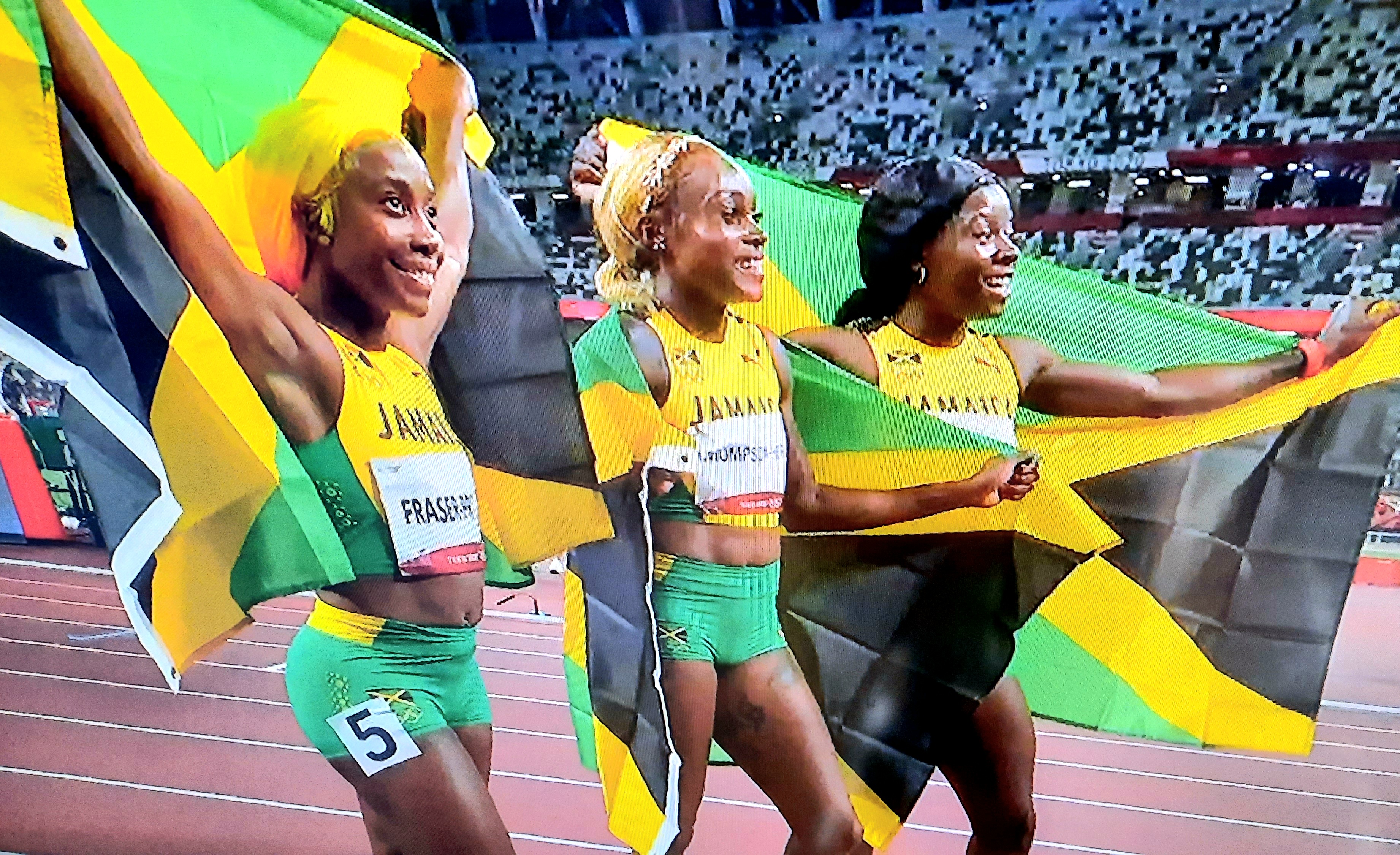
I’m Professor Opal Palmer Adisa from Kingston Jamaica where I live and work, the home to reggae music, jerk food and the fastest woman and man in the world. I am a writer of poetry , prose, essays and children’s books. I am a feminist, gender specialist and cultural activist.

From I was in my twenties I have been writing and advocating gender justice, especially in the area of children’s right, specifically for girls to be safe and protected from sexual and physical abuse.

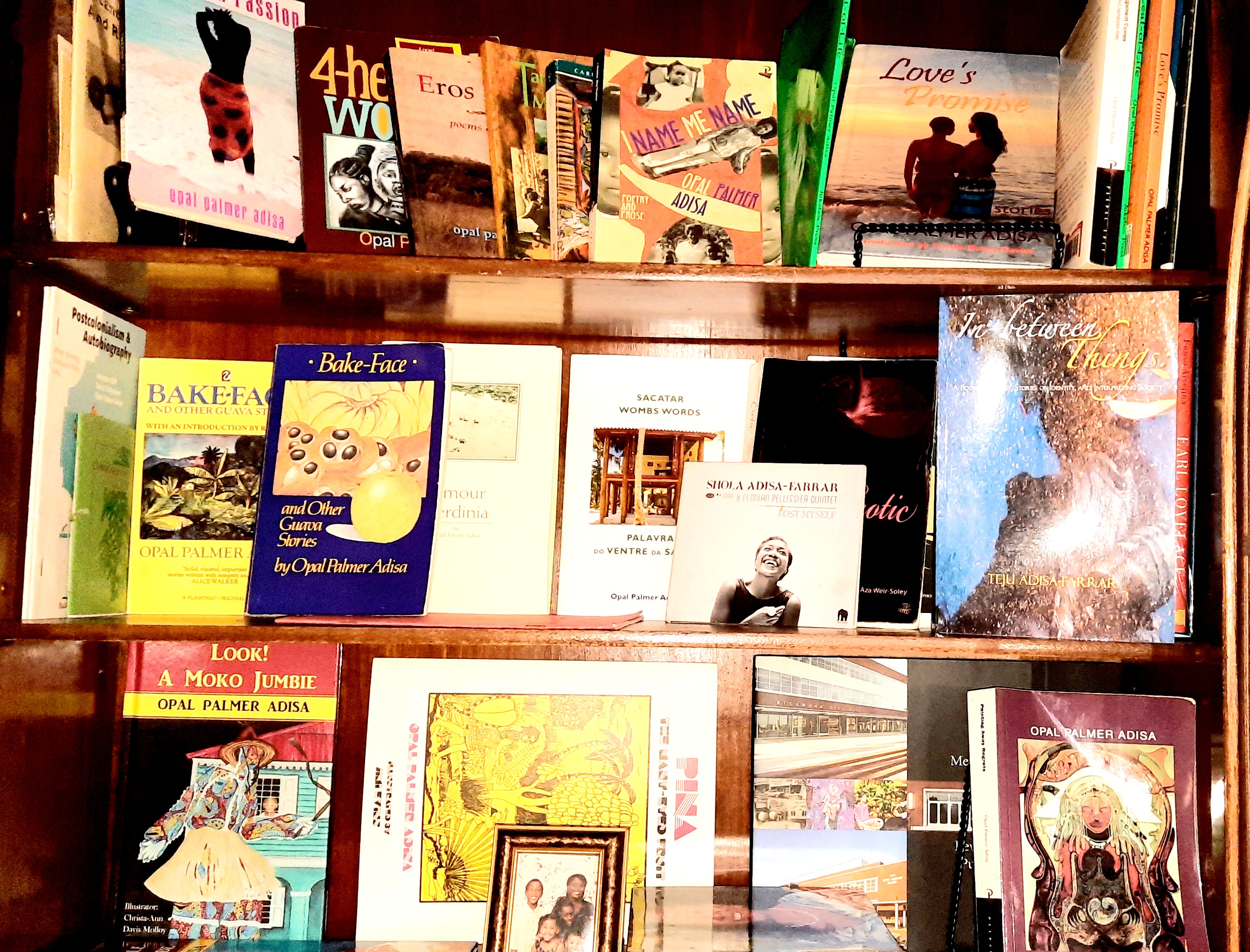
I have also been advocating against gender-based violence, in particular domestic violence that disproportionately affects women and children. I have worked with diverse groups that have made these issues their charge. I have written extensively on the issue, in fact my first short story collection, Bake-Face and Other Guava Stories, 1985, explores both of these issues.

When I was living and teaching in California, USA I taught at California College of the Arts, and headed the Diversity Studies programme, where among looking at Ethnic inclusion also worked  for gender equality; I also works  the Berkeley women’s center, designing and conducting workshops in shelters for women on self-empowerment and regaining their voice after years of domestic abuse.

In the US Virgin Island I worked with the V.I. Domestic Violence & Sexual Assault Council and The Women’s Coalition of St Croix, where I wrote and directed plays as a result of interviewing women on the issue of childhood sexual trauma and domestic violence.

 In Jamaica, as the outgoing University Director of The Institute for Gender and Development Studies, with units in Jamaica, Barbados and Trinidad and Tobago, I had the distinct opportunity to oversee and direct programs that tackled these issues, as well as liaison with community service organizations and NGOs throughout the Caribbean regio n to network around these issues. I have been promoting intergenerational networking of veteran advocates with emerging advocates to build capacity, share best practices and learn from each other and work together to solves many of these issues, especially GBV.  As the present initiator of Thursday in Black in Jamaica, I have led island-wide campaign/demonstrations to bring public awareness to GBV and work to reduce and eventually eliminate it.

Gender equality is the necessary prerequisite to bring about a culture of peace and, it is crucial that women and girls, and men and boys are involved in every aspect of peacebuilding as we must learn to co-exist and thrive together. Gender inequality negatively impacts everyone in the society, and while some men due to their patriarchal upbringing, believe they will lose out as a result of gender equality; they are mistaken.  Everyone wins when the scale is evenly balanced.  Women and girls get to make independent choices and men and boys are no longer have to bear the burden of being bread-winners or protectors as everyone will contribute to their own welfare and safety.  And more importantly, for development, the full participation, intellectual, physical and other areas of both women and men and girls and boys will allow for greater progress over a shorter period of time, and the combination of innate skills will result in peace and more respect and Intunement with our environment. 

Gender equality is the vision of the future that we are working to ensure will be a reality. We are all daily dying from lack of peace, from conflict, from inequality. I firmly believe GE will rebalance and allows us to recalibrate how we can live and work together in peace and harmony.

I identify as an African Jamaican because my ancestral roots are in Africa, and that sense of geographic roots grounds and connects me in a visceral way with the people of Africa; their struggles are mine, and mine theirs, and their past and present achievements are likewise mine.

People of the African diasporas in Jamaica and throughout  Caribbean will feel more connected to their African roots if they are taught about Africa, not just the history of enslavement, where they are always told their people sold them, and never about their people who valiantly fought to keep them from slavery, not about the great accomplishments of Africans way before the Europeans and Asia, and all the natural resources of Africa that has and is still continuing to benefit the world, include the very technology that we now take for granted. We don’t know this history.  We are not taught to love ourselves and honour our ancestors. The education system must change from the colonial model to a Caribbean/African model.

Jamaicans and other Caribbean people have been and will continue to be  involved in contributing to a culture of peace in Africa.  Jamaica was one of the first countries to boycott South African for its racist, apartheid policy; our musicians, Peter Tosh, Bob  Marley, Juddy Mowatt,  and many others have sang about freedom and liberation and peace. Reggae music is known and appreciated globally for its message of peace and liberation; its call to stand and end sufferation… We have been working to bring about peace and have joined out sisters and brothers throughout the African continent to amplify that message and end colonnization.  But more needs and can be done.  One way is to allow for more educational and trade exchange between the Caribbean and Africa; African languages and its full history must be taught throughout the Caribbean. We have to examine and adopt some of the measures of the Queen Mothers of Ghana and the sisters of Nzinga, with our own Nanny and other female fighters, their  strategy and methods of resolving conflict and building coalition can be insightful to our struggles.

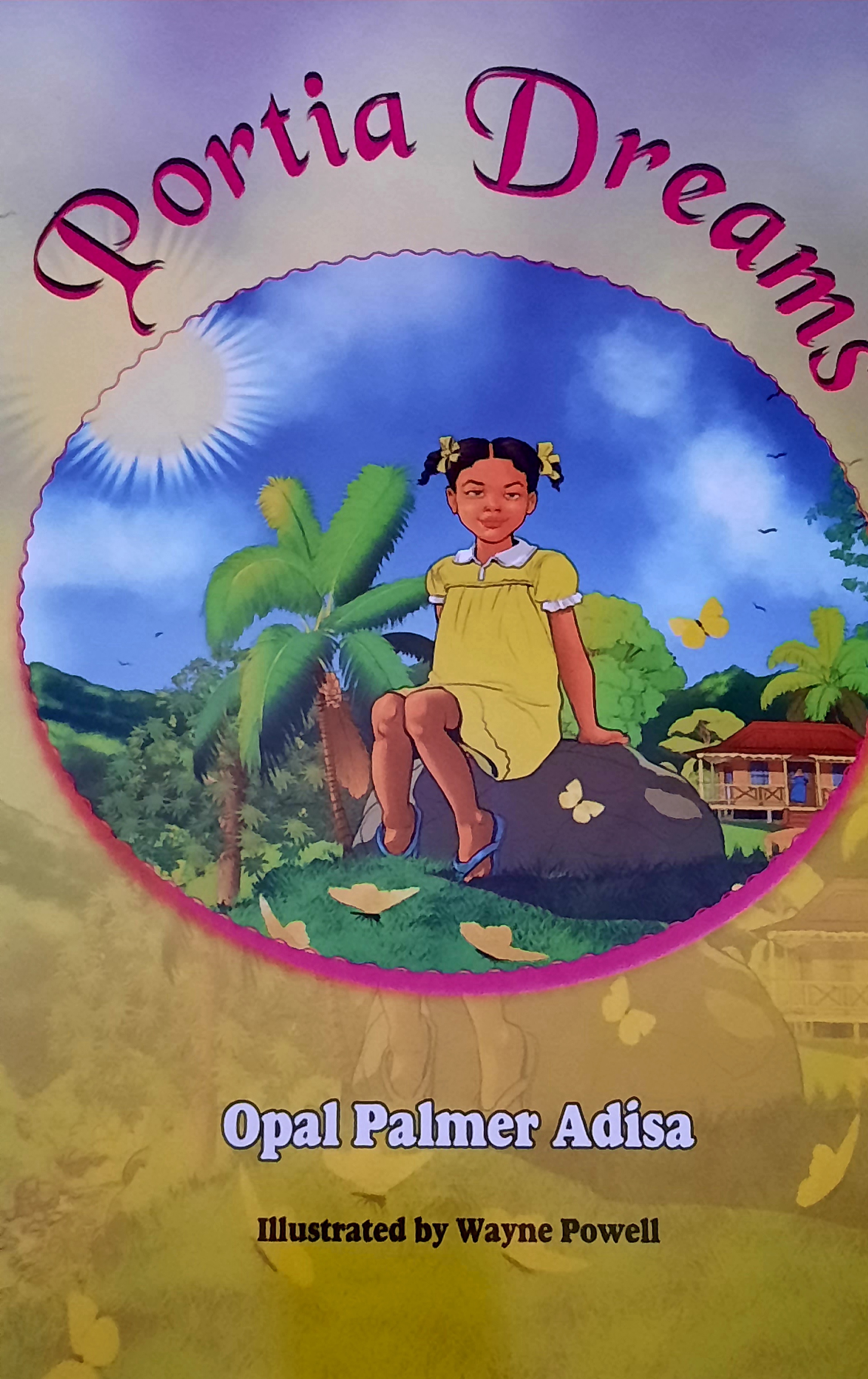
Portia Dreams – A children’s book

I am so excited about my new book for children, Portia Dreams.

It is the childhood story of Portia Simpson Miller, the first and still to date, the only female Prime Minister of Jamaica.


On March 2006 to September 2007 she was elected Prime Minister and again from 5 January 2012 to 3 March 2016. She was the leader of the People’s National Party from 2005 to 2017 and the Leader of the Opposition twice, from 2007 to 2012 and from 2016 to 2017.

Portia Simpson Miller is from a working-class family in the rural area of St Catherine, but she decided very early that she wanted to contribute to change, and supported by both her mother and father, she became a change-maker.

I invite you to read this book and learn about Portia’s childhood and the dreamer that she was.

My goal is to inspire children, especially those from humble beginnings, so they know that regardless of their circumstances, like Portia, they can dream and aspire and become Prime Minister one day.

For further information, please contact:

Lincoln Robinson

PSM Foundation Book Project Coordinator

Email: lincrob55@gmail.com

Tel: 876 833 0403

https://jamaica-gleaner.com/article/art-leisure/20211212/portia-dreams-book-mama-ps-childhood-years

Celia Sorhaindo: Guabancex

H2.5AZ (Strong Ties, Galvanized)

They are building me a new roof since the old one went

with the wind—category 5 +. I have learnt a whole new

vocabulary—purlins, rafters, wall plates, hurricane ties.

It is chaos on top of chaos—the necessary brutal breaking

down to build back better, stronger—mitigate against future

blows they say will come more frequently—ferociously unpredictable.

I look up—sturdy wet new treated pine above my head, see the thicker

rafters—bird beaked—sitting tied down on edge of anchored plate.

They say you must have such cuts and ties to firmly lodge onto ledges—

the price to be secure—to be more—permanent; more knowledgeable?

My chapbook Guabancex is about that traumatic and emotionally complicated period when in 2017 Dominica suffered a category five devastating hurricane, Maria. Poetry was my way of working through some of that mental chaos. I wanted to think more deeply about some of the complex nuances I observed and experienced; all the issues bubbling under the surface that a devastating event can uncover – but also the love, resilience, empowerment and community spirit that was there too. Often, what gets portrayed on the news when a catastrophic event occurs, can be very different to the lived reality of the people going through the experience, so I also wanted to record some of that in poetry.

I try to pay attention to what’s in the space , what words I keep seeing over and over again.  I had been coming across articles and videos about the indigenous Taino people of the Caribbean region, and their female deity Guabancex, associated with all natural destructive forces, including hurricanes. She’s known as “one whose fury destroys everything”, but she’s not only the goddess of disaster, she’s also the goddess of rebirth and renewal. Even though there is no evidence the Taino reached as far as Dominica, it seemed an appropriate title for the book and a way of honoring the Taino memory and the memory of all the indigenous people who perished due to colonization. We still have an indigenous population here in Dominica, the Kalinago, and people often aren’t aware of this. So, I felt it important, especially  in terms of climate change that the knowledge indigenous peoples seemed to have about weather patterns, where to build your house, how to build your house — we can learn their knowledge in these current times.

Immediately after the hurricane, there was no headspace for writing, it was mentally and physically an exhausting time, and we were just concentrating on the day-to-day basics of food, water, rainproof shelter etc.  It was six months after that I really began writing the poems in earnest and about one year after that I sent a few to Papillote Press for publication consideration. The final book was officially published in February 2020. Writing the poems was empowering and cathartic and it felt amazing to see something aesthetically beautiful, come out of the devastation of the hurricane. I agree with Kamau Brathwaite that art can come out of catastrophe. We had a physical book launch in Dominica, then the pandemic really kicked in, the lockdowns etc…

I never consciously have an audience in mind when I’m writing, because it makes me prone to self-censor. Hopefully during these testing time, readers will be able to relate to the themes of resilience of the human spirit, how we survive and over time heal from traumatic events, the importance of community, family, friends, faith, compassion and love; and the ‘collateral beauty’ of Guabancex.

Everything impacts my writing because for me writing is not separate to life. The world feels completely unstable and unpredictable; every area of life has been affected; I am just trying to stay balanced and healthy. I have a full-length collection of poetry which will hopefully be published at the end of next year.

I don’t have a formalized writing process. I read a lot and take a lot of notes. Sometimes I use writing prompts and writing exercises to get poems started; sometimes I work to deadlines for journals and competitions; sometimes poems subconsciously arrive unbidden which I always give thanks for and I use the craft tools I have learned to make them more potent. But every day, even though I am not writing, I am probably doing something related to my craft.

I’m a bit hesitant about giving myself a “writer” label, because there are so many expectations and assumptions as to what “a writer” should be and do and I’m just not sure yet how much of that world I want to be a part of. At the moment I am just enjoying having this creative outlet in my life; it is one of my health and wellness activities. I just want to keep enjoying the creative process, keep courageously experimenting and exploring with words and my imagination.

I have many quirks and idiosyncrasies but nothing in particular I think you should know.

 a poem filled with words not metaphors

im not going to sit here and paint a heavy hurricane picture for you to

visualise in pretty clever metaphor words will never carry you to what

its like actually lets just leave it like that words cannot ever take you

there at all although to be fair Mum is always saying kannót is a boat

all word is metaphor

this will never be real

in a billion years i dont

want some reader to come here think

this world of words was literal think

this blank ink represents black feeling

or that this white page feels any thing

this is what the hurricane left me with

go out and experience it for your self

metaphor the world however you want

http://www.celiasorhaindo.com/

https://www.facebook.com/TropicalTiesDominica/

Instagram @tropicaltiesdominica

LeRoy Clarke: A Prolific artist with a mission

LeRoy Clarke was a genius, a master artist, as passionate and as complex as the best. You either loved him fully, unconditionally, or you left him alone. He was fierce, full of convictions, and he did not mince his words, regardless of who might be hurt by them.

At his house/museum, 2017

I met LeRoy for the first time, at seventeen, recently arrived in New York, getting ready for college and a friend invited me to accompany her to visit him at his home/studio in Brooklyn. When we arrived he was working on a massive piece, about 20 x 60, part of his Douen series, with such minute details, I thought he would surely go blind. I still don’t understand, how up to two years ago when I last saw him before the COVID pandemic, how he was able to see with such clarity those fine lines and details of his multi-layered, prophetic, visual compositions.

I had been around artist in Jamaica as my uncle, Lloyd Walcott, was an artist, but walking through LeRoy’s home/studio that day I knew I was in the presence of a master. Also, amazing was his ability to work and entertain — I remember him making and offering us peanut punch, playing music, chatting with others who dropped by, between the 4 hours we were there, and in the midst of all the activity and talking with us, he kept painting. The caveat of that first meeting, of what would become many, many visits, was that my friend told him that I wrote and he said I should bring some of my poems the next time I came to visit — that was before computers and cell phones.

About a month later I visited LeRoy and left him a slim folder of my typed poems. He called about 3 weeks later and declared me a poet. He suggested some books for me to read, including Rilke’s Letters to a Young Poet, provided critique on several of the poems and told me, “Keep writing.” Thanks my dear LeRoy, I am still writing. LeRoy Clarke was my first mentor and he introduced me to many important poets in New York, Quincy Troupe and the late South African poet who was in exiled in New York at the time, Keorapetse William Kgositsile; LeRoy also took me to my first open mic reading, and at the many parties at his home I met other artists, musicians, and writers/poet from the Caribbean, Africa and the entire globe.

When his first collection, Taste of Endless Fruit: Love Poems and Drawings, 1974 came out he gave me a signed copy. When I left New York after undergraduate college and returned home, Leroy and I communicated via letters — still computer and WhatsApp was not yet invented. I believe I was visiting New York when LeRoy said he was packing up and returning home. I was inspired. He told me to come and visit him there and I did, in all of the locations in which he lived before he built his home museum, El Tucuche, where I stayed many times.

Opal & Leroy, 2018

LeRoy Clarke has been an inspiration; consistently he  was  clear and unwavering about doing his work without any distraction or deviation. The first original piece of art I bought when I was 21 years old was one of Leroy’s Painting that he allowed me to pay for over a 2-year period; it sadly was stolen from my California home, when I was away on study leave in 2009, when some very unscrupulous people tried to take over my house and stole that, among other art work.

LeRoy insisted that I attend his 75th birthday, and asked me to speak about his work and our friendship at the Museum in Port of Spain; also, I wrote and was interviewed in a local journal about our mentorship/friendship.

In 2016 I spent a week with LeRoy, and during that time we spoke extensively about his work – his process and some of  those conversations were in a taped interviewed him about his Eye Hayti Series; an excerpt of that interview was published in the journal, Interviewing the Caribbean, Vol 3, No 1, 2017

About five years ago, Leroy asked me about his work, and when I visited him three years ago he had me select 3 images from Ubiquitous Thunder, and write about those.  I hope this quintessential collection of line-drawings will be a forthcoming publication  by his estate.

LeRoy painting at his home, 2018

LeRoy Clarke has left a massive body of work that will take many, several  life times to analyse and process. He is certainly one of the Caribbean’s most prolific visual artists and writers, and his work enshrines our history, culture and his future hopes for our restoration. I count myself among those blessed to have known him and who was encouraged to keep steadfast with the work.  I am leaning on the shovel, LeRoy, and will keep leaning.

Asé.  I know the ancestors welcome you in their folds. Walk Good my dear friend.

https://en.wikipedia.org/wiki/LeRoy_Clarke

https://www.leroyclarke.com/

LeRoy Clarke (7 November 1938 – 27 July 2021)

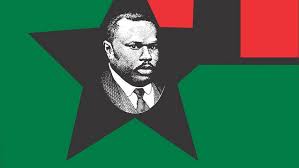
Marcus Garvey : still relevant today

“Our success educationally, industrially and politically is based upon the protection of a nation founded by ourselves. And the nation can be nowhere else but in Africa.” Marcus Garvey


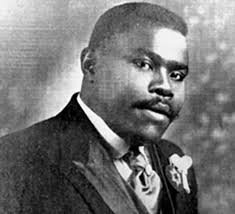
I love this photo of Garvey as it resembles my father –he resembles my father or more accurately, my father resembles him; they could have been brothers; therefore Garvey could have been my father; he is certainly my spiritual father. However, Garvey forged a path much wider than my biological father; he had a vision, insight and the tenacity to pursue his dreams, and thankfully for us –Garvey’s dreams still inspire us.

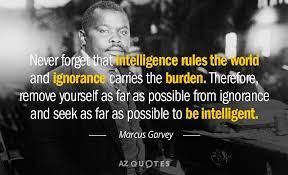
As a writer and intellectual, this Garvey quote resinates with me, especially when intellect is married with common sense then the whole world opens to one. But really what does Garvey mean by intelligence? It of course has its base with self-knowledge, as Garvey understood this to be the cornerstone of Black people’s liberation from enslavement whose primary goal was to reduce us by let us forget who we are truly and where we came from. The vast majority of us still don’t know the most basic things about our heritage, even today when so much is available to us.

CONFIDENCE in SELF

Similarly, if one has no confidence in self, there is very little positive change one can accomplish. That is why it is so important to endow our children with knowledge about self, and help to bolster their self-confidence. Everything we hope to achieve is only possible with self-confidence; without it we will remain stagnant.

Throughout his life, Garvey tried and accomplished many things. Some will say he also failed at many things, but that is also the mark of a courageous and forward thinking person, who is not afraid to fail because s/he knows every failure leads us that closer to success. So thanks Marcus Garvey for doing and failing and doing more so we have the history of the Universal Negro Improvement Association and African Communities League (UNIA-ACL, commonly known as UNIA), which you founded and Presided over, and which was once the largest organisation of Black people throughout the Diaspora, and that inspired countless, and continues to do so even today.

There are many Garvey quotes that I find inspiring but these three in particular resonate with me:

“Africa for the Africans… at home and abroad!”

I hope the leaders of Africa will come to truly understand and reflect this very soon in the near future.

“A reading man and woman is a ready man and woman, but a writing man and woman is exact.”

We all need to ponder the meaning and implications between ready and exact.

And this finally quote below speaks to our future:

“There is no force like success, and that is why the individual makes all effort to surround himself throughout life with the evidence of it; as of the individual, so should it be of the nation.”

How are we as individuals and as a society/nation measuring success, which must have a community component and an element of altruism. I don’t remember how old I was exactly when I was introduced to Garvey’s philosophy, but it feels as if he has been always around, and I know he will continue to be a beacon that sees me and others through to the other side.

Asé! May his words continue to guide…

Not Another Nashawn Brown: Let’s Parent With Love

The death of Nashawn Brown, resulting from the beating by his stepfather is not an anomaly.  Every day, throughout Jamacia, regardless of  class and ethnicity, children are abused emotionally, physically and sexually. This must  stop.  We must learn and understand that children are not empty vessels and not our property to do with as we feel.  We must not take out our anger and frustration on our children. We must honour and respect our children, and we must not stand by and watch adults abuse children. Those of us who know better, must be the voice of children who are unable to speak for and defend themselves.

Whenever I see children out, whether going to school, church or some function, they are always well-groomed. It is evident that a parent or guardian invested time and energy to achieve that appearance. However, it seems that parents do not take the same amount of pride in the psychological and emotional welfare of their children.

What we as parents say to our children has deep, life-lasting implications. If we want children who are intelligent and compassionate and emotionally intelligent, then as parents we have to provide them with an opportunity to practice and internalise these values.

Contrary to what some adults might believe, each child comes into this world fully equipped with a unique personality, with specific likes and dislikes. While parents or guardians are intended to guide our children, we are not expected to dominate nor terrorise them.

When I do workshops, parents often throw out the Bible phrase “spare the rod and spoil the child,” which is taken completely out of context. No matter how you slice it, beating is violence. Although there should be no corporal punishment in schools, we know that children are being damaged irreparably by some teachers who humiliate them because they might not understand a certain lesson. Teachers are co-parents so it is vital that  teachers are instructed in the psychology of children.

The data says that 75 per cent of adults who are in jail were abused as children. Those who rape, mutilate and murder, were abused as children. Here are the inescapable facts:

  • 80 percent of Jamaican children experience or witness violence in their homes and communities, and 60 percent experience violence at school.
  • Adults who engage in violence against their intimate partners or children, experienced and or witnessed violence in their homes or communities when growing up.

If we treat children with integrity, show them love and compassion we are on the pathway to creating an open, honest and healthy society.  Let us act as if each child is our most precious treasure. Listen to our children. Speak softly and kindly. Do not be quick to judge or interpret their actions based on your own adult reasoning. Give them the benefit of doubt as you discipline, do it with love and compassion. Model kindness. Model forgiveness.

Children’s Right

Opal Palmer Adisa

before she was four

she was thumped

pinched slapped in the face

by the time she was six

she’d been beaten with stick shoes

pot the hook of a fruit picker

her mother has shoved her

causing her to stumble

in the market for walking

too slow with the heavy basket

then cursed her out:

you too damn clumsy and weaky-weaky

her grandmother had spat on her

and knocked her in her head with a stone

for saying good morning to the woman who was

her grandmother’s life-long enemy

the teacher had slapped

her in her hands with the ruler until they swelled

because she couldn’t remember

nine times eight and when she said

her head hurt the teacher shamed her

now at twenty-three with four children

two fathers she expects to be thumped slapped

spread and entered with force

any friday night when her man

comes home drunk               feeling defeated

she expects to be cussed out/grabbed by the throat

when she asked for money to help with food

and when her frustration and anxiety mount

which is all the time she shoves and pushes

her children for clinging to her          screams at them

ah wish oonuh would just dead

and leave me the blasted hell alone

then she pulls and hugs then tightly

to her bosom                           head throbbing

as she mumbles    is love me love oonuh

is so love hurt

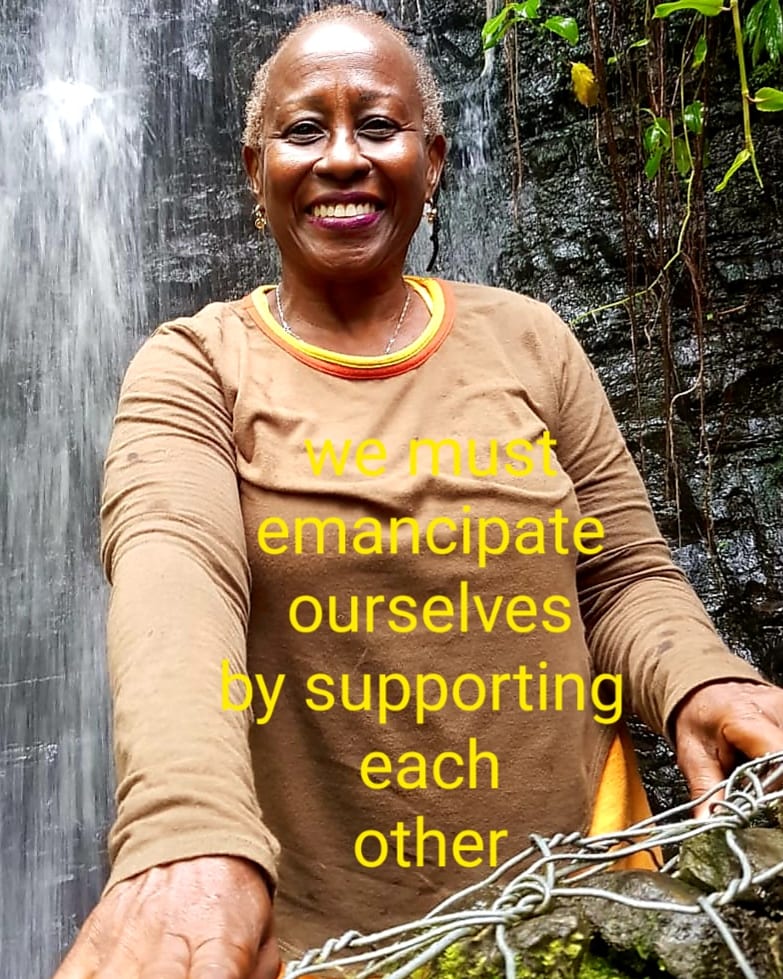
WE CAN & MUST EMANCIPATE OURSELVES

I am emancipation, the door and one path.

You are emancipation, the walls and another path.

We are emancipation, the roof and windows, a shelter.

Emancipation is not complete until we are all emancipated.

The first and important step is to scrub our minds of the colonizer ‘s lies and affirm those aspects of our culture that sustain and empower us.

The second step is respect of our people, and keeping us safe, especially women and children. Empower ourselves with knowledge.

Third step is a foundation of manhood that combines strength with wisdom.

Together we rise. We demand reparation out of respect for all the hard labor and sacrifices our ancestors made so that we are still here standing.

Shara McCallum: I love Myth

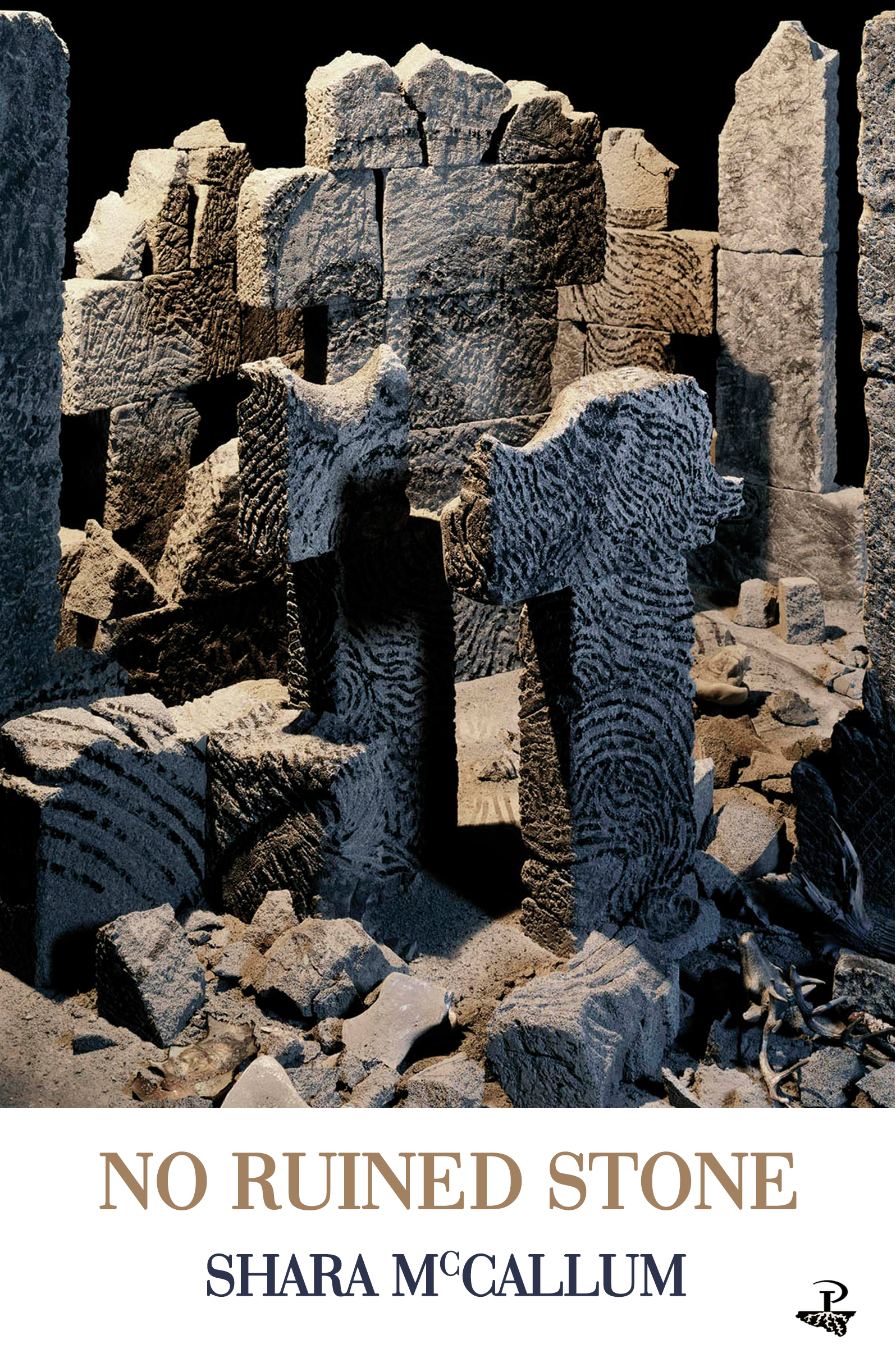
JAMAICAN born Shara McCallum is the 2021-22 Penn State Laureate, Edwin Erle Sparks Professor of English at Penn State University, and winner of the Silver Musgrave Medal of Jamaica and the OCM Bocas Prize for Caribbean Literature. The author of six collections, including the recently released, No Ruined Stone, Shara offers insight about this work.

No Ruined Stone

May 2018: for my grandmother

When the dead return

they will come to you in dream

and in waking, will be the bird

knocking, knocking against glass, seeking

a way in, will masquerade

as the wind, its voice made audible

by the tongues of leaves, greedily

lapping, as the waves’ self-made fugue

is a turning and returning, the dead

will not then nor ever again

desert you, their unrest

will be the coat cloaking you,

the farther you journey

from them the more

distance will maw in you,

time and place gulching

when the dead return to demand

accounting, wanting

and wanting and wanting

everything you have to give and nothing

will quench or unhunger them

as they take all you make as offering.

Then tell you to begin again.

OPA: What is this collection about?

No Ruined Stone is a collection of poetry. As a whole, the book is a novel-in-verse. It offers a speculative account of history, based on the real-life 18th-century Scottish poet Robert Burns. In 1786, Burns came very close to migrating to Jamaica to work on a slave plantation.

OPA: How did the title come about?

From a poem by the 20th-century Scottish poet Hugh MacDiarmid. In the poem, MacDiarmid says, “There are plenty of ruined buildings in the world but no ruined stones.” This quote serves also as an epigraph for the book.

OPA: How long have you been working on it and explain the journey, the highs and lows, and finally the triumph to completion?

The idea for this book took hold in 2015 when I first went to Scotland and, there, learned the story of Burns and Jamaica. I researched the book for nearly three years after that. So much time went into research with this book, I began to wonder if I’d ever write the thing itself or had bitten off more than I could chew. I’m a poet and was asking poetry to do the work of a novel. I wasn’t sure if I, as the writer, was up to this task. When I went back to Scotland in May 2018 for another extended stretch, that’s when the writing caught fire. I wrote a third of the book there in about 14 days.

OPA: Why is this collection important and why would it appeal to others? Do you have a specific audience in mind?

The book examines the legacy of slavery, race, passing, migration, exile, and memory. I hope Jamaicans and Scots would be interested in this interconnection and lesser-told story of our entangled histories. I live in the United States where the book will also be published, and I hope Americans will also be interested to hear a story in which reverberations of the past in the present are audible.

OPA: As a writer living under Covid 19 and the Black Lives Matter movement, how have these two very different social realities impacted you, your writing?

I may have answered the second part of this, obliquely, though I began writing this book before BLM became part of public consciousness. Like many black writers/people, my awareness of slavery and the continued impact of racism has a long memory. As for Covid, this last year and a half has strained my ability to write. But I did complete final rounds of revisions and edits with No Ruined Stone during this time. I also worked to finish my part of the work on another book (La historia es un cuarto/History is a Room, an anthology of my poems in Spanish, translated by Venezuelan poet Adalbar Salas Hernandez), which is coming out later this year too. The production stages of a book take time, as you know well Opal, but are an essential part of the writing life and I can’t complain.

OPA: What are you working on now, or what will be your next project?

Alongside poems, I’ve been writing personal essays for over the past twenty years. In 2020 I published two essays that are the foundation of a collection in process, Through a Glass, Darkly. The essay collection revisits several of the themes and narrative threads treated in my books of poems, though the discursivity and larger canvas of the essay formally shapes the material differently I think.

OPA: Can you share your writing process?

I generally draft new work in brief, concentrated periods of time, and then won’t write anything new again for months to a year. I prefer to revise on my own and don’t share writing in process with others very often, though I did when I was younger. I sometimes will sit on a poem or an essay for many years, wrestling with it until I feel I’ve seen all it wants to be.

OPA: What are your aspirations as a writer?

To keep writing and to be truthful.

OPA: Share a secret that we should know about you the writer-person.

I love watching sports. I also love superhero movies. Basically, these are modern-day myths and I love myth. These aren’t really a secret about me, but I share them because people tend not to associate either of these past times with poets & women.

No Ruined Stone

May 2018: to Robert Burns, after Calum Colvin’s “Portrait of Hugh MacDiarmid”

You saturate the sight

of those who come after, poets

and painters alike. Your words invade

my mind’s listening, manacle

my tongue when I try to speak

on all I backward cast my eye

and fear and canna see.

Who would I have been

to you, what stone

in the ruined house of the past?

In this world, I am unloosed, belonging

to no country, no tribe, no clan.

Not African. Not Scotland.

And you, voice that stalks

my waking and dreaming,

you more myth than man,

cannot unmake history.

So why am I here

resurrecting you to speak

when your silence gulfs centuries?

Why do I find myself

on your doorstep, knocking,

when I know the dead

will never answer?

No Ruined Stone (Alice James Books, US)

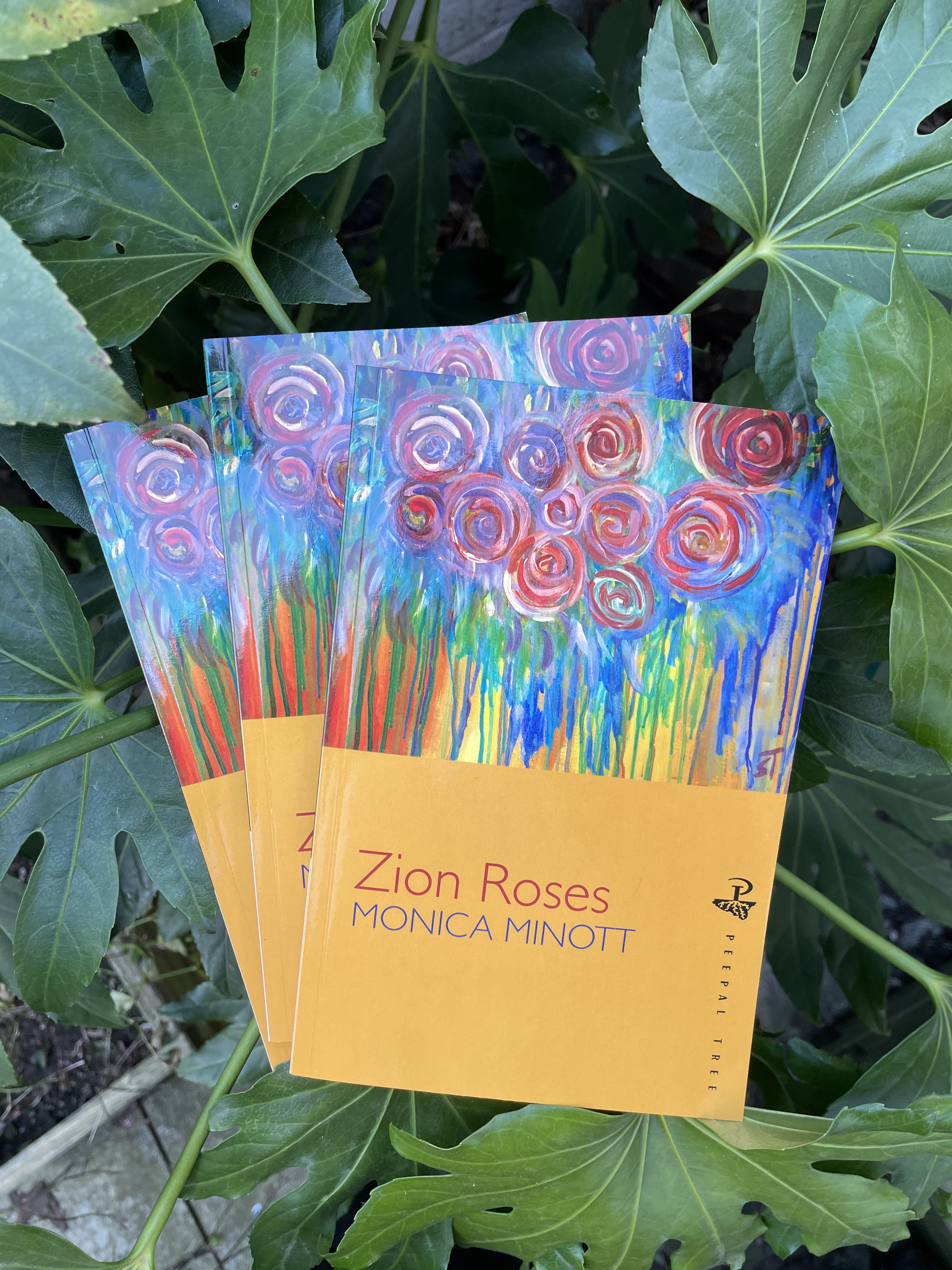
No Ruined Stone (Peepal Tree Press, UK)

sharamccallum.com

If you might like a review copy or media/publicity materials, please be in touch with Emily Marquis (pa@alicejamesbooks.org) or Alyson Sinclar (alyson.sinclair@nectarliterary.com), with Alice James Books, or Adam Lowe (adam@peepaltreepress.com) at Peepal Tree Press.

Paulette RamsAy: The Dynamism of Words

Both poetry and prose use language in an imaginative way to create vivid images and pictures. Both use a rich array of elements that communicate meaning in a creative manner. Paulette Ramsey

Mothers Make Magic

(For mothers everywhere)

they create magic

mothers do

everyday

they stretch time like endless

elastic ropes

that children swing on

to the moon and back

mothers

make tuneful onomatopoeia

and put the night on hold,

they keep the day running

as their sons float their kites

on the wind,

games must be played,

bodies fed,

fantasies spun

with the thread

of magical words,

songs must be sung,

the stars repainted in the sky

everyone must go to the moon

and back

as mothers make magic.

I write prose and poetry.  I write because I enjoy using language in different innovative ways. I love the dynamism of words and figures of speech and expressions.

As a childhood  I loved to read a lot and this enjoyment of reading gave mean appetite for living in the world of books. I enjoyed the books of Enid Blyton and Andrew Salkey, Everard Palmer , Jean Da Costa and others who drew me into the world of their works.

Because I like to write about Caribbean experiences, place is important for establishing cultural contexts and political and social background.

I do believe that poetry and prose can draw attention to social ills, and  try to subtly, and without preaching, suggest the ills that need to be addressed.

I am not writing now but I am thinking about my next novel. I usually carry things in my head.

I am an academic who does research on the injustices faced by people of African descent in Latin America.

My new novel is Letters Home. The title is based on the fact that the novel is made up of letters and diary entries.

I wrote it for about two years and eventually decided I wanted it out there in the public. It focuses on the trials, challenges and problems faced by Windrush people in England in the 60s and 70s.

My next project will be another novel, but you should know I wrote a novel for three years and never bothered to publish it.

My writing process is –I read , think ,then write and rewrite many times.

I would like to win an award one day…

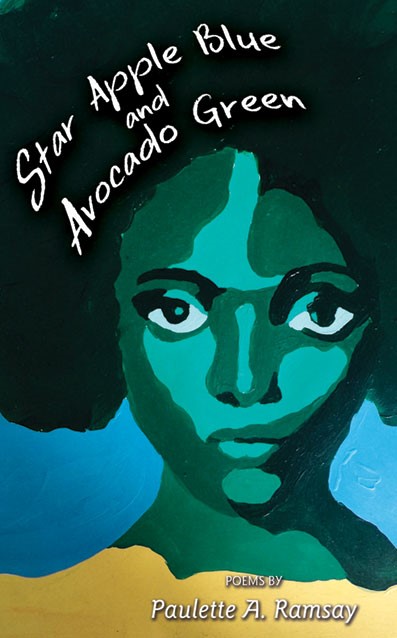
Star Apple Blue and Avocado Green

our star apple tree is old and tired now

so many many years after my

great grandmother planted it

it now leans lazily yet gracefully

against the avocado tree that I planted

ten years ago

interestingly, they each carry stories

of two different generations

in a family that celebrates

our tropical trees with great spirit

my great grandmother loved the star apple’s purple blue skin

and its succulent purple and white flesh

so delicately arranged in a wine coloured bowl

I planted my avocado for its smooth, waxy fruit

that my mother used to feed me

with hot slices of yellow heart roasted breadfruit

they seem to like each other’s company

my avocado tree seems happy to

bear the weight of my great grandmother’s

aged star apple tree with its purple green leaves

the star apple tree is happy to find

friendly support in a young strong trunk

in its last days

so reminiscent of the way great grandmother

loved the company of us young people

as we laughed and chattered around her

in her last days

our two trees seem to like

the cosiness of being snuggled against each other

listening to the soft whisper of their leaves

brushing against each other

in the quiet green breeze

sometimes I watch them with envy

I contemplate joining them

but then I wonder

who will I lean on

my avocado, or great grandmother’s star apples?

for now, I’m content to just watch them

or close my eyes and imagine myself

sitting in the V where they meet

surrounded by star apple blue and avocado green

flowers and colours, my colours of life and joy.

Glodean Champion’s Salmon Croquettes – a rites-of-passage novel

Prose is what happens when a writer shows up to the page

with the courage to be vulnerable, the willingness to be honest,

and a desire to uplift and enlighten the reader.” Glodean Champion

OPA: What is this novel about and why is it importance?

GC: This is a coming of age story about a 12-year-old Black girl who is struggling with her sexuality amidst a community fighting for equality. It is important because as bi-sexual Black woman who has more courage than most, my coming out wasn’t really a coming out. I just showed up with a “girlfriend” one day and acted as if it was the most normal thing in the world. My family was a little taken aback, but not shocked because of who I am. The other thing is I’ve never struggled with anything other than my weight. So, when I thought about all the other LGBTQ people of color, I knew it wasn’t as easy for them. I wanted to give them a voice and show people that homosexuality is not a “choice.” Having to witness a child trying to sort it out who hasn’t been molested or traumatized to make her “choose” to be with the same sex makes people think differently. That’s why I also made sure nothing about her story was stereotypical. She has both parents. They have money, but the father chooses to live in Watts because that’s where he comes from. And, her community is close knit and everyone looks out for each other.

OPA: How did the title come about?

I titled it Salmon Croquettes because my mother (now deceased) used to make salmon croquettes on Fridays and I loved them! She’s gone now and I thought the best way to honor her memory would be to name the book after something that makes me think of her. Then when I thought about the fact that my mother tried to teach me how to cook and I preferred poking holes in the tablecloth and taking things apart (like the radio and toaster) it made it easy to weave that into the storyline.

OPA: How long have you been working on this novel, and explain the journey, the highs and lows, and finally the triumph to completion?

I started working on the novel in 2008. It was actually my thesis for grad school. It evolved a LOT over the years it took me to complete it. Seven years, in fact. I finished the first draft on December 31, 2015. During that time, Zayla (my main character) kept me writing. On those days when I didn’t know where to take the story I would get an idea while cooking or sometimes in my sleep. It never failed; when I took action on those ideas the words poured out of me, seamlessly. I can’t say that I knew how the story was going to evolve. I wrote out an outline, but wound up writing something altogether different. I guess the best way to say this is, “I trusted the writing process and wrote what came to me in the moment.” In fact, there’s a character, Miss Millie, whom I didn’t even know existed until I was writing her into the scene! She literally just showed up and I went with it. It’s one of my favorite scenes in the book and I never edited any part of it. The way I wrote it the first time is the way it remained.

OPA: Why would this novel appeal to others? Do you have a specific audience in mind?

It’s both YA and historical fiction. I didn’t have an audience in mind, initially. I wanted it to be for “everyone.” But, to see how YAs would respond to it I did a book club with Willard Middle School in Berkeley, CA to test it out. There was a group of 14 girls, most white, and they loved it. What was most important was that it resonated with all of them. Several of them made references to the connection they see between George Floyd and one of the scenes in the book.

OPA: As a writer living under Covid 19 and the Black Lives Matter movement, how have these two very different social realities impacted you, your writing?

I don’t think it’s made much of a difference, however, releasing the book during this times was perfect because it’s so relevant.

OPA: What are you working on now, or what will be your next project?

I have four books in my head. The sequel to Salmon Croquettes, and three books about finding my birth family. One will be fiction (based on a true story) about my birth mother and adoptive mother. I’ll be exploring how things might have been if their lives (as women) paralleled each other and how my birth mother’s life encountered ours on the streets of Los Angeles without us knowing. It’s a love story. A mother’s love, which is what I’m going to call it. “A Mother’s Love.” Then there’s the memoir/leadership book I’m going to write about my life with my adoptive mother, who raised me with intentionality and can be equated to the epitome of a true leader/servant leader. It’s a telling of the foundation that shaped me into the woman I am today. Then there’s the book I want to write about my birth father. I might call this one, “Ain’t I a Man?” or “Ain’t I Man Enough?” (still sorting that out). Anyway, it’s an exploration of what it

looks like and how it may feel to a Black man when his child is taken away without his knowledge or input (fiction also based on a true story). And, lastly, a photojournalism style book, that I’m calling, “Pura Vida: A Black Woman’s Journey to Self-Love.” This will be a combination of travel pics, selfies, and journal entries that end with lessons learned or observations of life and love.

OPA: What is your writing process?

I come up with the idea then I show up to the page with one specific topic/idea to work on. And I write until it feels complete. It might be a scene or a chapter, but whatever it is I trust my instinct to know when it’s done.

OPA: What are your aspirations as a writer?

To get to a point where 50% of my income comes from my writing. Whether it’s in books, blogs, or articles. I have finally accepted that I have a voice that should be heard because my stories could change the world! It’s one of the goals I’ve set for myself that I won’t be able to achieve until I grown into the person who can. That person shows up to the page and, when the work is finished, has the courage to put it out into the world without any hesitation and a ton of confidence!

OPA: Share a secret that we should know about you the writer-person –quirks/ideocracies.

I have this pen thing that’s kinda crazy. It’s two fold. I have fine point pens that I like to write with at times and medium point pens that I like to write with too. If I’m on “fine point” mode, then I will ONLY write with that type of pen. It’s a specific pen, too. Not just any fine point pen. I use the “Uniball Signo DX 0.38” with black ink. When I’m in medium point mode there are two types of pens I go to. Here’s the crazy part…one is a pen I got from the Embassy Suites when I was conducting a training class. They gave me almost 20 of them. I’m down to 4. The other is a pen I got from my last job and I just found them on Vista print (so, that’s good cause when the Embassy Suites pens are gone I have back up)! That’s all kinda crazy, right? LoL!

Excerpt form Salmon Croquettes:

When Dee-Dee tired of the sprinklers, she came up on the porch, dripping water everywhere, and flopped down next to me. We watched the water go back and forth across the grass awhile. I searched for an excuse to leave, because as fascinated as I was, I was equally uncomfortable. Dee-Dee appeared to be completely comfortable in her skin, as if it was an extravagant evening gown designed by God Himself. She was one hundred percent girl. Polished fingernails and toenails. Matching swimsuit and sunshades. I was rough and tumble. My skin felt like a three-piece polyester suit four sizes too small – designer unknown.

Basically, I didn’t care how I looked coming out of the house. I hated fingernail polish. Matching clothes. And anything frilly or ruffled. My experience with the girls in The Circle proved that “rough and tumble” and “girlie girls” didn’t blend well. It probably didn’t help that I took pleasure in decapitating dolls and breaking up tea sets. Momma said I did it out of meanness because I was jealous. Except I wasn’t jealous. I just hated pretending to be a girlie girl when I had much more fun climbing trees and playing stickball.

All of sudden, as if she could hear inside my head, Dee-Dee turned to me and said, “We can’t be friends if you play with Barbie dolls or have dress-up tea parties.”

I grinned. “I hate Barbie dolls and I hate playing pretend even more.”

We became fast friends.

More  information on Glodean Champion:

  1. Website is: www.glodeanchampion.com
  2. Facebook: https://www.facebook.com/GlodeanGlo1967
  3. Twitter: https://twitter.com/GlodeanGlo
  4. LinkedIn: https://www.linkedin.com/in/glodeanchampion/
  5. Instagram: https://www.instagram.com/glodeanglo/