Category Archives: Daily Musings

Natalie Baszile: Blazing with her debut novel, Queen Sugar

An Interview with Opal Palmer Adisa

 Natalie Baszile is the author of the debut novel, Queen Sugar, soon to be adapted into a TV series by writer/director, Ava DuVernay of “Selma” fame, and co-produced by Oprah Winfrey for OWN, Winfrey’s cable network. Queen Sugar was named one of the San Francisco Chronicles’ Best Books of 2014, was long-listed for the Crooks Corner Southern Book Prize, and nominated for an NAACP Image Award.

Natalie_Baszile_1 

OPA: When did you know you had a novel in you?

NB:     I began to suspect I had a novel in me when I realized a short story I’d written was actually just part of a larger story.  This was 1997 and I was at my grandmother’s funeral in Louisiana. During the service, it occurred to me that her town was the place from where one of my characters had come.  It was a startling realization, but also a relief.  When I got home from the funeral, I pulled out the short story and started imagining the characters’ lives. The novel grew from there.

OPA: What education/life experiences prepared you to write this novel? And how long did it take?

NB:     Queen Sugar took 11 years to write, and I have to say that everything I did in advance of selling the manuscript prepared me  to write it.  I was an English major as an undergraduate at Berkeley. That’s where I was first introduced to and fell in love with Afro-American Literature. Afro-American literature was experiencing a renaissance of sorts. Alice Walker, Toni Morrison, Gloria Naylor were just a few of the black authors who were all publishing books and I was completely inspired by their work.  That’s when I started to thinking I might want to be a writer.  I earned a M.A. in Afro-American Studies, and that experience depended my appreciation, not just for Afro-American literature, but for the history the diaspora.  Those two experiences helped me lay the foundation.  Years later, after I’d started working on Queen Sugar, I went back to school again and earned an M.F.A. in Creative Writing because I realized I needed to learn more about the craft of writing.  I also worked for my family’s business for eleven years after college. While that experience didn’t teach me anything about writing, I learned some valuable lessons about how quickly time could pass and how important it was for me to pursue my passion while I had the chance.

OPA: Did you always know you wanted to write?

NB:     I always knew I wanted to write.  I loved books as a kid, and initially thought I wanted to be a journalist. During college I secretly dreamed of moving to New York and writing for a magazine, but I was afraid to take the leap, which, looking back seems so ridiculous. But I’d also promised my dad that after graduation I’d work in his business.  I’m the oldest of two girls, and my younger sister announced early on that she wanted to be an academic, so I suppose I felt a sense of duty–so that’s what I did for 11 years until I couldn’t stand it any more and quit.  Writing is something I have to do. It’s an absolute necessity–physically, emotionally, and psychologically, spiritually. When I don’t write, I don’t really feel like myself.

OPA: Your novel, Queen Sugar, is set in Louisiana.  Did you grow up there or do you have family there?

NB:     I’m a native Californian, but my dad was born in Louisiana, which, I think, gave me permission to claim it as part of my identity. My extended family still lives there, and I love having southern roots, but I’m also grateful to have a western sensibility.  I don’t think I could have written Queen Sugar if I’d been born in Louisiana.  That book is all about discovery and being in a state of wonder.  In so many ways, I needed to occupy a space outside of the culture in order to write about it.

OPA: Why is this story important to the Black literary tradition?

NB:     When I first dreamed of becoming a writer, African-American literature explored a range of topics, but then it seemed to narrow for a time, which I think had more to do with publishing and less to do with reality. But there was definitely a period when it seemed that the only stories told (or published) about black peoples’ lives were either entirely urban or entirely rural, and I wasn’t seeing anything that reflected my experience on the book shelves.  That lack of range was huge reason why I wanted to write Queen Sugar. Because it’s like Toni Morrison says:  “If you don’t see a book you want to read, then you must write it.”  I always hoped that Queen Sugar would tell a story readers hadn’t seen:  the story of a middle class, suburban black woman from the west.  The Black literary tradition is so rich.  I’m very grateful to be a part of it.

OPA: Which black writers and other writers’ works have influenced you?

NB:     Where do I begin?  James Baldwin, Toni Morrison, Alice Walker, Zora Neal Hurston and Jean Toomer were some of my early influences. I love Andrea Lee’s story collection, Interesting Women, then there’s Zadie Smith and Chiminanda Adiche.  I don’t write poetry, but I read it and have tremendous admiration for poets: Elizabeth Alexander, A. Van Jordan, Natasha Tretheway, Cornelius Eady, Yusef Komenyakaa, Lucille Clifton . . . .  I just read Claudia Rankine’s Citizen, which blew me away, and am reading Robin Coste Lewis’s Voyage of the Sable Venus, which I love, love love.  I love Amy Bloom and Elizabeth Strout, Michael Cunningham, Elena Ferrante’s,  Anthony Doerr. So many writers . . .I also draw inspiration from other art forms.  Kara Walker’s work is provocative and interesting. Then there’s Glen Ligon, Carrie Mae Weems, Elizabeth Catlett, and Richard Mayhew . . . I could go on.

OPA: Are you willing to say what you’re working on next?

NB:     I have an idea for my next novel, but I’m at the very beginning of the process, which feels so strange after working on Queen Sugar for so long. I have the tiniest seed of an idea, just a kernel, which I have to nurture and protect, so I can’t say much about it.

OPA: What does Natalie do for fun, when she is not writing, let us, just a little, into a glimpse of you – Natalie?

NB:     When I’m not writing, I love to ride my bike and garden, although I have to confess I haven’t done much of either lately. I had a big garden when I lived in Los Angeles, but I still haven’t figured out how to grow anything but salad greens and lemons in San Francisco where it’s so much cooler. I like to entertain and enjoy entertaining friends over for dinner. I love to travel and have a long list of places I’d love to experience. I have a lot of things on my bucket list.

QUEEN SUGAR paperback

Natalie Baszile, a member of the San Francisco Writers’ Grotto, has a M.A. in Afro-American Studies from UCLA, and an MFA from Warren Wilson College’s MFA Program for Writers. Her non-fiction work has appeared in The Rumpus.netMission at TenthThe Best Women’s Travel Writing Volume 9, and O, The Oprah Magazine. For more information visit her website: http://nataliebaszile.com or connect with her on FaceBook


Presenting It Begins With Tears to Young Readers: Berkeley High School

IMG_4903IMG_4901

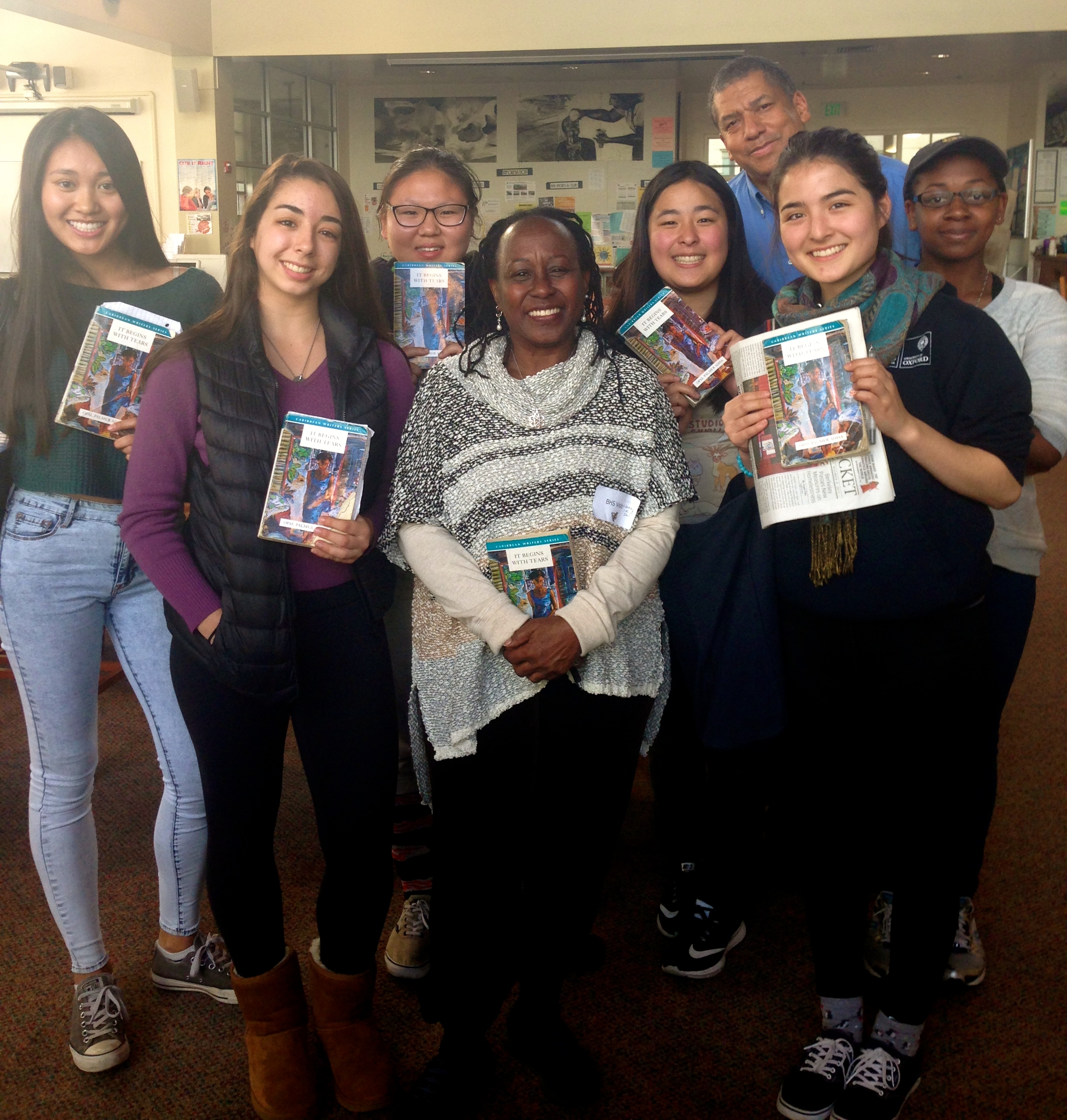
Yesterday  I had the pleasure of reading from my first novel to students, juniors, at Berkeley High where It Begins With Tears is being taught.

Although this novel has been taught in more than 30 colleges nation-wide, and internationally, and at three High schools, including Berkeley high, in the past, I had not written it with young people in mind so I am always surprised and humbled when students come up to me and say, as two students did yesterday, that it is the best book that they have read, and countless others, approached me after my presentation to say how much they enjoyed and liked the novel.

A parent was in the audience and asked what has been my most favorite thing about writing this and other books, and I have to say, hands down, it is the opportunity to share my work and hear what readers take away. I love that it continues to find its way to young people, and as far removed as they are from the rural Jamaica setting, and the issues of community and relationships that it explore, that it still resonates with students.

IMG_4900I want to thank Alan Miller, the teacher who has introduced these young people to my text and who invited me to present to both his classes yesterday, and for inviting other teachers and students, who were not in the class, but who came to listen and ask questions.

The greatest reward for me as a writer is sharing my work, and knowing that there are people out there who are reading me and being exposed to the people and their stories that I present in my works.

I truly enjoyed revisiting this text through the eyes of these young adults, and want to thank each of them for being present and all the questions they asked.

Thanks too to the two students who introduced me, Nia and the young man whose name escapes me now, and Zeeshawn, who made me promise to write a story with a character with his name.

Nuff Respect to Berkeley High School for my visit.

Walk Good,

WORDS HAD THE POWER OF MAGIC SPELLS: GENNY LIM

gennylim2  A San Francisco native, Genny Lim is an American poet, playwright, and performer. A graduate of San Francisco State University, and Columbia University, Lim has taught at several universities including New College and the California Institute of Integral Studies.


Lim began writing poetry in middles school, and remembers her first step towards poetry: “I have a vague and amusing memory of writing poems that were very intellectual and high falutin sounding. I must’ve thought them to be very deep at the time. I was pretending to be a poet. I liked the sound of language and the play of words as they rolled off my tongue like music. I had no mentors, only books, poetry books my older sister read and kept around the house. She had e.e. cummings, Pound, Wallace Stevens, Ginsburg, Creeley, Philip Whalen, Di Prima, lots of the Beats. I read them out loud, purely enjoying the vocabularies, the sound of the words, as if words had the power of magic spells. I had discovered something that I have never lost.”

And in deed Genny Lim has been reproducing the magic. The author of two plays, Paper Angels & Bitter Cane, and two poetry collections, Winter Place & Child of War, and co-editor of the seminal anthology, Island: Poetry and History of Chinese Immigrants on Angel Island, Lim states that the biggest influence have been her older sisters. They were the ones who exposed me to Jazz, flamenco, blues, yoga, zen, guitar, poetry and dance. Our house was always filled with music. Chinese opera, country music, top forty pop, big band music, Latin music a hodgepodge of everything. That happens when you’re from a big family. You get exposed to everybody’s tastes.”


The youngest of seven children, Lim likens her childhood experience to being like a human sponge, and all that she stored as a child, eventually found its way into her poetry. Of course, books is one of the common denominator that connects this Bay area writer with others. Lim enthuse, “I loved books. I read every Lois Lenski and Oz book I could get my hands on at the library. I was a closet country girl trapped in the city. I imagined strawberry bogs and running barefoot with goats and chickens. My older sister asked my why I liked the Oz books so much. I said because everyone is equal in Oz and everyone shares what they have and are happy. She told me I was a socialist. I thought she was calling me a name because I had no idea what a socialist was. I just wanted utopia.”


The recipient of many awards ,including the American Book Award, 1981, and several others including Bay Guardian Goldie, Creative Work Fund and Rockefeller for “Songline: The Spiritual Tributary of Paul Robeson Jr. and Mei Lanfang,” This was a collaborative project that Genny Lim did with Jon Jang and James Newton. Lim has been a stable in the Bay Area poetry and performance scene for more than three decades, yet her work remains fresh and vibrant. Reflecting on her steadfastness, Genny Lim remarks,

“Staying power is about keeping on. Writing is a practice. It’s my ritual. My form of meditation. Regardless of the ups and downs, regardless of who’s listening or not, it’s the way I make sense of an incomprehensible world. All my anxieties, fears, sorrows and questions are examined when I dive deep into my consciousness. I derive a sense of inner peace after having completed a poem.”


And in truth many of Lim’s poems read as meditation, like this one entitled, “Chukchi Woman

for Lin Sun Lim, Oct. 6, 1907-July 26, 2007


Lost in drifts of dawn

you walk and walk

With eyes of raven

and slits of obsidian

Don’t slip or blink or

you’ll fall into the

mouth of the man-eater

Don’t sleep or you’ll awake

inside the skin of the seal or

mouth of the tiger

Let your soul slip into oblivion

with migrating geese and

you will see with a thousand eyes

into the past and future

Let your voice echo the song of

whales calling to their ancestors

across the screech of owls

Scoop the darkness up with

both hands and tie your soul

to the antlers of reindeer to

watch the thunder roll

Shake the leaves of the forest

with the beat of your rattle

to elude the darkness and

men with sunken eyes

who trap souls in nets and

impersonate dreams

You drift through fire and water

mix cloud water with placenta

and earth to coax the first breath

in a world without memories

lost in yesterday’s dreams

you shed your skin

on raven’s wings


Speaking about audience and her concerns about her writing life, Genny Lim has this to say:


“Depending on the poem I write, my general audience can be other women, other people of color, other Asians or Whites. I don’t worry too much about who can relate or appreciate my poems, because I don’t write with a commercial intent. I’m not aiming for the mass market and never have. If I did, I would have to shift my values, attitudes, and beliefs so much that I wouldn’t be me. I don’t even send my poems out or attend writing retreats and professional conferences, like AWP, where you network with other writers, agents, etc. I’ve been a single working mom and now I’m a busy grandmother of two small and very active boys so I don’t’ have time for all that. It’s not my priority at this point in my career. Many of these opportunities were not even available when I was cutting my teeth as a young poet-playwright.

“Everything I write is seen and interpreted through my lens as an Asian American woman. My gender, race and ethnicity shapes the way I perceive the world and the social reality I experience is my truth. Readers may not agree with my political stance nor appreciate my point of view, but if I couldn’t exercise my freedom of expression, I wouldn’t care to write one word, not one word. I don’t have the burden of trying to sugarcoat or tone down my beliefs that a commercial author published by a big house might have. There’s way too much conformity around as it is and the lack of diversity in representation, due to corporate media, the entertainment industry and publishing houses, produces a dangerously docile public.

And like many artists who are also mothers, Genny Lim talks about how this aspect of her life interfaced with her creativity.

“Motherhood informs everything I do. The struggles I’ve had raising two girls as a single mother and the loss of one of them due to a tragic accident, is one of those things you never get over. You learn to access those areas of your psyche where the memories are still fresh, when you try to comprehend acts of gross human cruelty, such as war, torture or genocide, and what the loss of a child means to a mother. I don’t believe I could make that leap from my human condition to that of a Palestinian mother who has lost her children to the occupation, had it not been for my own loss.

“I am having a great time collaborating with longtime musician friends, like Anthony Brown and the Asian American Orchestra in our piece, 1945: A Day of Infamy which we’ve performed in Japan town, the Asian Art Museum and Herbst Theater for San Francisco Music Day. We hope to bring the piece to Japan. In the works is a collaboration with up and coming drummer and music strategist, Marshall Trammell at San Francisco Performing Arts Festival in Fort Mason in May 2016. At this stage, I’m just taking it day by day. I think I still have one more play left in me. I’ll have to wait and see.”

If you have not read Genny Lim’s work then make sure to purchase her books, and if you have not seen her engaging performances then be sure to check the listings and catch her next time.

Wall of Safety/A World of Peace

I am a woman who is a mother

this mother who is a woman

this woman who has two daughters

two daughters who are from this woman’s womb

daughters who like this woman are wayward and independent

DSC04034 - Version 2

independent enough to live   to live  to live

far from home  far from a mother’s love

a love that is never far  never too far

never far at all

and this woman

who is mother

of two daughters

who live in Paris & Brussels

Brussels and Paris where the history

of Ayiti and the Congo

Ruanda-Urundi, Mauritania, Senegal, Guinea, Mali, Ivory Coast, Benin, Niger, Chad, Republic of the Congo), the east African coastal enclave of Djibouti have felt the lash  have been forced to lick their own blood

and terror    terror  terror

is a new word only reserved for some

often not those who have been terrorized

land and people and resources exploited

but this is not a quarrel with history

history that is often written by the victorious

history filtered through  lens of guns and bible

this is not a quarrel with this history

this is about a mother with two daughters

daughters living in the mouth of terror

who must be safe

two daughters safe

safe as a mother’s loveDSC04049

Silence Needs to be Present

The older I get, the more  I crave silence, and the more impatient I get with mindless talking, and people rehashing the same story ad nauseam.

DSC03994There is hardly any public spaces where I can go and am not bombarded with chatter and noise, people talking loudly, sharing their personal business on cell phones,  TV blasting the latest disaster, ceaseless and continuous babble.

I go to the spa and am soaking in the hot tub and people are there chatting away, nothing of importance, but filling the space because they are afraid to be quiet and listen to their inner minds. I am not interested in having a conversation while I am being massaged, and if there must be music ask my preference.

I am demanding that in all public spaces their are quiet zones, where talking in not allowed just like how smoking is not allowed –at airports, at spas, on various walking paths.

Maybe it’s because I am a writer and there are all these characters inside my head forever vying  for my attention, and I can’t hear then unless I am quiet.

Maybe it’s because I think people should only speak when they have something important to say.

Maybe there is too much babble garbage in the world and I want to be spared such exposure.

Maybe because I do believe silence is golden and should be practiced regularly.

Maybe because I deserve down time to think and commune with  my divide self.DSC03999

Turn off your chatter.

Get to know yourself.

Enjoy the silence.


Healing the Human Heart – For the People of France

This flower is for the people of France, and especially to the city of Paris that has welcomed my daughter for five years, and a city I first visited 32 years ago and fell in love with.   image

We must meet and celebrate everyone at the level of our common humanity.

Senseless violence seldom resolves anything.

We must open wide our hearts and work towards peace so no one, anywhere in the world

 feels unsafe or is the target of attack.  This should be our single greatest task as a people and as the world right now.

We have landed people on the moon, we have created devices to talk with each other anywhere in the world so let’s make peace happen. Let’s feed and clothe the world. Let’s create Harmony. image

The Poem Finds Its Own Source

image

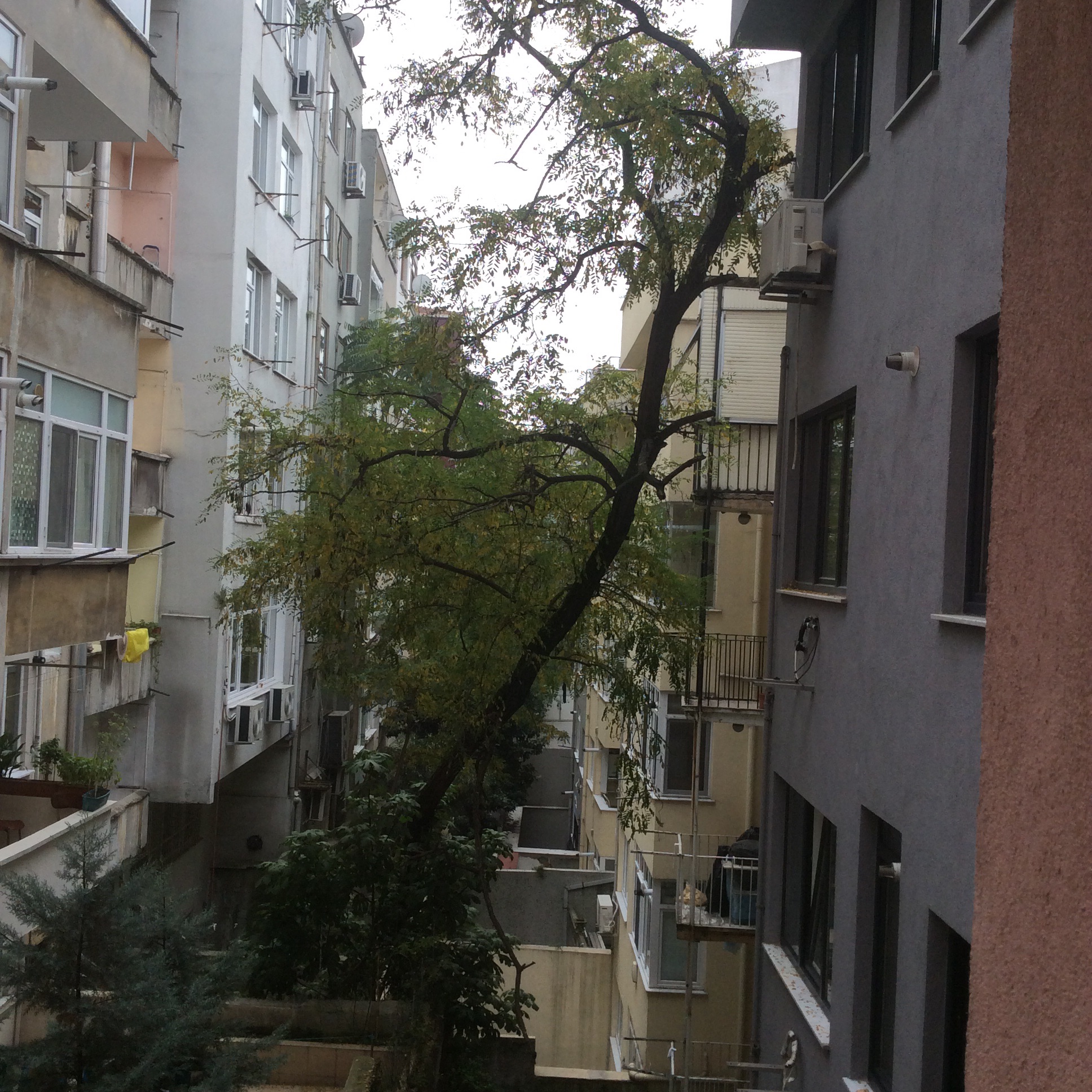
downstairs

opposite the apartment

where I’m staying

i spy on a woman waiting

who is late

who has left her worried

anxious as she looks up and down the street

to her right and my left

is a man

sitting on a step

pulling hard on his cigarette

he appears bedraggled

unshaved

life it seems has not been kind to him

he has no money

no one wants him around

won’t help him anymore

he has no where to turn

but life is not through with him

he pulls hard one last time

on the cigarette squeezed between

his fingers then tosses the butt

on the ground and walks pass the

lady with home and things

wondering if she notices him

image

Istanbul 11/13/15

Let the Poem be a Whirling Dervish

When I was young and began dancing

I was taught basic rules:

in order to spin and twirl

spotting was essential to avoid getting dizzy and falling

in school when I was taught poetry

my teacher focused on the structure

image

last night the dervish dancer pulled me into his trance

his eyes were closed the entire time

and I could feel him in a zone of tranquil immersion

he was not dancing for  the audience

he was connected to something more divine

and as a result I was lured into that space

of immense peace

and I was reminded that the true mission

of a poem is to descend or ascend

into a space where only the poem dwells

and twirl        eyes closed

shutting all out     yet welcoming

all in… Such dervishment

image

The Poem Finds Its Own level

How did the poem get here I wonder as I look around me at the 50 plus Spanish poets who are gathered and I am the only Engish/Caribbean poet?

image

How did I get here?

Through what channels did the poem travel to get here?

This is not the first time I am sharing my work among strangers who do not speak the same language or know anything about the Caribbean and always I’m amazed but gratified at the enthusiasm, that they identify, relate –the poems resonate with them.

i write about what it means historically, contemporarilly  and socially to be Black and Woman and Caribbean — the legacy, and continuing on…our humanity and struggles to get here, to be here, to continue, and they hear and understand and identify.

What I know is I have to do this work and like water if I do it well with integrity the poems will find their place in the world and many already have.

image

Thank each and all of you for welcoming and receiving them