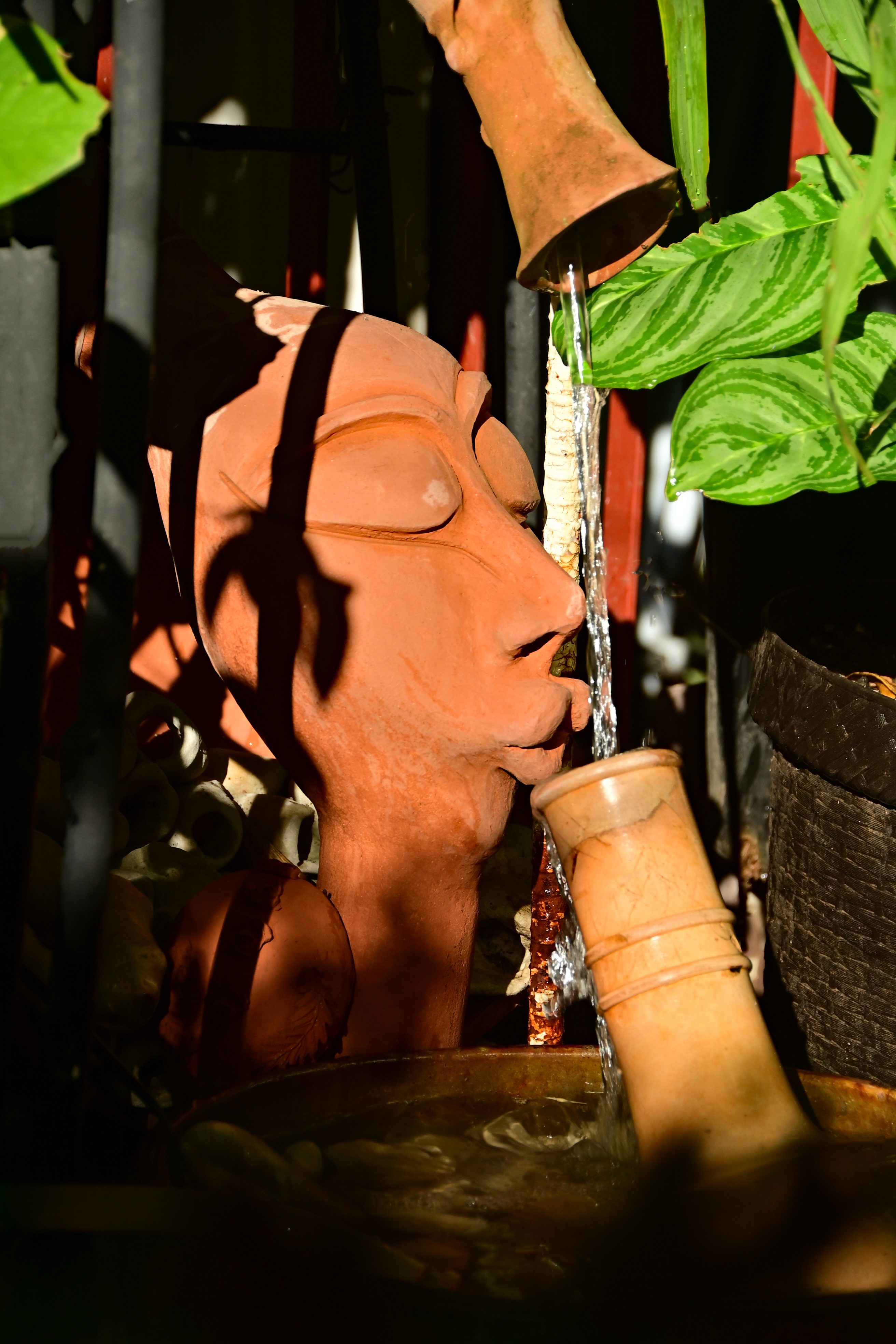
I had the pleasure of having breakfast with Donnette Zacca, one of Jamaica’s leading photographers. It was in her backyard, beneath the almond tree, light filtering through green like a whispered benediction, the sun warming my shoulders and the trickle of the water quieting my galloping thoughts. There was a fountain there and in the course of our conversation Zacca said, almost casually, that she had made it.
DONNETTEZACCA
As a photographer (I too do photography) I know that light is everything. Light is revelation. Light is confession. Light is an open door, a path and a gift. Light is the difference between seeing and knowing.
At one point she moved my chair. Gently, deliberately. “I want you to look at this,” she said.
It was the fountain. The woman who was the face of the fountain. “Look at her. And tell me what she evokes.”
I have always believed that objects and things talk if you listen closely. This is not madness. Or perhaps it is the madness of the artist, that holy disturbance that insists the world is speaking. It was a profound experience and reminder for me.
As I watched the woman: stone, water, plants, silence, I heard her saying very clearly that she was beginning to see the light and that the greyness was lifting. I felt it almost physically, as if the greyness was rising from her chest up to her head, dissolving into the air. She was coming to recognize the light in herself and the light she brings.
And even though she had long worn a crown on her head, she had not recognized her queenliness.
Perhaps she was speaking. Perhaps it was me speaking about myself.
Perhaps it was Donnette speaking through her into my head, forcing me to see, to really see.
Zacca spoke about how she loves the light from the sun under the almond tree in that amazing garden she has made; how she spends countless hours, days, weeks, maybe years taking images of the flowers in her yard from different angles, simply to see how the light plays with them. How the light tickles and arouses them. How the light transform them. Zacca is clear, ‘I witness the way light touches petal, leaf, stone, skin.”
It was a profound exercise in seeing and in giving voice to what you see. And I think how this guidance is so important to children, helping them to see, to open their eyes and their hearts. and see.
I think this is what artists do. They allow you, and sometimes they force you to see beyond what is visible. To hear what you are seeing. To understand that sight is not passive; it is participation. It is moving outside your head into your heart.
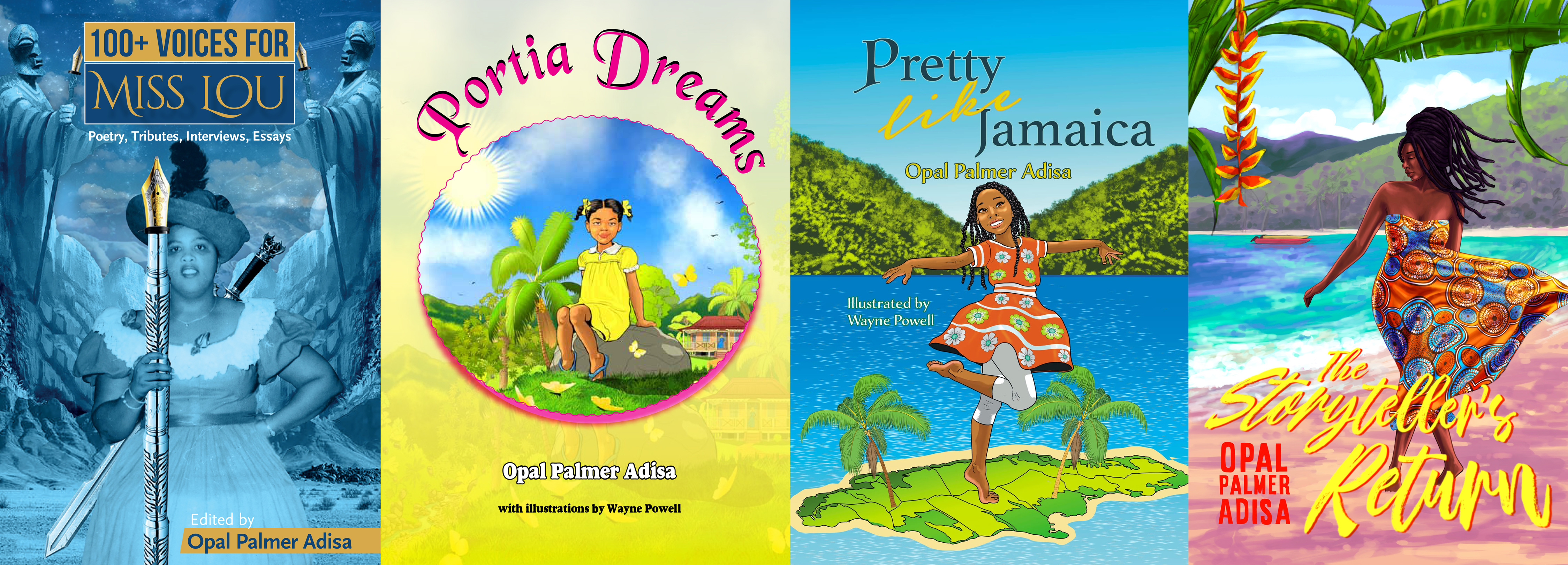
As an anarchist, as a writer, as a photographer, Zacca talks about the storytelling element in her photography. Anyone familiar with her work knows this. And certainly, as a writer of poetry and prose, I understand that impulse. My last adult collection, The Storyteller’s Return, is about seeing Jamaica after being away for a long time and asserting that storytellers are always present in our environment. The land remembers. The streets speak. The trees testify. The people expound and explode.
So when Donnette invited me to look at the light, to see how it reflected and played upon the statue she created, a statue she often uses as meditation, she was not simply offering another lens. She was offering an invitation, and gifting me another lens through which to see.
And I am sharing it because it is an invitation for all of us.
To see what is in front of us. To hear what is in front of us. To understand that the environment and the objects around us are witnesses.
Even though they are supposedly inanimate objects, they reflect, diffuse, and project their own stories onto us. They wait for our attention. They wait for our humility.
If we listen. If we look keenly. If we allow someone to move our chair.
So I want to Big Up Donnette Zacca, whose work I very much appreciate. Ithank her for reminding me what seeing is and how necessary it is, in this distracted world, to truly see what is already present in our environment.
Because sometimes the light is there all along. And we are simply waiting for someone to say,
I’ve written 26 books on my own in the last 30 years, so maybe AI can help me write 20 more before I die. What are the big issues?
I had never used AI until January 2025, when my daughter came and said, “Mommy, why aren’t you using AI? It could help you write quicker.” She showed me. I thought about it, but I didn’t use it again until March 2025 when I was touring in Europe. I had written one presentation for an institution, and they wanted another. The professor said, “You know everything. Why don’t you just tell it to AI and AI will organize it?”
Tell it to AI and AI will organize it? Okay, let’s try that.
I did. AI organized it. I was astounded.
I don’t believe in what they call writer’s block. I’ve never had it. I have ideas coming through my eyes, my nose, every pore of my body. I could write ten million books; I just don’t have the time. So 2025 was my first time really using AI, and it was only on those two occasions.
Then I was talking to my daughter again, telling her how frustrated I was about writing to someone. I wanted the right tone. I didn’t want it to sound abrasive or accusatory. She said, “Let AI in.” I thought, let AI in? She said, “Yes. Write your letter, then ask it to soften it.”
I tried. I was shocked! AI did what I asked, but also quicker than I ever could. I was truly muffled – is that the word?
I remembered: when I was in school, we didn’t have calculators. When my children were in school, they had calculators, and I thought that was cheating. But they used them. I used a typewriter all through college because computers didn’t exist then. You fed in the paper, changed the ribbon, retyped whole pages if you made an error, until whiteout came along. Then came the computer when I was doing my master’s. A big, clunky machine, like the old televisions. Floppy disks. I had so many floppy disks. I may have thrown some away with invaluable work on them.
Technology changes. It improves.
The debate about AI and writing is real. As a professor last semester, I read some student papers and thought: this does not sound like them. I see them in class. I know how they speak. I spoke to a colleague who mentioned Turnitin. I asked my students directly. They swore they hadn’t used AI, or only used it for organizing. Because I don’t know enough about AI to accuse anyone, I asked them to include a disclosure: either that they didn’t use AI or to explain how they did.
Then I thought about my own writing.
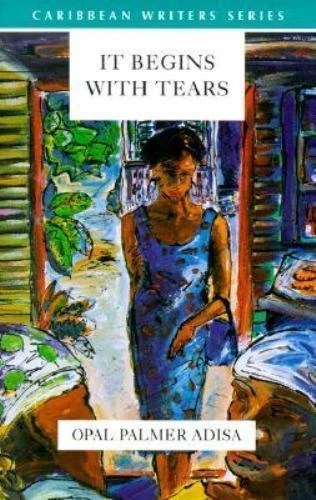
My first novel went through eight drafts because I didn’t know what I was doing. I was experimenting. I didn’t want to write a traditional novel in the traditional sense. It Begins with Tears went through eight drafts. When it was accepted, the publisher said it was too long—about a hundred pages too long. We had to cut it. The editor suggested changes to improve flow, to move paragraphs around.
Is that so different from what AI does only faster? I don’t know.
Every book I’ve published, 26 so far contains my thoughts, my ideas. Yes, I’ve had writing groups. They made suggestions: move this, clarify that, deepen this scene. When one uses AI that way, is it not similar to an editor or a writing group?
The other way is when you have no ideas and tell AI to write the paper for you.
I haven’t done that. But I am curious. I want to try asking AI to write a story I haven’t written yet, in my voice, and see whether people would know.
What am I saying? I’m saying the technology is here. None of us can stop it. The question is whether we use it ethically.
I have begun using AI as a business tool. It helps me produce documents much faster. It paginates, organizes, structures in ways that would take me hours. And I think about all the technologies that have come into being since I was a child.
When I was growing up, we had no telephone. Some people did. We didn’t. Later we got one. Now everyone has a cell phone, from the poorest to the richest, from rural to urban. Microwaves. YouTube. Twitter. Posts, tags, podcasts, meetups, LinkedIn. Followers. Groups. Fans. It is mind-boggling. The world is moving so fast.
I need help. I hope AI can help me.
I’ve been working on a book about my father for eight years, since he died. I thought I’d finished by now. Yes, I’ve written many other things in between. The book is halfway done. Maybe if I took two focused weeks, like they advertise with AI,I could finish the other half this year and send it out.
The world has changed. I don’t always recognize it. I like to think I’m hip and young. I’m not. But I still want to do a lot before I die. If AI can help me, then yes—AI, help me.
I want to write 30 more books. The ideas are bursting in my head.
What is the legitimacy of AI? What is the moral obligation? Is it not simply part of the evolution: from longhand, to typewriter, to computer, to this new tool?
I want to use the tools that make my life better and more productive. The stories I carry, AI does not have. I must feed it my stories. It does not know the Jamaican landscape the way I do unless I give it that landscape.
So is it not still my book?
Does AI claim ownership? Is it a predator, a thief? When I feed it my stories, does it claim them?
This debate will continue for some time. I am not firm where I stand, meaning each of us stories are unique and should write those stories, even with help.
When I was a child going from Kingston to Montego Bay took nearly all day. Now on the new highway I can go there and back, two or three times in the same day. I can fly to Africa in a day and it took my enslaved ancestors months of crossing. Everything is faster. The year just began and it is February already.
Technology helps us and it also harms us; it stymies our memories. Without my cell phone I am lost. I do not know one person’s number.
But I am grateful to have been introduced to AI. I plan to use it more frequently, and more effectively. Perhaps I will even learn how to use it well enough to prosper from it.
So tell me, good folks, is this me, Opal’s work? Or is it AI’s?
I had never used AI until January 2025, when my daughter came and said, “Mommy, why aren’t you using AI? It could help you write quicker.” She showed me. I thought about it, but I didn’t use it again until March 2025 when I was touring in Europe. I had written one presentation for an institution, and they wanted another. The professor said, “You know everything. Why don’t you just tell it to AI and AI will organize it?”
Tell it to AI and AI will organize it? Okay, let’s try that.
I did. AI organized it. I was astounded.
I don’t believe in what they call writer’s block. I’ve never had it. I have ideas coming through my eyes, my nose, every pore of my body. I could write ten million books; I just don’t have the time. So 2025 was my first time really using AI, and it was only on those two occasions.
Then I was talking to my daughter again, telling her how frustrated I was about writing to someone. I wanted the right tone. I didn’t want it to sound abrasive or accusatory. She said, “Let AI in.” I thought, let AI in? She said, “Yes. Write your letter, then ask it to soften it.”
I tried. I was shocked! AI did what I asked, but also quicker than I ever could. I was truly muffled – is that the word?
I remembered: when I was in school, we didn’t have calculators. When my children were in school, they had calculators, and I thought that was cheating. But they used them. I used a typewriter all through college because computers didn’t exist then. You fed in the paper, changed the ribbon, retyped whole pages if you made an error, until whiteout came along. Then came the computer when I was doing my master’s. A big, clunky machine, like the old televisions. Floppy disks. I had so many floppy disks. I may have thrown some away with invaluable work on them.
Technology changes. It improves.
The debate about AI and writing is real. As a professor last semester, I read some student papers and thought: this does not sound like them. I see them in class. I know how they speak. I spoke to a colleague who mentioned Turnitin. I asked my students directly. They swore they hadn’t used AI, or only used it for organizing. Because I don’t know enough about AI to accuse anyone, I asked them to include a disclosure: either that they didn’t use AI or to explain how they did.
Then I thought about my own writing.
My first novel went through eight drafts because I didn’t know what I was doing. I was experimenting. I didn’t want to write a traditional novel in the traditional sense. It Begins with Tears went through eight drafts. When it was accepted, the publisher said it was too long—about a hundred pages too long. We had to cut it. The editor suggested changes to improve flow, to move paragraphs around.
Is that so different from what AI does only faster? I don’t know.
Every book I’ve published, 26 so far contains my thoughts, my ideas. Yes, I’ve had writing groups. They made suggestions: move this, clarify that, deepen this scene. When one uses AI that way, is it not similar to an editor or a writing group?
The other way is when you have no ideas and tell AI to write the paper for you.
I haven’t done that. But I am curious. I want to try asking AI to write a story I haven’t written yet, in my voice, and see whether people would know.
What am I saying? I’m saying the technology is here. None of us can stop it. The question is whether we use it ethically.
I have begun using AI as a business tool. It helps me produce documents much faster. It paginates, organizes, structures in ways that would take me hours. And I think about all the technologies that have come into being since I was a child.
When I was growing up, we had no telephone. Some people did. We didn’t. Later we got one. Now everyone has a cell phone, from the poorest to the richest, from rural to urban. Microwaves. YouTube. Twitter. Posts, tags, podcasts, meetups, LinkedIn. Followers. Groups. Fans. It is mind-boggling. The world is moving so fast.
I need help. I hope AI can help me.
I’ve been working on a book about my father for eight years, since he died. I thought I’d finished by now. Yes, I’ve written many other things in between. The book is halfway done. Maybe if I took two focused weeks, like they advertise with AI,I could finish the other half this year and send it out.
The world has changed. I don’t always recognize it. I like to think I’m hip and young. I’m not. But I still want to do a lot before I die. If AI can help me, then yes—AI, help me.
I want to write 30 more books. The ideas are bursting in my head.
What is the legitimacy of AI? What is the moral obligation? Is it not simply part of the evolution: from longhand, to typewriter, to computer, to this new tool?
I want to use the tools that make my life better and more productive. The stories I carry, AI does not have. I must feed it my stories. It does not know the Jamaican landscape the way I do unless I give it that landscape.
So is it not still my book?
Does AI claim ownership? Is it a predator, a thief? When I feed it my stories, does it claim them?
This debate will continue for some time. I am not firm where I stand, meaning each of us stories are unique and should write those stories, even with help.
When I was a child going from Kingston to Montego Bay took nearly all day. Now on the new highway I can go there and back, two or three times in the same day. I can fly to Africa in a day and it took my enslaved ancestors months of crossing. Everything is faster. The year just began and it is February already.
Technology helps us and it also harms us; it stymies our memories. Without my cell phone I am lost. I do not know one person’s number.
But I am grateful to have been introduced to AI. I plan to use it more frequently, and more effectively. Perhaps I will even learn how to use it well enough to prosper from it.
So tell me, good folks, is this me, Opal’s work? Or is it AI’s?
Kim Robinson-Walcott’s latest collection features Kingston the city as the setting. Speaking about the collection, Kim says, “It’s a collection of different voices and different people from various strata of Kingston society. Only a couple stories are not actually based in Kingston, and even there Kingston is the backdrop or starting point.”
The title, the authors states is fitting, and she elaborates: “I really think we have to harden our hearts to survive in Kingston (and Jamaica overall, but in Kingston everything seems more intense), to make it from day to day without being overwhelmed. Life is hard here. On the other hand my aim as a writer is to soften those hearts – to offer insights about different lives and perspectives that will hopefully at least in some cases result in more understanding or empathy on the part of the reader.”
Perhaps this excerpt from “Spreeing in the SUV,” one of the stories in the collection published by Blouse and Skirt Books, 2024 shed more insights:
“I always wanted to be rich. People with money had cars. When I was a
little girl I used to ask God to give my daddy a car so I wouldn’t have to
get up at four in the morning to go to school. I wanted to reach school
not tired but clean and fresh like some of the children in my class.
God didn’t listen. My daddy never got a car, and then after a while I didn’t
have a daddy because he left us to look work in foreign and never came back,
and when I was twelve I had to stop from school anyway because there was no money.
I still had to get up at four, though, because I had to get my younger brothers
and sisters ready for school and then I had to mind the baby while my mother
went out to work. And then when I was a little older I had another baby to mind,
my own this time, and then when I turned seventeen I started work myself so I
still had to get up at four.
Now my job is with some rich people up at the top of Cherry Gardens and no
bus run there, so if I don’t leave Portmore at minutes after four, then by the time
I get the bus to Half Way Tree and the taxi to Barbican and then walk up the hill
I will reach work late, and the mistress warn me already that if I get there after seven again I won’t have a job. When I get there I’m tired. Sometimes when I’m walking up that hill I try to beg a ride, but the people who drive up that way act like they don’t see you, they just flash past in their big Bimmers and Benzes and SUVs.”
Kim has been working on this collection for a while and describes its evolution.
“In a sense I’ve been working on this collection for decades: a story I wrote for Wayne Brown’s writing workshop in circa 2000 was my first piece of what I later came to recognise was flash fiction. That story won the regional Commonwealth Short Story prize in 2005, and I enjoyed writing it so much, having to condense a story into a tight space of a few hundred words, that it inspired me to write more in that genre. But I was still writing mainly longer pieces. Then in 2018 Millicent Graham invited me to teach a flash fiction workshop for her Drawing Room Project and that was a refresher course for me. I was also writing other longer short stories, but I liked the compressed energy of a shorter piece. That same year I went on a year’s sabbatical from my job as editor of Caribbean Quarterly at UWI, and although my plan had been to finalise a manuscript of those longer stories during that year, instead one after the other a series of new short pieces started popping into my brain.
Then in early 2022 Tanya Batson Savage, publisher of Blouse and Skirt Books, approached me with a proposal to publish a collection of these newer, shorter pieces. I said to her, actually I was planning to get that other collection published first. She said, no, let’s do this one. I said, I don’t think I have enough of these newer shorter stories to make a collection. She said, I think you do.
Not all the stories in this collection are flash fiction pieces but I think the energy core resides there. I signed the contract with Blouse and Skirt Books in March 2022 and in September 2022, on September 23rd to be exact, Tanya sent me her editorial suggestions. I remember that day well, because it was the same day I had a colonoscopy and I was given the news that a mass had been found that looked cancerous. A couple weeks later that diagnosis was confirmed and I started chemo immediately. It took a year before I could even think about my stories, and it was only last year that I felt I could manage revising the stories in between rounds of chemo.
So yes, completing the revisions and getting the book published – with book cover art painted by me – was a huge triumph for me.”
An editor for decades, Kim has helped many writers realize their dreams of publishing, so she understands readership appeal and audience. She speaks to the importance of this collection.
“I think it’s important because many of the stories give voice to the voiceless, the disenfranchised. Some stories give perspectives which may be new to my readers. And the stories are very short – which makes them easy to read and therefore, I hope, appealing even to those who don’t love reading!
My specific audience is primarily Jamaican or Caribbean – as the pieces written in the Jamaican language demonstrate (although I did try to write a version of patois that would be accessible). That said, I’ve been pleasantly surprised by the response of some non-Jamaicans who told me they understood and enjoyed the patois pieces. And note that only eight of the twenty-six pieces are written mainly in patois. I hope that the Standard English pieces will attract those who can’t manage the patois.”
During the writing of this collection, Covid 19 and the Black Lives Matter movement occurred, and Kim speaks to the impact they had on her and her writing.
“The Covid experience in Jamaica was much less traumatic and horrific than in other countries such as the US, Canada, the UK – we had far fewer deaths, there was no one in my inner or even outer circle who died – but it did cause me, and probably the entire world, to realise how fragile our world is, to appreciate life more, to see more clearly what matters, and that inevitably impacted my writing.
“And the imposed quiet time and solitude actually gave me space to write.
“The Black Lives Matter movement: The horrors of racism in the US and the continuing struggles of black Americans for civil rights have always been extremely disturbing – I would never have wanted to raise my children in the US. But then Jamaica is no bed of roses either – we have a problem of police brutality and a shocking number of police killings here too – the difference is that here the victims, the disenfranchised, are poor black Jamaicans.”
Here is a glimpse of her upcoming project
“I’ve been doing some memoir pieces over the years, and I want to develop, expand and consolidate them. Also I want to publish the older collection of stories that I mentioned earlier – many of them were previously published but I would like to combine them in a new collection.”
Kim’s writing process is simple yet profound. What’s important is that it works for her.
“Listen, observe and absorb.
Process – play with the subject in the imagination.
Put it down on paper (or onscreen); then leave it to gel for a while.
Rewrite, revise, refine; then leave it to gel for a while; then rewrite, revise, refine.
Kim aspires to:
To write simply and clearly.
To give voice to the voiceless.
To move people.
To show them new perspectives.
And now you know her secret, “I was/am a Trinidad Carnival addict – I missed only a handful of Carnivals between 1981 and 2021, when Covid interfered. Fête, fête, more fête – that was me. Soca makes me happy. Illness prevented me from joining in the joyful resumption of Trinidad Carnival in 2023. But I’m still hoping to go at least one more time!”
And we are affirming that Kim will get to fête, and enjoy more fêtes!!!



 Opal Palmer Adisa