As a child growing up, ferns burrowed our veranda, so I guess it was natural that my mother’s love was transferred to me. However, ferns are not just decorative they are biofertilizer that helps with restoring the health of soil as well as preventing erosions and creating habitats for birds and other wild life. If you come to my yard, you will see ferns everywhere.
When I was about eight years old, my mother bought herself a car, a blue Ford Anglia, taught herself to drive, and got her license. I accompanied her on many of her self-taught lessons, so when she passed the driver’s licence exam on the first go-around, I celebrated her victory by jumping up and down and hugging her around the neck. Many of the men in the community had said she would not pass, but my mother had plans and did not take on any of those men, determined to be independent.
Thereafter, at least once a month, she would drive us from Caymanas Estate, St Catherine to Montego Bay, St James (literally across the island) to visit her sister and other relatives, and we would also go to Jericho to see our grandmother. In those early days, just after independence, my mother was one of the few female drivers on the road, and when men on the road tried to race her, she showed her skills, much to the amazement of many of them.
Naturally, at that time, there was no freeway. We drove Flat Bridge, then through Fern Gully, which became one of my favourite places. I loved the lush dampness and always thought of it as a womb, nature’s best shelter. My mother, too, loved ferns and Fern Gully, and a hush would descend inside the car as we drove through the three-mile stretch, which my mother said had the most varied species of fern anywhere in the world, reportedly 300 different types
I have to confess that my mother often stopped and snipped pieces she did not possess. The earthy smell, the artists selling crafts, the womb-like enclosure and luxuriance have made a lasting impression. So when I had children, I made sure to drive them through Fern Gully. However, the erection of the highway cuts off and bypassed that extravagant beauty, so I have not driven through in a long time, until last week.
Although still magical, Fern Gully is not so lush as before and I seriously doubt the different species of fern left. From Hurricane Melissa, trees have fallen, but what is sadly clear is that the government has not ensured the preservation of the beauty of this place, which should be a world heritage site, a tourist destination, and a field-trip excursion for students to learn about the value and uses of fern. Fern Gully is a historical and ecological site that should be preserved for us as a safeguard against soil erosion and a habitat to birds and other wild life.
Many might not know that ferns serve many purpose and are extracted for lotion and baths. There has been and continues to be extensive research being done, and herbalist recommends ferns both internally as tea for cough and fevers and for external uses to treat skin diseases such as itching, rashes and even eczema.
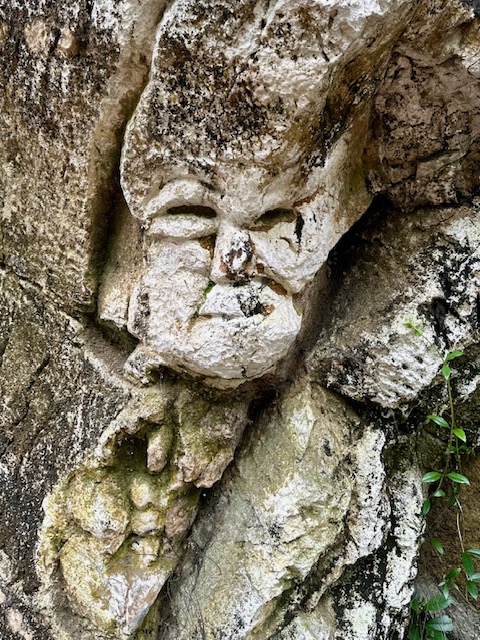
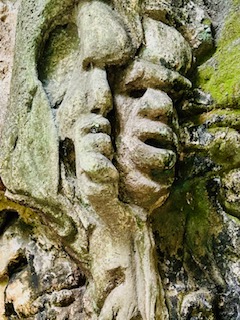
However, my recent visit was prompted by an article I saw by photographer and archivist Donnette Zacca, discussing the wall sculptures of Arthur Alexander, who is now dead, having disappeared a few years ago. I did not remember those carvings, and I wanted to see if they still existed, and they do!
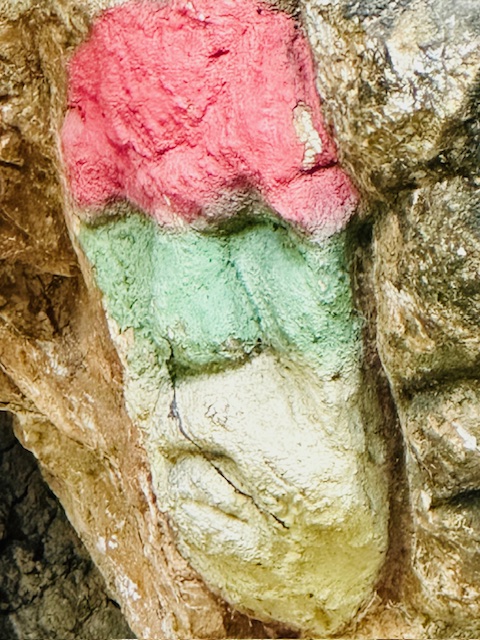
Almost at the end of Fern Gully, before you enter Ocho Rios, on the left-hand side, are the sculptures carved into the rock by a man known as Arthur Alexander. These sculptures are fading, but they are still there, and an effort should be made to preserve them and a plaque placed in his honour.
No one seems to know what happened to Alexander, but I am simply thankful for this man and the tremendous work that he has left as his legacy, doing what humans have always done across time: carving into rocks, giving shape to what is available, leaving an indelible mark.
I invite travellers and motorists to skip the highway and head to Ocho Rios via Fern Gully. Observe the ferns, and you will notice that your breathing slows, you feel more relaxed, and your heart begins to smile. Stop towards the end of the gully; there is a safe place for cars to pull over. Inhale. Extend your arms. Look up! Observe keenly and notice how many different species of fern you detect. Stand there for a while and relish the sight, the sounds, the smell, and look closely at Arthur Alexander’s amazing facial sculptures.
Really look at these faces carved into stone. He was not commissioned. He was not paid. He was an artist, working from instinct, from vision, from something deeper. And he did this on his own. I want to remember him. To immortalize him. To thank him for showing us that art, in all its forms, is a testament to who we are, what we are, and what we are capable of.
I appeal to Minister Grange, of Culture, Gender, Entertainment and Sport, to preserve and protect, and to apply whatever care-treatment or facing is needed so that these carvings do not disappear. Also, let’s restore Fern Gully to a national site that can still boast 300 different species of fern.
Long live and Bless Up Fern Gully and Arthur Alexander.
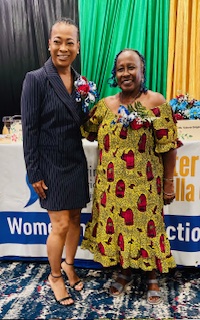
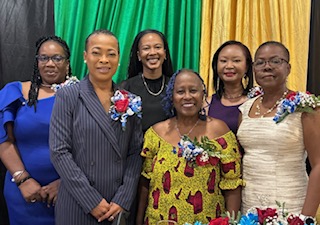
Keynote delivered for the Soroptimist International 63rd Charter Anniversary, Kingston, Jamaica, February 23, 2026
Good afternoon, ladies.
I am so happy to be here. So happy to see you.
You are all leaders. Thanks to each of you for giving of your time and skills to such worthy causes that help to strengthen and support many women and girls throughout this society.
I am honoured to be here to celebrate the awardees Dr. Christine Fray, recipient of The Grace Allen Young Award and Vice Admiral Antonette Wemyss-Gorman, recipient of The Stella Gregory Award for Excellence. These women, like each of you exemplify leadership.
As I stand here today and look out at you, Louise Bennett’s “Jamaica Oman” poem comes to mind. Allow me to recite the first stanza:
Jamaica oman cunny, sah!
Is how dem jinnal so?
Look how long dem liberated
An de man dem never know!
This stanza speaks volumes, especially if we pay attention to the adjectives, cunny and jinnal, which means shrewd and the ability to outsmart and get over any situation. But this is just a preamble to where I want to begin.
I want to begin by telling you my story.
I was born from between a woman’s thighs.
There is no metaphor more powerful than that. No leadership seminar more profound. No boardroom more sacred.
I was born late on a Saturday night. My mother had just finished ironing. She said she folded the last shirt, and then her water broke. There was no dramatic rush to a private hospital. I was delivered at home by a midwife, my mother’s best friend, a nurse/midwife who worked at Kingston Public Hospital.
My mother was 25.
Young. Brave. Married.
But my father was not home. He was out drinking with his friends.
It is said I came early but the truth is I came because I was ready. My mother was ready and so was the midwife. My safe birth happened because two women co-lead and ushered me into the world.
That is the greatest form of leadership.
There is an old saying:
“Water is fluid, soft, and yielding. But water will wear away rock, which is rigid and cannot yield… What is soft is strong.”
My mother was soft.
And she was one of the strongest human beings I have ever known.
She is the measure by which I understand leadership.
Her name will not be found in history books unless I put it there. But she changed lives. She changed policies in small rooms to make conditions for cane-cutters at Caymanas Estate in the 1960s better. She shifted outcomes in kitchens and clinics, by teaching house wives stuck at home facing abuse, skills that gave them economic freedom. She raised children who whom she infused with social commitment and who would not bow.
So before i go any further, I want to pause.
I want each of you to think of a woman you know, a woman who leads, but whose name may never be printed in gold letters or appear in any history book unless you write it.
Because leadership is often mismeasured.
In the wider world leadership is measure it by titles, or offices or applause.
But leadership is not just position.
Leadership is responsibility.
Leadership is integrity.
Leadership is who shows up when things fall apart, and we know all too often it is us women who show up for our children, for our communities and for each other.
When we speak about leadership, we often list its qualities:
Integrity and honesty which translate into acting ethically to build trust. Communication and listening which implies truly hearing people. Empathy and emotional intelligence which is understanding the emotions in a room before speaking, feeling who is present and working to touch those persons. Then there is accountability, which is often challenging as it means taking ownership of mistakes, owning them and not shying away from saying I was wrong and I apologize. Without Vision there is no leadership, as a leader must be present abut also able to see beyond today’s crisis to arrive at solutions. Leaderships is also about Empowerment lifting up others. Being Resilient which requires bending without breaking. A leader is Confident and able to Make Decisions that will benefit the majority.
If I placed my mother against that list, she would stand tall. She demonstrated these qualities, but she is not listed in any history books, and more likely neither are any of the women you thought about earlier.
And here is the irony.
Jamaica has the highest proportion of female managers in the world , over 59%, according to the International Labour Organization.
We lead. We show up. We give of our time and energy.
However, globally, women make up only about 5% of CEOs of the largest corporations. In Latin America, that number once hovered below 2%.
So what does that tell us?
That women lead daily, but not always where “power” is most concentrated.
So when women do rise to visible leadership, we applaud them, like we applaud Vice Admiral Antonette Wemyss-Gorman, the first woman to achieve this level of success in what is considered a male-dominated field.
We applaud Portia Simpson-Miller, Jamaica’s first female Prime Minister, for being tallawah.
We remember Sirimavo Bandaranaike, the first female Prime Minister in the world from Sri Lanka.
We recognize Mia Mottley in Barbados, and women across Denmark, Italy, Latvia, and beyond, who have ascended to the highest office in their respective countries.
But I want to ask a crucial question.
Are women leading differently? Vice Admiral, I put you on the spot – are you leading differently?
Are female leaders inheriting the same systems and performing the same scripts as their male predecessors?
I hope not because I do not simply want a woman in power.
I want a woman whose leadership is transformative.
Nurturing.
Inclusive.
Rooted in equity and fairness, rooted in compromise when necessary for the greater good. We have had enough flexing of muscles.
We do not need more wars. We do not need more dissension. We do not need more division.
We need leadership that understands soil and sea.
Leadership that understands that Hurricane Melissa was not an accident. It was the result of years of extraction, dumping, neglect. Years of ignoring warning signs.
If we do not pause and take responsibility, we will meet another Melissa by another name.
And so leadership must extend beyond the binary.
It must extend beyond ego.
It must extend beyond short-term gain.
Because I have a grandchild, Quetzilla, that means light feather.
And I want to believe I am helping to create a world worthy of her.
The world will continue to test women, especially women leaders.
And here I hear the voice of Maya Angelou whispering:
“You may encounter many defeats, but you must not be defeated…” The women I saw washing clothes at the river in Hanover a month after Hurricane Melissa, with their children wading and playing in the water ere not defeated.
Although, sometime leadership requires defeat.
It requires failure.
But as Oprah Winfrey reminds us: “Failure is another steppingstone to greatness.”
Here in this room is greatness, each of you, and leadership. And it is because you have failed many times why you are sitting here today celebrating.
The triumph cannot be had without the struggle, says Wilma Rudolph, who became the first American woman to win three gold medals in a single Olympic Game in 1960 after overcoming polio.
She knows. She had to overcome and sometimes look through many struggles to succeed.
Leadership is not pretty.
It is not polished Instagram posts.
It is often sewage systems fixed.
It is roads maintained.
It is children in western Jamaica who still sit in tents months after the hurricane to learn.
Leadership ensure that electricity is restored and clean water is flowing in schools, clinics and hospitals.
It is not looking away when we drive past garbage piled high and pretend not to see.
Where is the leadership that will make this island clean and beautiful , not once a year at Christmastime, but daily?
Where is the leadership that refuses to falter to support its neighbour, Cuba that has always supported us?
And here, I turn to Angela Davis to remind myself:
“I’m no longer accepting the things I cannot change… I’m changing the things I cannot accept.” What are the things you can no longer accept that you will help to change?
That is leadership.
Leadership says: I refuse to normalize dysfunction.
Leadership says: I refuse to accept inequity.
Leadership says: I will not waver.
But here is the truth that may unsettle us. We cannot rely only on leadership from the top.
Leadership must rise from the base.
Each of us is leading directly or indirectly, and others are watching, observing.
How do you lead your family? How do you lead your friends? How do you lead your church? How do you lead your community?
You know, if we are waiting for someone to rescue us, you will be waiting a long time, and it means you have misunderstood power.
Don’t sit down and wait for the opportunities to come. Get up and make them.
That is not just motivational language. That is civic instruction.
And when doubt creeps in, and it will, remember Wilma Rudolph who said:
“‘I can’t’ are two words that have never been in my vocabulary.”
Leadership begins in vocabulary.
It begins in what we permit ourselves to say.
Cicely Tyson once said:
“Challenges make you discover things about yourself that you never really knew.”
And leadership is a series of challenges.
Ella Fitzgerald reminds us:
“Just don’t give up what you’re trying to do. Where there is love and inspiration, I don’t think you can go wrong.”
Love.
Not ego.
Not dominance.
Love.
So today, as we honour women, as we honour a woman leader, I celebrate her.
But I also invite her, and all of us, to examine the kind of leadership we practice and the type of leadership we applaud.
Does it serve the majority?
Does it protect the vulnerable?
Does it understand that we are no better than the soil beneath our feet?
Does it understand that leadership is not about the individual; it is about the community?
My mother understood that.
She did not have a podium.
She did not have a press conference.
But she had integrity.
She had accountability.
She had vision.
She did not falter. She worked hard with others and help to bring about important changes.
That is the standard. By which I live and judge effective, impactful leadership.
So as you leave here today, I do not want you merely applauding women in power.
I want you reflective.
I want you asking:
What kind of leadership do I model?
What kind of leadership do I demand?
What kind of Jamaica do I want my grandchildren to inherit?
Because leadership is not a title.
Leadership is a practice.
Leadership is daily doing.
Leadership is soft and therefore strong. Like water.
And if we are fluid, if we are soft, if we are yielding in wisdom but firm in principle we will wear away what is rigid and unjust.
We will shape this country.
We will shape this world.
And when history looks back, it may not record every name.
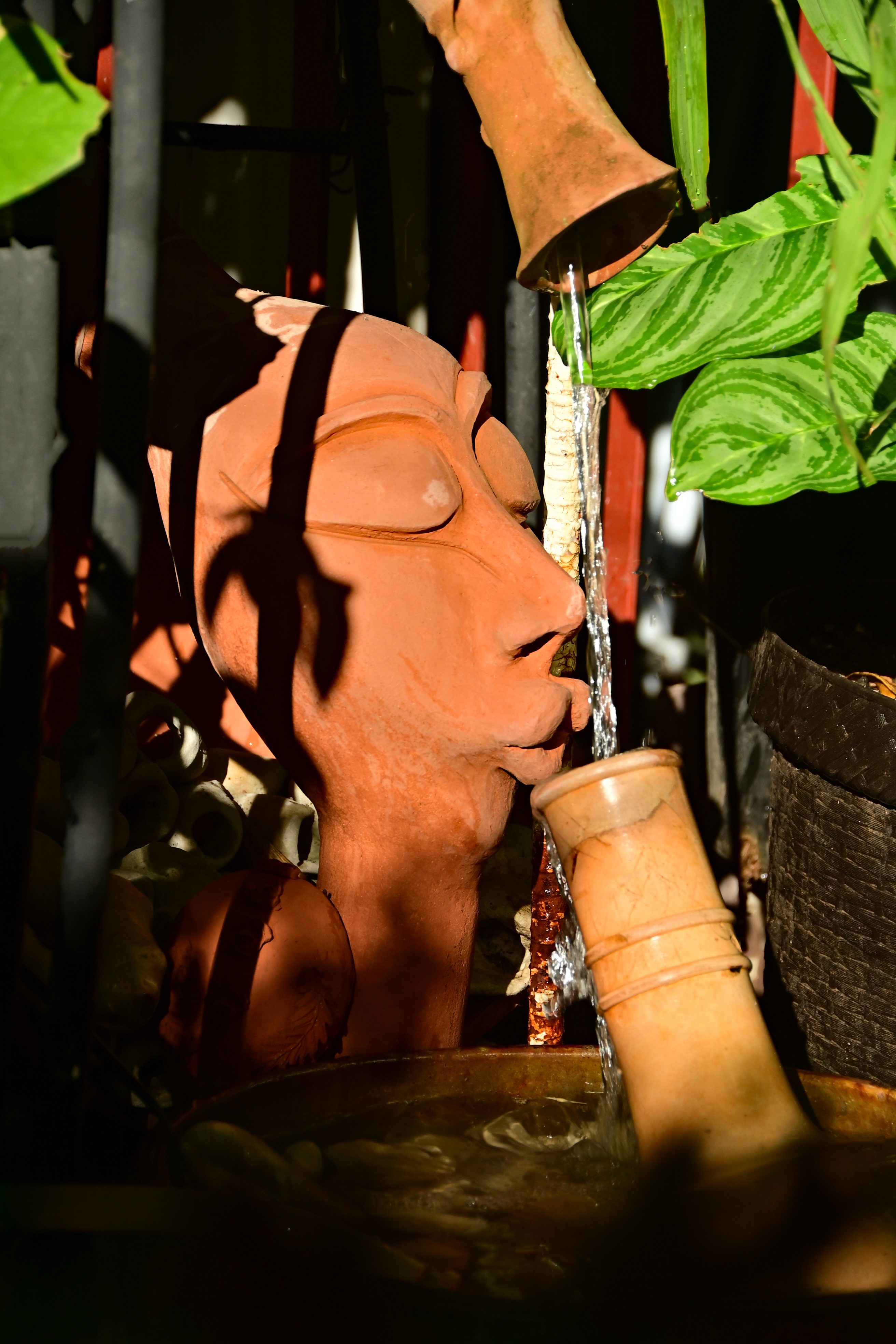
I had the pleasure of having breakfast with Donnette Zacca, one of Jamaica’s leading photographers. It was in her backyard, beneath the almond tree, light filtering through green like a whispered benediction, the sun warming my shoulders and the trickle of the water quieting my galloping thoughts. There was a fountain there and in the course of our conversation Zacca said, almost casually, that she had made it.
DONNETTEZACCA
As a photographer (I too do photography) I know that light is everything. Light is revelation. Light is confession. Light is an open door, a path and a gift. Light is the difference between seeing and knowing.
At one point she moved my chair. Gently, deliberately. “I want you to look at this,” she said.
It was the fountain. The woman who was the face of the fountain. “Look at her. And tell me what she evokes.”
I have always believed that objects and things talk if you listen closely. This is not madness. Or perhaps it is the madness of the artist, that holy disturbance that insists the world is speaking. It was a profound experience and reminder for me.
As I watched the woman: stone, water, plants, silence, I heard her saying very clearly that she was beginning to see the light and that the greyness was lifting. I felt it almost physically, as if the greyness was rising from her chest up to her head, dissolving into the air. She was coming to recognize the light in herself and the light she brings.
And even though she had long worn a crown on her head, she had not recognized her queenliness.
Perhaps she was speaking. Perhaps it was me speaking about myself.
Perhaps it was Donnette speaking through her into my head, forcing me to see, to really see.
Zacca spoke about how she loves the light from the sun under the almond tree in that amazing garden she has made; how she spends countless hours, days, weeks, maybe years taking images of the flowers in her yard from different angles, simply to see how the light plays with them. How the light tickles and arouses them. How the light transform them. Zacca is clear, ‘I witness the way light touches petal, leaf, stone, skin.”
It was a profound exercise in seeing and in giving voice to what you see. And I think how this guidance is so important to children, helping them to see, to open their eyes and their hearts. and see.
I think this is what artists do. They allow you, and sometimes they force you to see beyond what is visible. To hear what you are seeing. To understand that sight is not passive; it is participation. It is moving outside your head into your heart.
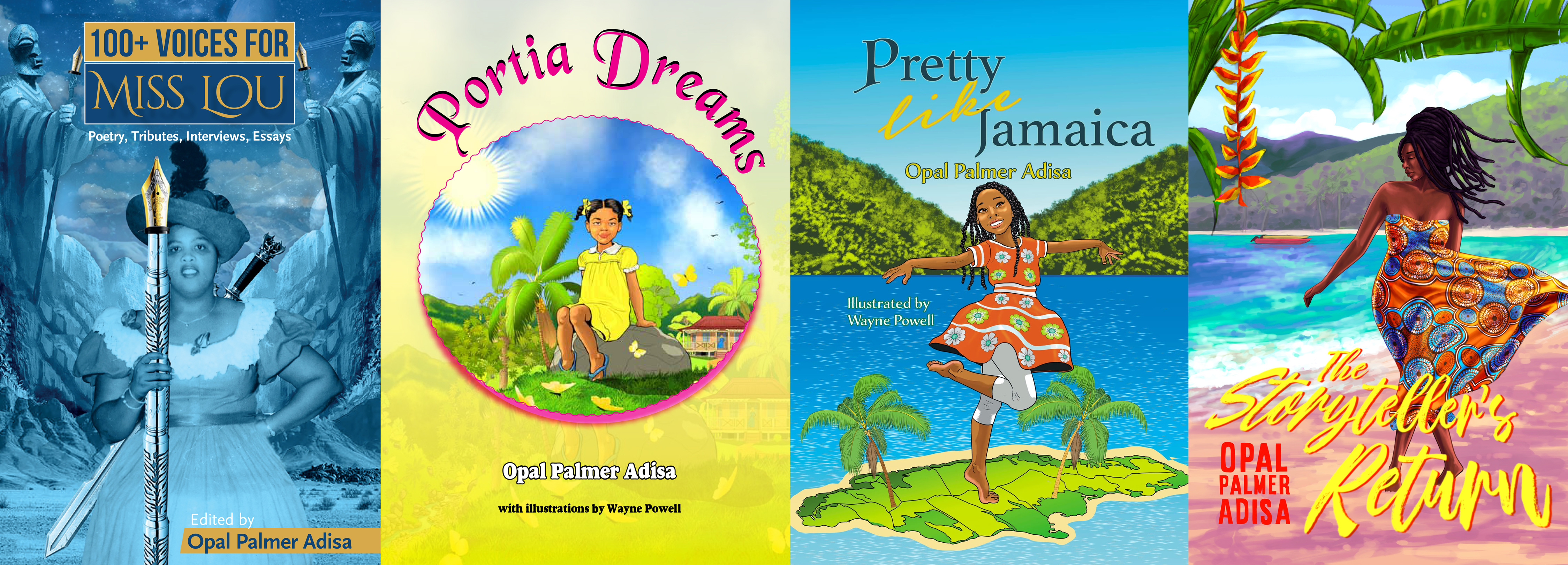
As an anarchist, as a writer, as a photographer, Zacca talks about the storytelling element in her photography. Anyone familiar with her work knows this. And certainly, as a writer of poetry and prose, I understand that impulse. My last adult collection, The Storyteller’s Return, is about seeing Jamaica after being away for a long time and asserting that storytellers are always present in our environment. The land remembers. The streets speak. The trees testify. The people expound and explode.
So when Donnette invited me to look at the light, to see how it reflected and played upon the statue she created, a statue she often uses as meditation, she was not simply offering another lens. She was offering an invitation, and gifting me another lens through which to see.
And I am sharing it because it is an invitation for all of us.
To see what is in front of us. To hear what is in front of us. To understand that the environment and the objects around us are witnesses.
Even though they are supposedly inanimate objects, they reflect, diffuse, and project their own stories onto us. They wait for our attention. They wait for our humility.
If we listen. If we look keenly. If we allow someone to move our chair.
So I want to Big Up Donnette Zacca, whose work I very much appreciate. Ithank her for reminding me what seeing is and how necessary it is, in this distracted world, to truly see what is already present in our environment.
Because sometimes the light is there all along. And we are simply waiting for someone to say,
There is hardly a country in the Caribbean, including Jamaica, that has not benefited from the generosity of the Cuban people.
More than 500 Cuban doctors currently serve in Jamaican hospitals and clinics, many in rural communities where access to medical care would otherwise be limited or non-existent. Across the region, Cuban medical professionals quietly and consistently save lives. Through programs such as those of the Henry Reeve International Medical Brigade, Cuba has also sent doctors to assist nations in times of crisis, from the COVID-19 emergency in Italy to outbreaks and disasters in Africa and Latin America.
Cuba has trained Caribbean students in medicine for decades. Jamaican doctors have studied at the Latin American School of Medicine in Havana and returned home to serve their communities. In Africa, Cuban doctors and teachers have worked in countries such as Angola, Mozambique, and South Africa during some of their most difficult periods.
This is not a political argument about communism versus democracy. It is a humanitarian appeal.
Today, ordinary Cubans, elders, children, families, face severe shortages of fuel, food, and medical supplies. The long-standing embargo imposed by the United States continues to affect daily life in profound ways. Regardless of one’s political position, the human cost is undeniable.
The question before us is simple: when a neighbour who has repeatedly come to our aid is in distress, do we turn away? Do we pretend as if we have not benefitted from their generosity?
Humanitarian assistance is not an endorsement of any government. Providing fuel so hospitals can operate, medicine so children can receive treatment, and food so elders do not go hungry is not ideology ; it is reciprocity. It is solidarity. It is humanity.
Jamaica sits less than 100 miles from Cuba. Our histories, cultures, and futures are intertwined. Across the Caribbean and Africa, thousands are alive today because Cuban doctors showed up when others did not.
If we believe in justice, in fairness, in shared humanity, then this is a moment to act with moral clarity. Governments can debate policy. But people of conscience must insist that humanitarian corridors remain open and that aid reach those in need.
We must not allow ordinary Cubans to suffer in darkness when they have brought healing and light to so many of us.
This is a call to Caribbean people, to Africans, to Europeans, to all who believe in human dignity to stand for compassion over division.
Let us be a blanket for Cuba in its hour of need.
Let us respond not with politics, but with humanity. Help Cubans to live.
I’ve written 26 books on my own in the last 30 years, so maybe AI can help me write 20 more before I die. What are the big issues?
I had never used AI until January 2025, when my daughter came and said, “Mommy, why aren’t you using AI? It could help you write quicker.” She showed me. I thought about it, but I didn’t use it again until March 2025 when I was touring in Europe. I had written one presentation for an institution, and they wanted another. The professor said, “You know everything. Why don’t you just tell it to AI and AI will organize it?”
Tell it to AI and AI will organize it? Okay, let’s try that.
I did. AI organized it. I was astounded.
I don’t believe in what they call writer’s block. I’ve never had it. I have ideas coming through my eyes, my nose, every pore of my body. I could write ten million books; I just don’t have the time. So 2025 was my first time really using AI, and it was only on those two occasions.
Then I was talking to my daughter again, telling her how frustrated I was about writing to someone. I wanted the right tone. I didn’t want it to sound abrasive or accusatory. She said, “Let AI in.” I thought, let AI in? She said, “Yes. Write your letter, then ask it to soften it.”
I tried. I was shocked! AI did what I asked, but also quicker than I ever could. I was truly muffled – is that the word?
I remembered: when I was in school, we didn’t have calculators. When my children were in school, they had calculators, and I thought that was cheating. But they used them. I used a typewriter all through college because computers didn’t exist then. You fed in the paper, changed the ribbon, retyped whole pages if you made an error, until whiteout came along. Then came the computer when I was doing my master’s. A big, clunky machine, like the old televisions. Floppy disks. I had so many floppy disks. I may have thrown some away with invaluable work on them.
Technology changes. It improves.
The debate about AI and writing is real. As a professor last semester, I read some student papers and thought: this does not sound like them. I see them in class. I know how they speak. I spoke to a colleague who mentioned Turnitin. I asked my students directly. They swore they hadn’t used AI, or only used it for organizing. Because I don’t know enough about AI to accuse anyone, I asked them to include a disclosure: either that they didn’t use AI or to explain how they did.
Then I thought about my own writing.
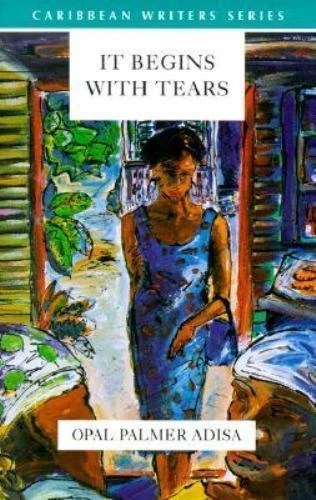
My first novel went through eight drafts because I didn’t know what I was doing. I was experimenting. I didn’t want to write a traditional novel in the traditional sense. It Begins with Tears went through eight drafts. When it was accepted, the publisher said it was too long—about a hundred pages too long. We had to cut it. The editor suggested changes to improve flow, to move paragraphs around.
Is that so different from what AI does only faster? I don’t know.
Every book I’ve published, 26 so far contains my thoughts, my ideas. Yes, I’ve had writing groups. They made suggestions: move this, clarify that, deepen this scene. When one uses AI that way, is it not similar to an editor or a writing group?
The other way is when you have no ideas and tell AI to write the paper for you.
I haven’t done that. But I am curious. I want to try asking AI to write a story I haven’t written yet, in my voice, and see whether people would know.
What am I saying? I’m saying the technology is here. None of us can stop it. The question is whether we use it ethically.
I have begun using AI as a business tool. It helps me produce documents much faster. It paginates, organizes, structures in ways that would take me hours. And I think about all the technologies that have come into being since I was a child.
When I was growing up, we had no telephone. Some people did. We didn’t. Later we got one. Now everyone has a cell phone, from the poorest to the richest, from rural to urban. Microwaves. YouTube. Twitter. Posts, tags, podcasts, meetups, LinkedIn. Followers. Groups. Fans. It is mind-boggling. The world is moving so fast.
I need help. I hope AI can help me.
I’ve been working on a book about my father for eight years, since he died. I thought I’d finished by now. Yes, I’ve written many other things in between. The book is halfway done. Maybe if I took two focused weeks, like they advertise with AI,I could finish the other half this year and send it out.
The world has changed. I don’t always recognize it. I like to think I’m hip and young. I’m not. But I still want to do a lot before I die. If AI can help me, then yes—AI, help me.
I want to write 30 more books. The ideas are bursting in my head.
What is the legitimacy of AI? What is the moral obligation? Is it not simply part of the evolution: from longhand, to typewriter, to computer, to this new tool?
I want to use the tools that make my life better and more productive. The stories I carry, AI does not have. I must feed it my stories. It does not know the Jamaican landscape the way I do unless I give it that landscape.
So is it not still my book?
Does AI claim ownership? Is it a predator, a thief? When I feed it my stories, does it claim them?
This debate will continue for some time. I am not firm where I stand, meaning each of us stories are unique and should write those stories, even with help.
When I was a child going from Kingston to Montego Bay took nearly all day. Now on the new highway I can go there and back, two or three times in the same day. I can fly to Africa in a day and it took my enslaved ancestors months of crossing. Everything is faster. The year just began and it is February already.
Technology helps us and it also harms us; it stymies our memories. Without my cell phone I am lost. I do not know one person’s number.
But I am grateful to have been introduced to AI. I plan to use it more frequently, and more effectively. Perhaps I will even learn how to use it well enough to prosper from it.
So tell me, good folks, is this me, Opal’s work? Or is it AI’s?
I had never used AI until January 2025, when my daughter came and said, “Mommy, why aren’t you using AI? It could help you write quicker.” She showed me. I thought about it, but I didn’t use it again until March 2025 when I was touring in Europe. I had written one presentation for an institution, and they wanted another. The professor said, “You know everything. Why don’t you just tell it to AI and AI will organize it?”
Tell it to AI and AI will organize it? Okay, let’s try that.
I did. AI organized it. I was astounded.
I don’t believe in what they call writer’s block. I’ve never had it. I have ideas coming through my eyes, my nose, every pore of my body. I could write ten million books; I just don’t have the time. So 2025 was my first time really using AI, and it was only on those two occasions.
Then I was talking to my daughter again, telling her how frustrated I was about writing to someone. I wanted the right tone. I didn’t want it to sound abrasive or accusatory. She said, “Let AI in.” I thought, let AI in? She said, “Yes. Write your letter, then ask it to soften it.”
I tried. I was shocked! AI did what I asked, but also quicker than I ever could. I was truly muffled – is that the word?
I remembered: when I was in school, we didn’t have calculators. When my children were in school, they had calculators, and I thought that was cheating. But they used them. I used a typewriter all through college because computers didn’t exist then. You fed in the paper, changed the ribbon, retyped whole pages if you made an error, until whiteout came along. Then came the computer when I was doing my master’s. A big, clunky machine, like the old televisions. Floppy disks. I had so many floppy disks. I may have thrown some away with invaluable work on them.
Technology changes. It improves.
The debate about AI and writing is real. As a professor last semester, I read some student papers and thought: this does not sound like them. I see them in class. I know how they speak. I spoke to a colleague who mentioned Turnitin. I asked my students directly. They swore they hadn’t used AI, or only used it for organizing. Because I don’t know enough about AI to accuse anyone, I asked them to include a disclosure: either that they didn’t use AI or to explain how they did.
Then I thought about my own writing.
My first novel went through eight drafts because I didn’t know what I was doing. I was experimenting. I didn’t want to write a traditional novel in the traditional sense. It Begins with Tears went through eight drafts. When it was accepted, the publisher said it was too long—about a hundred pages too long. We had to cut it. The editor suggested changes to improve flow, to move paragraphs around.
Is that so different from what AI does only faster? I don’t know.
Every book I’ve published, 26 so far contains my thoughts, my ideas. Yes, I’ve had writing groups. They made suggestions: move this, clarify that, deepen this scene. When one uses AI that way, is it not similar to an editor or a writing group?
The other way is when you have no ideas and tell AI to write the paper for you.
I haven’t done that. But I am curious. I want to try asking AI to write a story I haven’t written yet, in my voice, and see whether people would know.
What am I saying? I’m saying the technology is here. None of us can stop it. The question is whether we use it ethically.
I have begun using AI as a business tool. It helps me produce documents much faster. It paginates, organizes, structures in ways that would take me hours. And I think about all the technologies that have come into being since I was a child.
When I was growing up, we had no telephone. Some people did. We didn’t. Later we got one. Now everyone has a cell phone, from the poorest to the richest, from rural to urban. Microwaves. YouTube. Twitter. Posts, tags, podcasts, meetups, LinkedIn. Followers. Groups. Fans. It is mind-boggling. The world is moving so fast.
I need help. I hope AI can help me.
I’ve been working on a book about my father for eight years, since he died. I thought I’d finished by now. Yes, I’ve written many other things in between. The book is halfway done. Maybe if I took two focused weeks, like they advertise with AI,I could finish the other half this year and send it out.
The world has changed. I don’t always recognize it. I like to think I’m hip and young. I’m not. But I still want to do a lot before I die. If AI can help me, then yes—AI, help me.
I want to write 30 more books. The ideas are bursting in my head.
What is the legitimacy of AI? What is the moral obligation? Is it not simply part of the evolution: from longhand, to typewriter, to computer, to this new tool?
I want to use the tools that make my life better and more productive. The stories I carry, AI does not have. I must feed it my stories. It does not know the Jamaican landscape the way I do unless I give it that landscape.
So is it not still my book?
Does AI claim ownership? Is it a predator, a thief? When I feed it my stories, does it claim them?
This debate will continue for some time. I am not firm where I stand, meaning each of us stories are unique and should write those stories, even with help.
When I was a child going from Kingston to Montego Bay took nearly all day. Now on the new highway I can go there and back, two or three times in the same day. I can fly to Africa in a day and it took my enslaved ancestors months of crossing. Everything is faster. The year just began and it is February already.
Technology helps us and it also harms us; it stymies our memories. Without my cell phone I am lost. I do not know one person’s number.
But I am grateful to have been introduced to AI. I plan to use it more frequently, and more effectively. Perhaps I will even learn how to use it well enough to prosper from it.
So tell me, good folks, is this me, Opal’s work? Or is it AI’s?
Lately, I’ve been speaking to a number of friends who are in their 60s, most of whom are single, or divorced, and many of whom are feeling lonely. It reminded me of a time when I lived in California and there was a group of us, married and divorced., who talked seriously about buying property in the Caribbean so that when we reached 60s, 70s, and 80s we could live in community. We imagined a shared life because we held similar political, cultural, and social values and we could be independent, not alone, even though most of us had children.
This feels important now, this idea of imagining a new way of being. Loneliness is widespread, not just among women. Many of us, myself included, are creative productive people. We stay busy with our writing and other creative practices we’ve always pursued and will continue to pursue. But as we get older, we feel more vulnerable.
There was a moment when I almost slipped in the bathtub, and I wondered: if I fell and couldn’t reach my phone, how long would I be there? Most people have accidents in their homes. How long before someone would find me? My son calls me once a week. My daughter calls me. People do call me. But I hadn’t really established a dependable rhythm though I’m beginning to now, where someone would notice if they didn’t hear from me every day. I have friends who check in daily with their sisters. I’ve been so independent. I’ve traveled the world alone, gone off the beaten track. I remember once trekking somewhere and seeing a sign that said, Bears around. And I thought, Oh my God, I’m here alone in this country. A bear could attack me and nobody would know. I hadn’t even told anyone where I was. I barely knew where I was myself.
Loneliness is real even when you are living fully. It is important that at a certain age, 60s you creat checks and balances so people check in on you daily, so if they don’t hear from me, they’ll
raise the alarm. Those of us in the autumn of our lives and who are still active and vibrant must develop systems where we can come together in meaningful ways on a regular basis. I still have a lot of adventure in me. I still want to explore. I don’t like driving, and night driving has become difficult, as it has for many of my friends.
They tell me, “Opal, have events early so we can get home before dark.” But maybe we don’t have to worry about the dark if a few of us come together, pool resources, and hire someone to drive us so we can still enjoy the nightlife we love.
Loneliness is a major problem in many societies because of fragmentation because families and communities have changed. I was surprised when I taught a class in California and young people spoke openly about being lonely. I thought, When I was 20, loneliness never even crossed my mind. I was busy, meeting people, engaged with life. But now, for people my age to meet new people, it feels almost impossible unless you go online and then you don’t know what you’re finding.
So I am appealing to people in the autumn of their life not to allow loneliness to isolate you. Don’t allow it to stop you from enjoying the things you love. Don’t allow it to make you cranky, afraid, or small. You have lived an amazing life. You’ve done splendid, wonderful things. And until the day you die, you deserve to live fully and to have company.
One recommendation I always make is to have friends of all ages. We tend to cluster with people our own age, but we need friendships with people in their 30s, 40s, and 50s too, friendships that span generations, friendships with people who understand that you still want to do things and will include you. I’m lucky in that regard. My niece and her children include me in many of their activities.
So let us, in this middle, ripening age of maturity and wisdom, create spaces for ourselves, spaces that allow us to continue
So I’ve been trying to navigate that delicate path of sharing what I want and aspire to with the people I love. I remember being three years old and always being told, you want too much, you’re doing too much, you’re this, you’re that. So who I am was always too much for the people I loved, and still is. It’s never, Oh my gosh, you have all these brilliant ideas and projects. I want to help you with them, or connect you with people who can help you. Instead, it’s always, Why are you doing this? Why are you doing that? Why don’t you focus? As if the ideas and projects I carry mean I am somehow unfocused or scattered.
Most people, can only do one thing or choose to only do one thing. My brain has never worked that way. It is busy. I realize that I’m not seeking affirmation, because I am who I am, and I’m going to do what I do. But it is really painful to feel that when you share your dreams and ideas with the people you love, rather than seeing them through your eyes, they dissect them and decide they are too much, that they mean you are not focused.
And I find myself asking: how do we get over this hump of living our lives fully? I think I’ve done that, in many ways. But how do you live fully without tripping over what the people you love say and do, without being wounded by their doubts, without shrinking yourself to fit their comfort? How do you become free and wild enough to be your full self? Does that happen? And how does one achieve that if you are deeply connected to people, if you deeply love those people and deeply want them to remain in your life? And are often deeply hurt by their responses to who you are.
How does one achieve that sense of complete autonomy and still remain tender? How do you not be hurt or stymied by other people’s evaluations of how you are living your life and the things you want to achieve?
Because if you say you want to achieve something and you haven’t yet, they say, Do you see? You said that five years ago. And yes, I did say that five years ago. I did hope it would happen five years ago. But the fact that it hasn’t happened doesn’t mean it won’t happen. It doesn’t mean I should abandon it simply because time has passed. I still want it. And maybe that is naïve, but I still think it is possible.
I am all of my hopes and aspirations. I want to be seen and accepted as such, nothingness, nothing more. Just that who I am, and the things I value, are not discounted and diminished and dissected, but seen for what they are. I want people not to accuse me of lacking focus or trying to do too much, but instead to help me do all the things that I can do, or to guide me in how I might do them, even if they feel it is too much.
And I think, at this stage in my life, it shouldn’t matter what people think about me or my projects, whether it’s my children, my family, or the people I admire. I wish I could get to that stage where it didn’t matter, where it wasn’t so hurtful, so painful. But as human beings, we are connected to other human beings. We want their love and their approval. And if we love them deeply, as I do, then we want them to celebrate us, not through their eyes, but through ours.
I don’t want to seem as if all the things I want to do are too much. Yes, I need support. And yes, maybe I should say, this year all I’m doing is one book, not three, and nothing else. But my brain, my mind, doesn’t work like that. I’ve never wanted to be like anyone else. I say that with a certain level of aplomb. I’ve always just wanted to be me, and I’ve always wanted to be accepted as me.
But I haven’t found that in many places. And I want to publicly acknowledge that.
In order to keep despair from taking over my life, sometime toward the middle of last year, I made a conscious decision to stop watching the news. I figured that whatever I truly needed to know, I would know. Every time I watched or listened, I was overwhelmed by sadness, by grief, by a deep sense of hopelessness. I realized that if I wanted to keep living, if I wanted even a small measure of optimism, I had to be present to where I was, to my immediate life.
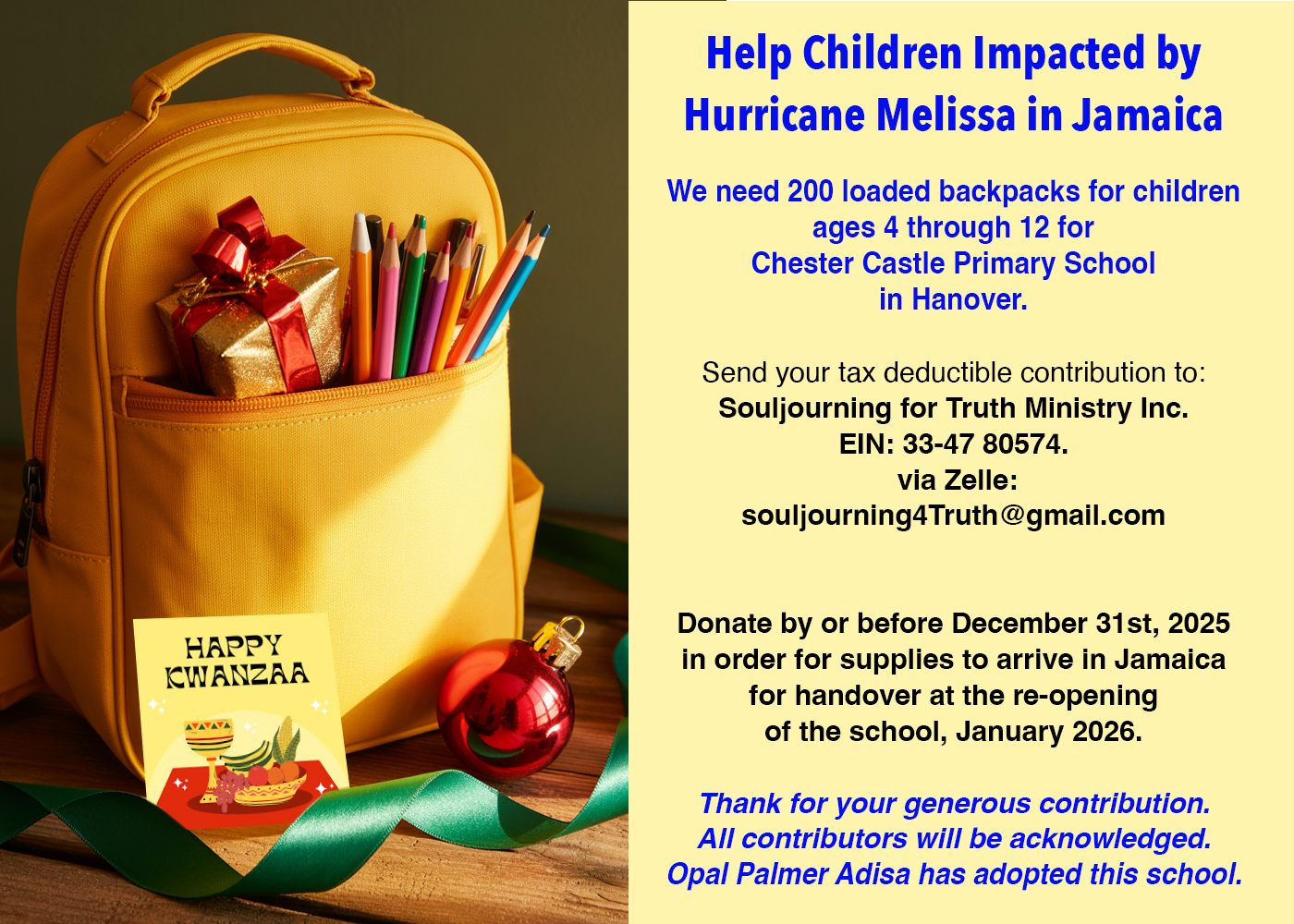
I understand, too, that I am privileged. I have a nice home. I have a yard. I am surrounded by nature. I do not take that lightly. And I know there are entertainers and athletes with money who are giving, who have projects, who are helping. But as I try to do my own work, preserving Louise Bennett’s legacy, adopting a Chester Castle Primary devastated by Hurricane Melissa, October 2025, seeking funds to get a children’s magazine for the Caribbean off the ground, and I keep hitting the same wall of insufficient financial support, I find myself asking: What is it that I am not doing? What am I not seeing? How do I make this happen?
Because there is not an absence of wealth or resources. There is an abundance. It may not be equally distributed, but it exists. I am a writer. I am an activist. All of my projects are about giving voice, about providing resources to people who do not have them. I truly did not think it would be this hard to secure 200 loaded backpacks for children of whom 75 percent have lost their homes to the hurricane. A loaded backpack costs about US$100, roughly JM$11,000. Why should getting 200 be so difficult?
Why is it so difficult to secure funding to honor Louise Bennett and Jamaican culture? I am trying to understand how to navigate this space, how to connect with the right people, how to know that I am doing as much as I can, helping as many people as I can. Maybe there is something falsely heroic, in that thinking. I don’t know. What I do know is that I genuinely want to help. But I do not have the resources.
Even my own Adisa Ancestry Artists Residency, which I launched in 2005—I am grateful that I stopped waiting for permission or help and simply did it. But I think about its future. I think about continuity. How do I maximize what I have? And how do I find the benefactors, the philanthropists, who can help ensure that it continues?
This is not despair. This is me searching for the light at the end of the tunnel, trying to continue the work I believe I am here to do, and asking plainly for the support I need.
So this is a plea. A plea to all the people who are my friends, all the people I know. If you can afford $20, or $50, or $100, or $500, or $5,000, or $5 million, send it. I will do exactly what I have outlined. You will be acknowledged. You will see the results of what your money made possible.
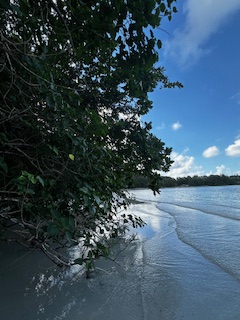
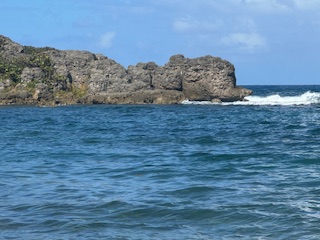
I still am not going to listen to the news in 2026. I am deeply saddened by the state of the world, saddened that on my own island beaches are locked off. I recently paid JM$2,000 to go to a beach –something I believe is criminal. What that means is that the vast majority of Jamaicans cannot afford access to what should belong to all of us. Some of us can afford it. Many cannot. And while not everyone will be rich or have the same resources, there are basic things everyone should have access to.
Everyone should have access to nature and parks. In the Caribbean, everyone should have access to all the beaches that should be maintained, with clean restroom facilities and changing areas—and that access should be free. I believe that everyone, even if they live in a single room, should be growing something: a plant, a tomato, a string bean, okra, cucumber, pumpkin, cane. We have to start. Not always in a grand way, though we need a grand plan, but we must start.
We must start so that I do not slip into despair. So that I can continue to believe that I make a difference, that I can make a difference, and that each individual can. We can, and we must.
This is my plea. And this is my prayer for 2026.
Please note the deadline to contribute to Chester Castle Primary school in Hanover is extended until I am able to gift each child a loaded bagpack. Thanks for your support.
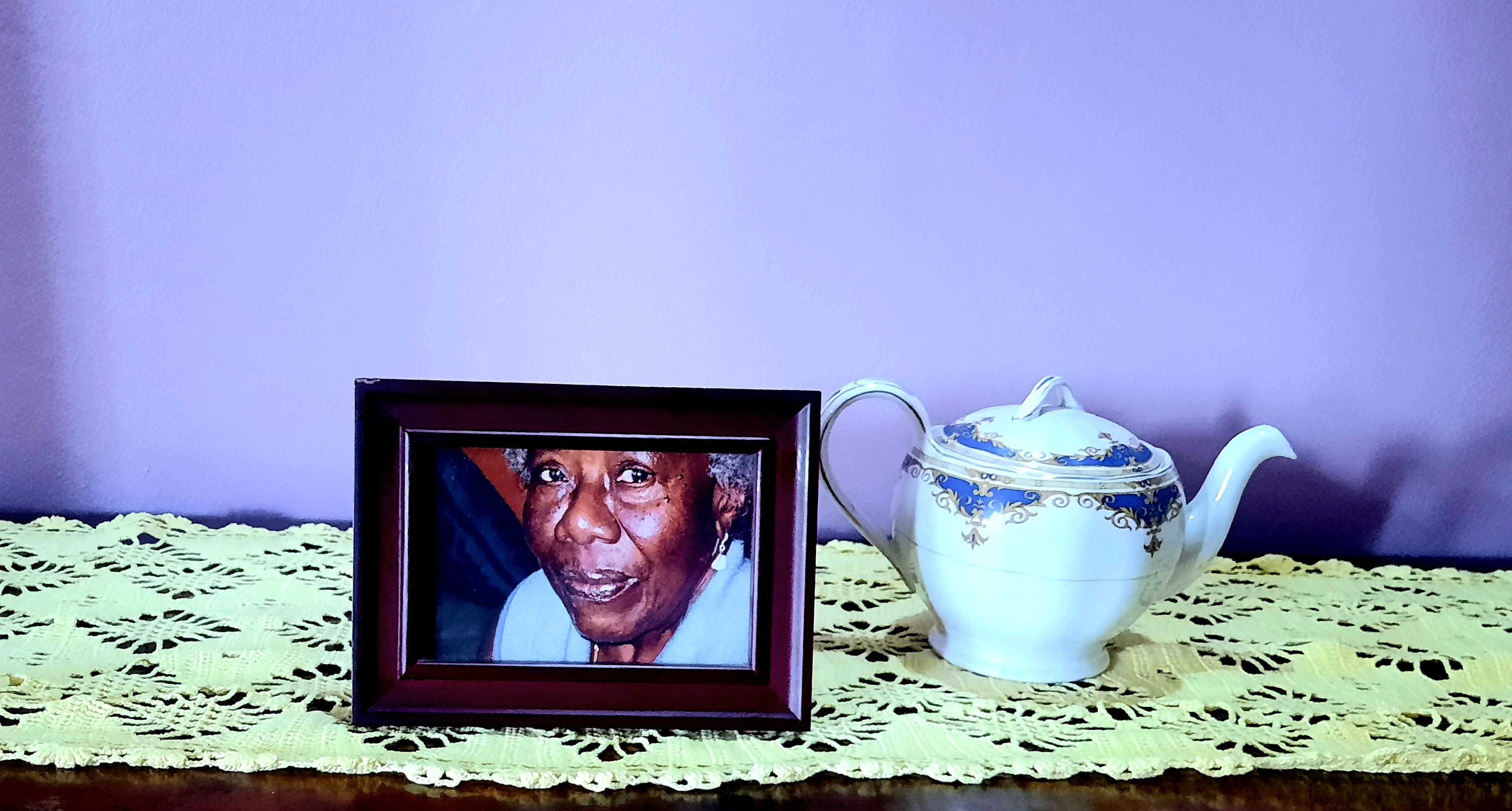
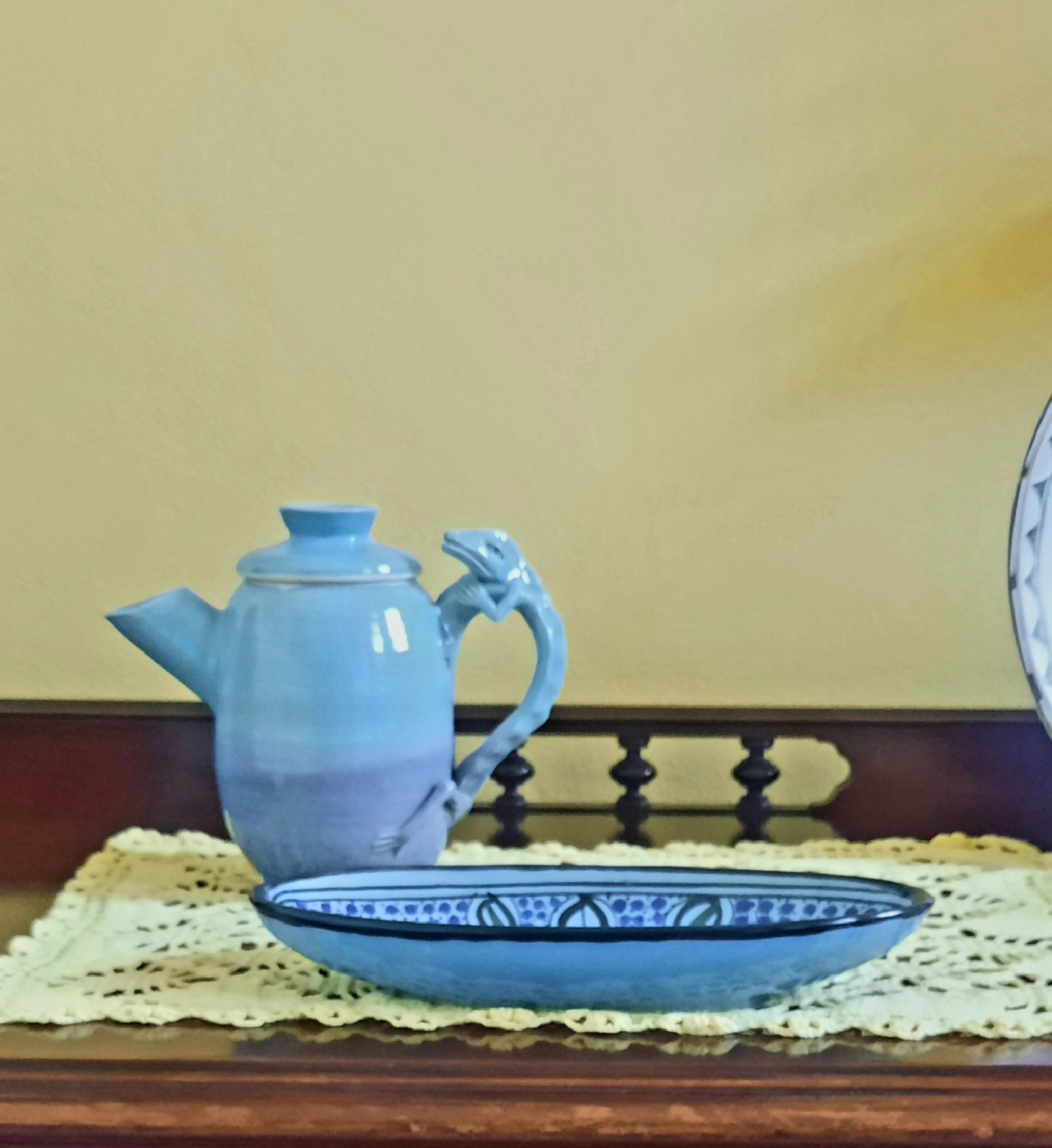
My mother loved the Christmas season, and what I remember most about her is that on Christmas Eve she would take down all the curtains in the house, all the dollies she crocheted, and she would change the curtains and place matching dollies on the tables: the centre table, the side tables, the dressers and night stands. She had loads of dollies that she crocheted, and they matched the curtains. She would have washed, starched then pressed them, all in preparation, all in care.
Last night I have took out a few of the dollies that she made for me. I don’t necessarily use them all the time like she did, my aesthetic is little different, but she made these with love, and they are beautiful as creative pieces. We don’t often think of women like my mother, who crocheted and knit functional things, as artists/creatives, but they were. She was an artist in her own regard. She loved to make the house look beautiful and new for the season.
In addition to that, she would bake fruit cake or black cake, and I would lick the pans clean. She would make ham with pineapple and cherries. I’m not sure how all that tradition came to be, but she followed it faithfully. She would make sorrel and other things. She gloried in the season.
I remember one Christmas in particular, because like me, she didn’t believe in cutting down trees just to decorate them and throw them away. So she and I went into the forest nearby. She found an old tree that was already dead, and we dragged it all the way out of the forest. She painted it silver and decorated it, and I remember thinking that it was one of the best Christmas trees we ever had.
Although a number of females writers have said this, I too must concur that I am a product of my mother, and in more ways than one that is true. My creativity, my love for decorating, my love for plants and nature; these are gifts she bequeathed me. I remember seeing her, as I was growing up, always attending to her plants. Sometimes when she came home from work, even before she took off her work clothes, she would stop to water the garden. She loved her geraniums. She planted bananas. She was multi-talented and multi-creative.
I thank her. I pour libation for her. I call out her name: Catherine James Palmer, in honour of her, in her love and in her laughter. She was a woman who laughed; she laughed with her eyes and her mouth, her whole body. I am grateful that I am her daughter.
So here’s to you, Catherine. I raise my glass and offer a toast. I pour libation on the ground that you will never be thirst.
I thank you for your creativity and showering me with love.
It is not the first time that I have felt this hollow. I have asked myself, where do I belong? Do I have a tribe? I have sat chewing on my tongue, hearing a group speak of things that I do not believe, and then trying to find a space, or take the space gently, respectfully, to say what I believe.
And I think about the injustices of slavery, which my people underwent and some are still undergoing. I think about the Jews and Africans being exterminated by the Hitler regime. I think about South Africa and apartheid. I think about Gaza and Palestine, about the Congo and the deliberate starvation being perpetrated there and ai think about all the people who wanted to speak up but didn’t, because of fear, because of not wanting to be isolated, because of thinking maybe they were wrong, maybe they weren’t wrong, but why go against so many people?
Tonight, I was among good people, people I like, people who are decent, people who have been generous to me in many ways. But their interpretation of God and the Bible and Christianity is different from mine. And inasmuch as they loudly and frequently expose their notion about God, and say they like me, I know that if I were to present my view of God, they would probably be shocked. As I was shocked tonight by their homophobia, their narrow and limited interpretation of what they claim to be “God’s Words,” So I find myself folding inside myself.
I sat there with this hollow feeling, and I thought, I have to speak up. There are too many gay friends that I have who need me to speak up, too many who believe that Jamaica has a language that is erroneously called patois that should be defended. But it brought back again this feeling of not belonging. You know where do I go? Why do I go against the grain? Why am I frequently perceived as a rebel?
Do I give up all my earthly possessions and find a forest and learn to live alone, listening to the birds and the other forest creatures, and howling, with the only thing that comes back to me being the echo of my own voice?
I want a tribe. I want community. But so often I don’t feel as if I fit into any of these places, with any of these people, where I can speak without chewing my tongue off. And it is a hollow, empty aloneness that I really don’t want, because I do want to be in community. I do want companionship. I do want meaningful engagement. But I also want to be with people that I can share my ideas with. They might not agree, but they listen and are open.
People who believe in justice, not just for themselves, but for everybody else.
I try to make the analogy: okay, you might not be gay, you might not believe in same-sex marriage, and you might not think it is right that they shut down a man’s shop because a gay couple wanted two men, and the person said they weren’t going to do it because they are against gay people. I offer this scenario as a point of comparison. I go to a cake shop and the owner happens to be a white supremacist, I request a Black couple—a man and a woman, on my cake because we are Black, and he says, I’m not going to do it because I don’t believe in Black love. Should that shop be shut down too? And if yes, then what is the difference? Justice have had to legislated to end slavery Jim Crow, apartheid, sexism, gender-based violence, child abuse… People’s rights cannot be denied just because they are the minority.
And don’t bring God into the difference, because God created all of us, Africans, Asians, Europeans, heterosexual/GLBT, Christian, Muslins, Buddhist, etc…We are all children of God, different but equal, and if we truly believe in equity and peace, we must not condemn and judge.
Often, I feel so alone, and I’m tired of being alone. I want to be here, because I love being here. But I want a community, an open inclusive community. I don’t want to always have to chew off my tongue.





 Opal Palmer Adisa