Tag Archives: faith

Want To See More of the Ordinary Me in Media

I’m Black. I love being Black. I love my skin, my features, my history, my ancestors.

Let me say from the outset, I have absolutely nothing against white people or anyone else telling their stories. Every people should tell their stories.

What I’m tired of is that white stories are still the default from Hollywood, the largest film industry located in a multi-cultural and diverse USA

.

I’m tired of turning on the television or going to the movies and, more often than not, watching white people, and especially white men, occupy the center of the universe. Their lives are presented as universal. Their joys, their heartbreaks, their coming-of-age stories, their romances, their family dramas—all of it is assumed to represent humanity.

But after a while, as a Black woman, it becomes exhausting.

I just want to see me. Not a caricature of me. Not another story about drugs, gangs, violence, prostitution, or poverty. Those stories  and lives exist, yes, but they are not the totality of Black existence; they are not even the majority of Black existence.

Where are the stories about the Black teacher? The Black writer? The grandmother raising her grandchildren? The nurse who goes to work every day? The farmer. The artist. The scientist. The woman who falls in love at sixty. The ordinary Jamaican/Caribbean family working hard to make ends meet, to instil strong family-values and life principles. The ordinary Nigerian family. The ordinary South African family. The ordinary Black family anywhere in the world.

Most of us get up every morning, go to work, love our families, struggle, laugh, cry, dream, and survive with dignity. Why aren’t those stories considered cinematic enough?

Why is ordinary Black life still treated as though it is somehow less universal than ordinary white life?

And yes, perhaps it is our responsibility as Black filmmakers, producers, writers, governments, and investors to tell these stories. I accept that. But I also think we have inherited a colonial imagination that still determines what is considered beautiful, marketable, and worthy of being seen.

One of the things that saddens me about many contemporary Nigerian and South African films is that too often they seem to be creating African versions of Hollywood instead of drawing from the extraordinary richness of their own cultures.

Africa has thousands of years of philosophy, mythology, spiritual traditions, languages, music, aesthetics, and ways of seeing the world. Yet so often what I see are stories modeled after American television dramas, populated by the same aspirations, the same beauty standards, and often the same stereotypes.

Even more troubling is the colorism.  The leading women are so often light-skinned, sometimes obviously bleached. The beauty ideal remains astonishingly colonial. The men can be dark, rugged, handsome, and powerful, but the women are expected to be lighter, with long wigs, weaves, or straightened hair, conforming to a European standard of femininity.

Where are the women with tightly coiled natural hair? Where are the indigenous hairstyles worn proudly? Where are the broad noses, the full lips, the deep brown and blue-black complexions celebrated simply because they are beautiful? Why are we still teaching young girls that beauty must resemble Europe?

And this isn’t only happening in Africa.  I see it in Indian cinema. I see it in Asian cinema.

The men may come in every shade imaginable, but the women must so often be fair-skinned, delicate, and possess long flowing hair. It sends a message, not only to Black girls but to dark-skinned Indian girls, Asian girls, Indigenous girls, that somehow their natural selves are not enough.

That is the quiet violence of colonialism. It teaches us to reject ourselves without anyone having to say a word.  Sadly, a similar thing is happening spiritually.

Why does everyone have to become the same kind of Christian to be respectable? Why aren’t African spiritual traditions explored with the same seriousness and dignity afforded to European religions? Why are indigenous belief systems still so often portrayed as primitive, sinister, or superstitious?

Our ancestors created sophisticated systems of knowledge, ethics, healing, and spirituality long before Europe declared them illegitimate.  Why aren’t those stories being told?

It feels as though instead of becoming more inclusive, more expansive, more curious about who we are, we’re becoming narrower. This is the ideal beauty. This what success looks like.

This is respectability. This is God.

Everything else is pushed aside.  We’re reducing ourselves instead of enlarging ourselves.

Cinema should enlarge us. It should remind us of the infinite possibilities of being human.

I don’t want fewer stories about white people. Those stories have every right to exist.

I want more stories about everybody else. I want balance. I want to see ordinary Black people living ordinary lives that are every bit as worthy of the screen as anyone else’s. I want to see our humor, our tenderness, our intelligence, our spirituality, our families, our contradictions, our aging, our joy because our lives are not an anomaly.

In fact, our reality is closer to the experience of most of the world’s people than the reality that has been presented to us for generations as universal. This isn’t about exclusion. It’s about inclusion.

It’s about dismantling the visual legacy of white supremacy and colonialism that has taught us whose lives matter, whose faces are beautiful, whose stories deserve to be told, and whose humanity counts.

I want a world where little Black girls see themselves and know they are beautiful exactly as they are. I want little boys to know that strength comes in kindness as much as conquest.

I want young people in Africa, the Caribbean, Asia, Latin America, and Indigenous communities to understand that their cultures are not footnotes to Europe, but rather they are civilizations in their own right.

I simply want to see us. Not as symbols.  Not as problems.  Not as stereotypes. But as fully human.

That is not too much to ask.

See and Blind, Hear and Deaf Is Not the Answer

It is not the first time that I have felt this hollow. I have asked myself, where do I belong? Do I have a tribe? I have sat chewing on my tongue, hearing a group speak of things that I do not believe, and then trying to find a space, or take the space gently, respectfully, to say what I believe.

And I think about the injustices of slavery, which my people underwent and some are still undergoing. I think about the Jews and Africans being exterminated by the Hitler regime. I think about South Africa and apartheid. I think about Gaza and Palestine, about the Congo and the deliberate starvation being perpetrated there and ai think about all the people who wanted to speak up but didn’t, because of fear, because of not wanting to be isolated, because of thinking maybe they were wrong, maybe they weren’t wrong, but why go against so many people?

Tonight, I was among good people, people I like, people who are decent, people who have been generous to me in many ways. But their interpretation of God and the Bible and Christianity is different from mine. And inasmuch as they loudly and frequently expose their notion about God, and say they like me, I know that if I were to present my view of God, they would probably be shocked. As I was shocked tonight by their homophobia, their narrow and limited interpretation of what they claim to be “God’s Words,”  So I find myself folding inside myself.

I sat there with this hollow feeling, and I thought, I have to speak up. There are too many gay friends that I have who need me to speak up, too many who believe that Jamaica has a language that is erroneously called patois that should be defended. But it brought back again this feeling of not belonging. You know where do I go? Why do I go against the grain? Why am I frequently perceived as a rebel?

Do I give up all my earthly possessions and find a forest and learn to live alone, listening to the birds and the other forest creatures, and howling, with the only thing that comes back to me being the echo of my own voice?

I want a tribe. I want community. But so often I don’t feel as if I fit into any of these places, with any of these people, where I can speak without chewing my tongue off. And it is a hollow, empty aloneness that I really don’t want, because I do want to be in community. I do want companionship. I do want meaningful engagement. But I also want to be with people that I can share my ideas with. They might not agree, but they listen and are open.

People who believe in justice, not just for themselves, but for everybody else.

I try to make the analogy: okay, you might not be gay, you might not believe in same-sex marriage, and you might not think it is right that they shut down a man’s shop because a gay couple wanted two men, and the person said they weren’t going to do it because they are against gay people. I offer this scenario as a point of comparison.  I go to a cake shop and the owner happens to be a white supremacist, I request a Black couple—a man and a woman, on my cake because we are Black, and he says, I’m not going to do it because I don’t believe in Black love. Should that shop be shut down too? And if yes, then what is the difference? Justice have had to legislated to end slavery Jim Crow, apartheid, sexism, gender-based violence, child abuse… People’s rights cannot be denied just because they are the minority.

And don’t bring God into the difference, because God created all of us, Africans, Asians, Europeans, heterosexual/GLBT, Christian, Muslins, Buddhist, etc…We are all children of God, different but equal, and if we truly believe in equity and peace, we must not condemn and judge.

Often, I feel so alone, and I’m tired of being alone. I want to be here, because I love being here. But I want a community, an open inclusive community. I don’t want to always have to chew off my tongue.

Top of Form

Bottom of Form
The Power of Poetry: Bridging Gaps in European Voices

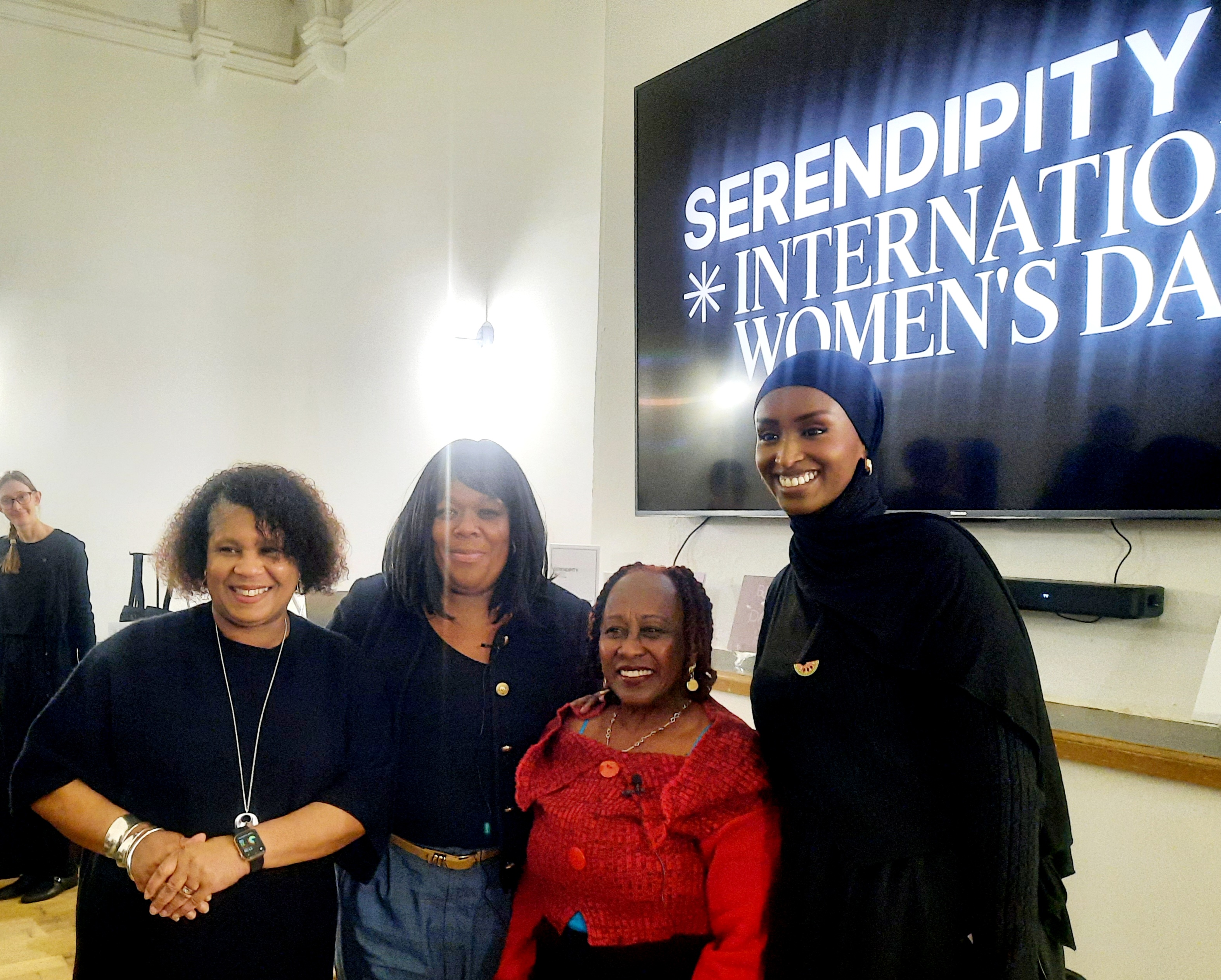
The life of a writer is to share her work and trust that it finds its audience. I’ve just returned from a three-week European tour—unexpected, yet affirming. While I’ve long known my work is taught in Europe, I had not been invited to share it in over a decade. So, when the Serendipity Institute for Black Arts in Leicester, UK, invited me to present my documentary Conversation –Jean Binta Breeze, I felt an immense joy. Jean was the first female dub poet, a dear friend, and a voice I refuse to let fade.

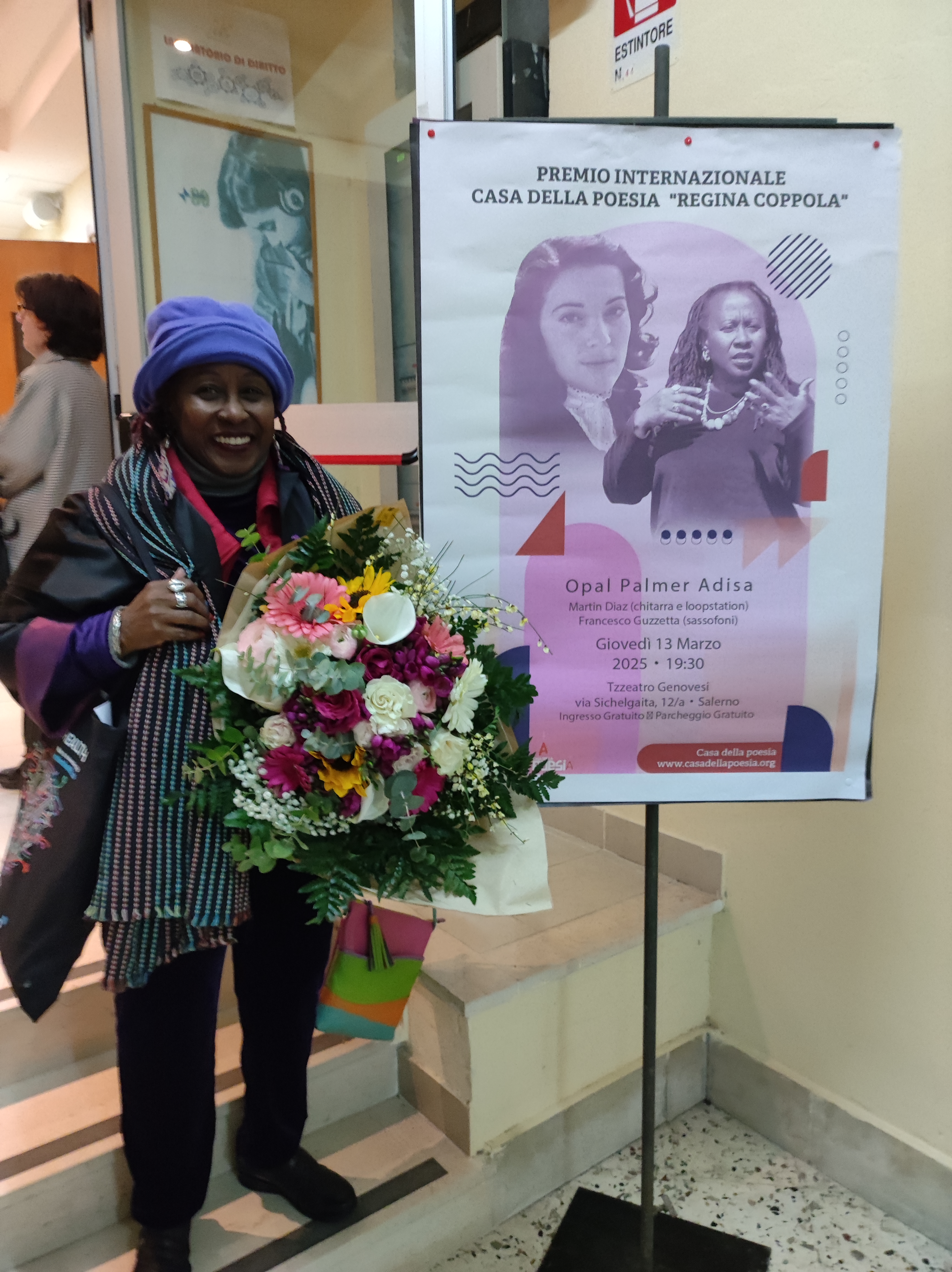
That invitation opened new doors. Casa della Poesia, a thirty year literary organization committed to amplifying diverse voices, invited me to share my work. To my surprise, they informed me that they were translating a selection of my poems and that I had been awarded the Regina Coppola International Literary Prize. I had worked with Casa della Poesia before, years ago, as part of the Bosnia Peace Festival, but I didn’t realize they had planned visits to three schools and a bookstore event to launch my translated collection, La lingua è un tamburo.

People often assume a writer’s life is glamorous—and, at times, it is. I travel, share my work, and connect with audiences in places I never imagined visiting. Yet, writing is also solitary. You create in isolation, unsure if your words reach anyone, let alone touch them. Without awards or royalties to reassure you, doubt can creep in. But these invitations reminded me that my work still carries weight in places I had never even considered.

At a bookstore just outside Naples, I read to an overflowing audience—one of their largest. That night, they sold more books than at any previous launch. Yet, the true highlight wasn’t the accolades or sales; it was the engagement with students. In three different high schools, we had deep discussions—about the Middle Passage, colonialism, gender, and history. In Salerno, a predominantly European, middle-class city, I found young people eager to engage with Caribbean history and black identity. Their depth and insight moved me to tears. Clearly, their teachers had prepared them, translating my poems and guiding discussions. My work had become a permanent feature in Italy, a country with a small black population and even fewer Caribbean voices.

Fifteen or twenty years ago, when I visited Europe, everyone associated Jamaica with Bob Marley. Today, I encounter a new generation, one less familiar with our icons but still eager to learn. My poems—whether about No Woman, No Cry or Emmett Till—remain teaching tools, bridging gaps in knowledge and fostering dialogue. Creative writing, poetry in particular, has the power to break barriers, to create understanding where there was none before.

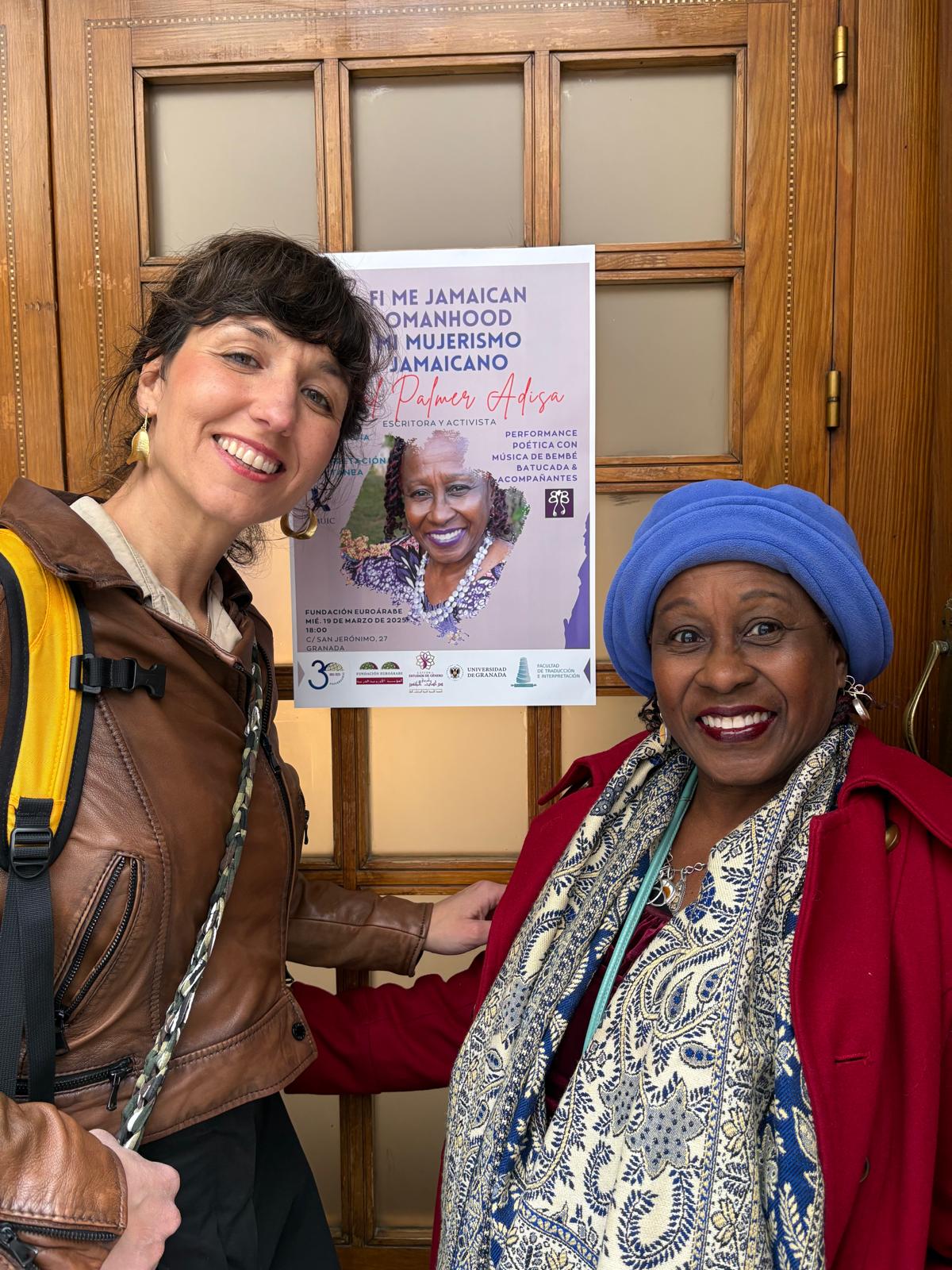
From Italy, I traveled to Spain. Elisa Senario, who once wrote her dissertation on my work, is now a professor. She and her students have been translating my short stories from Love’s Promise, and last year, we held a Zoom lecture. When she learned I would be in Europe, she invited me to the University of Granada for a symposium. Meeting her students in person reinforced an unexpected lesson: translation is more than words—it is history, context, and culture.

To my fellow Caribbean writers who feel unseen: seek audiences in Europe. This journey reminded me that my work is not only read but also embraced. There is an eager readership willing to engage with the complexities of our histories and experiences. Our stories matter. We must share them—fully, honestly—without assuming they will be ignored. The students and audiences in London, Italy, and Spain have reaffirmed what I had nearly forgotten: my work remains relevant and has currency. I am profoundly grateful for the opportunity to continue sharing it.

Watch:
https://www.facebook.com/share/p/15T2iq9aKF/