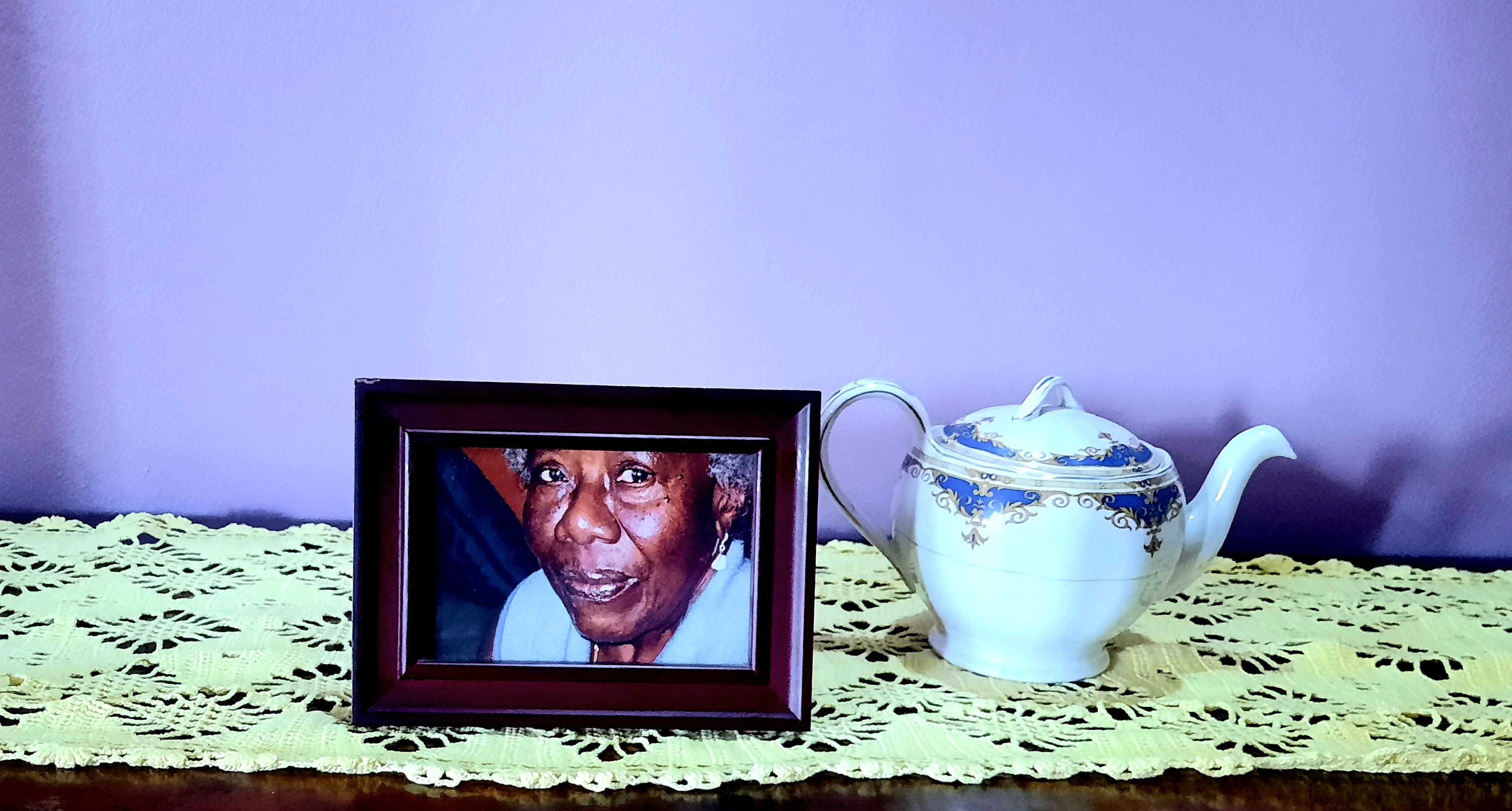
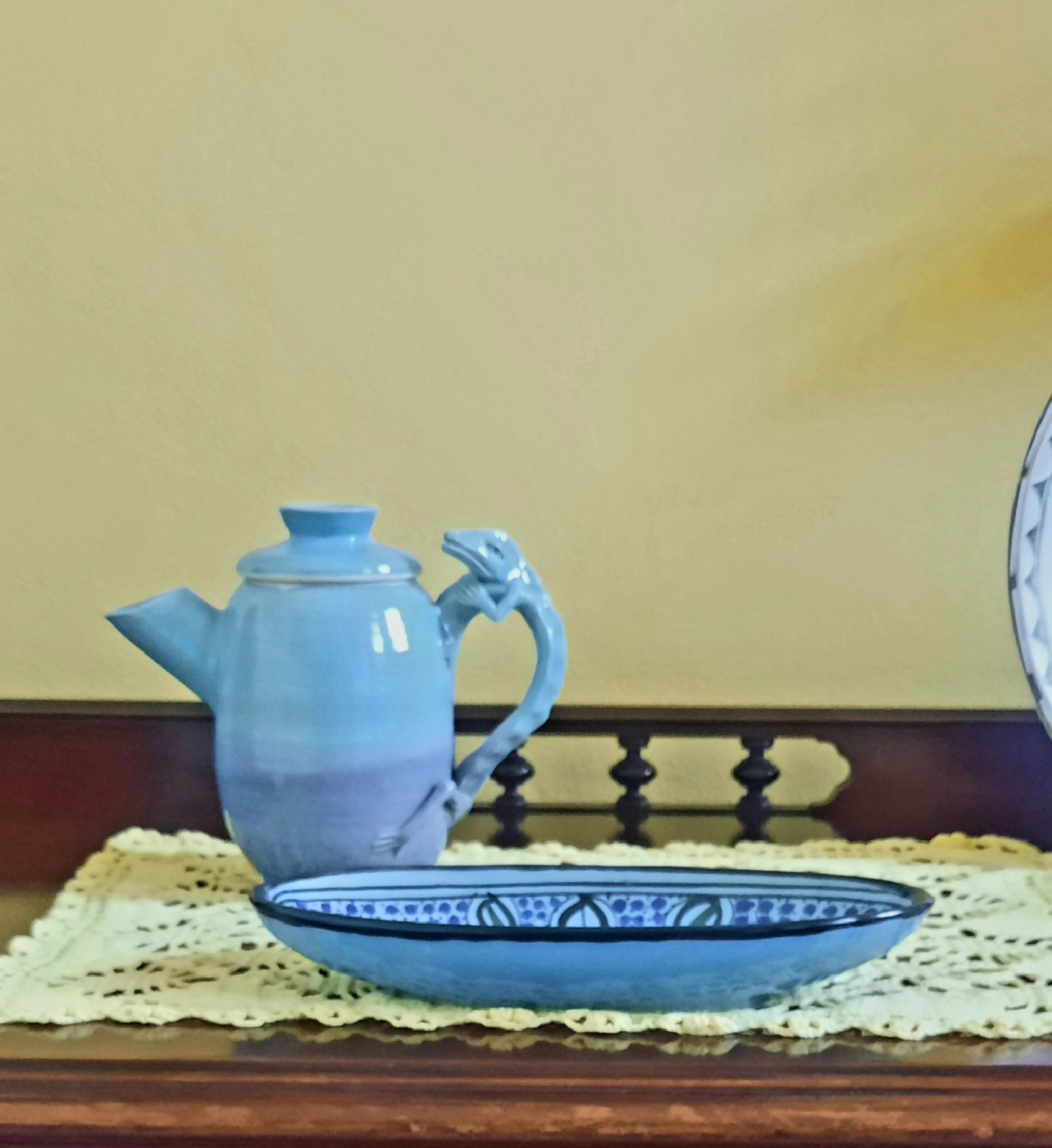
My mother loved the Christmas season, and what I remember most about her is that on Christmas Eve she would take down all the curtains in the house, all the dollies she crocheted, and she would change the curtains and place matching dollies on the tables: the centre table, the side tables, the dressers and night stands. She had loads of dollies that she crocheted, and they matched the curtains. She would have washed, starched then pressed them, all in preparation, all in care.
Last night I have took out a few of the dollies that she made for me. I don’t necessarily use them all the time like she did, my aesthetic is little different, but she made these with love, and they are beautiful as creative pieces. We don’t often think of women like my mother, who crocheted and knit functional things, as artists/creatives, but they were. She was an artist in her own regard. She loved to make the house look beautiful and new for the season.
In addition to that, she would bake fruit cake or black cake, and I would lick the pans clean. She would make ham with pineapple and cherries. I’m not sure how all that tradition came to be, but she followed it faithfully. She would make sorrel and other things. She gloried in the season.
I remember one Christmas in particular, because like me, she didn’t believe in cutting down trees just to decorate them and throw them away. So she and I went into the forest nearby. She found an old tree that was already dead, and we dragged it all the way out of the forest. She painted it silver and decorated it, and I remember thinking that it was one of the best Christmas trees we ever had.
Although a number of females writers have said this, I too must concur that I am a product of my mother, and in more ways than one that is true. My creativity, my love for decorating, my love for plants and nature; these are gifts she bequeathed me. I remember seeing her, as I was growing up, always attending to her plants. Sometimes when she came home from work, even before she took off her work clothes, she would stop to water the garden. She loved her geraniums. She planted bananas. She was multi-talented and multi-creative.
I thank her. I pour libation for her. I call out her name: Catherine James Palmer, in honour of her, in her love and in her laughter. She was a woman who laughed; she laughed with her eyes and her mouth, her whole body. I am grateful that I am her daughter.
So here’s to you, Catherine. I raise my glass and offer a toast. I pour libation on the ground that you will never be thirst.
I thank you for your creativity and showering me with love.
Hurricane Melissa hasn’t only affected adults; it’s shaken the lives of our children too, and we must attend to their needs. They’ve been traumatized, are traumatized and we have to help them recover by providing them with the necessary outlets. They need books and pencils, crayons and markers, games to play, clothes to wear: t-shirts, shorts, pants, underwear. However, we cannot stop at meeting physical needs. Many parents, busy rebuilding homes and lives, are stretched thin so some children might be left to fend for themselves. Unfortunately, in every crisis, predators emerge. We must put safeguards in place so our children aren’t further traumatized by sexual, emotional, or other forms of abuse by persons posing as goodwill, offering snacks and other treats.
It is important that we look carefully at the specific needs of children and ask, what can we do right now? I know that Child Protective Services and the Ministry of Education are thinking about this, and implementing plans in formal ways for children whose schools have been damaged, but I also want us as communities, as individuals to take action. Think about the children in Anchovy and other areas still without electricity, running water, or connectivity. They can’t attend online classes, and many have lost access to school entirely. They need real support; proper food and means and ways to continue their education. Removing them from family might be an option, but can also be emotional distraught at this time.
As an educator, a writer, and a cultural activist, I’ve seen and know what happens when families are pushed to their limits, and my heart breaks for the children. During COVID, so many parents were overwhelmed, frustrated, anxious, angry and some took that stress out on their children. It wasn’t because they didn’t love them, but because they were stretched beyond measure. We cannot let that happen again. Parents breathe and rather than shout, hit and threaten, continue to breathe and speak loving words.
Our children have already endured trauma. They need safe spaces to express what they feel, and guidance to process what they’ve lived through. They need counselors, teachers, and community support. And let’s not forget those in children’s homes who have been displaced; they are especially vulnerable and need urgent attention.
Sometimes in the midst of the crisis children are overlooked like Louise Bennett’s reminds us in her poem, “Earthquake Night.” In the second and third stanzas, she recounts how in this catastrophe the child was forgotten:
Me hear seh Verna baby,
Tree year ole December gawn,
What never cut a teet nor walk
Nor talk good from it bawn,
When everybody run from shock
An left it one fi dead,
De pickney holler `Po me gal!’
An run under de bed!
Parents and other people in these severe impacted communities also need communication tools: phone cards, charging stations so they can stay connected to family, teachers, and the outside world. Communication is not a luxury. In a crisis, it’s a lifeline.
We also need to give people cash. Yes, we hand out food bags, and that’s important but those bags don’t cover everything. When you give someone a food package, ask how many children they have, and add a little cash. Even a modest amount of $1,000 or $2,000 can help families buy fruits, vegetables, or other essentials everyday things that aren’t in food packages: oil, salt, soap, and other basics. Transportation cost to travel if someone is sick.
Let’s be honest: sometimes what’s packed for them isn’t what they eat. Even in crisis, people deserve the dignity of choice. The Jamaican rural diet is built on yam, cassava, chocho, pumpkin, green banana, callaloo, carrots and cabbage; that’s what sustains people. And our children need fruits: bananas, pineapples, papayas, watermelon. Aid shouldn’t just fill bellies; it should nourish bodies and spirits.
We have to stop assuming that one standard “disaster bag” fits all. What does a relief package look like for a Jamaican family with three children, ages three, five, and sixteen? We need to diversify what we give, and most of all, ask people what they need. Listening is an act of respect and generosity.
The government, through the Ministries of Education, Health, and Social Services, must send nurses, counselors, and social workers into isolated communities. We need patrols and outreach teams checking on families and ensuring children are safe and supported.
At the center of all this must be our children. Their healing, their safety, their sense of stability. If we fail them now, the effects will last far beyond this hurricane. But if we act wisely and compassionately, if we truly listen and respond , we can help them not just survive, but recover and grow stronger.
Yes, children are resilient, but they too have been terrified by Hurricane Melissa, and their responses will vary. So it is our job to provide them with comfort, but also the space to express their fears. And this isn’t just the government’s job. It’s on all of us, the entire community, leaders, teachers, churches, neighbours, and citizens to look out for the children around us. To notice when something’s off. To ask questions. To make sure no child is left behind in this recovery.
Let’s keep our focus clear as we continue this relief effort and protect the children, support the families, and restore their dignity. Let’s rebuild with love, awareness, and with purpose.
Earth days are special, and I tribute this feeling to my mother who made my birthdays magical when I as a child.. Since I turned forty, I’ve made it a rule never to work on my birthday. As an academic, I had the freedom to arrange my schedule, so if my birthday happened to fall on a teaching day, I’d send my students on a field trip or give them a research project.
Birthdays, for me, have always been sacred and wherever I am in the world, I find a body of water, sea, river, or a lake to visit and spend some time meditating. After that reflective time, I treat myself to an elegant meal and usually end the day with some kind of body work, a massage or facial. My birthdays have been about reflection, indulgence, and gratitude.
But this year was different. After Hurricane Melissa, celebration felt out of place. Watching the devastation across Jamaica, I knew the best way to honour my life was to give. I’m privileged in many ways, and have more than enough. But so many in the rural areas had lost everything. While relief efforts were underway, many communities were still untouched, cut-off, unseen.
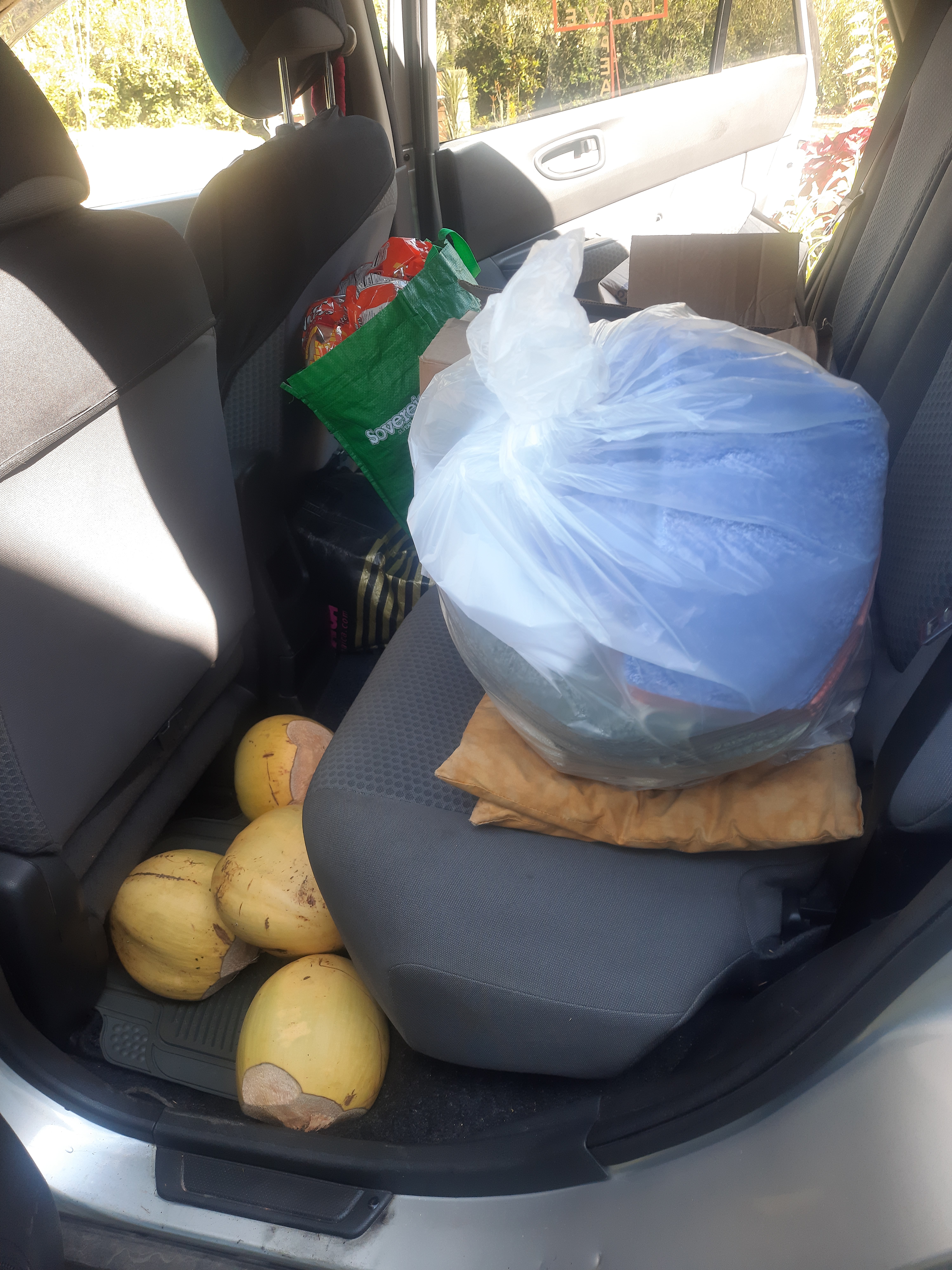
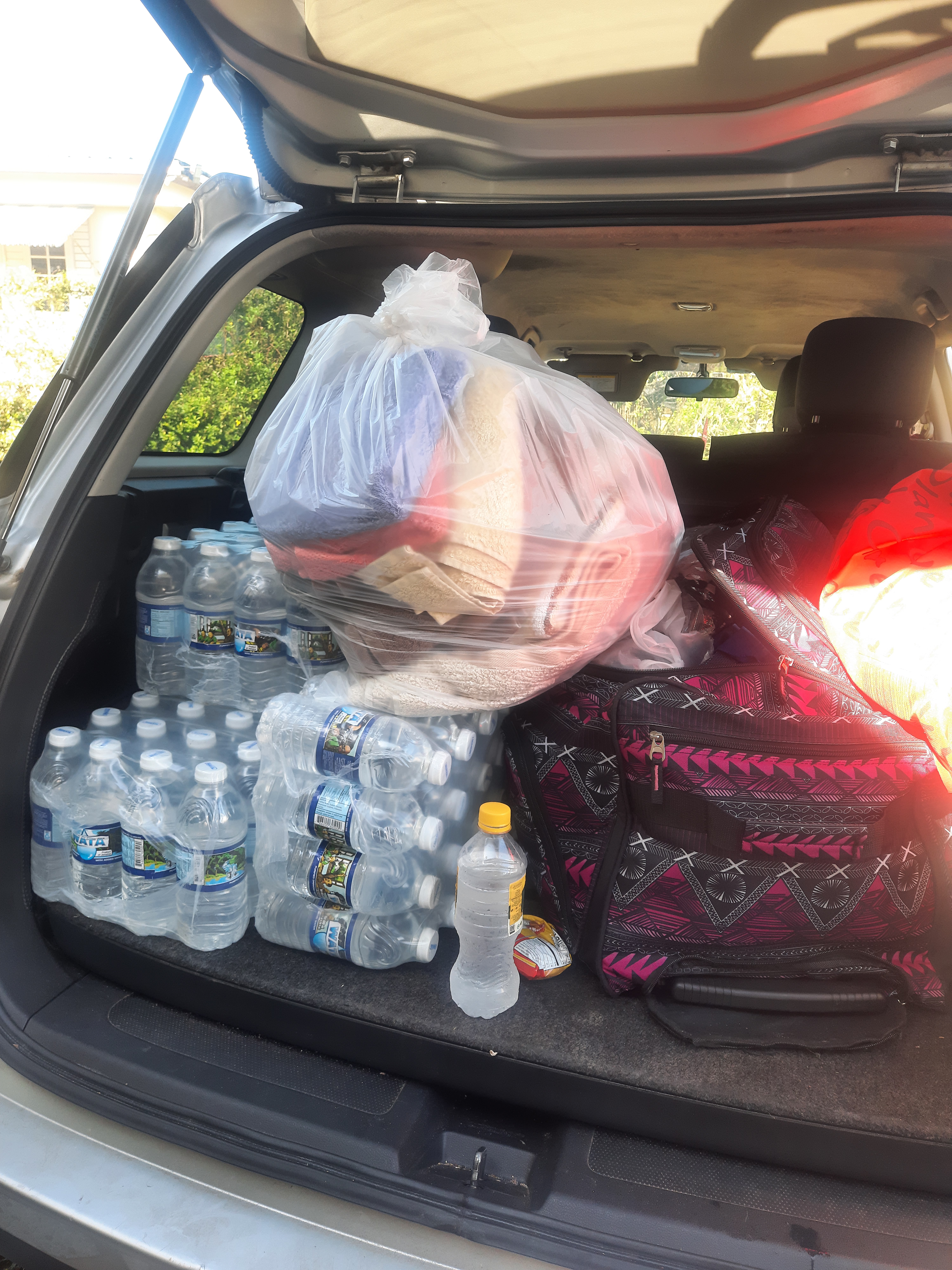
So first, I went through my closet and unloaded 40 dresses, most of which have not been worn more than six times; people needed clothes. Also, I knew people needed towels and wash cloths so packed up ten of those. Next I went shopping and spent $35,000 on the basics: rice, flour, sugar, cornmeal, bread, crackers, tinned mackerel and sausage, wipes, bottled water, soap, shampoo. I loaded everything, and accompanied by a community male, I drove to Anchovy, a community a distant cousin told me had been devastated and overlooked.
There, by the river, I met nine women washing clothes with their children nearby. Their words came like a chorus: “We have lost everything. No one has come.” I distributed what I had, and they showered me with blessings and gratitude for my modest donation. I thought about taking photos of the distribution but in the moment, the need of the women and children did not leave space for such documentation. And because the story isn’t about what I gave, but rather what lesson Melissa gave me: a new way to see my birthday not as a day of self-luxury, but of active service.
Returning from Anchovy I went into my closet, and it did not look empty. It was still full, with more dresses than I need. That’s when I affirmed that I am rich. I had never used that word for myself before. I used to say “comfortable,” but no, “I am rich.” Yet I realized I am rich enough to give and not experience loss. This is what many of my fellow Jamaicans must reckon with: the illusion of scarcity. We have more than we think.
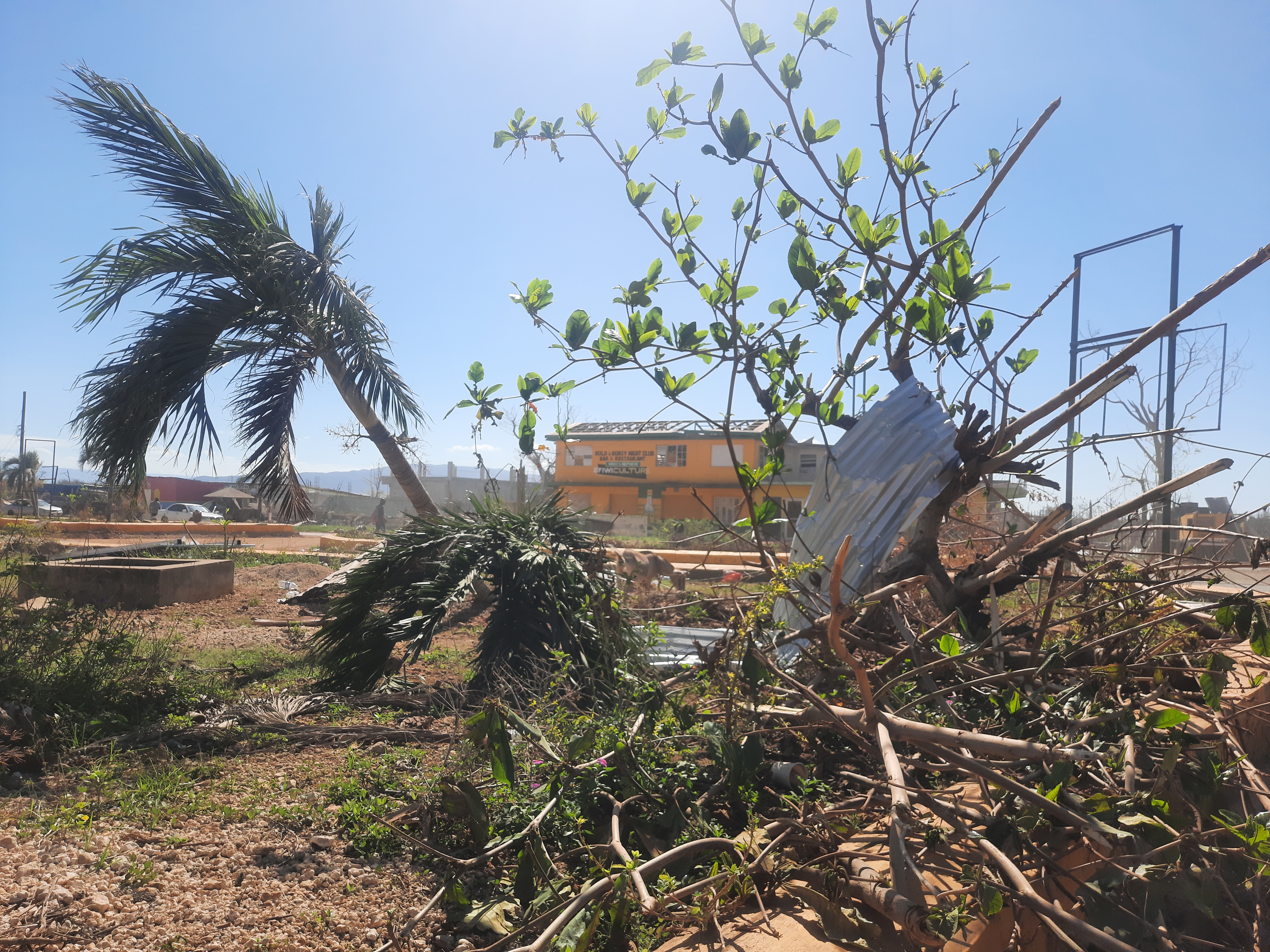
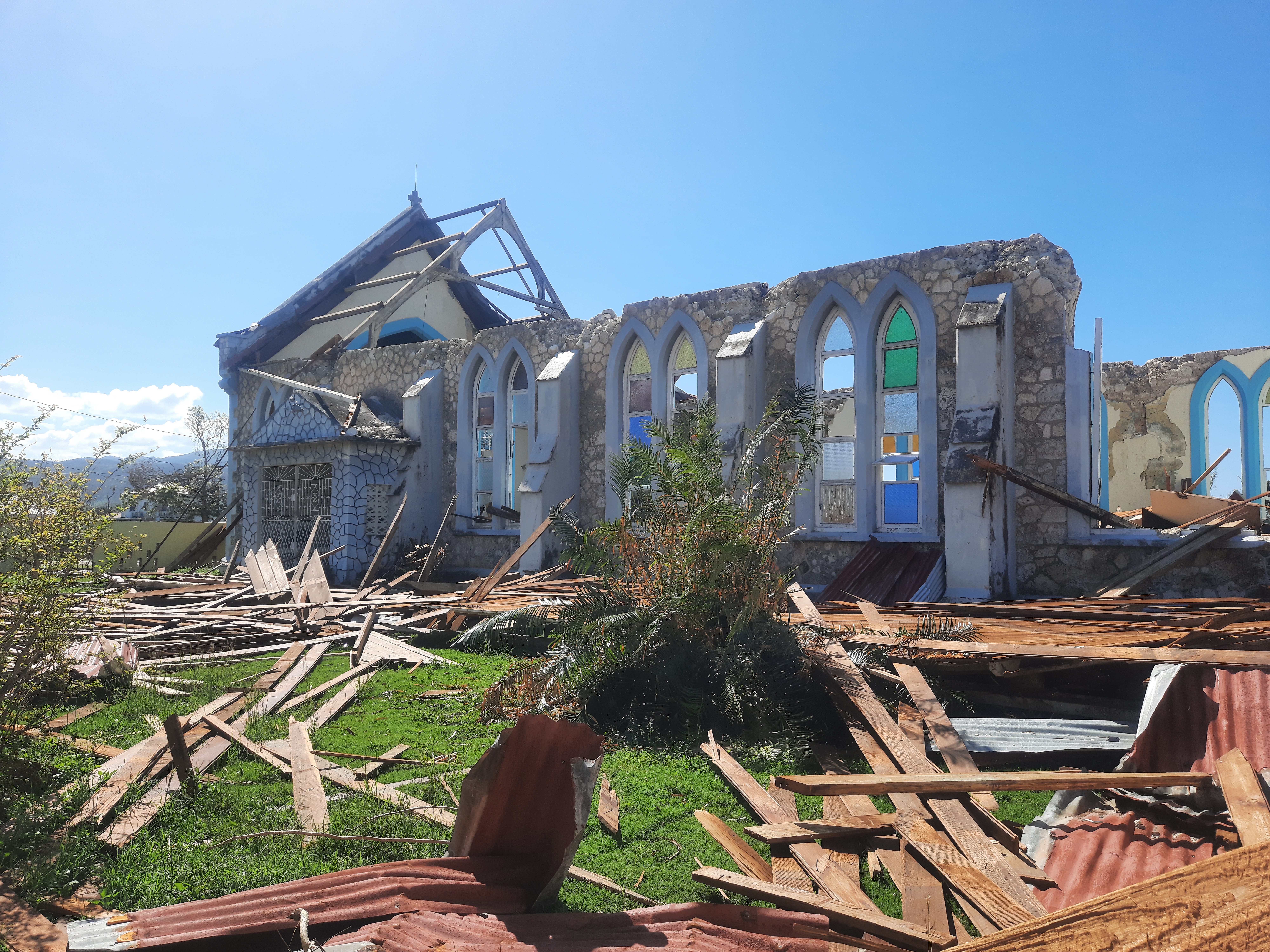
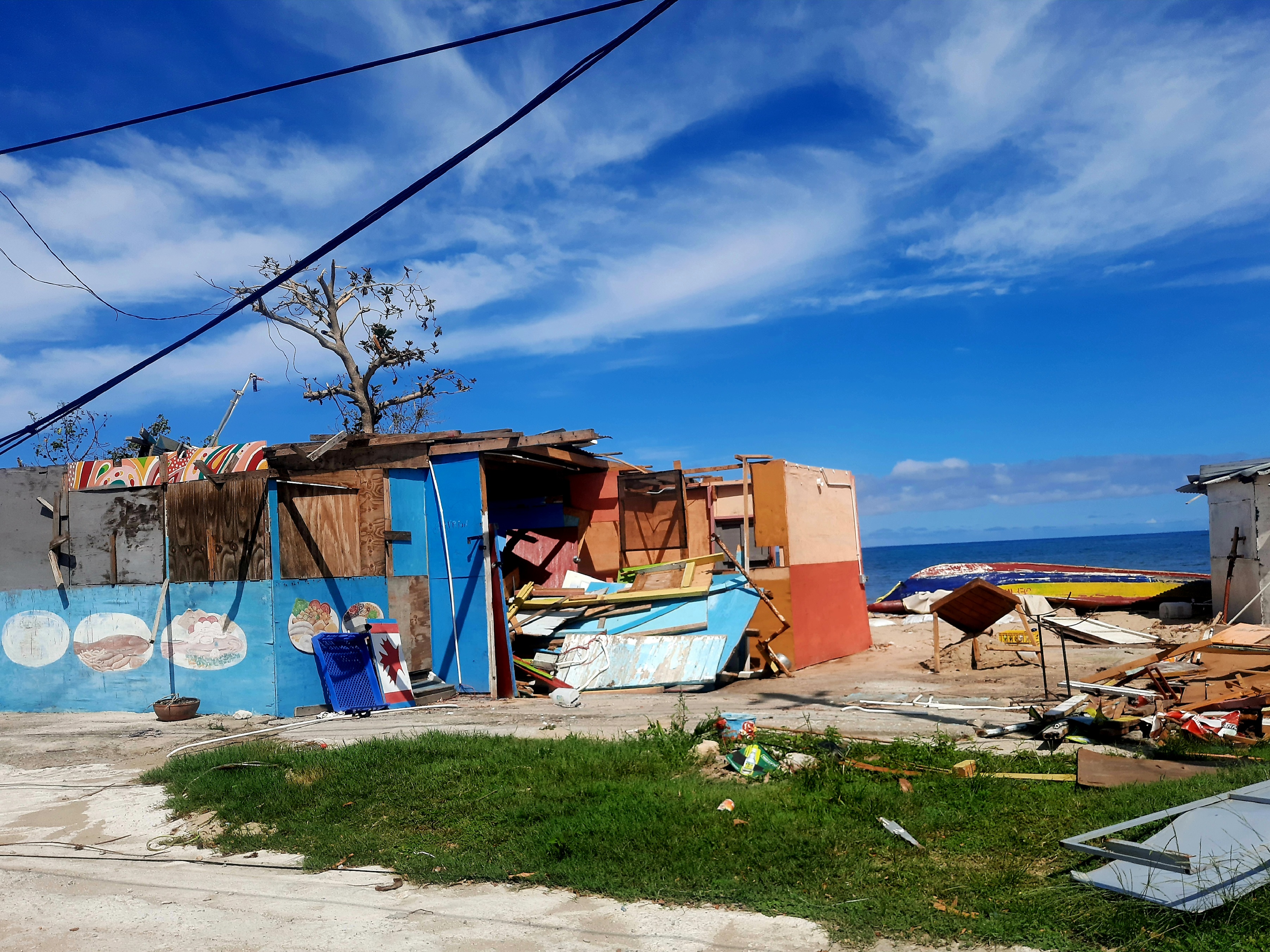
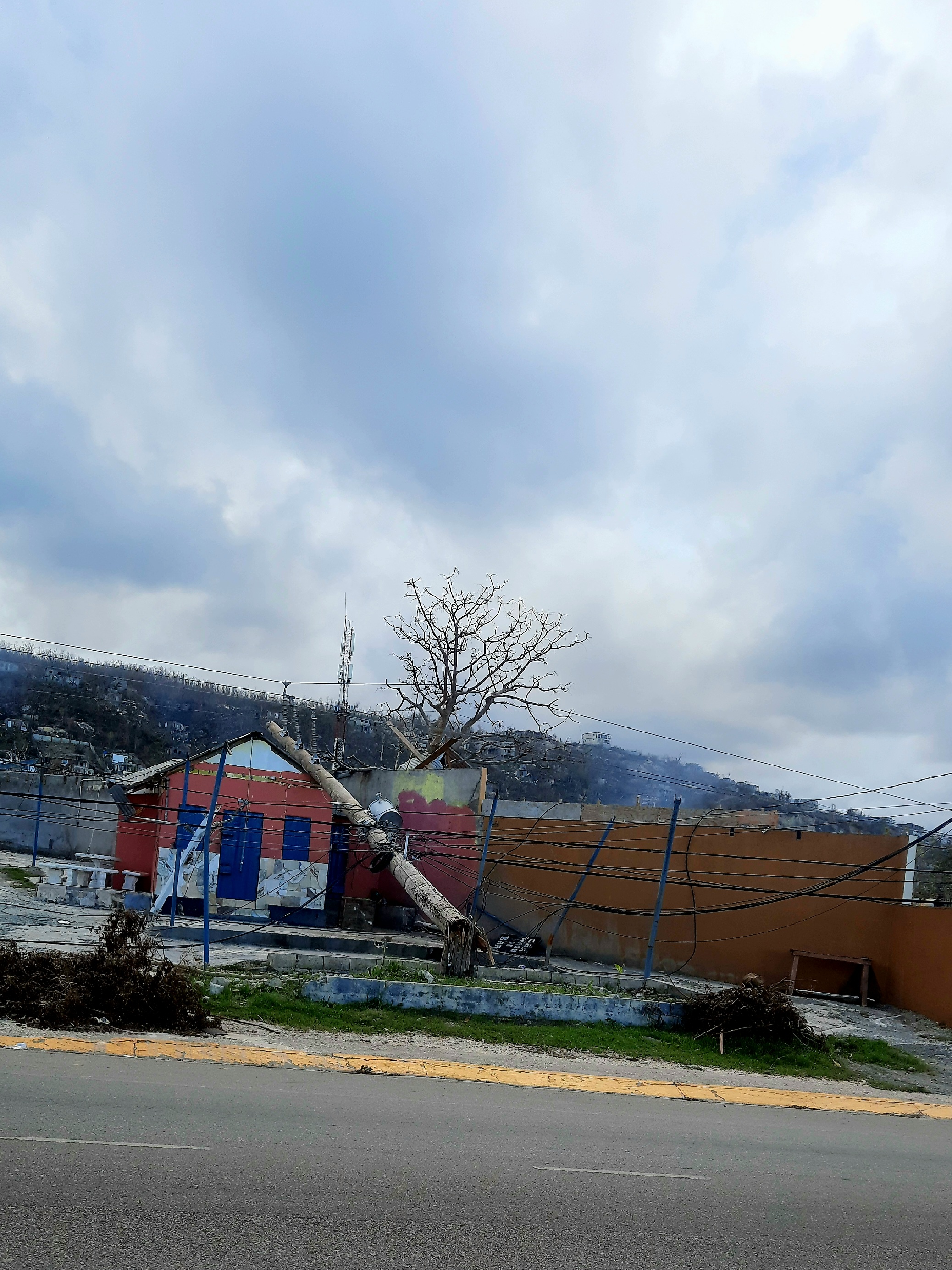
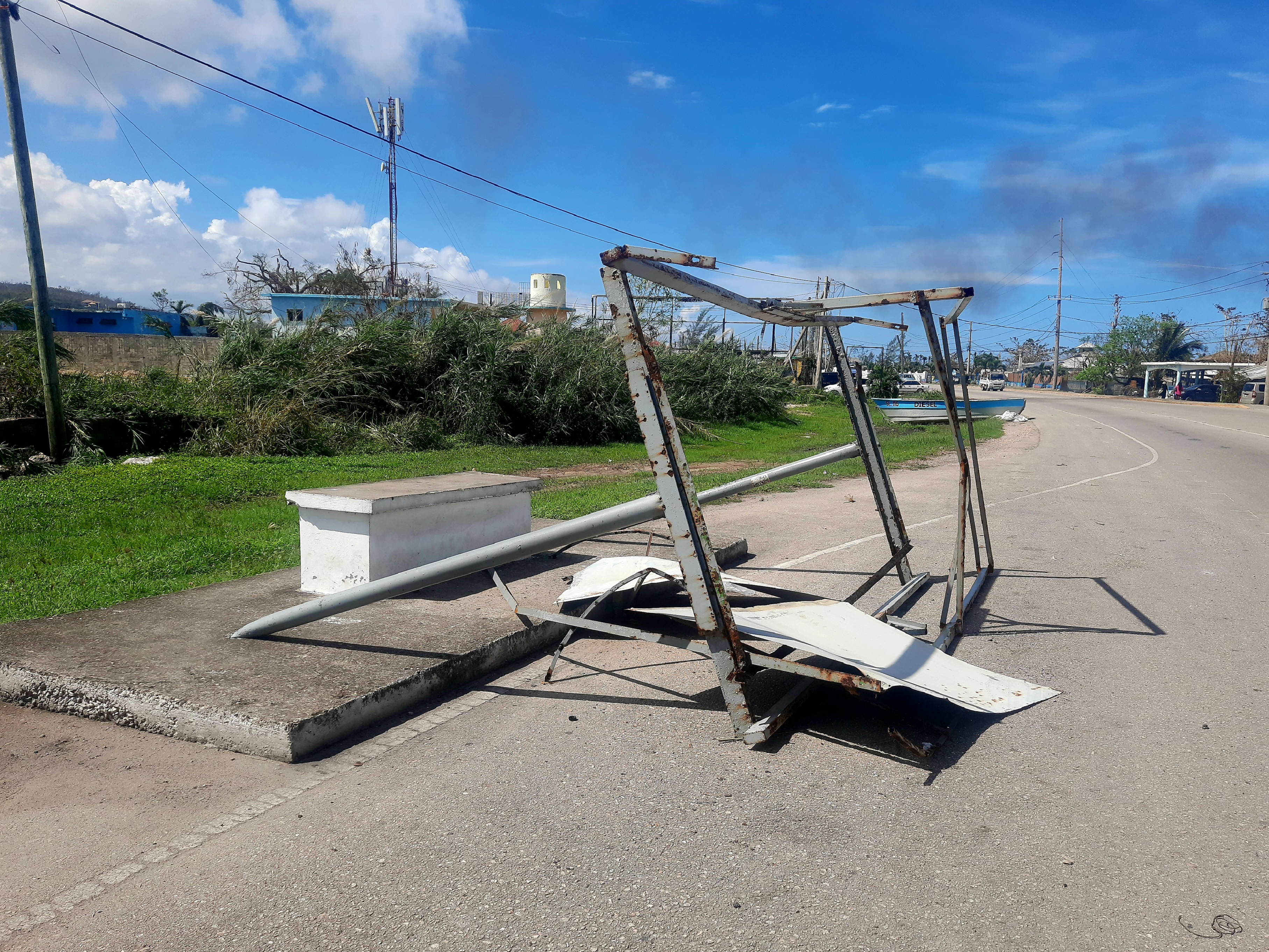
But my heart and body felt pained as I grieved for those people and the land that have been so severely impacted. The countryside looks like images I have seen of Beirut and Iraq in ruins. Thousands of trees gone. Animals lost. Land stripped bare.
And while it is true, we’re a resilient people, a phrase repeat like a mantra, I want to invite all of us to pause. It’s time to admit that resilience alone isn’t enough. We must allow space for grief, for weakness, for mourning so we can rebuild stronger and better. Strength means nothing if we cannot first acknowledge our pain and what we lost.
I believe rich and middle-class Jamaicans have a moral and social responsibility to adopt the forgotten villages, those not on the radar, cut off from aid and internet, invisible to the government. These are poor Black communities that have been neglected for centuries, before and after independence. They need more than charity; they need solidarity, and a plan that will secure their respective places, but also take them into the future. They need their stories recorded, their voices amplified, and their needs and wants acknowledged and respected.
This is an opportunity for the Ministry of Culture and Gender to send young artists, writers, and students into these communities to document the traumatic experiences of these people. Let us create a living archive of their voices, a testament to what Hurricane Melissa has done to our land and our people. We owe them that dignity.
And so I’ve made a decision that every year on my Earth Day, I will give. I will continue to celebrate my awesome life but by serving. I invite my friends, colleagues, and fellow Jamaicans to do the same. Let’s adopt a village. Let’s help ensure that by next August, 2026, the families in these rural communities will have sturdy homes and sustainable livelihoods. Food relief is temporary, but empowerment is lasting.
We are resilient, yes, but we are also humans who have suffered great loss, who are in pain, and are therefore in need of not only food and shelter, but comfort, and permission to grieve. Yes, we are tallawah and will rebuild, but let us give those impacted a moment to just be still, to reflect and decide what they want their future to look like. On this Earth Day, I learned that true abundance lies not in what we have, but in what we give away.






 Opal Palmer Adisa