Tag Archives: travel

Home in the Diasporic / Home at Home

I have never been exiled from Jamaica, though I have lived most of my life away from her shores. Jamaica has always been my root, my anchor, the marrow of who I am. I never felt cut off, never felt she was beyond my reach. Jamaica is not a distant place I visit; it is the pulse that shapes me, the rhythm in my walk, the breath in my speech. My Jamaicanness is not a badge nor a flag — it is seamless, both my imagined self and my lived reality.

Paul Gilroy speaks of “the dialectics of diasporic identification,” reminding us that it is never the same for everyone, yet always returns to the dialogue of homeland and home. Can home be carried with you? Is it in the yellow, green, and black, in the taste of ackee and saltfish — even from a can — in the cane you bite into, juice running down your chin, in the childhood lessons of duppies so that when a shadow looms, you wonder if it is this or more?

Perhaps it is as Gilroy insists: “It ain’t where you’re from, it’s where you’re at.” The “where” being body and mind, geography and imagination. Home becomes memory you carry like a favorite dress, a figurine, a faded photo of first love, the friends whose lives moved on without you as yours moved on without them. Yet it always circles back to origin. Like the time I walked into the faculty parking lot in California and found a note on my windshield: Go back to where you come from. Perhaps because I demanded a place for Black people and people of color. Perhaps because I was a woman. Perhaps simply because it was known that I was not from there — not California, not Oakland, not America. To them, I was Africa, a presence they never wished to claim except for her resources. Go back where you come from.

But it is never that easy when you live where you are not “from.” They remind you constantly, even if you wanted to forget, even if you could. It is always: Where are your people from? Where was your navel string buried? What soil stains your soles, veins your blood, whispers your names?

Gilroy says, “It ain’t where you’re from, it’s where you’re at,” but the deportee knows better. For those who fled poverty or were exiled into unfamiliar streets, home is neither here nor there. Stories told of home were mostly lies meant to soothe — to suggest a place that would welcome us — but home did not. Could not. Not for the deportees. Not for those who built new nations out of necessity. For them, home became nowhere: not in the Diaspora, not in the unfamiliar land of exile.

And yet, sometimes home is that uncanny space — familiar and foreign all at once. Like Half-Way Tree in Marcia Douglas’s Marvelous Equations of the Dread, where Marley returns disguised as a madman searching for himself. Home is recognition denied, a hostile space where you may be chased, ridiculed, shunned. It does not always yield answers. At times it feels strange, unfamiliar, as if you are experiencing the Diaspora within home itself. Still, even when hostile, home holds memory, bloodlines, visceral connections. Home teaches, as it teaches Duppy Marley before he drifts into the other realm.

But not so for the madman in Jennifer Rahim’s Curfew Chronicles. He wanted only to speak truth to power, to explain the injustice he witnessed. He was home, known — and yet not recognized. Recognition would mean being heard, and being heard would demand change. It would unravel the order, blur color and class boundaries, disrupt the hierarchy. So he was silenced, thrown down, his words trampled, his identity erased. At times, home itself robs you of belonging, of dignity, of safety. Home, too, imposes curfews.

James Clifford asks: “How do diaspora discourses represent experiences of displacement and replacement of homes away from home?” A valid question. Yet it must also be asked of home itself. How does the twelve-year-old boy who fails common entrance confront displacement at home? His identity hinges on a single act. For my Danny in Love’s Promise, the shame of home propels him outward, to anonymity in the Diaspora, to find voice and self where he is not known. Sometimes the weight of home stifles growth.

And sometimes, being away is the very condition for growth. Absence shifts the gaze from lamenting displacement to embracing the fertile ground of possibility. The Diaspora becomes a field where seeds of reinvention take root, allowing home to be reframed — not as loss, not as exile, but as promise. Between Gilroy and Clifford, home becomes a moving force, fashioned and refashioned, alive in memory, radiant in imagination — at once paradise, at once euphoria.

The Power of Poetry: Bridging Gaps in European Voices

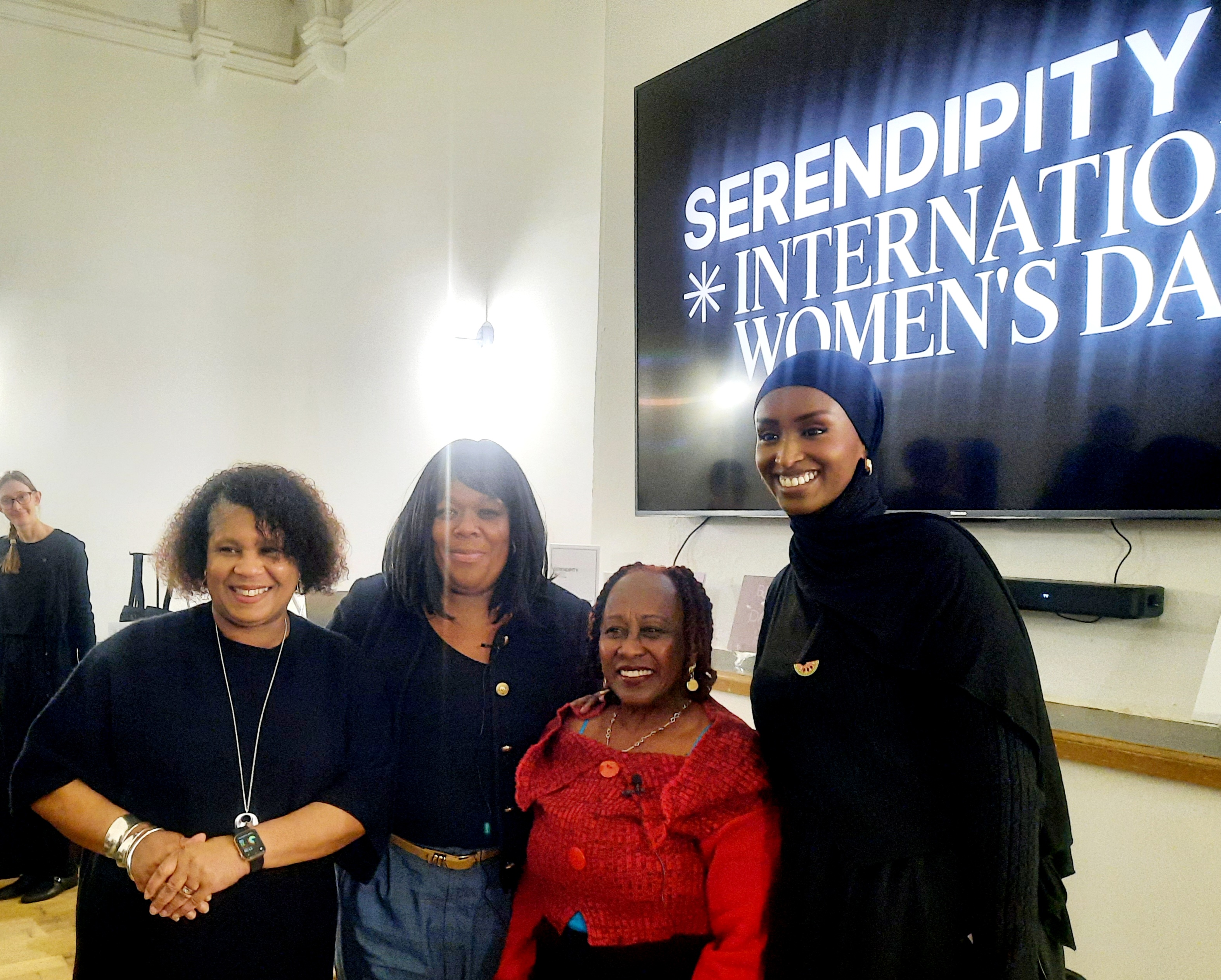
The life of a writer is to share her work and trust that it finds its audience. I’ve just returned from a three-week European tour—unexpected, yet affirming. While I’ve long known my work is taught in Europe, I had not been invited to share it in over a decade. So, when the Serendipity Institute for Black Arts in Leicester, UK, invited me to present my documentary Conversation –Jean Binta Breeze, I felt an immense joy. Jean was the first female dub poet, a dear friend, and a voice I refuse to let fade.

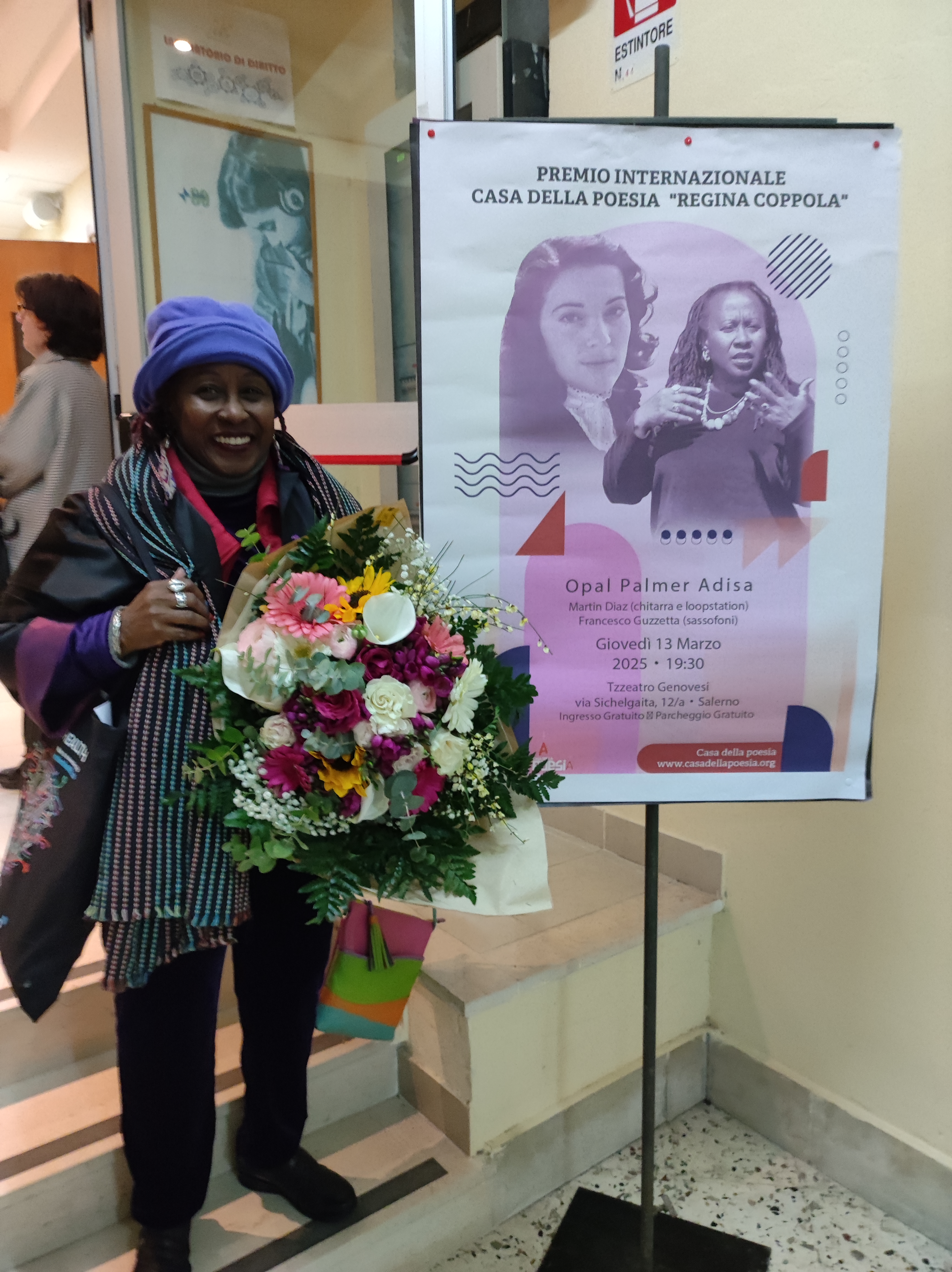
That invitation opened new doors. Casa della Poesia, a thirty year literary organization committed to amplifying diverse voices, invited me to share my work. To my surprise, they informed me that they were translating a selection of my poems and that I had been awarded the Regina Coppola International Literary Prize. I had worked with Casa della Poesia before, years ago, as part of the Bosnia Peace Festival, but I didn’t realize they had planned visits to three schools and a bookstore event to launch my translated collection, La lingua è un tamburo.

People often assume a writer’s life is glamorous—and, at times, it is. I travel, share my work, and connect with audiences in places I never imagined visiting. Yet, writing is also solitary. You create in isolation, unsure if your words reach anyone, let alone touch them. Without awards or royalties to reassure you, doubt can creep in. But these invitations reminded me that my work still carries weight in places I had never even considered.

At a bookstore just outside Naples, I read to an overflowing audience—one of their largest. That night, they sold more books than at any previous launch. Yet, the true highlight wasn’t the accolades or sales; it was the engagement with students. In three different high schools, we had deep discussions—about the Middle Passage, colonialism, gender, and history. In Salerno, a predominantly European, middle-class city, I found young people eager to engage with Caribbean history and black identity. Their depth and insight moved me to tears. Clearly, their teachers had prepared them, translating my poems and guiding discussions. My work had become a permanent feature in Italy, a country with a small black population and even fewer Caribbean voices.

Fifteen or twenty years ago, when I visited Europe, everyone associated Jamaica with Bob Marley. Today, I encounter a new generation, one less familiar with our icons but still eager to learn. My poems—whether about No Woman, No Cry or Emmett Till—remain teaching tools, bridging gaps in knowledge and fostering dialogue. Creative writing, poetry in particular, has the power to break barriers, to create understanding where there was none before.

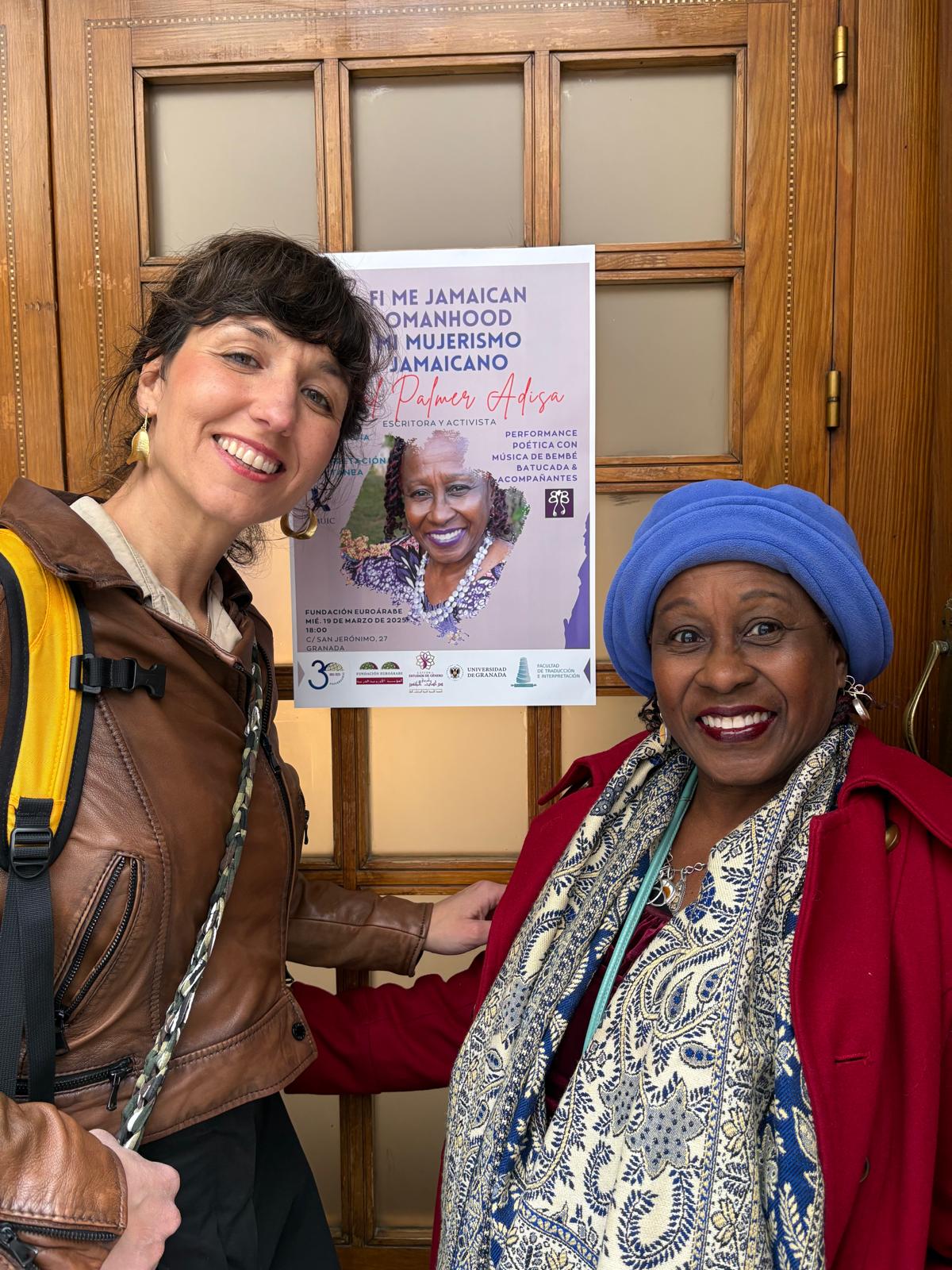
From Italy, I traveled to Spain. Elisa Senario, who once wrote her dissertation on my work, is now a professor. She and her students have been translating my short stories from Love’s Promise, and last year, we held a Zoom lecture. When she learned I would be in Europe, she invited me to the University of Granada for a symposium. Meeting her students in person reinforced an unexpected lesson: translation is more than words—it is history, context, and culture.

To my fellow Caribbean writers who feel unseen: seek audiences in Europe. This journey reminded me that my work is not only read but also embraced. There is an eager readership willing to engage with the complexities of our histories and experiences. Our stories matter. We must share them—fully, honestly—without assuming they will be ignored. The students and audiences in London, Italy, and Spain have reaffirmed what I had nearly forgotten: my work remains relevant and has currency. I am profoundly grateful for the opportunity to continue sharing it.

Watch:
https://www.facebook.com/share/p/15T2iq9aKF/

Cyclist Zen: Kevin “KDot” Nelson

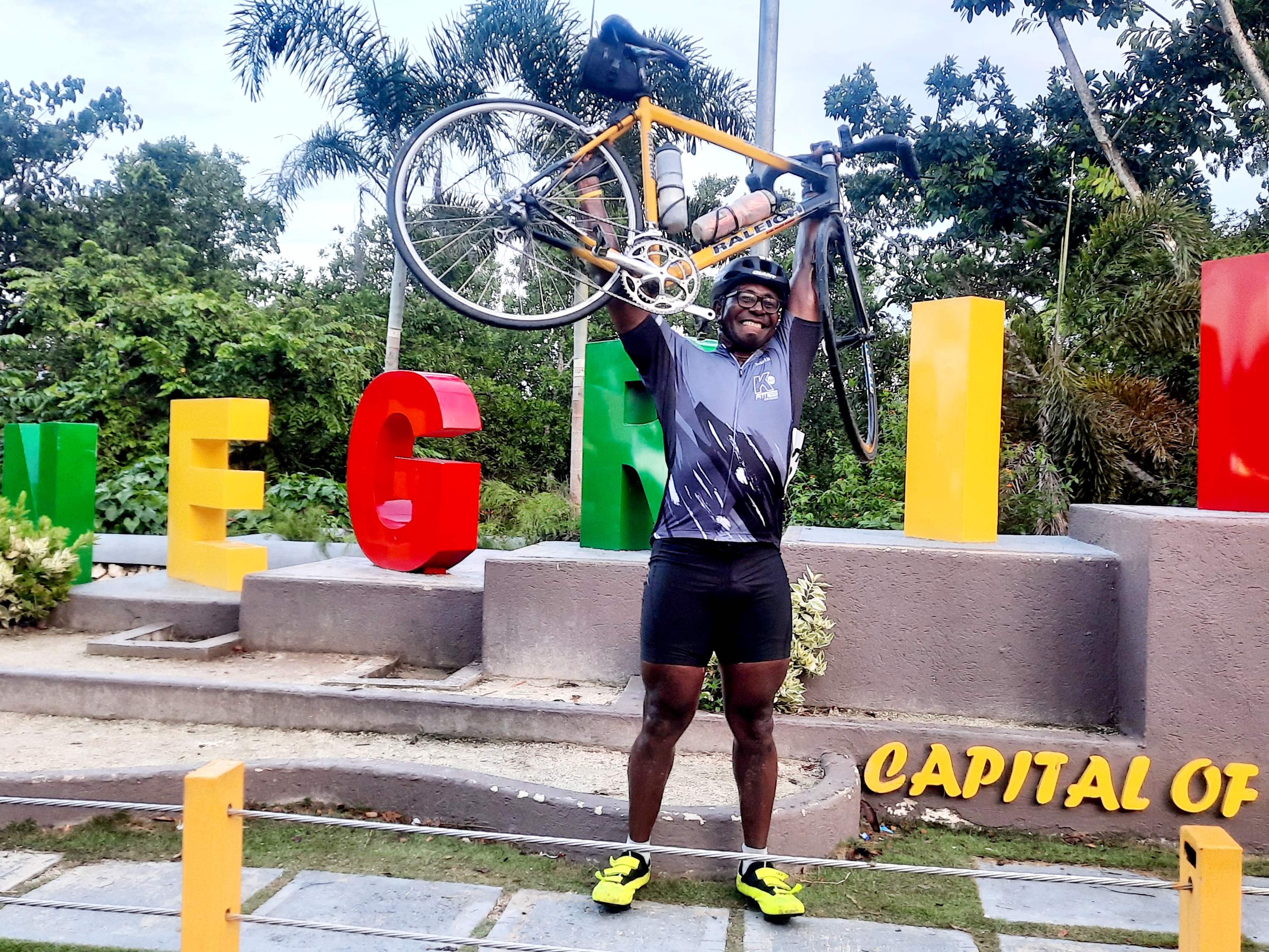
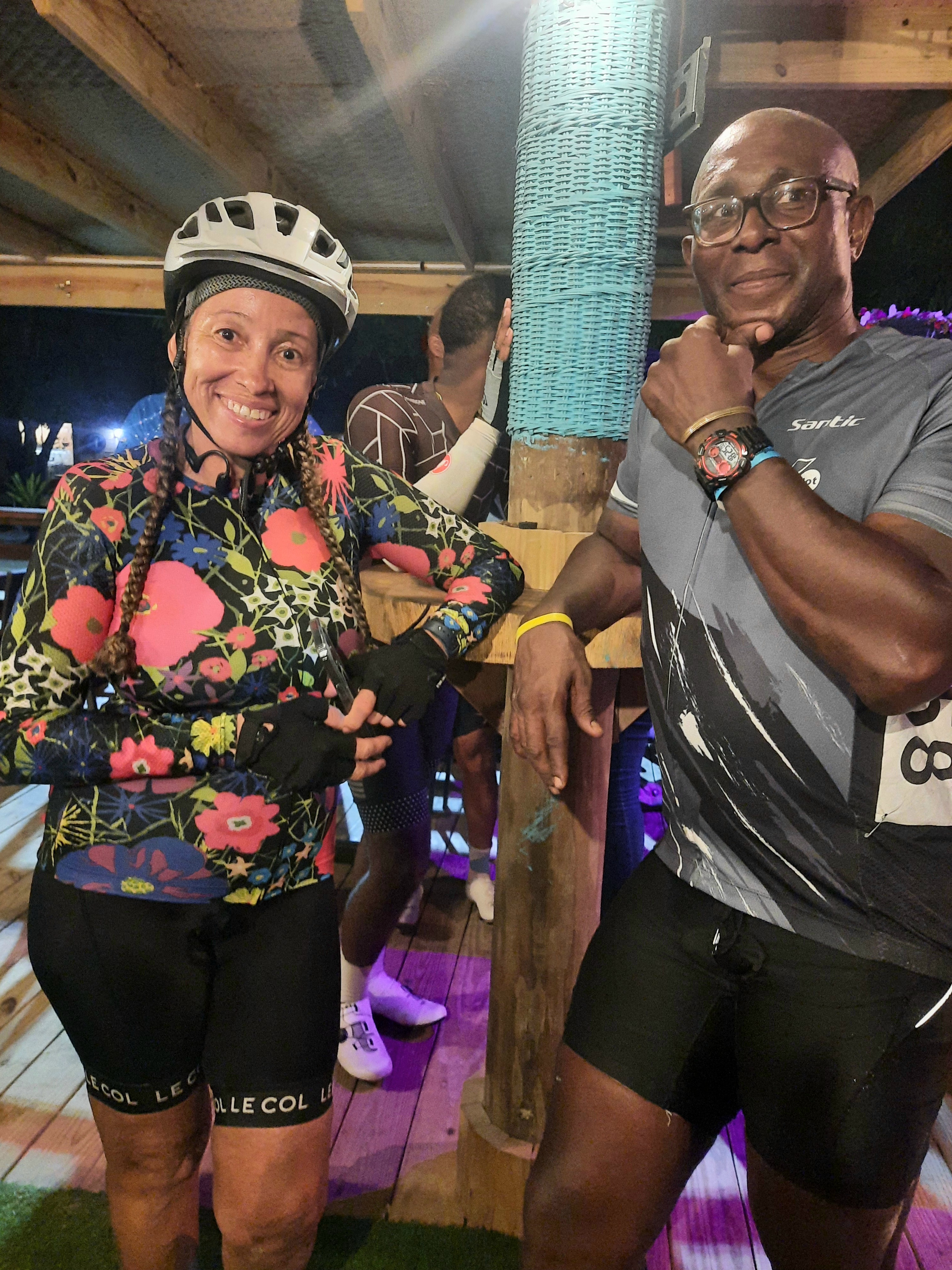
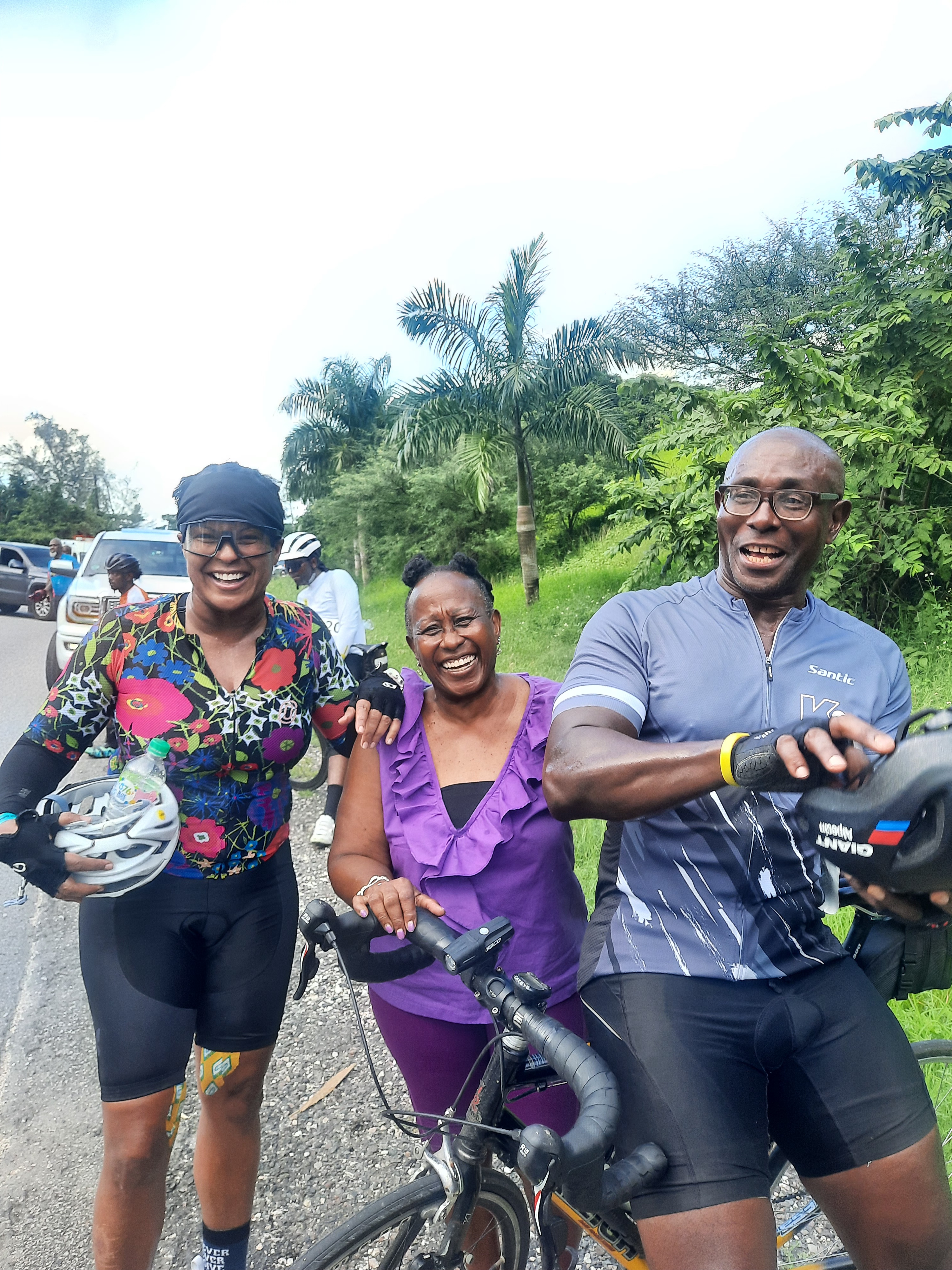
On Saturday,  October 19, 204, our National Heroes Week celebration, I  had the distinct pleasure to participate, vicariously, in the amazing cycling race from Kingston to Negril. I joined Anya, who drives the support car  for her husband, Kevin Nelson.

I was inspired and awed by the over 113 participants, mostly men,  but there were ten women ranging in age 30 to 65. Organized by Coach Carlton Simmonds who has initiated this race for the last three years.


Well organized with a team of supporters, including police escorts, an ambulance, a bus to transport any cyclist and bicycle, who gets tired, a food/water truck and several other supporter cars.

The race began at 4:30 am at 6 Miles in Kingston and the cyclists arrived in Negril at approximately 6:15 pm with a 45-minute lunch break just outside of Montego Bay and four short 15-minute break stops in Moneague, Duncans, Mobay, and Lucea respectively.

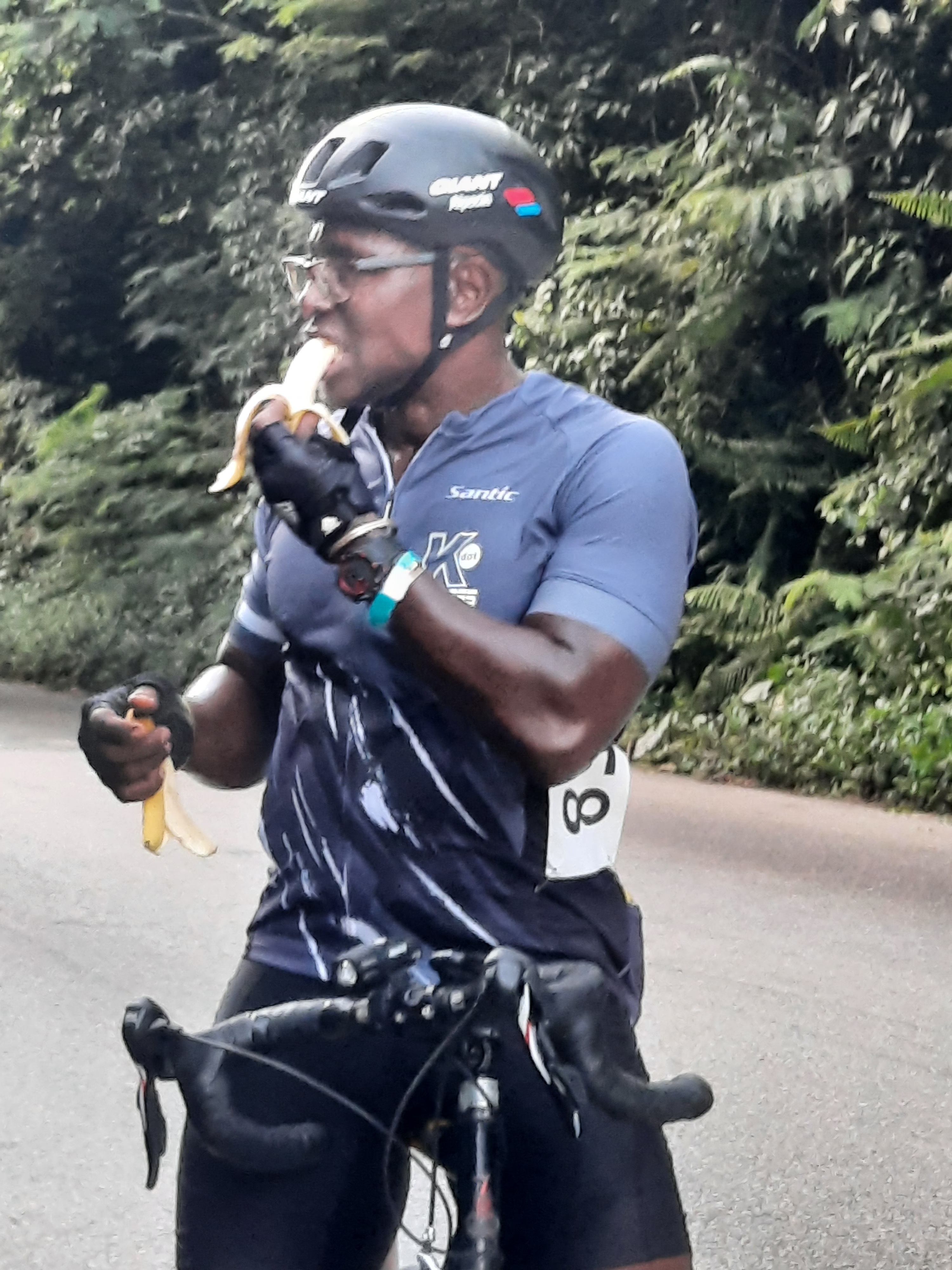
Kevin Nelson, a friend, is an avid cyclist, who rides, at least five days a week from Gordon Town to Mona. A gym enthusiast, He has been participating in this race for many years so it seemed appropriate that I interview him about his involvement.

‘I actually started cycling again in 2013 after stopping  in my teen years due to academic issues. I was very much inspired by my very senior neighbour Mr. Eaton Gabbidon who was an early pioneer of the Negril expedition. I have done annual road races in the corporate area as well at shorter distances as a member of the Jamaica Cycling Federation.

‘Since 2013 I have done this expedition 10 times. I keep doing it, not only for amusement but it’s how I am able see how much I can physically and mentally endure each year.”

Stamina and endurance are key elements to completing the ride, which is not only strenuous but hazardous as well, many potholes, steep hills, curves and bends and the sun, yes the fierce sun as they approach Duncans area; they also encountered slight rain. While physical prowess is vital, mental and psychological well-being are other key elements. However, one also have to prepare physically. Nelson has this cover and he outlines his practice.

“Generally, as a fitness trainer myself, I maintain a good level of self-care and conditioning that has become my normal lifestyle. It involves daily strength training at dawn and cardio work in the evenings. I do Yoga for meditative breath work and stretching sequences in the early mornings. I’m also a ranked table tennis player so I am close to the sport. I cycle to and from the gym every day covering over 100 miles per week inclusive of the long weekend rides to Port Royal or Bull Bay. Nutrition is a key and I  refrain from consuming overly processed foods.”

Indeed self-care is mandatory, and part of this is accomplished by Nelson’s
monthly recovery program that involves chiropractic and massage treatments. But what is the emotional cost, of having the right mental framework to manage the race.

Nelson admits that “Emotions vary throughout the arduous 158 miles, but I ground in spirit and sharing in the energy of the event. 113 international cyclists (10 women) participated in the 2024 event and although not all finished, the enthusiasm was high. The Kingston to Negril event builds my spirit every year; the most difficult parts of the ride between Drax Hall to MoBay take a toll on you physically and mentally if don’t regulate your fluid intake and nutrition on the four breaks. It’s positively different emotionally for me now. In 2013, I felt like abandoning the ride at Runaway Bay!”

And some cyclists did succumb, to severe cramping, shortness of breath, overall fatigue and the unsympathetic weather. But the majority pushed on, because as Azikiwe states, “my thoughts on completion very much evoked the emotion of joy that I have passed my own test. The moment I see the Negril sign, I started to see myself on the beach.”

The seawater is a balm and helps cyclists cool down and relieve some of the tension and cramping that such an excursion produces.

It should be noted that while the cyclist is doing the hard pedalling, their success is also dependent on their support team. Nelson admits, “Generally, I  need a co-pilot in a support vehicle, and my wife fills that post. A co-pilot also helps to manage the hydration and nutrition packs as I am in motion.

What the Future Holds

Kevin Nelson  “encourage others to join this ride to build confidence and character. I am requesting more women, especially to join this cycling event.

“I think it would be a great asset to the spirit of cycling to create a national effort towards its promotion via even “Jamaica Moves” or any health initiative. Just as with football or athletics, start school programmes, and designate cycle lanes on certain roads (Palisadoes to Port Royal has room for such a facility). Bicycles can be easily sought via Chinese or European missions.

Equally important is the promotion, and Nelson laments that “this event does not get the local or international recognition it deserves.  I think us cyclists should take most of the blame as there exist many more options now to get and maintain a PR mechanism.”

Concluding, Nelson says, “I wish to see cycling facilitated as another sport to add to Jamaica’s, medal tally at the Olympics; so far we have had only 2 persons at such a level.”

It should be noted that there are several other Kingston to Negril cycling events that happen around the same Heroes weekend. Some do South Coast and others North Coast. I  recommend that these organizers come together and schedule these races at different times throughout the year.

This year, Kevin Nelson rode with Coach Simmonds who organized this race. I spoke with the coach briefly about his organization and the early beginnings of the race, which he states was “started by six doctors at The University of the West Indies, Mona, who did a ride on the weekend, then decided to include others.

Simmonds branched out and began the Kingston to Negril ride three years ago under the auspices of Simmonds High-Velocity Cycling Club. The function of which he says, “is to coach, manage, and encourage youngsters to cycle with the end result, participation in the Olympics.  The goals are to put on competitive cycling events, encourage international cycling events, and in general, engage the average cyclist to participate in recreation fitness rides.”

This is a worthy cause with important goals that I endorse. When I was younger I used to cycle but after two accidents and a knee replacement, I do not cycle anymore. Nonetheless, it is a great sport, and I remember the feel of the breeze on my back, the tension in the muscles of my calves and the adrenalin rush as I break, the bicycle moving on its own velocity down the hill.