
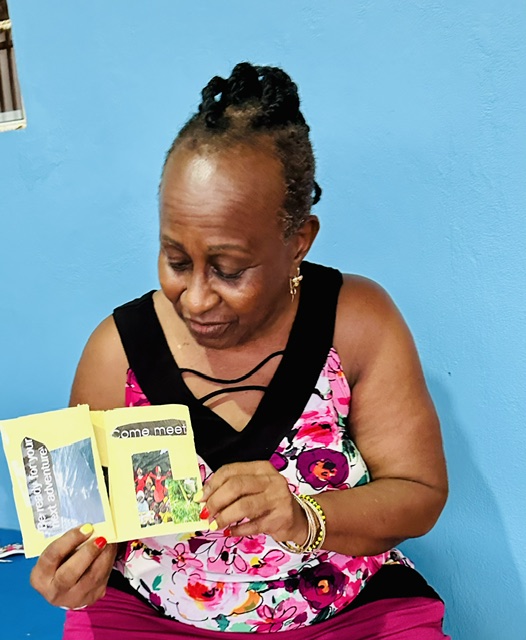
I’m Black. I love being Black. I love my skin, my features, my history, my ancestors.
Let me say from the outset, I have absolutely nothing against white people or anyone else telling their stories. Every people should tell their stories.
What I’m tired of is that white stories are still the default from Hollywood, the largest film industry located in a multi-cultural and diverse USA
.
I’m tired of turning on the television or going to the movies and, more often than not, watching white people, and especially white men, occupy the center of the universe. Their lives are presented as universal. Their joys, their heartbreaks, their coming-of-age stories, their romances, their family dramas—all of it is assumed to represent humanity.
But after a while, as a Black woman, it becomes exhausting.
I just want to see me. Not a caricature of me. Not another story about drugs, gangs, violence, prostitution, or poverty. Those stories and lives exist, yes, but they are not the totality of Black existence; they are not even the majority of Black existence.
Where are the stories about the Black teacher? The Black writer? The grandmother raising her grandchildren? The nurse who goes to work every day? The farmer. The artist. The scientist. The woman who falls in love at sixty. The ordinary Jamaican/Caribbean family working hard to make ends meet, to instil strong family-values and life principles. The ordinary Nigerian family. The ordinary South African family. The ordinary Black family anywhere in the world.
Most of us get up every morning, go to work, love our families, struggle, laugh, cry, dream, and survive with dignity. Why aren’t those stories considered cinematic enough?
Why is ordinary Black life still treated as though it is somehow less universal than ordinary white life?
And yes, perhaps it is our responsibility as Black filmmakers, producers, writers, governments, and investors to tell these stories. I accept that. But I also think we have inherited a colonial imagination that still determines what is considered beautiful, marketable, and worthy of being seen.
One of the things that saddens me about many contemporary Nigerian and South African films is that too often they seem to be creating African versions of Hollywood instead of drawing from the extraordinary richness of their own cultures.
Africa has thousands of years of philosophy, mythology, spiritual traditions, languages, music, aesthetics, and ways of seeing the world. Yet so often what I see are stories modeled after American television dramas, populated by the same aspirations, the same beauty standards, and often the same stereotypes.
Even more troubling is the colorism. The leading women are so often light-skinned, sometimes obviously bleached. The beauty ideal remains astonishingly colonial. The men can be dark, rugged, handsome, and powerful, but the women are expected to be lighter, with long wigs, weaves, or straightened hair, conforming to a European standard of femininity.
Where are the women with tightly coiled natural hair? Where are the indigenous hairstyles worn proudly? Where are the broad noses, the full lips, the deep brown and blue-black complexions celebrated simply because they are beautiful? Why are we still teaching young girls that beauty must resemble Europe?
And this isn’t only happening in Africa. I see it in Indian cinema. I see it in Asian cinema.
The men may come in every shade imaginable, but the women must so often be fair-skinned, delicate, and possess long flowing hair. It sends a message, not only to Black girls but to dark-skinned Indian girls, Asian girls, Indigenous girls, that somehow their natural selves are not enough.
That is the quiet violence of colonialism. It teaches us to reject ourselves without anyone having to say a word. Sadly, a similar thing is happening spiritually.
Why does everyone have to become the same kind of Christian to be respectable? Why aren’t African spiritual traditions explored with the same seriousness and dignity afforded to European religions? Why are indigenous belief systems still so often portrayed as primitive, sinister, or superstitious?
Our ancestors created sophisticated systems of knowledge, ethics, healing, and spirituality long before Europe declared them illegitimate. Why aren’t those stories being told?
It feels as though instead of becoming more inclusive, more expansive, more curious about who we are, we’re becoming narrower. This is the ideal beauty. This what success looks like.
This is respectability. This is God.
Everything else is pushed aside. We’re reducing ourselves instead of enlarging ourselves.
Cinema should enlarge us. It should remind us of the infinite possibilities of being human.
I don’t want fewer stories about white people. Those stories have every right to exist.
I want more stories about everybody else. I want balance. I want to see ordinary Black people living ordinary lives that are every bit as worthy of the screen as anyone else’s. I want to see our humor, our tenderness, our intelligence, our spirituality, our families, our contradictions, our aging, our joy because our lives are not an anomaly.
In fact, our reality is closer to the experience of most of the world’s people than the reality that has been presented to us for generations as universal. This isn’t about exclusion. It’s about inclusion.
It’s about dismantling the visual legacy of white supremacy and colonialism that has taught us whose lives matter, whose faces are beautiful, whose stories deserve to be told, and whose humanity counts.
I want a world where little Black girls see themselves and know they are beautiful exactly as they are. I want little boys to know that strength comes in kindness as much as conquest.
I want young people in Africa, the Caribbean, Asia, Latin America, and Indigenous communities to understand that their cultures are not footnotes to Europe, but rather they are civilizations in their own right.
I simply want to see us. Not as symbols. Not as problems. Not as stereotypes. But as fully human.
That is not too much to ask.

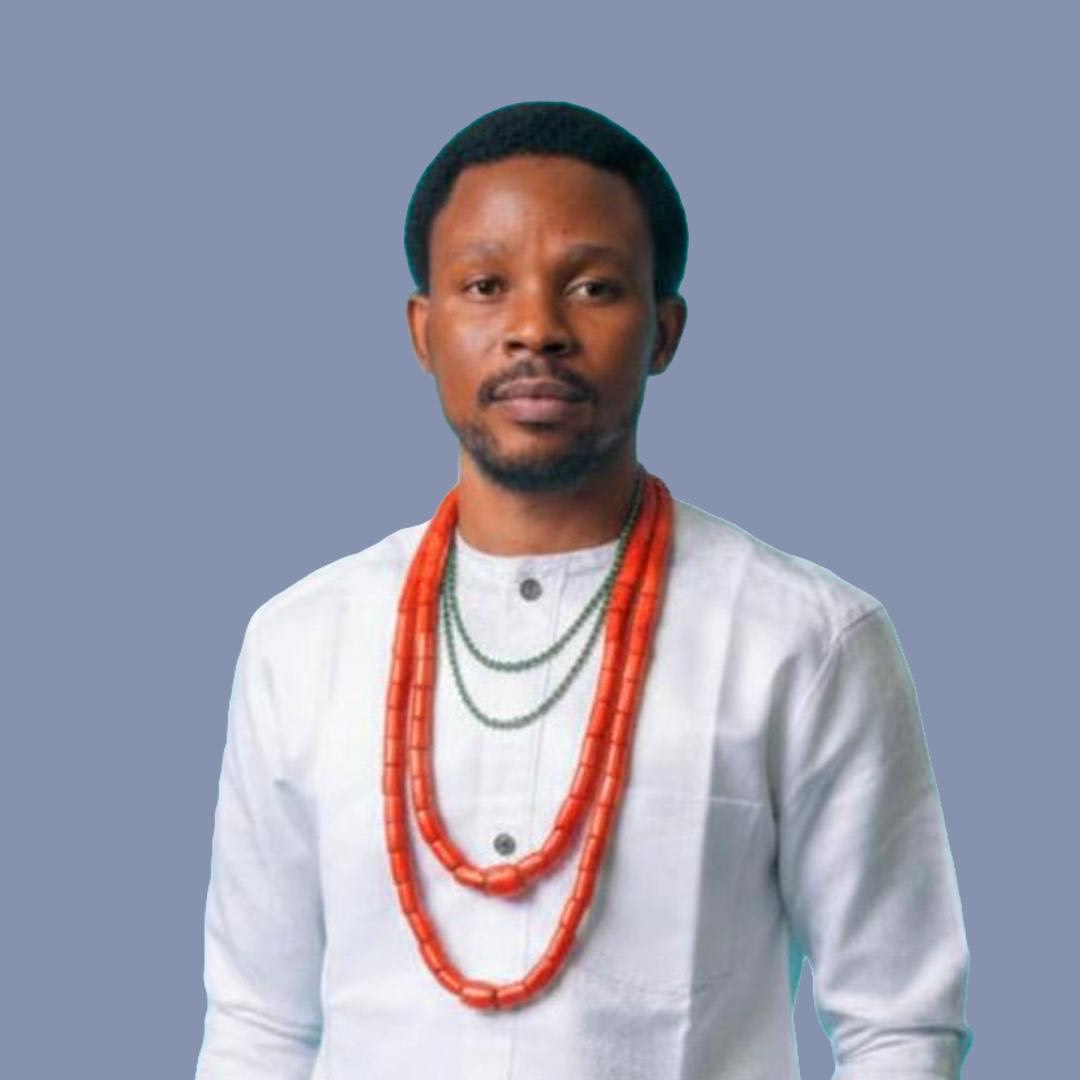
 Opal Palmer Adisa