FAN LEE WARREN: The Simultaneous Reality of Looking Backward and Being in The Present

Interview with Opal Palmer Adisa
When did you first realize that you are a painter or rather that you wanted to paint? [You might have realized that you were an artist earlier than you decided you wanted to be a painter]. When did you step fully into your painting/artist?

When I was a child, I liked to paint and draw. I’ve never considered myself a painter, and I still don’t because painters are so saturated with paint physically and mentally, they are purists.  I’m not a purist, but I use traditional materials such as acrylic and watercolor in untraditional ways.  But to answer your question, I started to paint when I was about seven. Even though I have been making art since childhood, I feel now I have fully stepped into being an artist.  I understand the purpose, how to sustain the ability to create art, and why I cannot live without it.  

Were you exposed to Art growing up and in what ways? Are there members in your immediate or extended family who are artists?

My mother ignited my artistic spark early on, guiding me to outline shapes and fill them with vibrant colors in kindergarten. She didn’t just tolerate my scribbles in the coloring book; she was not having it.

My mother’s love for art and culture was boundless. She took me to art museums like the Chicago Art Institute, where we marveled at masterpieces, and to galleries and to see public art, even the controversial pieces. She was a fan of independent films, dance, and all things cultural. I remember her turning to drawing and painting when stress crept in, a testament to her coping through creativity. Her interest in crafts, colors, and cultural events was infectious, and she instilled in me a curiosity to experience and appreciate different art forms.

How would you define your art and what is the dialogue that you are creating between yourself and audience? 

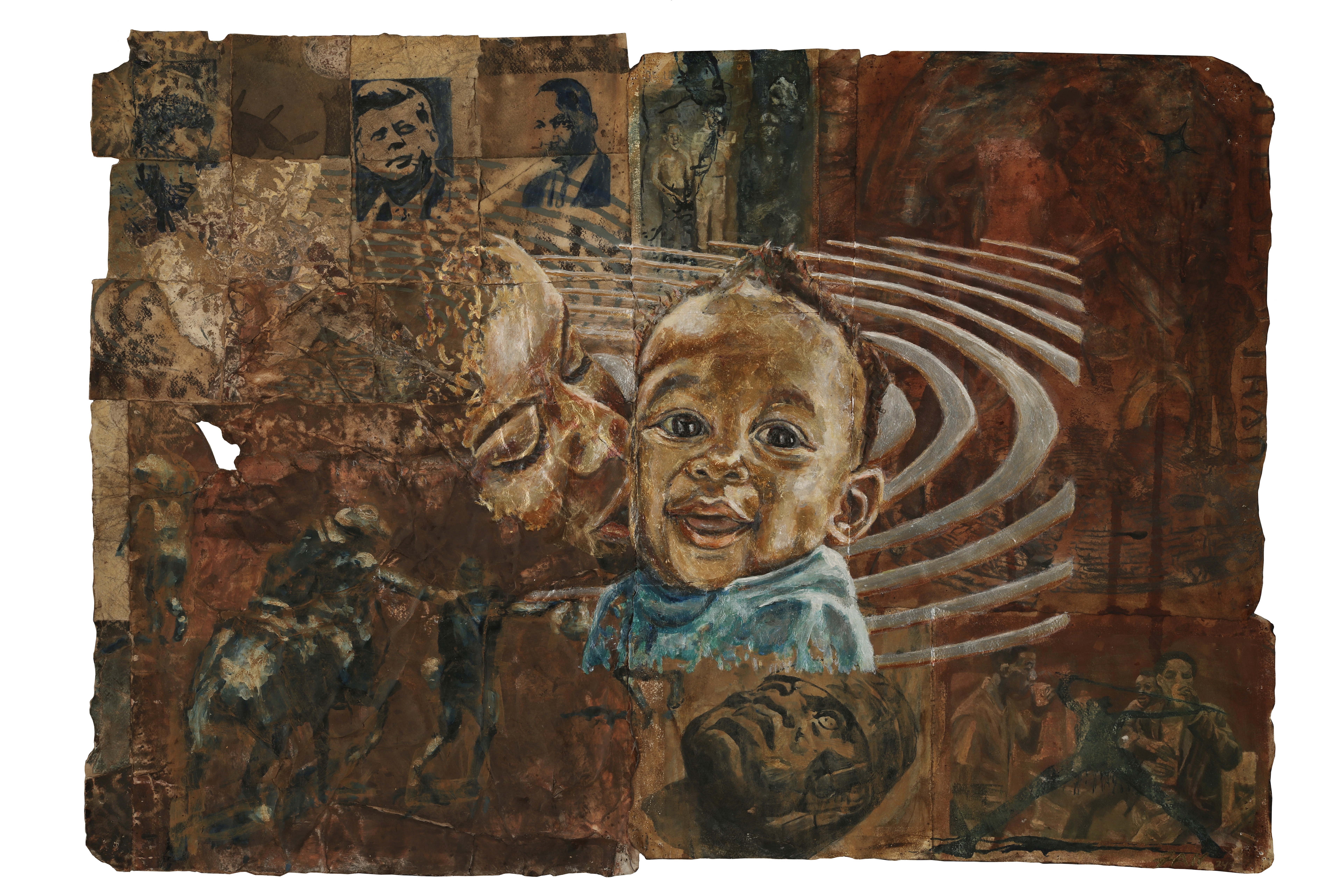
My work examines the simultaneous reality of looking backward and being in the present. It’ s not only a social commentary but also a deeply personal journey through the colonization, assimilation, and disenfranchisement of my people in the Americas. It reflects the collective consciousness and shared memories of survivors, inviting viewers to empathize with our experience.

The works on paper consist of layered collages that incorporate narrative-based painted and drawn images. These fragmented images, along with racial and ancestral memories and current events, come together to form a distinct visual language.

My goal is to awaken memories in the viewer, encouraging you to think and feel through my work. I want to create an image that resonates with you and touches your soul. I am communicating with you visually in a unique way. You recognize what you are seeing, and now it’s time to reflect on how we are all connected.

Speak to me about your new work and the other works that you’re going to be doing?  What has influenced/inspired these Madonna images, women painted gold… Are you in anyway countering the Aunt Jemima, black mammy stereotypical image portrayed in America.

My current series, The Black Madonna, features images inspired by the original dark mother, Isis, and the iconic Mammie figure holding a child.

The image of the enslaved person nurturing the white child has been a cultural taboo that is hard to forget. Yet, I was compelled to examine these images since it has been associated with some of the elders in my family.

The mammy, nursemaid, and bed-wench servant figure perched on the spiral of life appeared in my work in1999, and I’m still deeply engaged with a mixture of those images and symbols, demonstrating a continuous commitment to the exploration of these themes.

Yes, of course, I wanted to counter those explosive images and heal those old wounds that many black women and their children carry, aiming to empower and bring about positive change.
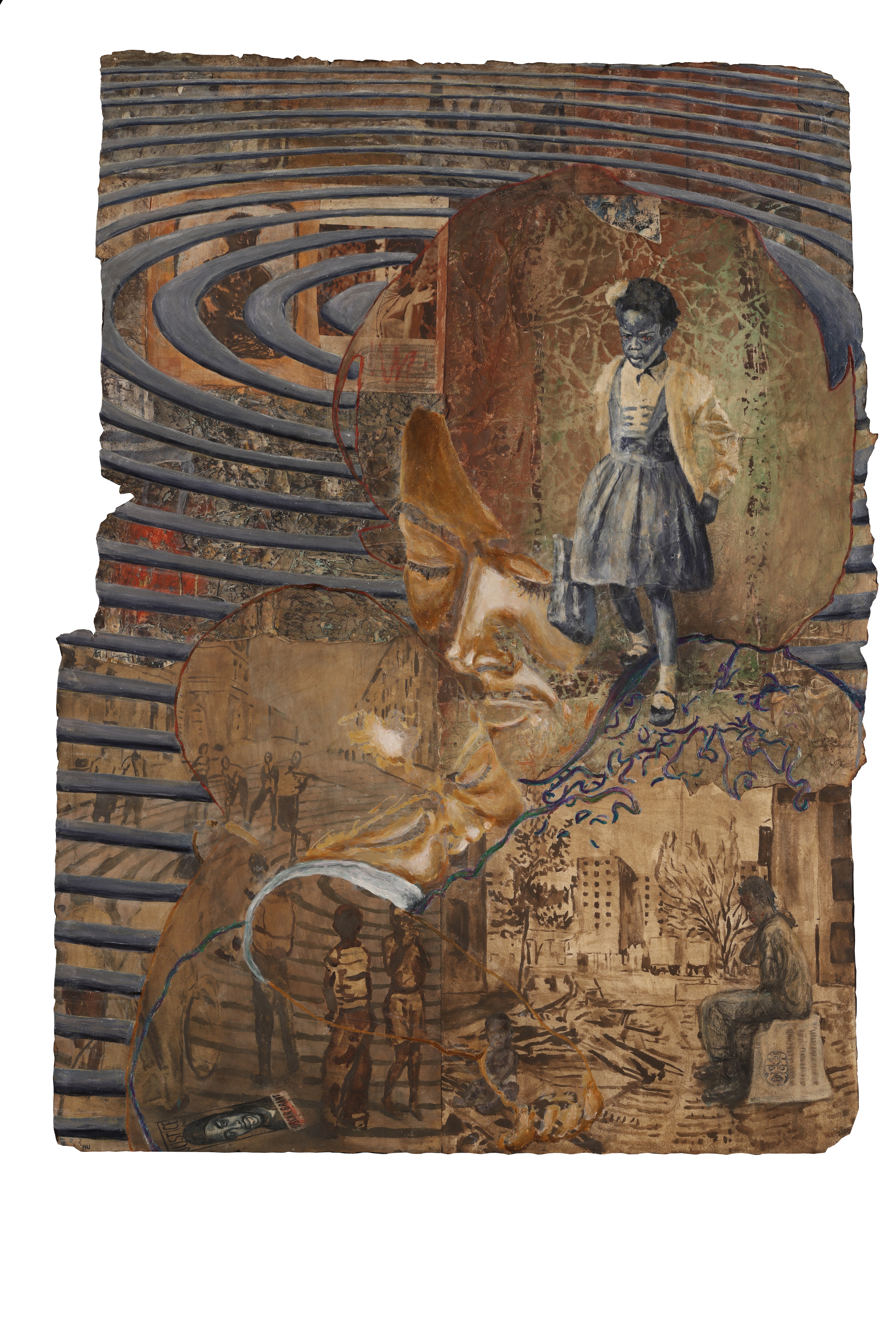
So, the Black Madonna series was created. Contemporized images of golden and copper black women lovingly holding their babies are layered over composed visual narratives. These narratives are carefully constructed to question societal opinions, using layered images, fragments of symbols, and current events to create a multi-dimensional and thought-provoking experience.

I see that you have a series about children, how did that come about and how does that fit into the larger body of your work?

The Legacy series came about from a visit to my mother in Chicago, who was sick. I stayed with her over the summer and watched a group of children hanging outside, or at least that’s how I perceived them.  They were moving in a group, walking, talking, and a little playing, but nothing like I thought.  I thought, wow, there is a group they could play games together, like how I grew up. It wasn’t until I went back to Oakland that I realized they were in a war zone infested with drugs, etc.  I was behind a tall chain linked fence with locks surrounding my mother’s property, and I realized that they were surviving.  They had to keep their little heads on a swivel and move as a group for their protection.

The Legacy series is a stark representation of the resilience of those surviving in Western culture, symbolized by my earlier work that depicted slave houses atop colonial tables, representing the colonized mind. The later images, showing children carrying guns and e-waste on their heads, serve as a powerful symbol of imperialism. The Legacy series captures the children of Chicago, navigating through drug-infested neighborhoods, a stark and urgent representation of gentrification. Yet, amidst these harsh realities, the series also incorporates symbols of transformation and historical images, offering hope in the face of adversity.

You’ve been doing a lot of reading, but  you’ve done that throughout your career. However, as a result of specific readings you have decided and will and be embarking on a series about men. Why have you decided to take on the male persona and what is it that you’re trying to say about black men? Are your tackling or countering the stereotypical Black male as dangerous, hypersexual,  a buffoon — all of those stereotypical images of black men being worthless and lazy and stupid… 

I’m interested in showing the complexity of black men, how they are perceived, and how they are not any of the things that we have been programmed to believe or brainwashed to see, such as being aggressive or dangerous. I want to show how the perception is a lie and that black men are incredible, special, normal and complex humans. They are fascinating when comfortable and may allow you to see who they are.   Black men are some of the most beautiful men physically, yet they are more than that. Just like black women are more than the Eurocentric opinion and the gaze, that often shapes our perceptions and judgments.

When you’re producing/doing your art, how does that make you feel, what is the atmosphere that you need to create? Do you listen to music; do you drink tea or do you just go into your studio and say I’m ready to work and begin?

I must calm my mind and make space for the work to develop.

For me, achieving a balanced state of mind and spirit is crucial when I step into my studio. Whether I’ve been away for a few days or haven’t had the necessary hours to reset, finding this equilibrium is key. However, when I’ve been working nonstop, it can feel like an addiction.

When I’m creating, I feel a profound sense of calm and connection. It’s as if I’m exactly where I’m supposed to be, at the right time. I’m stimulated, excited, and deeply connected to my work.

“I’m thinking, moving, and talking within the working progress. I start by sitting in my chair and having a discussion with whatever pieces I’m involved with. Sometimes I can listen to…”

Childhood memories, see the color, hear the sounds, and remember the feelings.”

Yes, I listen to music by Miles Davis, Roots, Mos Def, Faith Evans, Clark Sisters, Isaac Hays, Ramsey Lewis, Carmen McRae, Montserrat Caballe, Jessye Norman, and Leontyne Price, to name a few. I drink hard kombucha, water, tea, and sometimes juice.

To viewers and buyers of your work –what is it you want them to take away from seeing your work? Why should anyone purchase your work?

I want my Black Madonna’s to be a source of healing for the viewer, offering a comforting and soothing experience. The creation of my Black Madonna series was a personal journey of healing, a process that helped me mend my relationship with my mother.  I aimed to infuse the mother’s love into each piece, fostering a sense of connection to personal history, memory, and an understanding of how many things are connected.  As I matured, I transitioned from making socially polarized statements with color and content in my art to layering it with hope, love, and understanding.

I want to engage the viewer’s memory.

My work is collectible. I’m part of the one percent club. Only one percent of people who attend art school or a program continue to make art in their older adult life or make it a profession. My work is unique in its style and techniques, which involve a blend of traditional African American art forms and contemporary methods, and how the historical content is collaged in a narrative style.

My work also holds a significant place in the historical narrative of African American art, particularly since the Harlem Renaissance and the Great Migration. This is not just a historical connection, but a personal one, as I was also part of the Great Migration from Birmingham to Chicago. This personal connection adds a layer of authenticity and depth to my work, fostering a sense of belonging and connection for the audience.

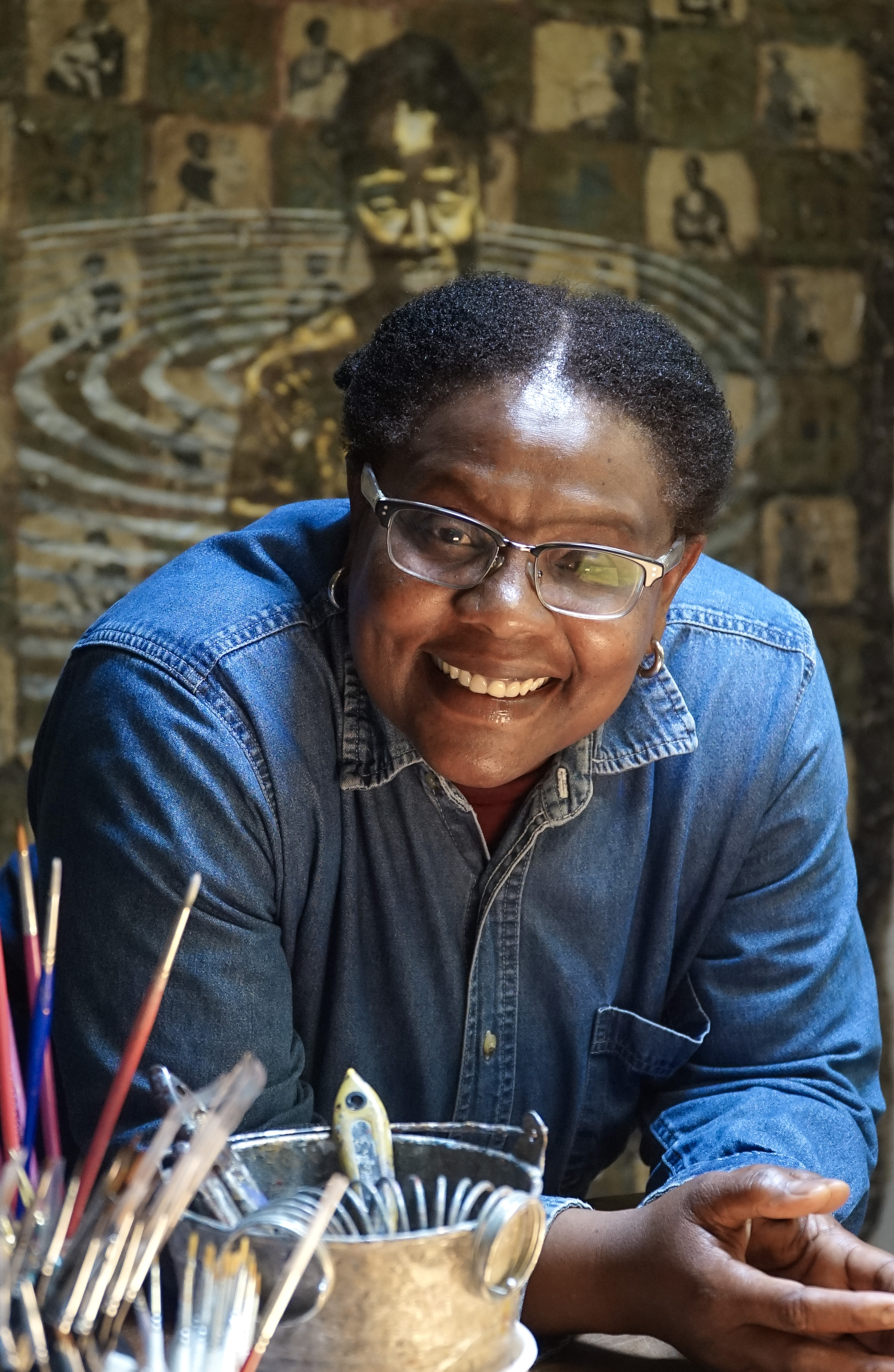
Fan Lee Warren, a contemporary African American artist, draws profound inspiration from her upbringing and education. Her birth in Birmingham, AL, and upbringing in Chicago, two culturally rich cities, have left an indelible mark on her art. Her creative boundaries expanded through her BFA from Illinois State University and an MFA from the School of the Art Institute, both of which have been instrumental in shaping her distinctive artistic voice. Her artworks grace several public collections, including the Neuberger Museum of Art in Purchase, New York, the New Harold Washington Library Center in Chicago, IL, the Alameda County Art Commission in Oakland, CA, and numerous private collections. Warren has received numerous grants, awards, and art commissions, and has been reviewed in various publications and catalogs.

For more information about the artist, visit her website:
The Power of Nature: Judith Falloon-Reid

Filleting fish with 

a sharp machete, the master

bad as yaas! Fiyah! 

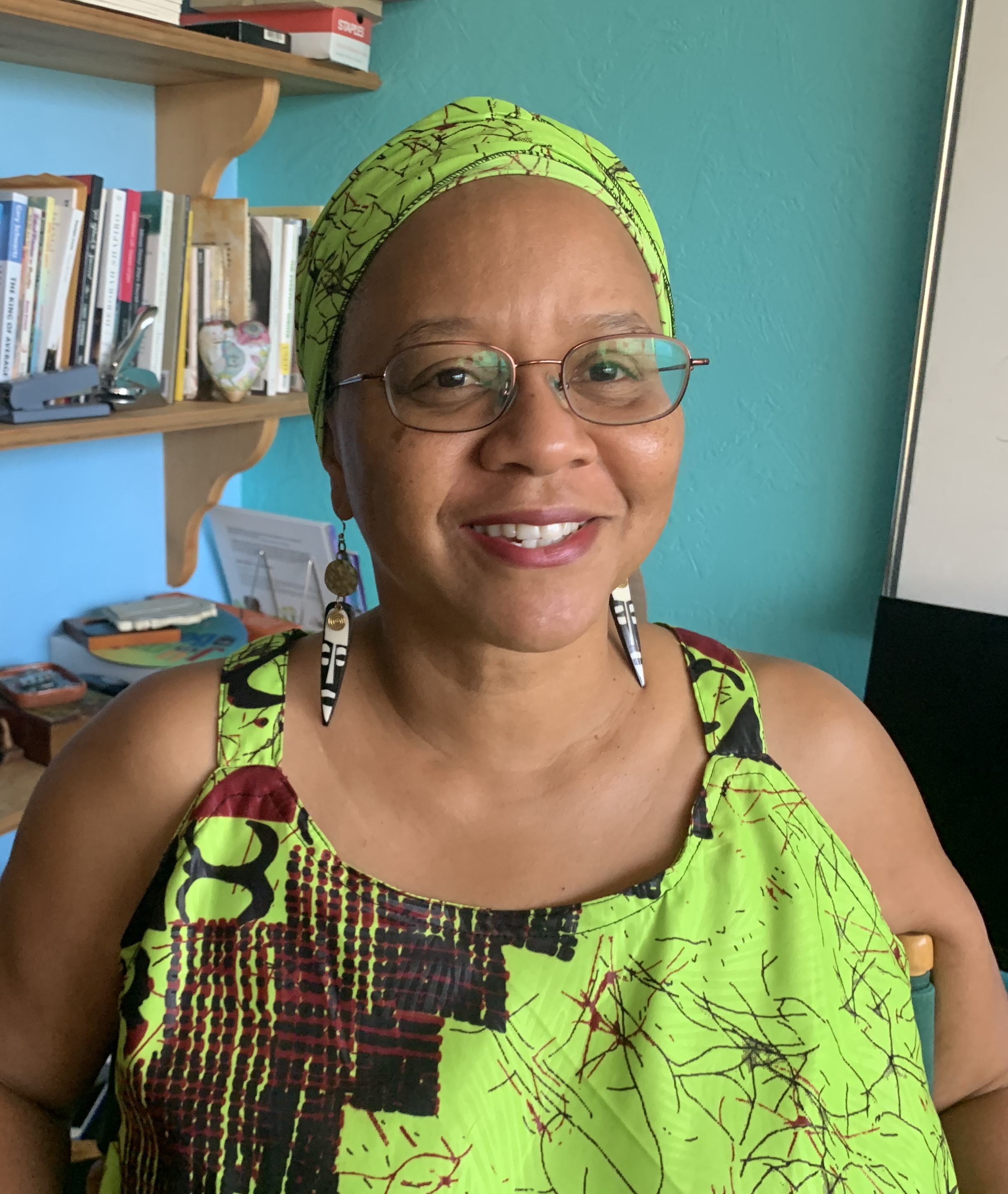
Poet, Filmmaker and Media Personality,  Falloon-Ried is also an adventurer, and is credited as the first Jamaican woman to visit Antarctica and has written, Antarctic Adventures with a Jamaican on Ice, 2020, that chronicles her trip. Here she talks about her new collection:

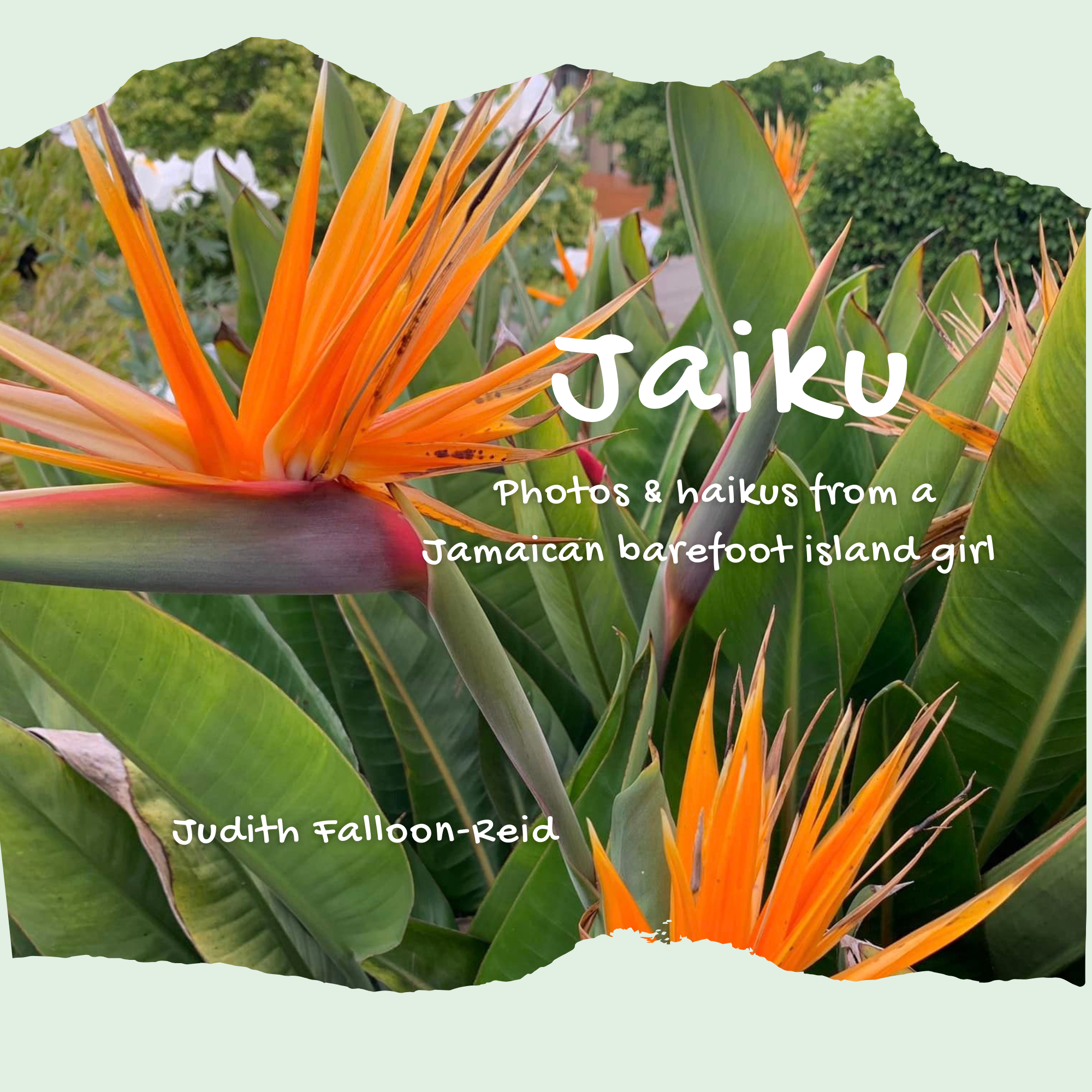
Jaiku, is a collection of Haikus and photos. In 2022, my husband and I moved to a small town called Puerto Armuelles on the Pacific Coast of Panama. The shift awakened my creativity in a new way. I had always been an amateur photographer and a nature lover, but living steps away from the untamed Pacific Ocean, having a yard filled with fresh fruits and flowers that grow and free from the stresses of America, I started writing haikus to accompany my photos and posting them on social media. The response was overwhelming. For me, this collection is a testament to the power of nature on our mental, spiritual, emotional and physical state.

Mango blooms in heat

A promise of things to come

Summer tun up high. 

While many authors sometimes find it challenging to come up with a title, Falloon-Reid’s focus was clear

Jaiku is a combination of Jamaican and haikus. I have used that hashtag for the past three years on social media to describe my combination of photos and haikus that often include Jamaican language.

It’s been three years in the making although, the idea of creating a book to house the photos and haikus didn’t materialize until early 2024 when friends and social media followers suggested that I create a book.

While the world cries blood

my garden blooms love and peace

man could learn something. 

Responding to the importance of this collection now, Falloon-Reid reflects on the technological impact:

In a world where AI seems to be taking over, it is important that live photography continues to have a space on bookshelves and in people’s consciousness. AI can never replace a photographer’s eye. AI has no emotion, empathy or ability to see beyond the natural. It simply mimics what already exists. I also live to inspire others to see their creative work, whatever it is, as valuable and I hope this collection will inspire photographers and writers to think outside the box.

A single red stone

defies the waves. I shall not

be moved. Be the stone.

While a writer’s process is often an indication of her productivity, Falloon-Reid keeps it simple but her ambitions are not:

I simply write as it comes. I know my main characters and storyline and how it begins then let it surprise me as it unfolds. I follow my characters as they tell me their story.

I aspire to be a famous author. I just want to write everything that is within me until my mind stops giving me words and my inkwell runs dry.

Writers, like the general public, are impacted by the social factors that arise. Here is what Falloon-Reid has to say about living under Covid 19, the Black Lives Matter movement, and the present US President:

I have always been considered a poet who speaks to issues of the day. I continue to write on the black experience, living in Amerikka and social justice in poetry. Jaiku is a little different. It has a mixture of observations, inspirations and social themes that accompany the photos and although most are haikus, there are a few poems as well. For example, the poem No Trees Aloud accompanies an image of machinery deforesting an area and speaks to the problems of gentrification and cutting down forests to build concrete jungles and the impact on nature. I also try to inspire hope in poems such as the one below that accompanies an image of a sprawling tee with massive roots.

With strong roots spreading

your leaves will shake, branches bend

but you will survive.

And like many writers who complete one project then go on to the next, Falloon-Reid might be doing some back-pedaling:

I am working on a relaunch of my novel The Silent Stones as well as filming season two of Mirrors in Paradise, a six-part series I wrote for PBC Jamaica, based on my book Are Mirrors Cleaner in Paradise?

The Silent Stones was first released 10 years ago but my mother passed away shortly after its release. I am updating it and doing a new cover before rereleasing it later this year.

Finally, the quirky thing about Falloon-Reid that you might not know is:

I don’t like structure, capital letters or punctuation. I use a lot of fragments. And, I like to start sentences with “with” and  “and”.

Website: jfalloon-Reid.com

YouTube: youtube.com/@Judithfalloonreid

Facebook: facebook.com/jfalloonreid

Instagram: instagram.com/barefootislandgirlja

The Power of Poetry: Bridging Gaps in European Voices

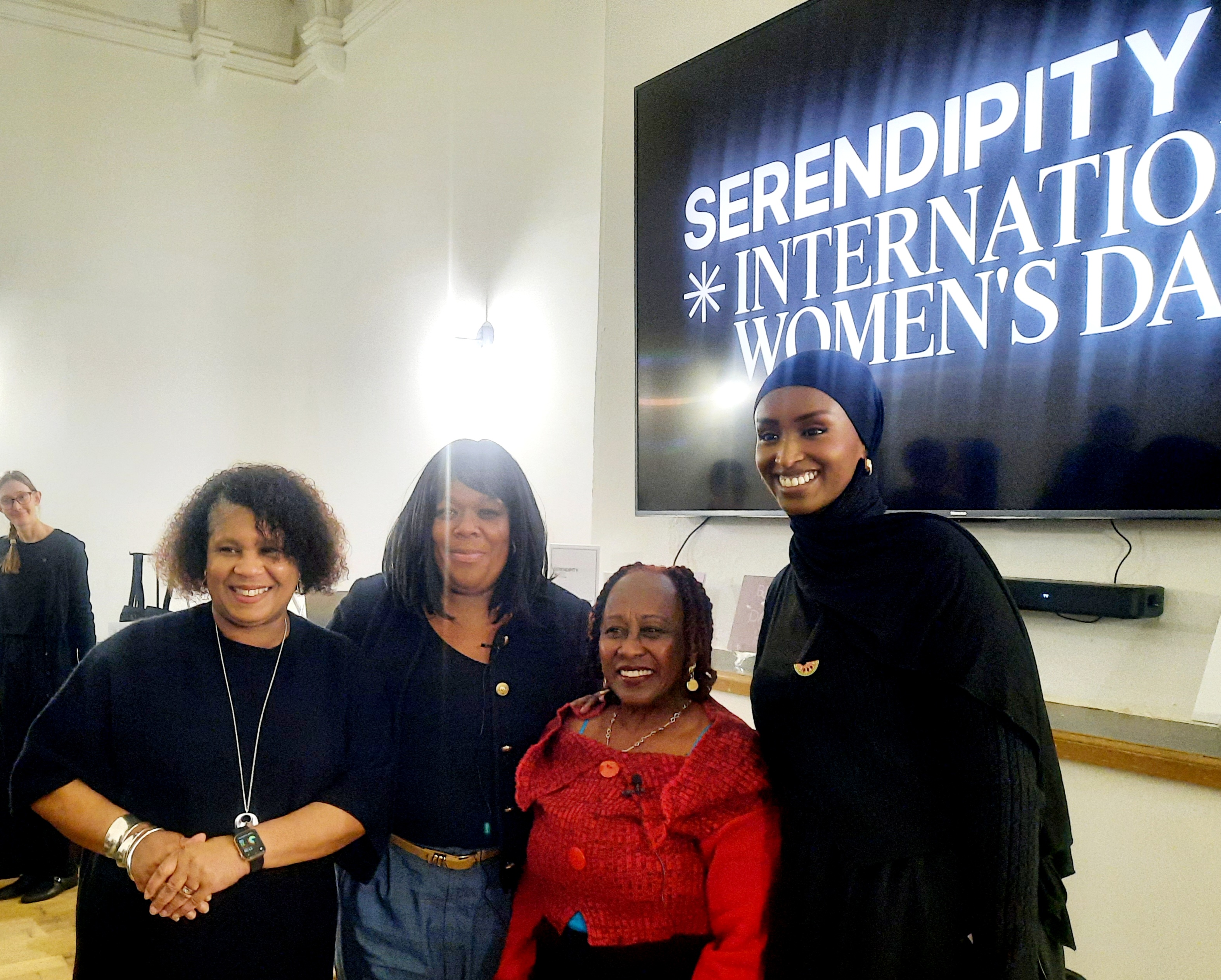
The life of a writer is to share her work and trust that it finds its audience. I’ve just returned from a three-week European tour—unexpected, yet affirming. While I’ve long known my work is taught in Europe, I had not been invited to share it in over a decade. So, when the Serendipity Institute for Black Arts in Leicester, UK, invited me to present my documentary Conversation –Jean Binta Breeze, I felt an immense joy. Jean was the first female dub poet, a dear friend, and a voice I refuse to let fade.

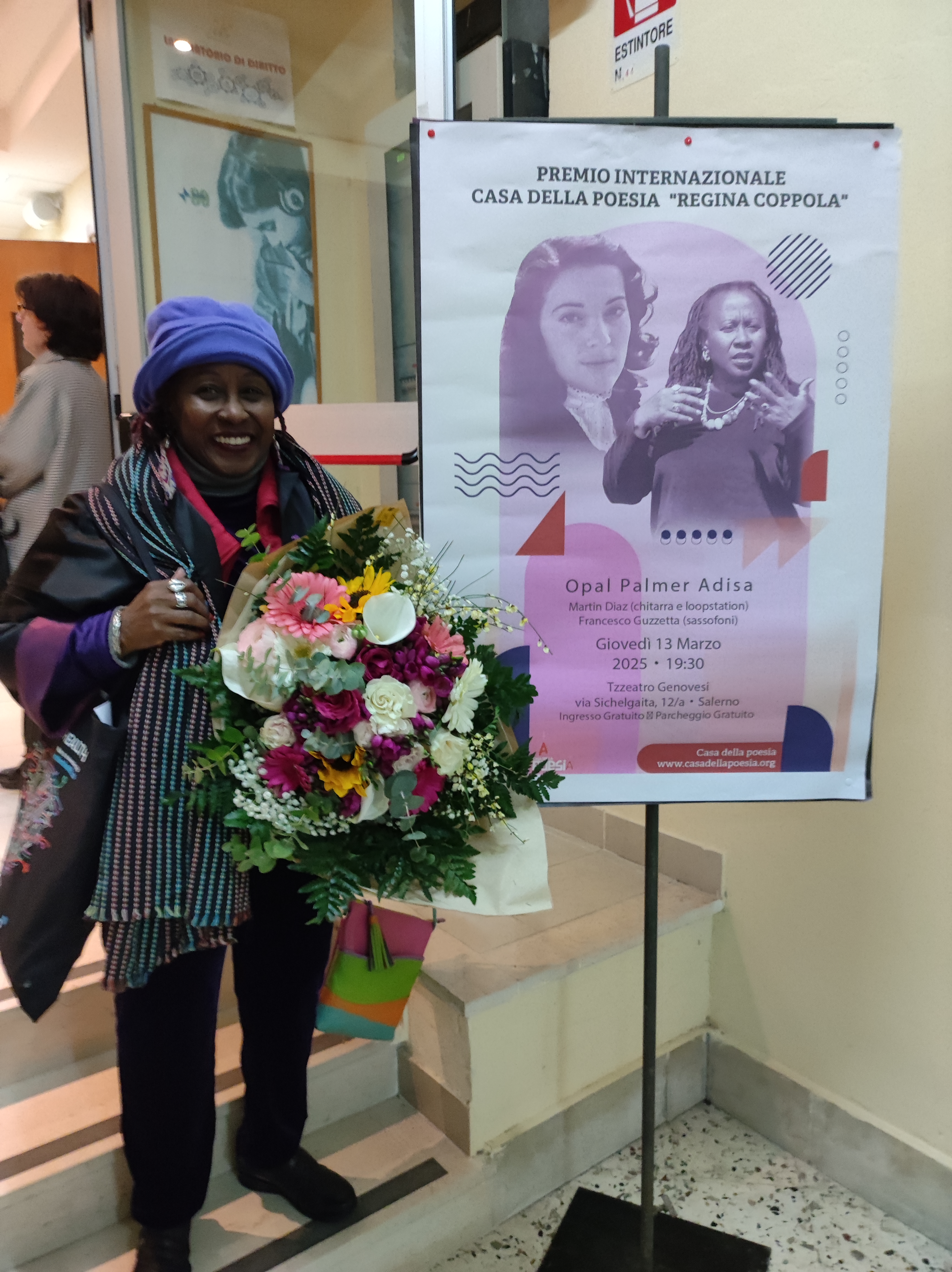
That invitation opened new doors. Casa della Poesia, a thirty year literary organization committed to amplifying diverse voices, invited me to share my work. To my surprise, they informed me that they were translating a selection of my poems and that I had been awarded the Regina Coppola International Literary Prize. I had worked with Casa della Poesia before, years ago, as part of the Bosnia Peace Festival, but I didn’t realize they had planned visits to three schools and a bookstore event to launch my translated collection, La lingua è un tamburo.

People often assume a writer’s life is glamorous—and, at times, it is. I travel, share my work, and connect with audiences in places I never imagined visiting. Yet, writing is also solitary. You create in isolation, unsure if your words reach anyone, let alone touch them. Without awards or royalties to reassure you, doubt can creep in. But these invitations reminded me that my work still carries weight in places I had never even considered.

At a bookstore just outside Naples, I read to an overflowing audience—one of their largest. That night, they sold more books than at any previous launch. Yet, the true highlight wasn’t the accolades or sales; it was the engagement with students. In three different high schools, we had deep discussions—about the Middle Passage, colonialism, gender, and history. In Salerno, a predominantly European, middle-class city, I found young people eager to engage with Caribbean history and black identity. Their depth and insight moved me to tears. Clearly, their teachers had prepared them, translating my poems and guiding discussions. My work had become a permanent feature in Italy, a country with a small black population and even fewer Caribbean voices.

Fifteen or twenty years ago, when I visited Europe, everyone associated Jamaica with Bob Marley. Today, I encounter a new generation, one less familiar with our icons but still eager to learn. My poems—whether about No Woman, No Cry or Emmett Till—remain teaching tools, bridging gaps in knowledge and fostering dialogue. Creative writing, poetry in particular, has the power to break barriers, to create understanding where there was none before.

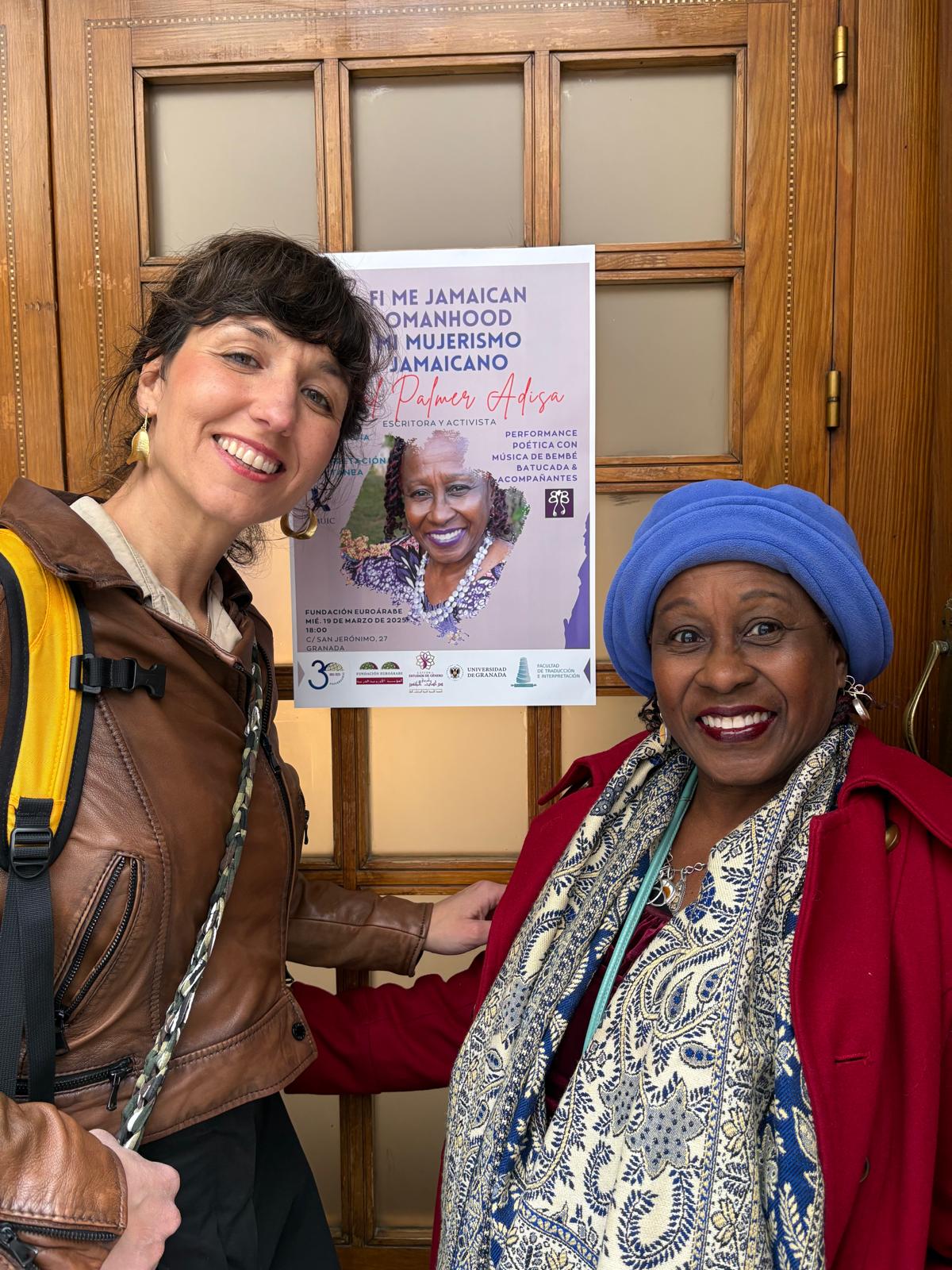
From Italy, I traveled to Spain. Elisa Senario, who once wrote her dissertation on my work, is now a professor. She and her students have been translating my short stories from Love’s Promise, and last year, we held a Zoom lecture. When she learned I would be in Europe, she invited me to the University of Granada for a symposium. Meeting her students in person reinforced an unexpected lesson: translation is more than words—it is history, context, and culture.

To my fellow Caribbean writers who feel unseen: seek audiences in Europe. This journey reminded me that my work is not only read but also embraced. There is an eager readership willing to engage with the complexities of our histories and experiences. Our stories matter. We must share them—fully, honestly—without assuming they will be ignored. The students and audiences in London, Italy, and Spain have reaffirmed what I had nearly forgotten: my work remains relevant and has currency. I am profoundly grateful for the opportunity to continue sharing it.

Watch:
https://www.facebook.com/share/p/15T2iq9aKF/

fabian thomas: a 30+ year journey

JAMROCK

Wi laugh loud

go hard

dweet sweet

ramp rough

lick hot

dance wid screw face

a nation in trauma

acting as if there are

no problems.

fabian m thomas is a writer, poet, artistic director, spoken word performer, Performing Arts Specialist, and a Calabash Writers Workshop Fellow, and the above poem is from his new colletion , the solace of sound. Thomas says, “the title came from a section of words, which I consider the anchoring poem in the collection.”

Often the question is asked how does a poet put  a collection together, and this is thomas’ response to this  volume, which he describes as “A pot pourri, offering varying flavours for the palette of readers: sweet, tart, spicy, and even bitter, as I explore matters related to the heart, the head and the soul.”

Reading the poems in this collection, you will fully appreciate thomas’ poetry voyage, which he says “is the culmination of a 30+ year journey of writing, learning, dreaming, affirming, living, evolving and persevering.”

Fortunate to have had some seasoned mentors, Thomas credits  one such person, who also edited the collection. “It was my editor Prof Mervyn Morris, who suggested that I add spoken word to the description of the collection, because he said I “..write for the voice.” The audience I claim is those who love and are curious about the powerful allure of the spoken and written word.”

Responding to the impact on his writing and his life living under Covid 19, the Black Lives Matter movement, and the present US President,  these very different social realities, Thomas  offers: “I am present to the reality of people, forces and cabals that are determined to set us (black/people of colour) in particular, and the world in general, back, like resetting a clock to a time when we had no rights, value and free will. My response is “We will NOT go quietly into the night, disappear, shrink, but instead stand firm, take space, draw ranks, resist, rebel and overcome (again!). As in life, so in art, di livity muss ketch pon di page an di stage!”

His reponse  is in keeping with how he describes his writing process: “Live. Observe. Listen. Bear witness. Be witnessed. (Re)imagine. Ideate. Give form. Share (or not 😊).” Like many writers, thomas  aspires to “share my work as widely as possible…and meck money fram it too!!”

Active as a presenter, theatre consultant, Thomas  also makes time for his writing and has many plans:

“Having had the blessing of being published (by Independent Voyces Literary Works) I am now fully engaged in marketing and promoting the solace of sound, along with my previous works: Djembe (illustrated children’s book) and New Thought, New Words: a collection of affirmations, gratitude verses, spoken work and a bit of prose). I also plan to complete two books (a memoir and an exploration of my parents’ meeting and sojourn in the UK), and a collection of essays.”

We still are…

We were

kings & queens

before we were

enslaved

We

still are

In 2018, fabian m thomas self-published a collection of writings entitled New Thought, New Words. His first children’s book Djembe was released, February 2022 and Tribal Elements (A Tribe Ting, Volume 1), a chapbook of original writings by members of his performing arts collective Tribe Sankofa was launched in April 2022. He has two pieces in 100+ Voices for Miss Lou: Poetry, Tributes, Interviews, Essays (UWI Press, 2021).

Contact info:

i.am.fabianmthomas_writer_poet:  https://www.instagram.com/i.am.fabianmthomas_writer_poet?igsh=Z2NhOTZnbGV4a3Bt

Kwame MA McPherson: The Story That Needs To Be Told

Read what the Commonwealth Short Story Prize 2023 Winner for the Caribbean region & Global; Co-author Amazon Bestseller: ‘Heart of a Black Man’; Ghostwriter, Content Creator, Editor/Proofreader, and Book Mentor Strategist has to say.

OPA:  Briefly trace how and when you first began writing; when did you decide that writing was what you wanted to do? 

KMAM: The skill to write began at Tarrant Primary. It was there, we were taught how to compose essays, compositions and poems. At Calabar High, I didn’t do anything around writing unlike my brother, who won a short story competition for a few years. Later on, after migrating to England, London, specifically, while working in the Civil Service, I was approached by a colleague who wanted a personalised poem written for their partner. I think it was to celebrate their birthday. I wrote the poem and they were well impressed. The next thing I knew, I was being inundated by other staff members to write a poem for them. After that, I thought that since others enjoyed my writing I might as well enter poetry competitions, which I did, winning commendations and so on. So, writing was never something I considered as a career, it just happened! Writing found me, rather than me finding writing.

Are there writers in your immediate or past family? Did your family read when you were a child?

My father was a carpenter. He would write building specifications for drawings and so on but he was never a creative writer. He definitely was a reader and both my brother and I are avid readers, absorbing any and everything. As for the immediate family, I have more work to do to find out if any of my ancestors were writers.

You stated that you entered the Commonwealth prize, I think, eight or nine times before you won.  That speaks to a specific determination and consistency.  Do you think determination and consistency are important traits for a writer and how do you continue to write despite rejections?

Yes, actually, it was nine times overall, really. Two of those times was when it was called the Commonwealth Writers Prize and the ninth time when I won everything in Jamaica as the Commonwealth Short Story Prize. I would say that as a writer, having self-belief and confidence enables the determination and consistency to lead to success. Rejection is part and parcel of being a winner, not just in writing but in anything in life. The winners we witness from medal-winning athletes to award-winning musicians to a student who passes their exams, have been rejected in one form or the other. Such as losing a race, failing to chart or sell a song, or failing an exam. These are forms of rejection. One just picks oneself up, dust oneself off, put in the work that leads to success. That is the process of a winner, which includes writers!

In your self-published 2018 book, you reveal your bouts with depression, a mental illness that many of us still  stigmatize and judge.  You offer a 8-step guide for men.  Do you think your depression was related to midlife crisis or was the depression something that was on the fringe of your life for sometime.  Was writing this book cathartic?

Yes, ‘My Date With Depression: from mental uncertainty to self-fulfillment’, documented a part of my life when I had mental health challenges that led to depression. Not at all was it related to a midlife crisis, it was more about where I was at in my life journey. Lacking the understanding of self – who I was as an African Caribbean/Jamaican man, knowing why I am here, acknowledging how my being and behaviour impacted on myself and those around me, and having a fundamental concept of financial management and how to build generational wealth. When I wrote the book, I was recounting the story and thus the journey and how it helped me comprehend what that part of my life meant to me today. It played a pivotal role in making me who I am. The beautiful thing too, is that the book has helped other men to come to terms with where they’re at, assisting them to overcome their own challenges since they see themselves in me.

Having won this prize, there’s a lot of pressure on you, some self-imposed and some by others… what’s  the next work, and are you trying to top yourself ?  

Lol! I don’t feel any pressure, I just keep doing what I’ve always done and that’s writing and producing my best work. For me, the storytelling doesn’t stop and thus, there’s so much to write about. If others choose to put pressure on me, I don’t see or feel it and actually that isn’t my burden to carry. I just do what I do, challenging myself with every and anything I can do, and that means entering as many competitions as I can, just to see how well I do or don’t! The ultimate will be to see one of my pieces done visually…whether as a movie or tv series.

How has winning the prize impacted what you write and how you write?

Positively. Pre-competition I shifted my writing to tell tales from an African-centred perspective, even more. That means, subtlety placing African people as the main characters, telling and showing up in the story.  Sometime ago, a UK publisher put out a call  looking for diverse writers, for an anthology series. Each author was allowed to submit one story for one anthology. I had three of my pieces accepted out of the four I submitted. Everyone of those stories focused on African characters and settings. So, I realised, for the world, there’s a need for more stories to be told from that perspective. And, honestly, my writing has evolved and I can’t write any other way now.

You, like so many Caribbean writers, write both poetry and prose; is there a different kind of hat you put on when you write poetry or when you’re write prose?  Do you prefer one above the other?

There’s a different hat for sure. When I started my writing journey I began as a poet. I still do poetry but not as much because I’ve fallen in love with telling longer pieces. I find I still can do poetry in storytelling prose too, so in a way I’ve been able to merge the two but I definitely love writing and telling stories in prose form. 

You have been writing for a long time and have won other prizes and you continue to write.  Is there a story you have been storing in your head that you’ve wanted to write and are you now writing?

Great question! There are so many stories I want to tell. As a writer, I challenge myself to write across genres such as sci-fi, western, romance, historical fiction and even as a female protagonist. And all of these are either ongoing or near completion!

You’re listed as a UK/ Jamaican what does that mean?  Were you born in London to Jamaican parents? What is your lived experience in Jamaica ? Did you spend some time in your childhood here? Did you leave, for how long, and when did you come back?

That’s what they’ve documented, personally. I prefer just being Jamaican since my formative years and some of my young adult life was experienced right here in Jamaica. My parents were Jamaicans who went up just after the Windrush and I spent about nine years in London, but my memory of that time is scanty to say the least. My parents divorced and my father took myself and brother home. All of my full memories are set in Jamaica. So, I lived and created my long lasting friendships in Jamaica. I was schooled and worked until I was an early twenty something young man who only left his home to pursue further education (I hadn’t left high school with enough subjects) and England was the option.

I was always in Jamaica, even the first year after I’d left since all of my true friends were home. Every year or every other year I was in Jamaica and I’d vowed from the time I left that I’d be returning home. It took me a while but I also had the opportunity to live in another cold country for a while and that just confirmed I couldn’t live anywhere but Jamaica.

What is your definition of writing and specifically, when you think about good writing what are some of the characteristics or traits that you look for? 

Writing is the ability of a writer to tell a story that engages the reader, taking them on a journey, building tension and allowing the protagonist to weave in and out of their interaction with others, creating complexity but not losing sight of the outcome. The characteristics and traits I personally look for, is drawing the reader in so that they become the protagonist.

There are many writers I admire and a few have influenced my own writing, but at the end of the day, it’s the story that needs to be told, how it’s told, and what effect it has on the reader which makes for a successful storyteller/writer.  


Cyclist Zen: Kevin “KDot” Nelson

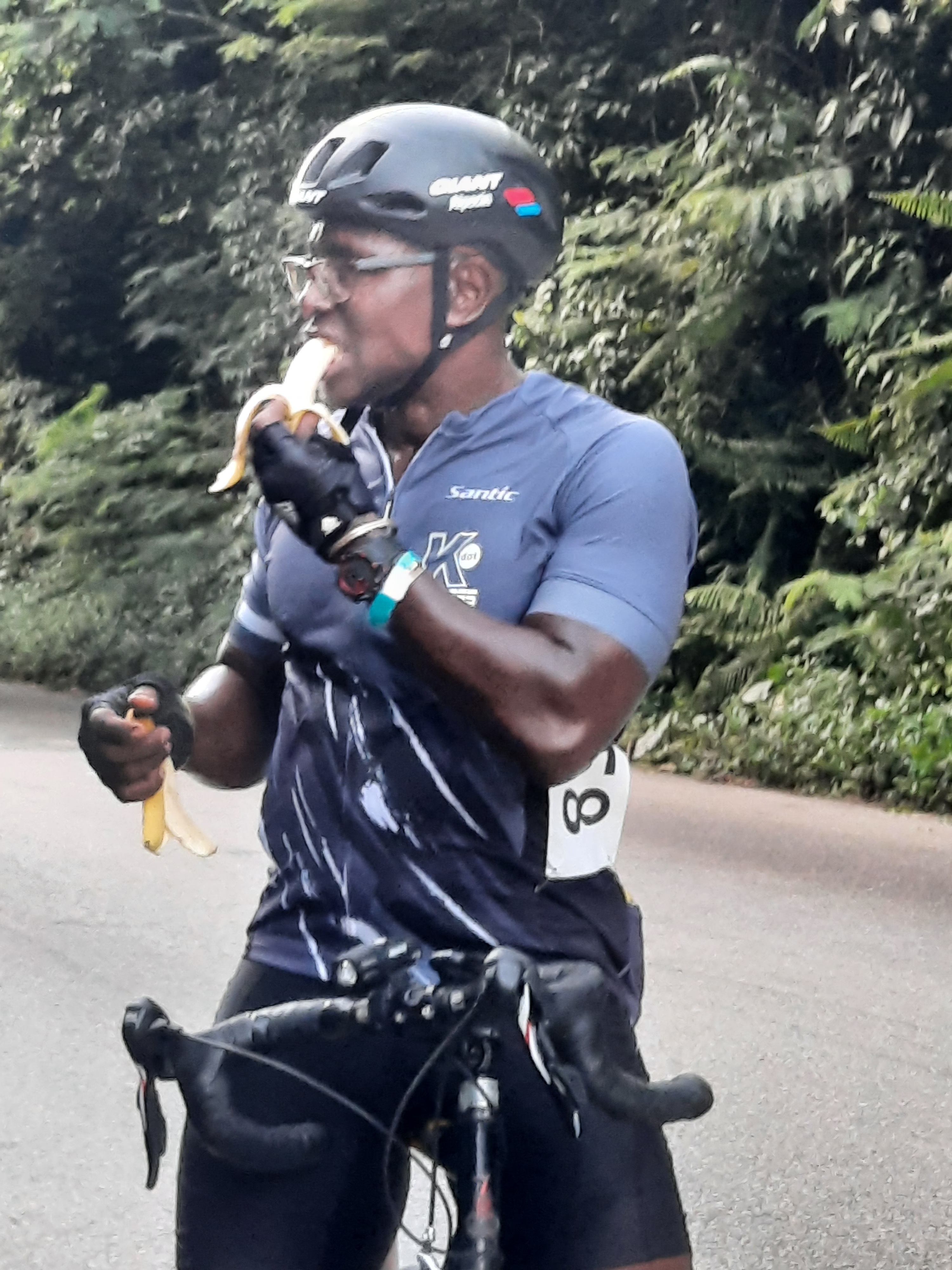
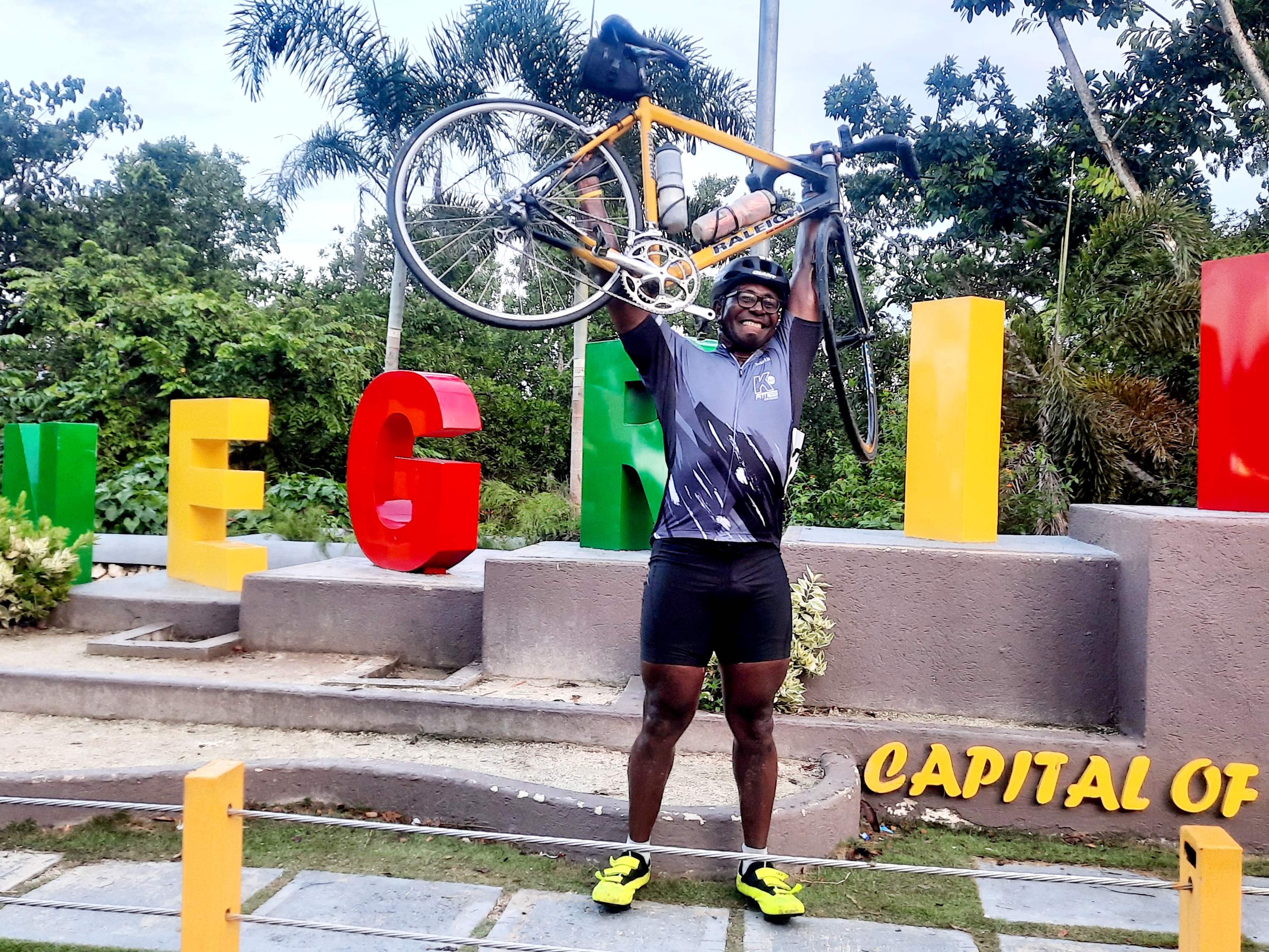
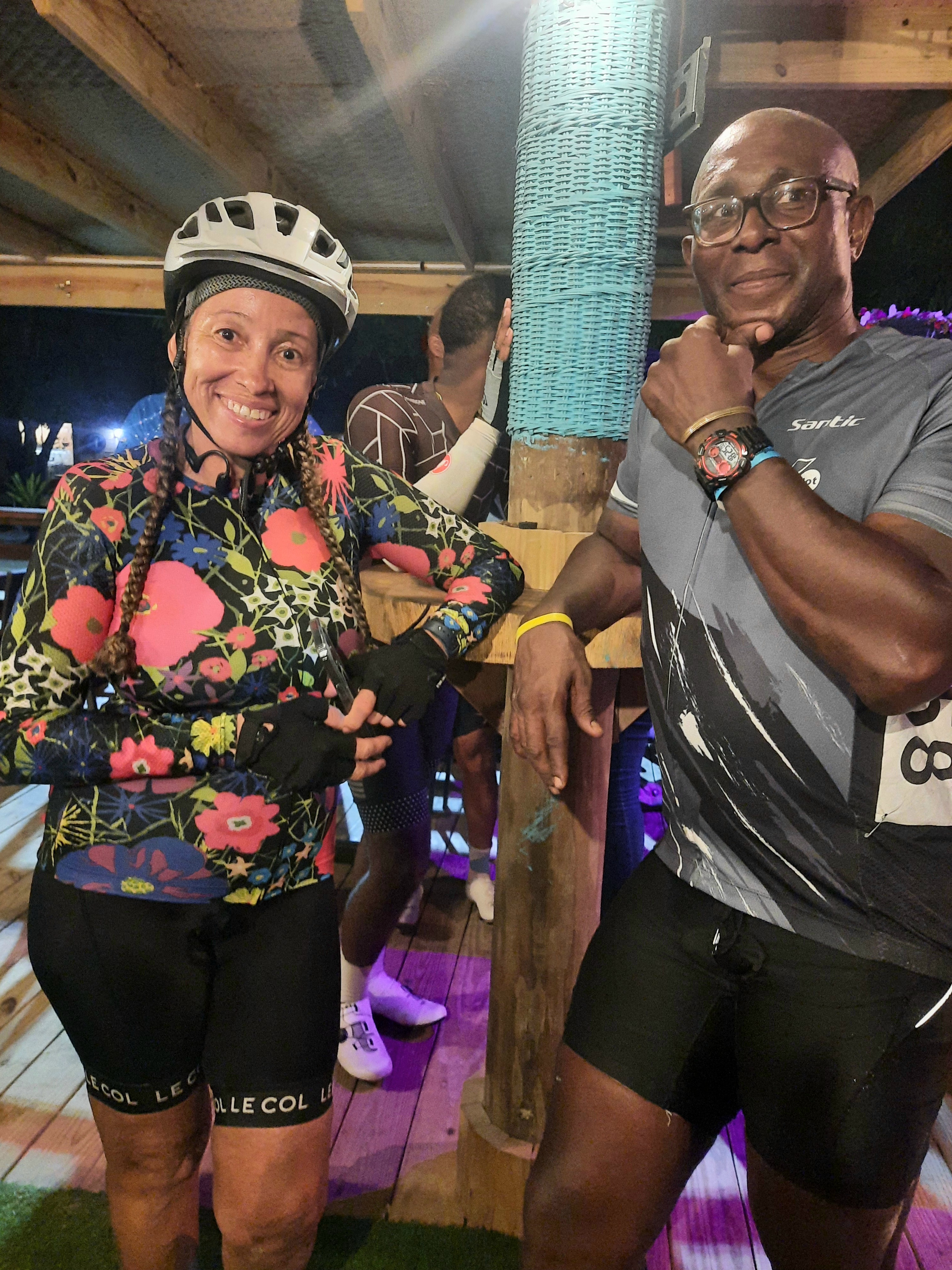
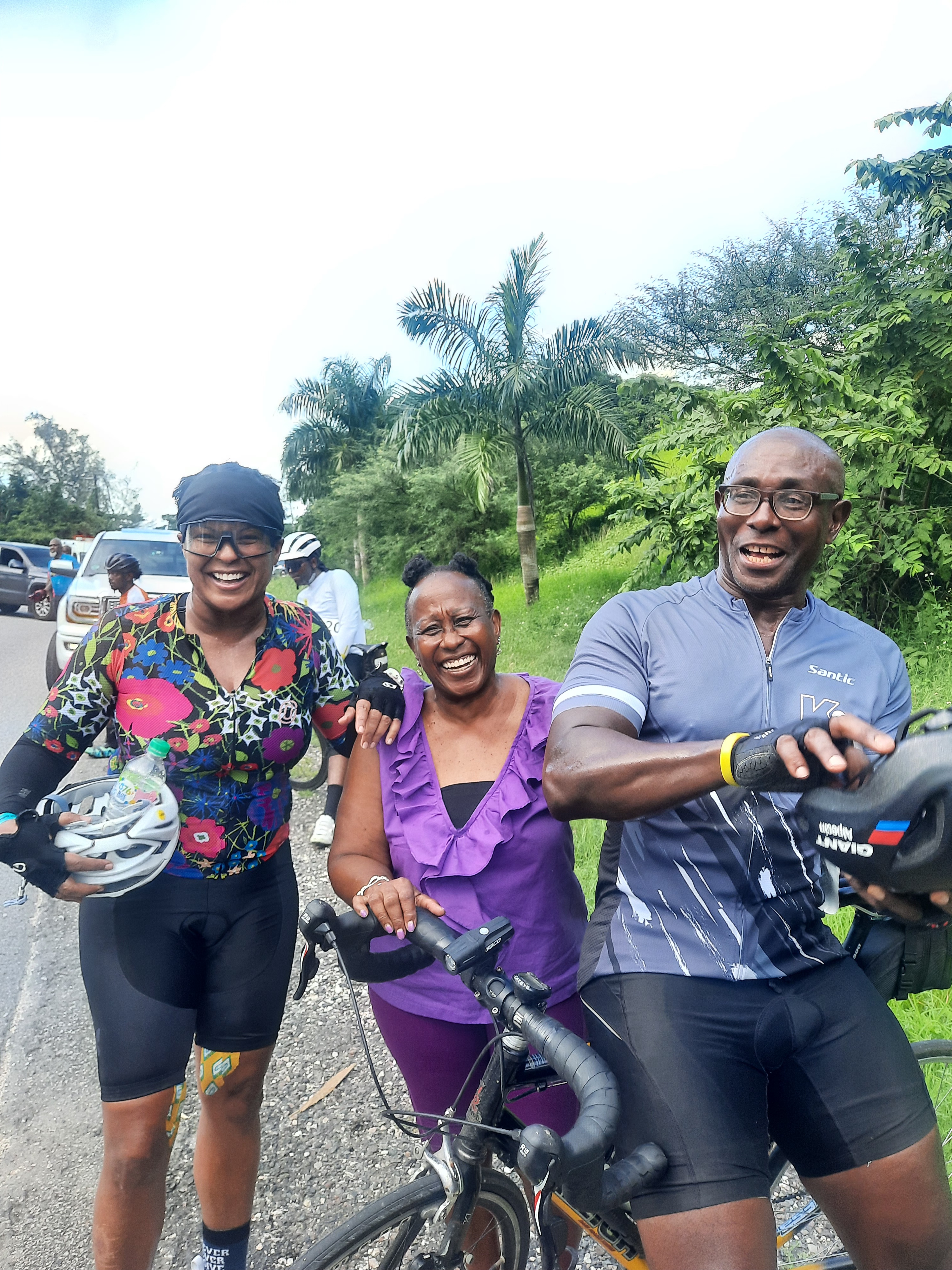
On Saturday,  October 19, 204, our National Heroes Week celebration, I  had the distinct pleasure to participate, vicariously, in the amazing cycling race from Kingston to Negril. I joined Anya, who drives the support car  for her husband, Kevin Nelson.

I was inspired and awed by the over 113 participants, mostly men,  but there were ten women ranging in age 30 to 65. Organized by Coach Carlton Simmonds who has initiated this race for the last three years.


Well organized with a team of supporters, including police escorts, an ambulance, a bus to transport any cyclist and bicycle, who gets tired, a food/water truck and several other supporter cars.

The race began at 4:30 am at 6 Miles in Kingston and the cyclists arrived in Negril at approximately 6:15 pm with a 45-minute lunch break just outside of Montego Bay and four short 15-minute break stops in Moneague, Duncans, Mobay, and Lucea respectively.

Kevin Nelson, a friend, is an avid cyclist, who rides, at least five days a week from Gordon Town to Mona. A gym enthusiast, He has been participating in this race for many years so it seemed appropriate that I interview him about his involvement.

‘I actually started cycling again in 2013 after stopping  in my teen years due to academic issues. I was very much inspired by my very senior neighbour Mr. Eaton Gabbidon who was an early pioneer of the Negril expedition. I have done annual road races in the corporate area as well at shorter distances as a member of the Jamaica Cycling Federation.

‘Since 2013 I have done this expedition 10 times. I keep doing it, not only for amusement but it’s how I am able see how much I can physically and mentally endure each year.”

Stamina and endurance are key elements to completing the ride, which is not only strenuous but hazardous as well, many potholes, steep hills, curves and bends and the sun, yes the fierce sun as they approach Duncans area; they also encountered slight rain. While physical prowess is vital, mental and psychological well-being are other key elements. However, one also have to prepare physically. Nelson has this cover and he outlines his practice.

“Generally, as a fitness trainer myself, I maintain a good level of self-care and conditioning that has become my normal lifestyle. It involves daily strength training at dawn and cardio work in the evenings. I do Yoga for meditative breath work and stretching sequences in the early mornings. I’m also a ranked table tennis player so I am close to the sport. I cycle to and from the gym every day covering over 100 miles per week inclusive of the long weekend rides to Port Royal or Bull Bay. Nutrition is a key and I  refrain from consuming overly processed foods.”

Indeed self-care is mandatory, and part of this is accomplished by Nelson’s
monthly recovery program that involves chiropractic and massage treatments. But what is the emotional cost, of having the right mental framework to manage the race.

Nelson admits that “Emotions vary throughout the arduous 158 miles, but I ground in spirit and sharing in the energy of the event. 113 international cyclists (10 women) participated in the 2024 event and although not all finished, the enthusiasm was high. The Kingston to Negril event builds my spirit every year; the most difficult parts of the ride between Drax Hall to MoBay take a toll on you physically and mentally if don’t regulate your fluid intake and nutrition on the four breaks. It’s positively different emotionally for me now. In 2013, I felt like abandoning the ride at Runaway Bay!”

And some cyclists did succumb, to severe cramping, shortness of breath, overall fatigue and the unsympathetic weather. But the majority pushed on, because as Azikiwe states, “my thoughts on completion very much evoked the emotion of joy that I have passed my own test. The moment I see the Negril sign, I started to see myself on the beach.”

The seawater is a balm and helps cyclists cool down and relieve some of the tension and cramping that such an excursion produces.

It should be noted that while the cyclist is doing the hard pedalling, their success is also dependent on their support team. Nelson admits, “Generally, I  need a co-pilot in a support vehicle, and my wife fills that post. A co-pilot also helps to manage the hydration and nutrition packs as I am in motion.

What the Future Holds

Kevin Nelson  “encourage others to join this ride to build confidence and character. I am requesting more women, especially to join this cycling event.

“I think it would be a great asset to the spirit of cycling to create a national effort towards its promotion via even “Jamaica Moves” or any health initiative. Just as with football or athletics, start school programmes, and designate cycle lanes on certain roads (Palisadoes to Port Royal has room for such a facility). Bicycles can be easily sought via Chinese or European missions.

Equally important is the promotion, and Nelson laments that “this event does not get the local or international recognition it deserves.  I think us cyclists should take most of the blame as there exist many more options now to get and maintain a PR mechanism.”

Concluding, Nelson says, “I wish to see cycling facilitated as another sport to add to Jamaica’s, medal tally at the Olympics; so far we have had only 2 persons at such a level.”

It should be noted that there are several other Kingston to Negril cycling events that happen around the same Heroes weekend. Some do South Coast and others North Coast. I  recommend that these organizers come together and schedule these races at different times throughout the year.

This year, Kevin Nelson rode with Coach Simmonds who organized this race. I spoke with the coach briefly about his organization and the early beginnings of the race, which he states was “started by six doctors at The University of the West Indies, Mona, who did a ride on the weekend, then decided to include others.

Simmonds branched out and began the Kingston to Negril ride three years ago under the auspices of Simmonds High-Velocity Cycling Club. The function of which he says, “is to coach, manage, and encourage youngsters to cycle with the end result, participation in the Olympics.  The goals are to put on competitive cycling events, encourage international cycling events, and in general, engage the average cyclist to participate in recreation fitness rides.”

This is a worthy cause with important goals that I endorse. When I was younger I used to cycle but after two accidents and a knee replacement, I do not cycle anymore. Nonetheless, it is a great sport, and I remember the feel of the breeze on my back, the tension in the muscles of my calves and the adrenalin rush as I break, the bicycle moving on its own velocity down the hill.

Miss Lou Advocating for Our Children: Happy Birthday Miss Lou

Long before she conceptualised and hosted Ring Ding, the first local television show developed for Jamaican children, Louise Bennett aka Miss Lou was actively advocating for our children. Miss Lou researched and unearthed material in which Jamaican children could see themselves and their culture and feel proud. Ring Ding had a 12-year run, from 1970 to 1982, and was designed around Miss Lou’s basic tenets and ideology that “de pickney-dem learn de sinting dat belong to dem.” A novelty idea still desperately needed, more so today.

Emerging from a colonial legacy, Jamaican children were schooled on European paradigms and aesthetics that advocated white supremacy. To counter this indoctrination, Miss Lou taught them our folk wisdom that nourished their minds and gave them a sense of self-worth and pride. One of the proverbs that she collected states: Marga cow a bull mumma. There are several ways to translate that proverb, but the most obvious is: regardless of the cow’s slim size she mothered a bull. Asked to analyse the poem, a child can infer that regardless of her or his size, she or he can produce or do something great.

In her poem,  “New Scholar” Louise Bennett persuasively advocates for children and seeks to ensure that their special and unique ways are taken into consideration. The very title makes Bennett’s agenda of producing excellence in our children clear. The persona of the pome is a mother who goes to her child’s school and respectfully informs the teacher about the personality of her child so that the teacher can be more effective in teaching and recognising him as an individual. The mother implores, “No treat him rough, yaw, Teacher”.  Throughout this poem, Bennett offers a way of teaching children in a non-abusive manner where the child is catered to and handled with care. The poem also establishes a partnership between parent and teacher: ‘Now dat yuh know him lickle ways/ Ah not havin no fear…”

New Scholar, like the other proverbs and riddles that Miss Lou collected and shared on her television show, were all intended to feed Jamaican values and infuse patriotism so that the Jamaican child could clap herself or himself and know her or his worth. Moreover, riddles support critical thinking, help to make associations, and employ deductive reasoning. These two riddles are apt examples: Riddle: Hell, a top, hell a bottom, hallelujah eena di miggle. Answer: Potato or cornmeal pudding (pone), made in a traditional oven with coals on top and at the bottom. Riddle: Mi doan weigh anything but mi can sink di biggest ship. Answer: A complaint. 

I invite parents to pause before relinquishing their children to games on the telephone. These games do not originate in the Caribbean and are imbued with subliminal values and norms that run counter to our values and beliefs. Miss Lou, like Marcus Garvey, understood acutely that we had to liberate our children’s minds if we expected to enjoy true independence and sovereignty. Who is developing local games that will teach our children our culture and the self-knowledge project that Miss Lou started?

More than a folklorist, poet, actor, and storyteller, Miss Lou was a warrior champion for our children. She understood that the real work of development must begin there, not just educating them, but equipping our children with skills and knowledge about themselves and their resilient history so they see themselves as important contributors to the world. I summon parents and teachers to revisit Miss Lou’s impressive body of work and dig deep and plumb its metaphors and messages. Now more than ever our children need to be fed our soups as foreign technological domination is at an all-time high, intrusive and insidious, focusing our children’s eyes away from themselves and their culture.

Miss Lou’s stories and idioms were about disrupting this gaze and refocusing it back to self.  She was warming and reminding, Come See me an come life wid me a two different sinting and You cyaan teck mout-water so out fire. Many of our children are being murdered, raped, and emotionally abused at alarming rates. We must stop this tide of abuse. Our stories, riddles, and proverbs can help to guide us back to self and the native pride and development, with an active and effective village that help to raise and protect our children.

Let’s return to family time, and story time and tell each other Anansi and Duppy stories and analyse their meanings together. Equally important, is the need to collect and share the new stories that we are creating.  Remember Miss Lou on this her birthday and Clap Yuself.  There is much in our folk culture to invent games and television shows to share with our children as well as the world’s children.

Happy Birthday Miss Lou and Walk Good.  Mi heart is singin, Is long time gal me neva see yu…”

*Selected Poems – Louise Bennett, edited by Mervyn Morris, Sangster’s Book Store, 1983.

Protect All Children: We Must Be a Village Committed

“ The true character of a society is revealed in how it treats its children.” Nelson Mandela

As a feminist and gender advocate and as a mother of two girls and one boy, I believe it is important to unite and protect all our children and not create a gender divide by advocating to protect women and girls only. While data supports that the vast majority of rape cases are against girls, from speaking to mothers and other organizers in various communities, I have learnt that a large number of our boys are being raped, trafficked and abused but because of the homophobia in the society their suffering has been silenced, and those cases are not being reported.

We must no longer feed the divide and pit girls against boys or we will reap the consequences down the road. W must begin to be inclusive and insist that we protect all the children in our society that is steeped in violence, where men and boys are some 80% of  the perpetrators. As we celebrate Child Month under the lofty, but important theme: “Children Need our Love and Protection- Get Involved,” let us ask and answer these questions: From what and whom does our children need protection?  How can we re-energize and activate the concept of a village raising a child that is wholistic and meaningful? What systems must the government put in place to ensure that our children, on a daily-basis, are protected? What guidance and instructions do parents need to be more effective, daily demonstrate love, commitment and protection? What steps need to be taken to ensure that the rights of every child are protected?

The Thursdays in Black Initiative to end gender-based violence, of which I am the Coordinator, for the last three years has been working weekly to bring awareness and education to this issue in Jamaica, to get all Jamaicans involved as it requires our collective will and determination to end this plague. Violence against our children is part of the larger violence in society and we must get to the root cause if we desire to live in a Jamaica where such acts are seen as heinous, and not just another incident to shake our heads over and move on.  In this month of celebrating the achievements of children as well as their precarious situation, concerned adults and parents must sit down and talk with our children and listen to them. They can provide alternative solutions that we might not have thought about.

We must be mindful of the trending disparity between boys and girls in educational achievement and look at alternative best practices that will keep our boys motivated to advance in academic status with the girls.  We must also simultaneously examine and rectify GBV against our girls and also provide them with sufficient information to stem the tide of teenage pregnancy and the spread of HIV and other SIDs among girls 15 and older. Girls and boys need to be informed of their fundamental rights and how to ensure that those rights are protected. We need to engage them more in protecting the environment on which their future hinges. We need to involve them in the political process so they can be agents of change who will not only protect the environment, but ensure we have a democratic society that is home-grown and governed for the benefit of all the people and not just a minority.

All our children are in need of love and protection.  They must be assured that they are valuable and can and must contribute to the development of our society. We must socialize and allow boys to express the full range of their emotional landscape; we must give our girls a voice to speak out against and stop sexual and other forms of abuse. We must penalize those men and women who target underage children for sexual exploits, and we must introduce in the school system and other institutions a process to promote true equality and fairness for our girls and boys, and teach them how to effectively communicate in non-violent ways, and treat each other with respect and dignity.  It is our job and obligation as adults to model and reinforce these foundational practices.  I concur with Nelson Mandela who asserts, “Safety and security don’t just happen, they are the result of collective consensus and public investment. We owe our children, the most vulnerable citizens in our society, a life free of violence and fear.” 

 My fellow Jamaicans, let’s be intentional and love and protect our children not just during Child Month but 365 days, 24/7. We must build a solid foundation for our future.

A Girl Needs Her Father Too: A Personal Journey

 I am here to inform you that your daughters, not just your sons, need you to be actively present in their lives. A girl needs her father too. The most indelible memories of my father are all before I was ten years old and then there is a blank. Not one scrap of an image after that period as my father migrated to the United States of America and  was absent from my life for the next nine years.  His leaving and not communicating with us left a vacuum that took three years of therapy to come to terms with my issue of abandonment  and to make space for me to have a meaningful relationship with a man and prepare to be a mother to my children.  Daniel Flint, a paediatric psychologist, says girls who have healthy relationships with their fathers are less likely to develop depression. While I was never diagnosed with depression, I do believe that my tendency during that time-frame to go off by myself and live primarily inside my head might have been related to my father’s absence.

Luckily, positive males figures were filled by my two maternal uncles,  Lloyd, a painter, and Cecil, a soldier, both of whom visited regularly and took my sister and I  on outings, the latter always protective, warning his friends when he took us around them, that we were his nieces and that they had to respect and protect us. Once, Cecil spoke angrily at one of his friends who cursed in our presence, warning him, “Nuh cuss nu bad words in front of dem.” Lloyd was more cultural and spoke to me kindly but passionately about Africa,  Egypt civilization in particular. It was the love and grounding of both of these uncles that cushioned the privation of my father. As I moved beyond the confines of my home and began dating, it was their guidance and warning that guided my decisions. Studies have confirmed that a girl’s relationship with her father often influences  her romantic choices, but more importantly, a father’s support, praise and active love boost a girl’s  self-esteem and confidence, allowing her to postpone or delay early sexual engagement. I wish I had had my Daddy during that period , but I am thankful for my uncles.

I was fortunate to have a loving, motivated, formidable mother who never seemed to be afraid of anyone or anything; she was amazing. However, I remember an incident of a man threatening  my mother and us, and her evoking my absent father’s presence, “Although, you don’t see a man in this house, just know my children have a father, and if you hurt them you will have to contend with him.”  My parents were then divorced and I know my mother had not heard from my father as I had deliberately eavesdropped on her speaking with her sister and lamenting, “Not a word from Dadda (everyone called my father  Dadda), not a word. Him just gone so.”  I remember crawling into my favourite corner after the threatening man left our gate, wondering what would happen if he were to return to fulfill his threats and neither my mother nor I could produce my father.  I remember being very angry with my father, feeling anxious and abandoned. I silently cursed my father, and I felt deeply ashamed. 

This feeling lingered with me, and while my mother always threw me lavish birthday parties and I had been all along looking forward to my sweet sixteen, I refused her offer of a party and did not celebrate this significant birthday because I did not know where my father was and he did not even send me a birthday card. While data suggest that girls with fathers tend to perform better academically, despite my father’s absence from my life for almost all of my undergraduate education, I was determined to perform to outshine him, the trained chemist and city planner. Despite the presence of my uncles, because there was never a man in the house, I did not witness a relationship between a man and a women close up, and did not know or felt capable to navigate the give and take that is required to grow and nurture a mature, wholesome relationship.

 This is a common topic discussed among many single women with “daddy issues,” especially if they have a strong mother as I did and no father or male role model at home. My father denied me this perspective, when  for whatever reason, he decided to walk away from me, from his children.

My father was a functioning alcoholic until the doctor warned him that his liver was at risk, after he migrated to the USA. This I learned, when I was an adult, was one of the foremost reasons why my mother left him and sought a divorce. Allegedly, he would come home drunk, belligerent and he was also a womanizer. I know this knowledge of his earlier behavior impacted my choice of the man I married, a non-Jamaican, non-drinker, whose parents were married for over forty years until his mother died. He was a man whom I felt would not abandon his children, no matter the circumstances, and he did not/ has not even after our divorce. Also, my forty and thirty-plus years friendship with Jamaican men, Neville, Don, Errol, Peter and Karl, Bilal, whom my children call uncles, was based on their exemplary roles as fathers and devoted husbands, and I thank and applaud them for their friendship and helping to serve as positive male models for my two daughters and a son.

I don’t remember my mother ever once speaking negatively about my father or trying to keep us from him. After they divorced when I was almost five years old, and while he was in Jamaica, he would always come to get us and I remember us spending a few weeks during the summer at his house.  I remember Sunday drives  in his grey Morris Oxford car.  When we moved to New York to attend college, in my fourth year, Daddy sent us a letter, having secured our address from his mother, saying he would like to see us.  I refused, still angry and feeling neglected and promptly said I was not going even though my older sister was eager. My mother did not insist, but she pulled me aside and urged me, “Give him a chance. Go see him and hear what he has to say. ” I relented and my mother drove my sister and I to the station to take the train to see Daddy in White Plains. That awkward reunion was surreal as Daddy acted like nine years had not elapsed.  That first visit made me even angrier.  I wanted an apology; I wanted him to go on his knees and beg our forgiveness.  I wanted from him what I could never have, those lost years returned.

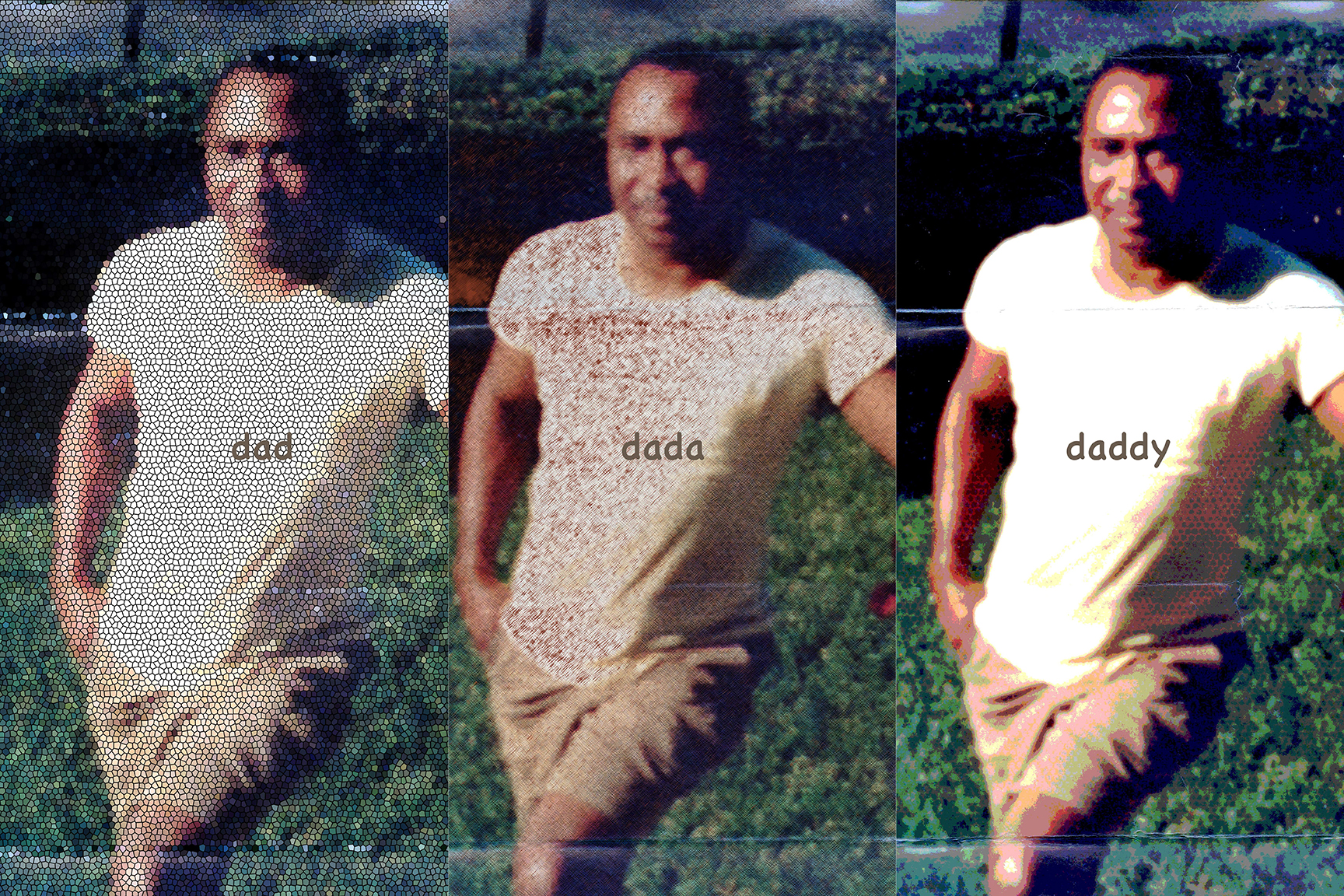
I’m writing a book about my father that I began a year after his death, 2012,  entitled, The Scent of My Father, that I hope to complete this year.  Part of my challenge is trying to fill in the gaps and piece information from older cousins who knew him. There is so much I don’t know about my father even though we reconciled and I took my children to see him whenever I could.   We never lived in the same place again before his death, and he wasn’t big on talking via the telephone, preferring to write. I would ask him some questions about his life and he would write me letters which I still have. I truly miss those almost ten years of his absence…The sense of loss is still a big pit that I will carry to my grave. I don’t remember ever dancing with my father as a teenager or adult; he could not and did not attend my wedding.  He did not attend my children’s naming ceremony. There are so many events he did not attend, so many crucial moments in my life for which he was absent. The smell of my father is absent.  What does that smell like; like having a bad cold and losing your taste buds.

Once, when visiting my father at his home in White Plains, New York, he took me upstairs to his office and I was shocked to see photos of my sister and me on the walls. He also had copies of a few of my books. We went back downstairs, and were sitting in the kitchen by the window when I braved the question, “Why  didn’t you send me birthday cards for nine years?”  He looked away then stood up and removed the plates from the meal he had prepared for me that we had eaten. Then he sat back down and said, “I always remembered your birthday, but I just didn’t. I have always loved you…” Tears came to my eyes then, as they do now as I am allowing these moments to wash over me. Then he said nothing else even though I prodded, saying his life was complicated then…his first several years in the USA.

I suspected he might not have been legal even though when I visited him he was working as a chemist at one of the leading candy factories in the area, from sugar making to candy…a natural evolution. I had to tell myself what was lost was lost and could not be retrieved. I missed out and so did my father.

I want to think we both have holes that will never be filled. I love my father and two of my fondest memories of him are him swimming me out to sea on his back many Sunday mornings at the now defunct Gun Boat beach off the Palisadoes Road, and how safe and connected to be on Daddy’s back and the water enfolding us…Perhaps that is why the sea still soothes me. The other memory is of Daddy showing me how to clean Pretty Parrot’s cage and not being afraid to hold out my arm and have the parrot stand on it while feeding him peppers. I close my eyes now and try to imagine my Daddy’s arms embracing me, try to see if I can excavate  a memory of him dancing me on his feet, him telling me about what to look for in a good man and how to live a meaningful life.  The slate is clean. I have to nurture what I have and continue to love him despite the fact that he did not give me many things that I needed.

As I reflect on Father’s Day, I thank Vinnie, my father-in-law, who is/was a wonderful father figure to me, and never stopped calling me his daughter nor broke off communicating after his son and I divorced and I moved away.  Thanks Vinnie for your enduring love. So I appeal to all men who are fathers to not walk away from your sons or daughters.  We need you too and your absence leaves a chasm that no one can fill and no time or therapy can heal.  Your presence must be a constant  garden from which sun-flowers grow. Be an engaged, loving father to your daughters.  Help us to grown whole and strong. Happy Father’s Day, Daddy; A Blessed Father’s Day to all fathers.

                        Daddy I need you

                        the left side that grounds me

                        in masculine strength and assurance

                        with your love my feet are planted

                        not a path I cannot navigate…

Men Who Are Fathering: Being a Father to your children

The notion of single-parenting, especially by women, has dominated the parenting discourse and many

might believe it is the norm in Jamaica.  However, there are some men who are single- parenting their children, and many who are co-parenting with wives or partners and have not skirted nor withdrawn

from their responsibility. Often these progressive fathers are not showcased and their positive involvement in their children’s lives is not recognized nor noted as a viable and important cultural contribution to the development of the entire society.

All too often we hear about the negative impacts of absentee fathers and the widespread “baby-mother” man who is nothing more than a sperm dropper, who has fathered several children with several different women and is not bearing any financial or emotional responsibility. While fatherhood and fathering can vary from man to man, I believe there are some basic values or even norms to which active fathers ascribe. My definition: a father is a man who is actively involved in the daily life and welfare of his child or children, offering love, guidance and protection. While, historically, emphasis was not placed on the importance of fathers, equal to the importance of mothers, researchers, over the last three-plus decades have been advocating and promoting the daily involvement of fathers in every aspect of their children’s lives.  Dads play a necessary and pivotal role in the lives of  boys and girls, helping to bolster their self-esteem and confidence, providing guidance that results in better academic performance, and producing overall well-rounded individuals.

As an academic, I value data generated from research, but I also know that lived reality is of paramount importance. Hence, I sought out three fathers to learn how they see their role as fathers in their children’s lives. Each was asked the same 3 questions, the first,” How do you define your role as a father?” Roderick, married with five boys, ages 20, 17, 14, 11 and 8, responds in what some might consider a more traditional manner. “My role is the authority figure, the one who demonstrates manhood to my children. The father’s role is to teach, correct, provide, protect, to give security and guide his children and to help them to make wise decisions.” Roderick  admits that he is still learning how to be a good father, especially with regard to his oldest son, whom he defines as very intelligent, “ yet he is still finding it difficult to make certain wise decisions when his youthful adrenaline kicks in.” Roderick is always there “to support and help him to balance his life.” Roderick wants fathers to understand that their children need them at all ages, as they go through different phases of their lives.

Charles, the father of 2 boys, ages 11 and 12, believes his role as a father is to understand his children, then adds, “also guide, protect and discipline  them because love sown from a father to a child is  also inclusive of discipline and corrections.” In response to my second question:”Why is it important that fathers are present in their children’s lives?” Charles offered this insight. “One of the most important aspects of being a father is that of celebration. I love to celebrate with my children when they get something right so that the feeling will last a long time. I will try whatever to make the celebration memorable.” This practice of celebrating your child’s life, not just on birthdays, is really a caveat that I encourage more parents to incorporate into their practice. Charles invites fathers “to experience life through your children, but not to grow them to be you or to do all the things that you wanted to be.”  Although he recognizes that your child won’t listen  and might consider you antiquated, he has discovered that they do listen and that parents “can sit back and watch them [children] heed  many of the things that you told them before.”

Jayson, father of twins, a boy and a girl, age 7, and a 14-year-old daughter is a Counselor and sees his role as a father as a four-pronged involvement: “Making sure all of their basic needs are met, having “resources to capitalize on their educational opportunities at a minimum to university and to protect my children.”  Jayson also believes there is an essential male role as a socializing agent, “ by expressing my emotions in a healthy and acceptable way; respecting, managing disagreements and conflicts between us in a harmonious way and being very intentional.” Jayson knows that fatherlessness can result in maladaptive behaviour that leads to crime and violence, so he urges those fathers who are home, but not involved in their children’s lives to get up off the sofa and be psychologically present. Acknowledging that “parenting is the toughest job,” he also appeals to those men who might not have had positive father role models “to break that cycle and be present in your child’s life.”

The three fathers echoed a similar appeal  to absentee fathers, “Don’t relive what was handed down to you and what is becoming the norm; you have the power to break the generational cycle.”  Roderick acknowledges that unhealthy fatherhood has been modeled for far too long, so he says “ Remember that your child/children need you and you also need them, if not now, then later.”

Today as we rightly pay homage to fathers and acknowledge their roles as equal to that of mothers, I invite all men who have fathered children to be mindful of Charles’ appeals, “Get present! No matter how hard it is, no matter if you having problems with the mother or have to take her to Court. Make sure you’re in your child’s life because it is the most important award  and reward that you can  give your child.”

Happy Father’s Day to all men who are fathering their own children as well as others, and many joyous blessings.

                                                                  –30–