All posts by Opal Palmer Adisa

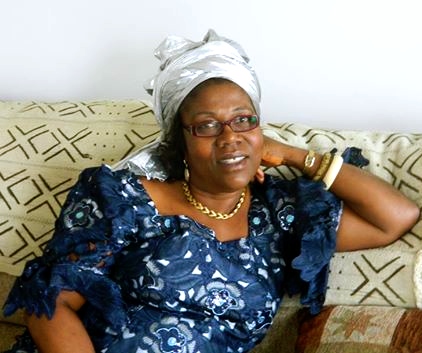
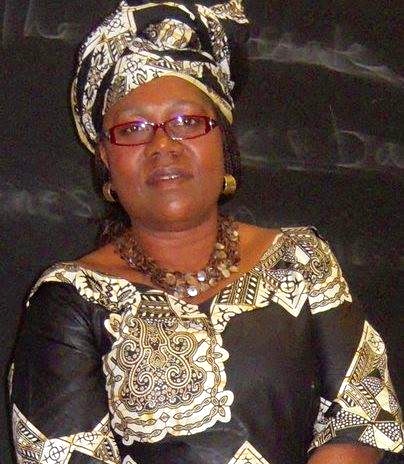
Opal Palmer Adisa is an exceptional writer/theatre director/photographer/gender advocate, nurtured on cane-sap and the oceanic breeze of Jamaica. Writer of poetry and professor, educator and cultural activist, Adisa has lectured and read her work throughout the United States, South Africa, Ghana, Nigeria, Germany, England and Prague, and has performed in Italy and Bosnia. An award-winning poet and prose writer Adisa has twenty four titles to her credit. Most recents are: Pretty Like Jamaica; The Storyteller's Return; Portia Dreams and 100 + Voices for Miss Lou. Other titles include the novel, It Begins With Tears (1997), which Rick Ayers proclaimed as one of the most motivational works for young adults. Love's Promise; 4-Headed Woman; Look a Moko Jumbie; Dance Quadrille and Play Quelbe; Painting Away Regrets; Until Judgement Comes;

Moment of Realization

Although you cannot see it now

there will come that moment

when all the outside noise

DSC05516will decrease then dissolve

and all you will hear

is yourself

not the self

you have been telling yourself

you should be

or the self

you’ve been comparing to others

just you and you alone

DSC05501naked and vulnerable

naked and beautiful

and you will no longer

talk to impress

as silence is really more

profound

you won’t carry the weight

of the applause and recognition

that you thought you deserved

and should have received

you will be content

proud of all you have

done

honored that life

has gifted you

these experiences

and you will smile at

those still pandering for the light

still spouting what they know

but haven’t truly studied

and you will not contradict

or try to insert yourself

you will just know

who you are

and love yourself

for being you

Soil for Your Roots

DSC02587We are the very essence of nature

and just like a tree we have roots

that allow us to grow and flourish

in those things we select to pursue.

If, however, you are feeling stagnant — as if things are just

not working out for you, then it’s time to stop and check the soil

–your thoughts;

the people you surround yourself with.

your daily habits…

How healthy is that soil?

Certain trees, like mango for instance, need acidic soil with good drainage or it will rot.

What type of soil do you need to flourish and ripen as sweetly and abundantly as a good mango tree?

Chance are, if you are not blooming prolifically, yearly, you are in the wrong soil.

Now you know so don’t bemoan the fact.

You need to change your soil.  Make sure you have proper drainage and adequate sun — if you are a mango tree.

First, find out what kind of tree you are, and the soil and condition that are best suited for your growth.

It all begins with self-knowledge and awareness, then willingness to do what is necessary to optimize the conditions for your maturation.

For more helpful tips check out our book:

Fame, Money, Power Not Required! Kindle Edition

Tendai Humbasha Maduwa: Zimbabwean TV and Radio Presenter

DSC01312Ready and willing are the characteristics that most aptly describe this young Zimbabwean television and radio personality who is also an aspiring poet. With fine features, and  a genuine interest in the welfare of others, Tendai is passionate about his life and his work. As a Life-Coach, he wants to help others become their better selves.

He remembers himself writing and performing from the tender age of seven, but when he was eleven years old, he realized that this was his calling. This awareness came about in his primary school, when his Headmaster recognized his talent. During the School’s Prize Giving Ceremony, Tendai staged a theatrical show, which captured the audience. Ben Sibenke, a prominent Zimbabwean actor, author, teacher, was then the Headmaster, who observed Tendai’s talent, and decided to nurture and mentor him.

DSC01334“I have been performing since the age of eleven on the professional scene, and I continue today,” Tendai announces. He has performed in India, the Netherlands, Germany, South Africa, Kenya, Uganda, Swaziland, Malaysia, Thailand, Zambia, Tanzania, and of course, throughout his native home, Zimbabwe. He loves sharing his work and seeks to inspire people with his motivational messages.

Tendai, who was one of the featured poets of the 2014 Kistrech Poetry Festival, attended and participated in this year’s festivities, primarily to give support as a result of the positive experience from the previous year. From this event he says, “I learned that poetry is beyond words and performances. When we went to the villages, I learned much about poetry, and how much it should be appreciated in our daily routines.”

Despite, or perhaps because of this belief that poetry should be incorporated into our daily life, Tendai is very clear that poetry “is a profession just like other professions,” and therefore he states, “Don’t expect me or any other artist/poet to offer it to you for free.”

His ditty below conveys his feeling about poetry, so titled.

Poetry

Poetry is a song

Sung with riddles of language

A combination of proverbs and sweet rhythms

Intertwined with voices that echo on stage

Poetry is freedom of expression

The liberty to act and perform bilingual aspirations

Frequent movement on stage

The true voice that portrays humanity

Poetry is the air that I breathe

It is language that I speak

The emotions that I express

It is the thoughts that I expose

Poetry is self-perception

It is a wife I have married

The person I’m ready to share with others

It is an adopted child that needs to be looked after

Poetry is the force of manipulation

In my mind but a force that others listen to and buy

It is a short song,

A soft yet to be sung musical lyric

Copyright © 2014  IMG_1841_2

Intuition – Your Guide

DSC03060Your inner wisdom

knows    always

when you’ve reached

the turning point

and guides you to detour

before you

walk off the cliff

confirming what you

already know

you’ve been this way

too many times

just accept

enough is enough

try something else

sit quietly

release

which ever crossroads

you find yourself

turn within

dig deep

and yield to

your third eye

your knowing self

your intuition

similar

DSC03059to the pelican

who submerges its head

spreads its beak

and secures food

you too will unfold

a new path

for tomorrow

An Interview with Godspower Oboido: One of Nigeria’s Emerging Poets

DSC01212With a name such ad Godspower, how can he go wrong? Perhaps his parents were prophetic, the moment he arrived, they saw that he would wield words, an irrepressible power; or perhaps they hoped that he would harness his inner powers to create a better, more egalitarian world, whatever the sentiment, this is clear, Godspower Oboido’s name is a harbinger of his talent as a wordsmith.


OPA: How long have you been writing poetry and how did you come to poetry?

GO: I’ve always wanted to do poetry. The first poems I wrote were in 2005–which interestingly got published in a Journal in the States but I am not saying which journal it is as I do not think those were successful poems –the type you no longer want people to see.

I used to make a living from working as a painter. Visual art was everything to me and everyone wanted me to study Fine Arts in College but I knew somewhere that I wanted to paint with words. I wanted to marry poetry and painting –so that is why as a poet today, I am more concerned with imagery than anything else really. I want to see and live in the poems that I read, or write. Let it have feelings, frown if it likes.

OPA: As a poet what do you want to share with your audience?

GO: As a poet I quite like to hide behind my poems. But I guess these days I am not so much about writing for meaning but writing about significant experiences in my life –giving my audience the opportunity to share in them. That was what Christopher Okigbo did too. Again writing about your own experience is also writing about other people’s experiences too, or being their voice in a way.

OPA: Nigeria has an impressive body of Writers and poets, what do you think account for that? And who is your favorite Nigerian writer?

GO: Yes that is true. It is very inspiring, if not daunting, to come from a country of literary heavyweights. We have a great storytelling heritage. Everyone is a storyteller –your grandma, teachers and peers –I remember growing up in Benin City, the children in the neighborhood would collect ourselves together to tell folk tales of the tortoise, ancestors and everything else. It was a tradition passed down through many generations. Then the early postcolonial writers from Nigeria did a lot to establish our literature on a global level. I am talking of the era of Christopher Okigbo, John Pepper Clarke, Chinua Achebe, and Nobel Prize for literature winner, Wole Soyinka. They were all friends –how cool is that? We draw a lot of inspiration from that generation.

My favorite Nigerian poet is easily Christopher Okigbo who is today widely acknowledged as by far the most outstanding postcolonial, Anglophone, African, modernist poet of the 20th century. There is a chapter devoted to his works in the British Open University textbook, Aestheticism and Modernism: Debating Twentieth Century Literature  (Gupta Danson Brown and Suman Gupta, 2005), David Richards (2005) that placed Okigbo side by side with T. S. Eliot, Ezra Pound, Anton Chekhov, Katherine Mansfield, Lewis Grassic Gibbon, Bertolt Brecht, and Virginia Woolf, among the pillars of twentieth-century modernism. I also like Niyi Osundare who was one time my favorite and modern poets like Afam Akeh, Amatoritsero Ede and a few others.

For prose fiction though, it is surely Ben Okri, the Man Booker Prize winning novelist. But in my opinion the most complete and accomplished Nigerian writer of all time is surely Wole Soyinka. His face is the most common of all the writers and it is not because of his iconic hair.

DSC01096 DSC01447

OPA: Have you performed widely? At any other festivals besides Kistrech, and if so where?

GO: I haven’t performed widely, but I have done a handful of poetry readings around the place. The first time I read my poems in Public was in England at a really nice Theatre in Hastings called The Stables Theatre. That was such an experience with a handful of talented poets. I remember thinking to myself, “wait people are actually paying money to come hear my poetry?” Peter Harvey, a distinguished theatre director and poet, who put the event together gave me encouraging feedback and would later edit my first volume of poetry, as well as write the foreword. After that, I did several weekly readings in Norfolk, to small audiences, and that was pretty cool too.

OPA: What did you take away from the festival in Kenya?

GO: It is the joy of sharing poetry that is so little valued around the world today. It was very refreshing to be with other international poets and to share in their passion for poetry, which is power. Poets like you, Dr. Opal, and Dr. Patricia Jabbeh Wesley provided inspiration and encouragement. That is something.”

DSC01336

With a compelling laugh that is full and satisfying, Godspower is thoughtful, a keen listener and a quiet observer. His maneuver of language, evident in his poem, “The Drum’s Lament,” is that of a practiced dancer lost in the exuberance of the beat.


THE DRUM’S LAMENT

For Christopher Okigbo (1930 -1967)

Cowhide cry of white light summons

The spirit of the sojourner,

Sole listener to the drum’s dirge.

A raging tide approaching,

A gathering war,

A gathering fear.

“The child in me trembles before the high shelf

On the wall,

The man in me shrinks before the narrow neck of

A calabash;”

The trembling gong loses its throat to the drum

The drum loses its beats, tonalities that prophesy war

To gunshots that know too well the ethnicity of skin.

The curtain falls on tremulous eye that loses its dream

The dream loses its dawn, the dawn its hope of a rising sun.

An anthology dies ambushed at a junction, open-paged.

Open let it be till the funeral night of posterity.

Contact details: kingpowerunited@yahoo.com