All posts by Opal Palmer Adisa

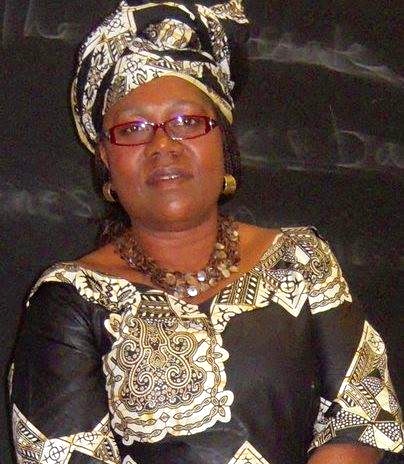
Opal Palmer Adisa is an exceptional writer/theatre director/photographer/gender advocate, nurtured on cane-sap and the oceanic breeze of Jamaica. Writer of poetry and professor, educator and cultural activist, Adisa has lectured and read her work throughout the United States, South Africa, Ghana, Nigeria, Germany, England and Prague, and has performed in Italy and Bosnia. An award-winning poet and prose writer Adisa has twenty four titles to her credit. Most recents are: Pretty Like Jamaica; The Storyteller's Return; Portia Dreams and 100 + Voices for Miss Lou. Other titles include the novel, It Begins With Tears (1997), which Rick Ayers proclaimed as one of the most motivational works for young adults. Love's Promise; 4-Headed Woman; Look a Moko Jumbie; Dance Quadrille and Play Quelbe; Painting Away Regrets; Until Judgement Comes;

The Right Soil.

In order to grow organic vegetables and sweet fruits you must begin with fertile soil that is manured with forgiveness and watered with love.

Your body and mind are nourished with the same substance.

The ease and success of your life is guided by the same principles.

A solid base — love and forgiveness, which encompass all other emotions– will withstand all natural disasters.

Poetry Saved Her Life: Patricia Jabbeh Wesley

Patricia Jabbeh WesleyWriting poetry and fiction since she was fourteen years old, Patricia Jabbeh Wesley, realized that she “was more gifted in poetry than fiction” when she was in college.” Currently, she is editing “a collection of short stories, while seeking an agent for my memoir, so maybe one day soon, I can say I am a writer of three genres.”

Born and raised in Liberia, in 1989 when the Liberian civil war began Jabbeh Wesley was “experimenting with fiction.” However, her shift to poetry was prompted by the civil war, and at its beginning had nearly completed a collection of poetry. Jabbeh Wesley speaks to how the shift in emphasis occurred.

“It was during our flight as a family, the urgency of the war, bombs falling, people dying around me, and always being on the run with my small children, my husband, my mother, and her family that I realized that war had no time for the long windedness of prose. I needed to capture my life during those days in the refugee, displaced camp, and I did with the urgency of war. That was when I began writing only poetry. And then I knew I was more a poet than a fiction writer.”

Confident and outspoken, Patricia Jabbeh Wesley teaches creative writing at Penn State University where she is an Associate Professor;  she has lived in the USA since 1991, where she earned a doctorate degree. She has so far published four poetry collections, and is very popular reader both nationally and internationally at festival as well as universities. Jabbeh Wesley shares some of the top venues where she has performed.

“I was invited to the 2007 famous International Poetry Festival of Medellin in Colombia, South America, and then again to the 20th anniversary celebration, 2010, something which rarely happens with that festival. I have also been a guest of the 2008 Pan African Literary Forum in Accra, Ghana, that brought together writers and students of writing from around Africa and the world, including the USA. Also, I was a guest at the Fall for the Book Festival 2009, held throughout Virginia; and to the very renowned City of Asylum Festival, the Calvin College Festival of Faith and Writing.”

Patricia Jabbeh Wesley was one of the featured poets at the Kistrech Poetry Festival. Of her participation she says, “I was very privileged to be a part of the Kistrech International Poetry Festival for the opportunity to present my poetry to my East African brethren, to read at the three universities along with other poets, and to meet all of the wonderful writers from around the world, the younger generation of African poets as well as others in the Diaspora who are my contemporaries. The festival taught me a lot. I also got the opportunity to see a region of Africa that I had long longed to see.”

“I am an African with the heart for my continent. despite being away in the Diaspora for two decades. When I write, it is to bring my culture and my people to the world, to bring to life the stories of our war, those who died, and to give voice to my people, the Liberian and the African people. I want my audience to hear the voice of one African woman poet, and to understand that our poetry speaks a far different language than the poetic language of the African man.”

Her poem below reveals her social consciousness.

Sometimes, I Close My Eyes

Sometimes I see the world, scattered

in small brick shacks along the hillsides

far away in Colombia,

where it is only the poor, at the peak

of the mountains. Medellin, holding on

so the city can find rest.

Sometimes, I see the poor in my Bai,

shoeless and old, his teeth threatening

to leave him if he continued on,

and walking on barefoot, he looks ahead,

his eyes, not betraying the future, where

the children he’s populated

the globe with, will cradle him beneath

the soil, where we all go, poor or rich,

where we all go, if we believe in the grave.

Sometimes, it is just these children who

have emerged from a long war they never

saw; children, left along

the sewage drains, the same people who

brought on the war, now recapturing

the land as if the land could be captured.

Sometimes, the world is hazy, as if fog

were a thing for the artist’s rough canvas;

sometimes, the world is a shattered piece

of your Iyeeh’s dish, the one from ages ago,

the one that was not meant to crack,

but sometimes, this is the world, the simple,

ordinary world, where people are too

ordinary to matter. Sometimes, I close my

eyes so I don’t have to see the world.

1979894_10203427294191848_1421844885_nTo learn more about Patricia Jabbeh Wesley visit her website: http://www.pjabbeh.com

;and her blog: poetryforpeace.wordpress.com

Head Down Bottom UP

DSC03251folks might see you

with your bottom up

and be confused

think you have flipped

but you know that

in order to secure food

sometimes it is necessary

to keep your head down

and your bottom up

every goal you plan

to achieve will require

that you change course

so don’t mind others

flipDSC03252

bottom up

and go to the bank

Toes=Forgiveness

DSC03108If you had feet, but no toes, would you be able to walk?

Sure you could; your balance would be thrown off, but you could be fitted

with prothesis, and with practice, regain balance and mobility.

Toes are essential to your balance, and are in no way superfluous.

You wiggle them, and you can also use them to grasp and pick up things;

some women paint their toenails, and they are essential to ballerinas.

Would you be willing to have your toes amputated?
I think not.

Yet many people are willing to deny themselves emotional freedom

as they refuse to release old wrongs.

Well you might want to rethink your position.

Forgiveness is to emotional freedom what toes are to feet.

So how sturdy is your emotional balance?

If you feel wobbly and you’re unable to gain stride

then check in with yourself and see who is on your

list to forgive, and always, always begin with yourself.

DSC03123

Feminizing Myth: Maria Dahvana Headley

MariaDHEadley3Maria Dahvana Headley, USA fantasy writer for young adults as well as adults, also writes non-fantasy, and is at Arte Studio Ginestrelle on a serious mission.

“I am here to finish the sequel to a young adult novel, Magonia, which I did and to write an adaption of a classic saga which mainly, in its original, focuses on male heroics.” A full time writer, with five novels to her credit, Maria is disciplined and driven. Knowing the task ahead of her, she searched for a place where she would be productive, and an environment, that in some way, is similar to the setting of her new title.

Maria elaborates, “I was looking for a place where I could be on a mountain because the two heroes of my story live on a mountain with ghosts and wolves.  This setting is amazing, and everything I write lately is set on a mountain. I have 3 things I’m writing about set on mountain so this is perfect.”

MariaDHeadleyAt Arte Studio Ginestrelle, located in Assisi, Italy, a country that Maria loves, there are only women artists in residence, but Maria is enjoying the time and sharing with the other artists, especially at leisurely breakfasts, during breaks from their respective goals and cooking for dinner. Comfortable in the kitchen, Maria enjoys whipping up a dish to share with her cohorts as she takes a break from fantasy to explore another genre.

“I write fantasy that I make up completely.  I though it would be nice to work on something based on historical literature, and also I think it is inspiring to be in this colony, which is located in a beautiful place in the world, but also isolated – and the novel takes place in isolation.”

Maria began this novel in Paris, last year, when she went to visit her sister who had a new baby. She reminisces, “I wrote in the middle of the night, the baby was crying, lots was going on, but I wrote amidst all the travails of domestic life.” However, at the residency she is exploring the wilderness section of the book, and therefore requires a different headspace.

Perhaps some readers do not fully understand the process of writing a book, and the prerequisite research necessary to the plot development. In this case, set in contemporary America, Maria “researched women in the military, in the last fourteen years of conflict, years of furious war, and women coming out of it with a lot of injuries. I also looked at fossil records of New York. I promise, it all makes sense.” While the novel is about ghosts, Maria also wanted to find out what was there first, and this is what she discovered.

“An old forest in upstate New York – a  fossilized forest, discovered in the 1920’s when they were building a dam there; they found full fossil trees! It is considered the most ancient forest in the world, and it was under the dam, drowned.  I learned that and I just wanted to write a book about it –upstate New York, ghosts, water, marshland and floods…Then it turned out it was all one book, the ancient world saga, combined with present day NY politics.”

“I always write about women,” Headley says. “I also always write about monsters, the definition of what might or might not be monstrous. So that’s what this novel is about too.” The novel is finished, in draft at Ginestrelle, and it couldn’t have been written anywhere else. “The solitude combined with being able to tell fellow artists every morning where I was in the word count – and then get there! – was invaluable.”

 MariaDHEadley2 Magonia CoverTo learn more about Maria Dahvana Headley visit her websites:  www.mariadahvanaheadley.com

Moment of Realization

Although you cannot see it now

there will come that moment

when all the outside noise

DSC05516will decrease then dissolve

and all you will hear

is yourself

not the self

you have been telling yourself

you should be

or the self

you’ve been comparing to others

just you and you alone

DSC05501naked and vulnerable

naked and beautiful

and you will no longer

talk to impress

as silence is really more

profound

you won’t carry the weight

of the applause and recognition

that you thought you deserved

and should have received

you will be content

proud of all you have

done

honored that life

has gifted you

these experiences

and you will smile at

those still pandering for the light

still spouting what they know

but haven’t truly studied

and you will not contradict

or try to insert yourself

you will just know

who you are

and love yourself

for being you

Soil for Your Roots

DSC02587We are the very essence of nature

and just like a tree we have roots

that allow us to grow and flourish

in those things we select to pursue.

If, however, you are feeling stagnant — as if things are just

not working out for you, then it’s time to stop and check the soil

–your thoughts;

the people you surround yourself with.

your daily habits…

How healthy is that soil?

Certain trees, like mango for instance, need acidic soil with good drainage or it will rot.

What type of soil do you need to flourish and ripen as sweetly and abundantly as a good mango tree?

Chance are, if you are not blooming prolifically, yearly, you are in the wrong soil.

Now you know so don’t bemoan the fact.

You need to change your soil.  Make sure you have proper drainage and adequate sun — if you are a mango tree.

First, find out what kind of tree you are, and the soil and condition that are best suited for your growth.

It all begins with self-knowledge and awareness, then willingness to do what is necessary to optimize the conditions for your maturation.

For more helpful tips check out our book:

Fame, Money, Power Not Required! Kindle Edition